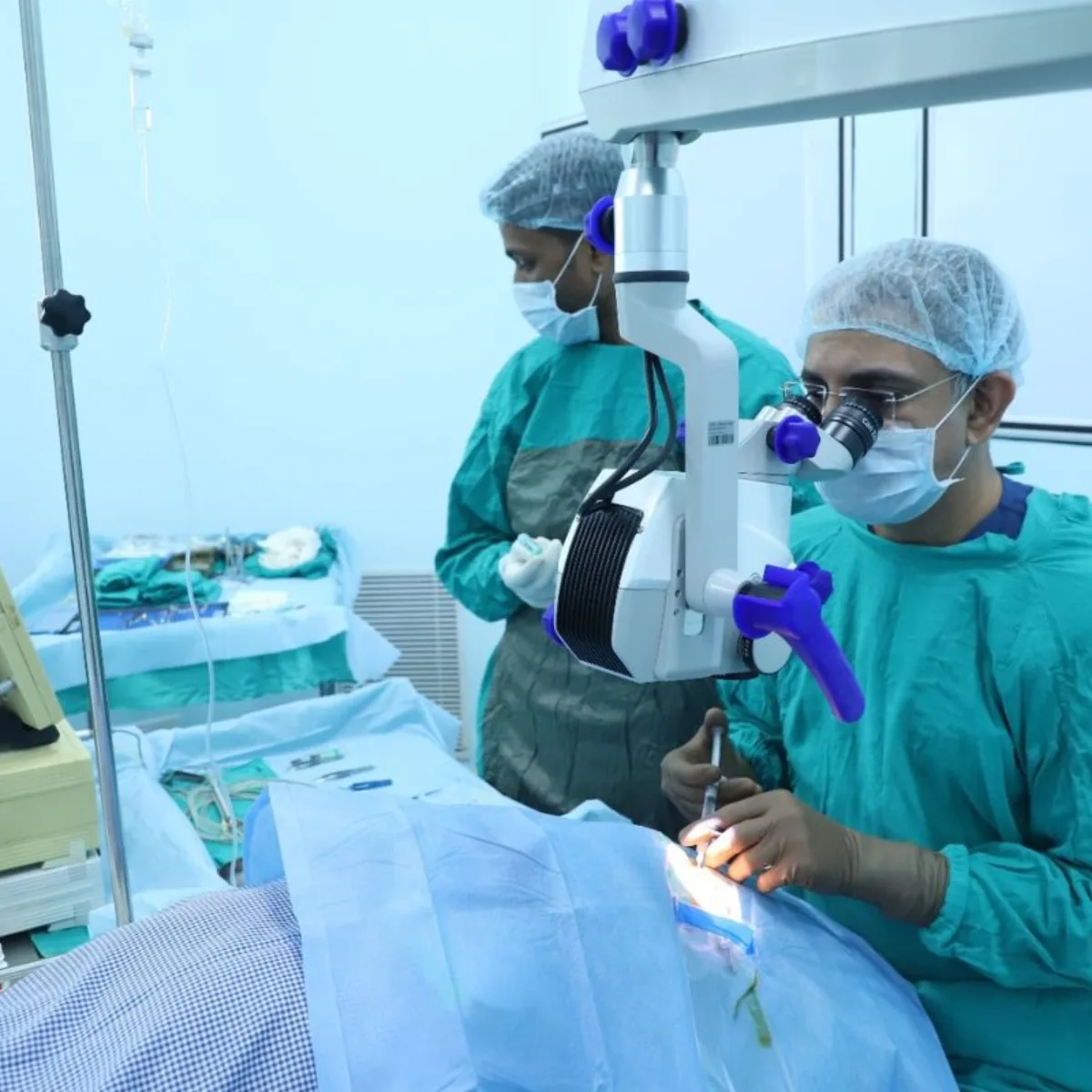
Dayal Eye Centre is a single, NABH-accredited eye hospital in Gurugram — not a chain, and not a separate Jhajjar branch. Many of our patients make the short journey because they want their eyes treated by a genuinely senior specialist, on the same technology used at leading centres, at a fair and transparent price.
Signature procedures backed by fellowship-trained surgeons and FDA-approved laser platforms.
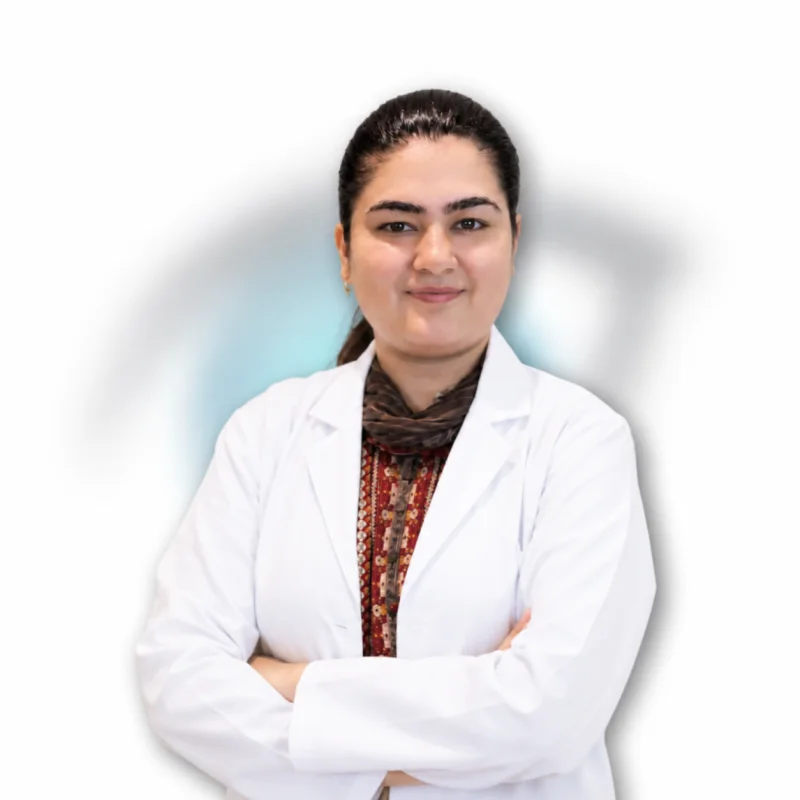
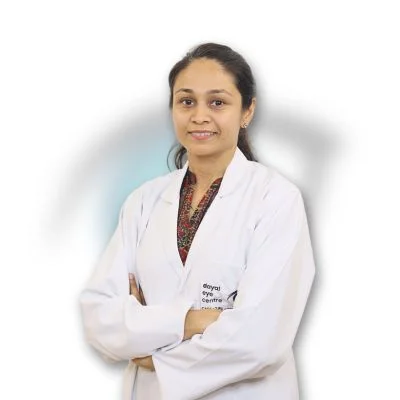
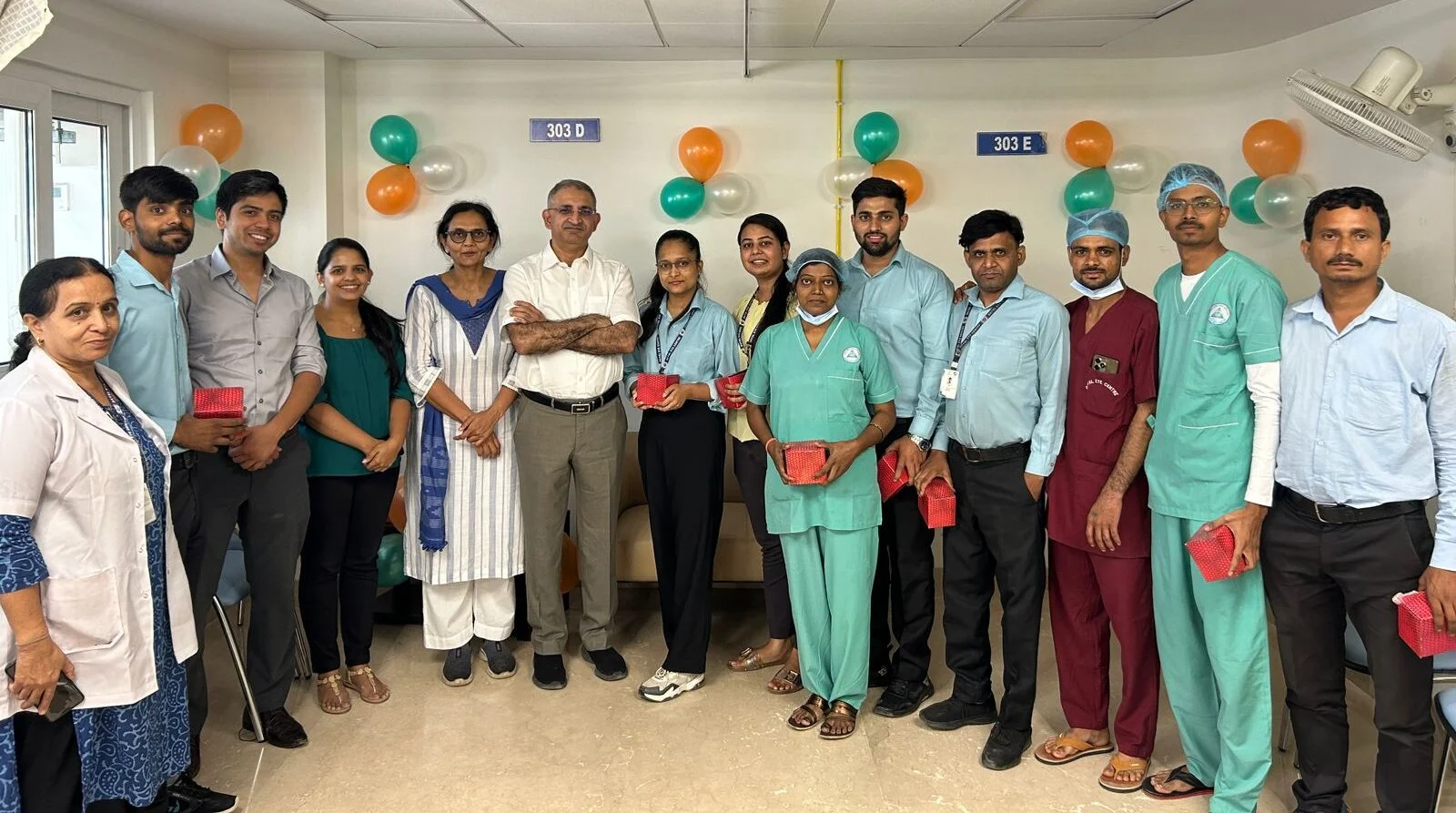
Every sub-specialty is led by a fellowship-trained surgeon — whatever brings you in from Jhajjar, you're seen by someone who treats it every day.
Not sure which treatment you need? Schedule a comprehensive eye check-up and our specialists will guide you.
If either of the first two rows applies, go to the nearest eye casualty today and travel later. Distance should never delay an emergency.
| What You Notice | How Soon |
|---|---|
| Something struck the eye at speed; chemical splash; severe pain | Emergency — same day, nearest facility |
| Sudden loss of vision, or a curtain across the vision | Same day |
| A shower of new floaters with flashes of light | Within 24–48 hours — possible retinal tear |
| Eye pain with headache, nausea and halos around lights | Same day — possible acute glaucoma |
| Diabetes, no complaints, no eye check in the past year | Screening within a few weeks |
| Gradual haze, glare from headlights, frequent change of glasses | Routine — likely cataract |
| A child tilting the head, sitting close to the TV, one eye drifting | Routine, but do not postpone it |
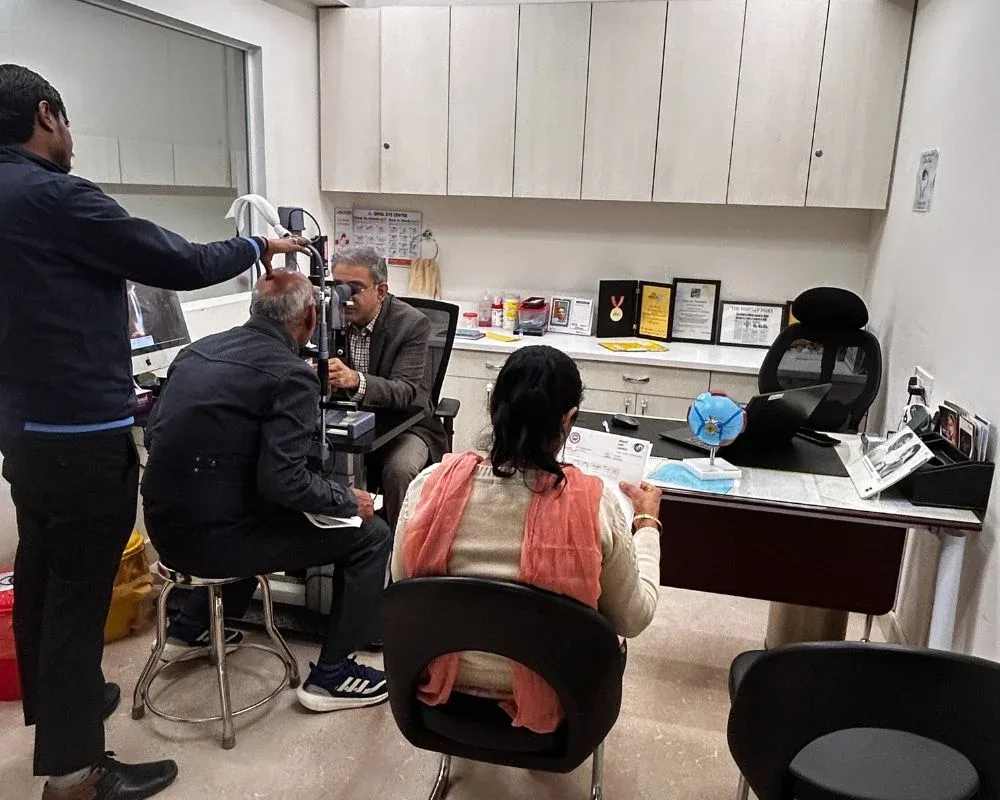
Not sure which of these is you? A single consultation with our doctors tells you exactly where you stand — and we'll tell you plainly if something belongs closer to home.
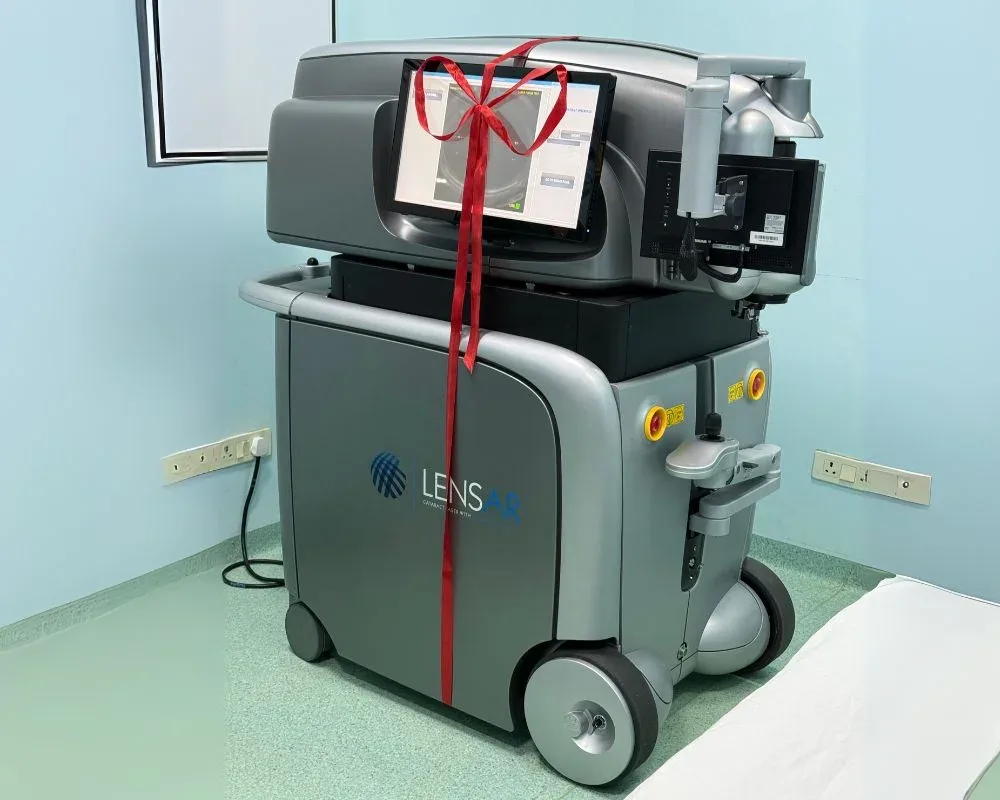
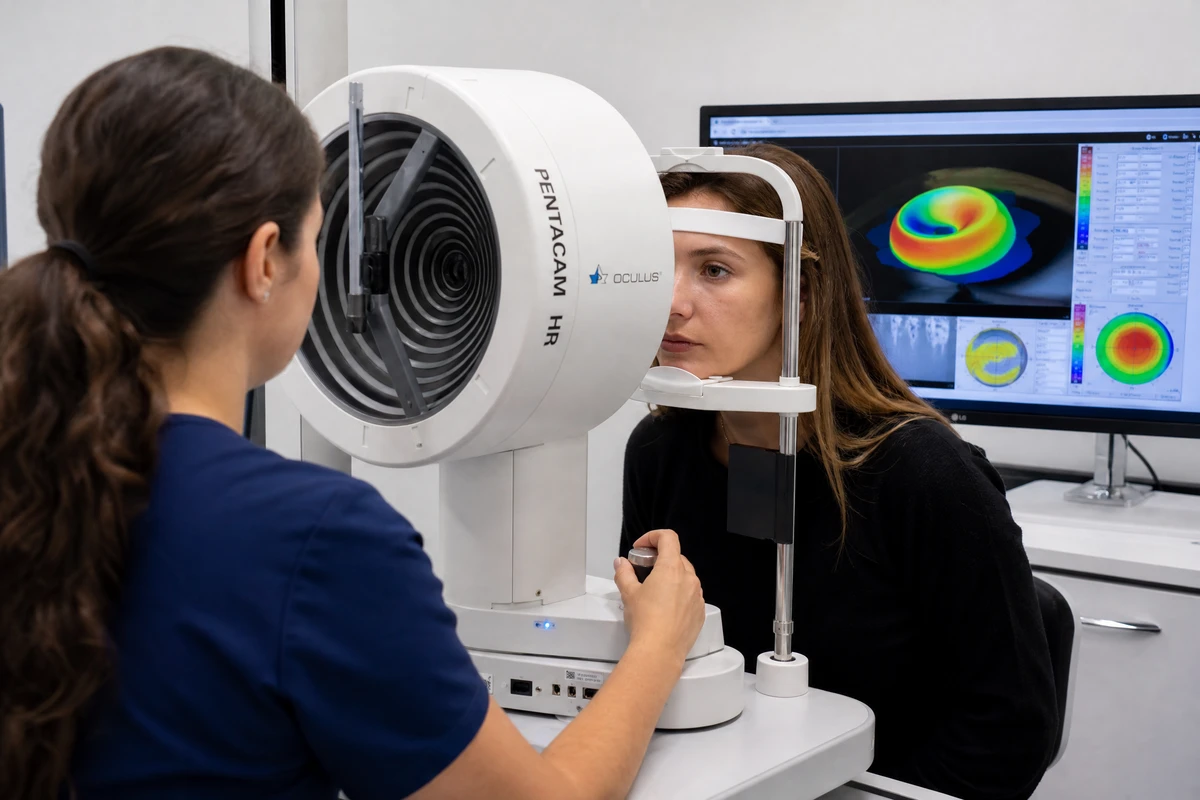
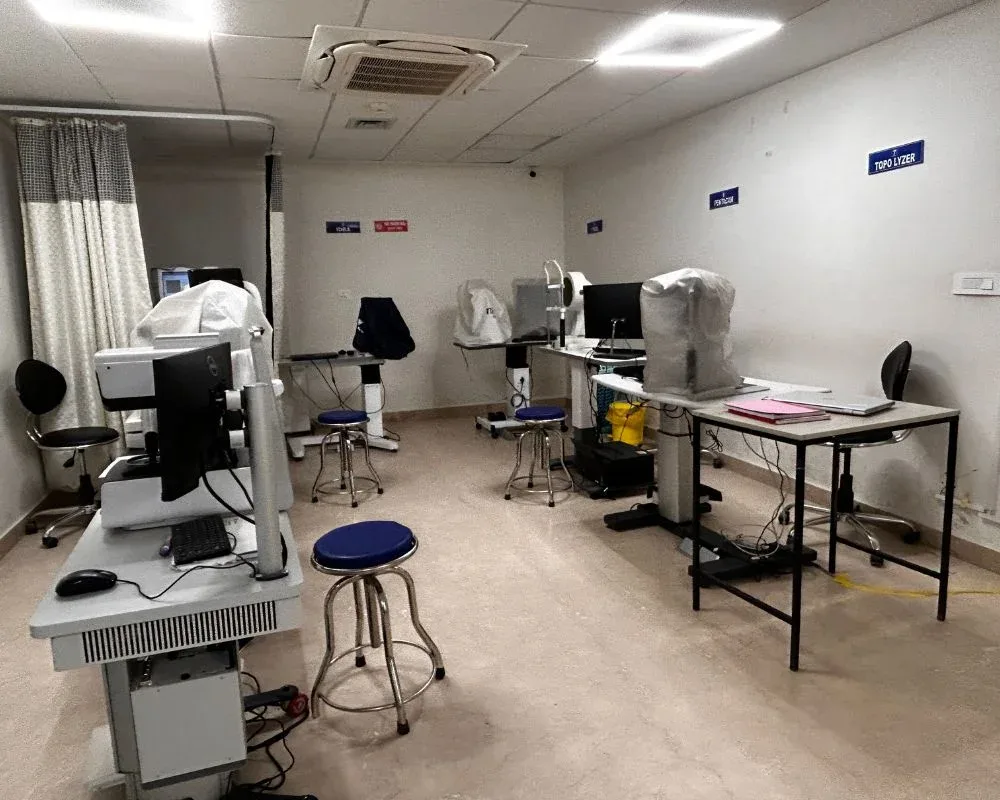
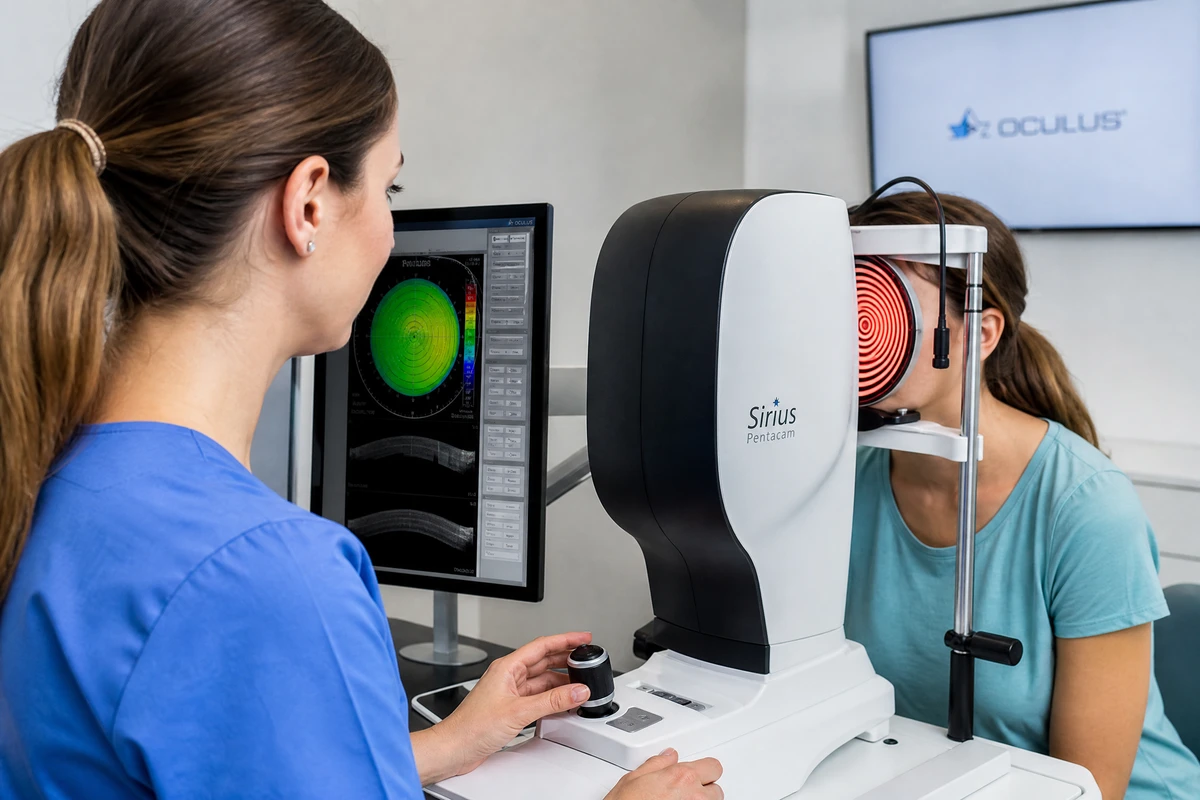
FDA-approved and CE-certified surgical and diagnostic systems, in a NABH-accredited setting with three modular operation theatres.
Five senior sub-specialists, trained at AIIMS New Delhi, Aravind Eye Hospital and internationally.
Jhajjar's catchment is largely agricultural and semi-urban, and that shows up in the clinic in three ways. None of this is cause for alarm — it is worth knowing what to act on.
Published research links cumulative ultraviolet exposure to earlier cataract and to pterygium — the fleshy pink growth that creeps from the corner of the eye onto the cornea in people who work outdoors. A small pterygium needs only monitoring and lubricants.
When it grows towards the pupil, distorts the corneal shape or keeps becoming inflamed, we remove it with a conjunctival autograft, where a small piece of your own surface tissue covers the bare area. Published studies report recurrence is substantially lower with an autograft than with older bare-sclera techniques. It is day care. A cap and wrap-around sunglasses genuinely reduce exposure.
Husk, dust and metal fragments off a thresher cause corneal abrasions and embedded foreign bodies. Do not rub the eye, and please do not use oil, home remedies or leftover steroid drops — steroids on an abraded or infected cornea can turn a small problem into a corneal ulcer and a lasting scar. If pain, watering or blurring is still there after a few hours, have the eye seen the same day. An abrasion caught early usually heals cleanly; an ulcer treated at home for a week is far harder.
Grinding, hammering, welding or working near a running machine can drive a fragment through the eye wall with little pain. Get it examined the same day even if it feels settled.
Early diabetic retinopathy has no symptoms. Your reading vision can be perfectly normal while the small vessels at the back of the eye are already leaking; by the time sight blurs, the disease is usually well established. Caught early, it is often managed with better sugar control and monitoring, with laser or injections if needed.
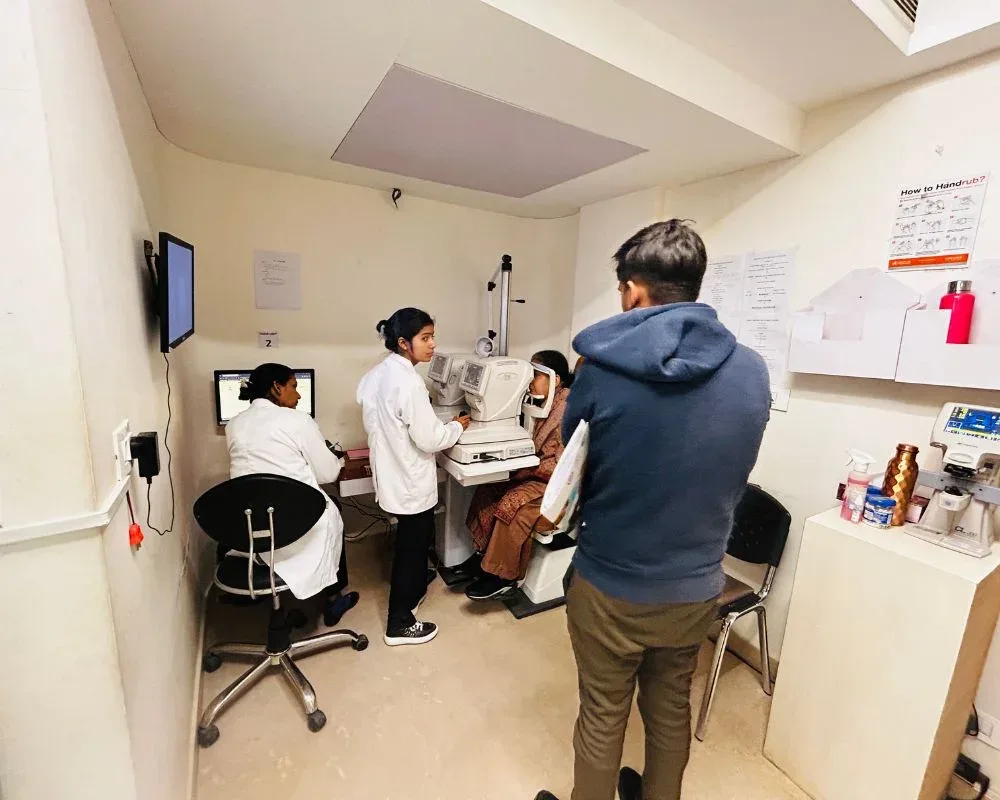
Screening is straightforward: we dilate the pupils with drops, examine the retina and photograph it on the CX-1 Digital Retinal Camera, so this year's images can be compared with next year's. If the macula looks affected we add a scan on the RTVue FD-OCT. Allow two to three hours, and expect blurred vision afterwards — so do not drive yourself home.
Whether or not your vision has changed. Diabetic eye screening is widely missed in district catchments, and it is the check we most often wish patients had had earlier.
These are indicative starting ranges, subject to an individual consultation and eye examination. Your final cost depends on your eyes, the lens or technology chosen and your investigation findings.
| Procedure | Indicative Starting Range |
|---|---|
| Cataract surgery | From ₹26,000 per eye, up to ~₹93,000 by lens type; femto/laser-assisted extra |
| Glaucoma — trabeculectomy / drainage implant | From ₹30,000 · ₹40,000–₹50,000 |
| Laser vision correction (LASIK / SMILE / Contoura) | From ₹40,000 |
| Pre-surgery screening | ₹3,000 – ₹3,500 |
We accept Ayushman Bharat (PM-JAY), CGHS, ECHS and the Health Department, Government of Haryana, plus cashless treatment across a wide list of empanelled insurers and TPAs. For anything not covered, Easy EMI is available through Savein (a nominal processing fee may apply); cataract, retina and LASIK are EMI-eligible. Bring to the first visit your scheme card, Aadhaar, insurance policy and TPA card, earlier prescriptions or discharge summaries, your glasses, and — if you have diabetes — recent blood sugar and HbA1c reports. Full list on our policies and insurance page.
Bring your reports and your scheme card. We'll tell you honestly whether it needs surgery — or whether your local clinic can manage it.
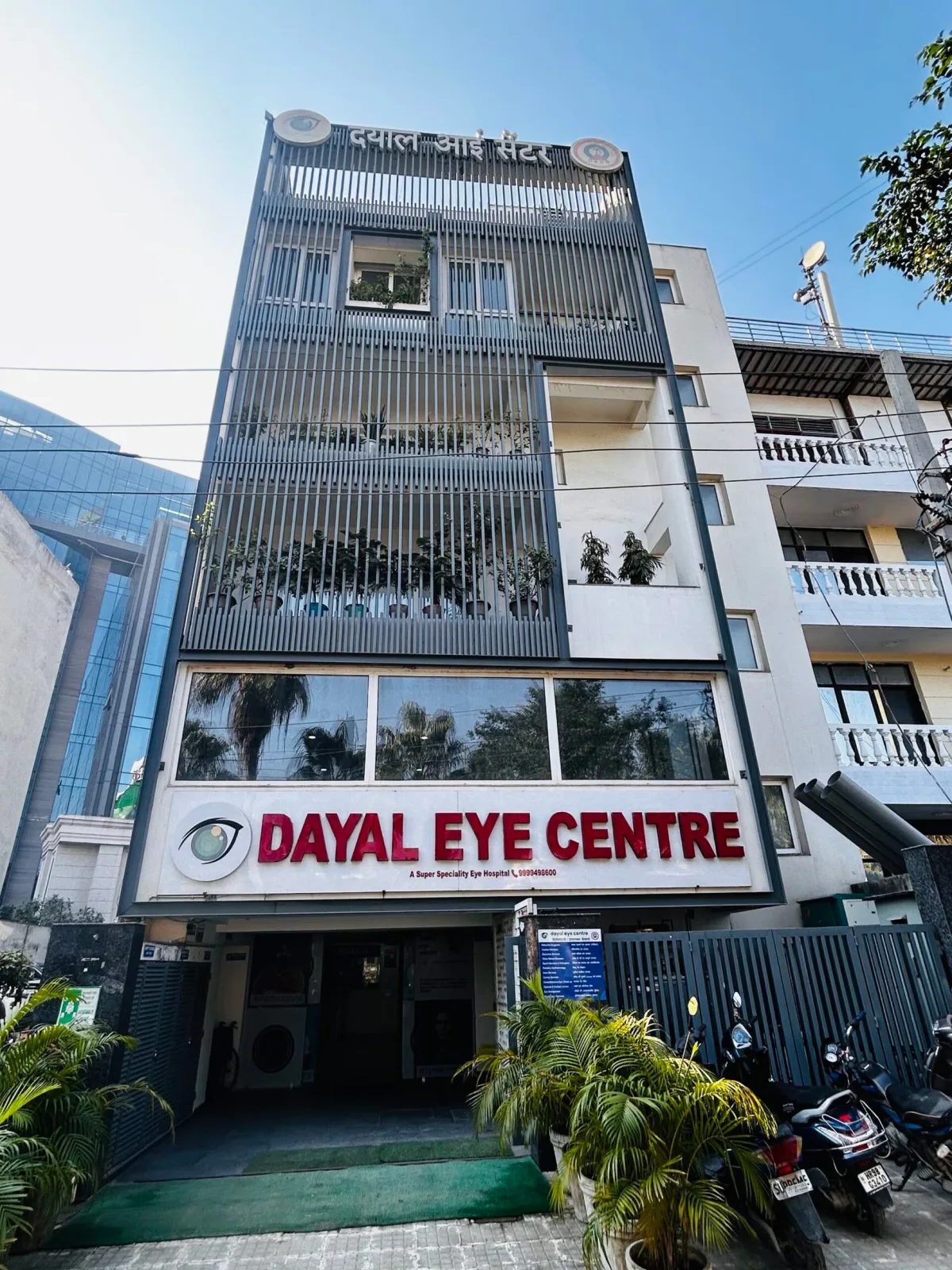
We're at 808 B, Galaxy Road, Sector 15 Part 2, beside 32nd Avenue (about 150 m) and just off NH-48 — tell the driver "32nd Avenue, Sector 15 Part 2". On-site parking, with ramps and lifts for wheelchair access.
The direct route is the Gurugram–Jhajjar Road (SH-22), approximately 55–60 km and typically 80–100 minutes by car — approximate and heavily traffic-dependent, especially past Farrukhnagar. From Bahadurgarh, in the same district but on the Delhi side, most patients find the Western Peripheral (KMP) Expressway or the Najafgarh route easier.
Haryana Roadways services from Jhajjar reach Gurugram Bus Stand / ISBT Sector 12, about 2.5–3 km away; a shared auto or e-rickshaw covers the last stretch. Please check current frequency before you travel.

Via Delhi Metro, IFFCO Chowk on the Yellow Line is the most practical station, roughly 3.5–4 km away — a sensible option for anyone who will be dilated and should not drive home.
"Dayal Eye Centre is a single NABH-accredited eye hospital in Sector 15, Gurugram. We serve patients from Jhajjar and across Delhi-NCR; we do not operate a separate branch in Jhajjar."
A little planning turns a long journey into one workable morning. Here's the honest shape of it.
Leaving Jhajjar by about 7 AM usually lets you finish a consultation, dilated examination and most investigations in one morning, and gets you across the NCR before the worst of the traffic in both directions.
The drops blur vision and cause light sensitivity for four to six hours. Bring someone who can drive, or travel by bus.
Cataract, pterygium, most retinal injections and laser vision correction are same-day day-care procedures, but do not travel back alone. Our in-patient ward has general, semi-private and private rooms if an overnight stay is advised; ward visiting is 8:30 AM to 7:30 PM.
Consultation and biometry, the surgery, a next-day check, a review at about a week. If repeated travel is difficult, say so at the first visit — we can often combine investigations into one day.
For any surgery, suitability depends on a detailed evaluation — not every patient is a candidate, and we will tell you plainly if you are not.
Through our outreach programme, we run 15–20 community eye camps every month across Haryana and Delhi-NCR, screening for cataract, glaucoma and diabetic eye disease close to where people live. If your gram panchayat, school, factory or welfare association would like to host a camp in Jhajjar or Bahadurgarh, write to us.
Results: Individual results vary based on eye condition, prescription/power range, corneal thickness, age, overall eye health and healing response. Outcomes shown or described are not a promise of a specific result.
Pricing: All costs are indicative starting ranges and are subject to an individual consultation and eye examination. They are not a quotation.
Medical: This page is for general information and is not a substitute for a medical consultation, diagnosis or treatment. Please consult with our doctors about your own eyes.
Travel: Distances, drive times, routes, bus and metro details are approximate and depend on traffic and current service patterns. Please check live timings before you travel.