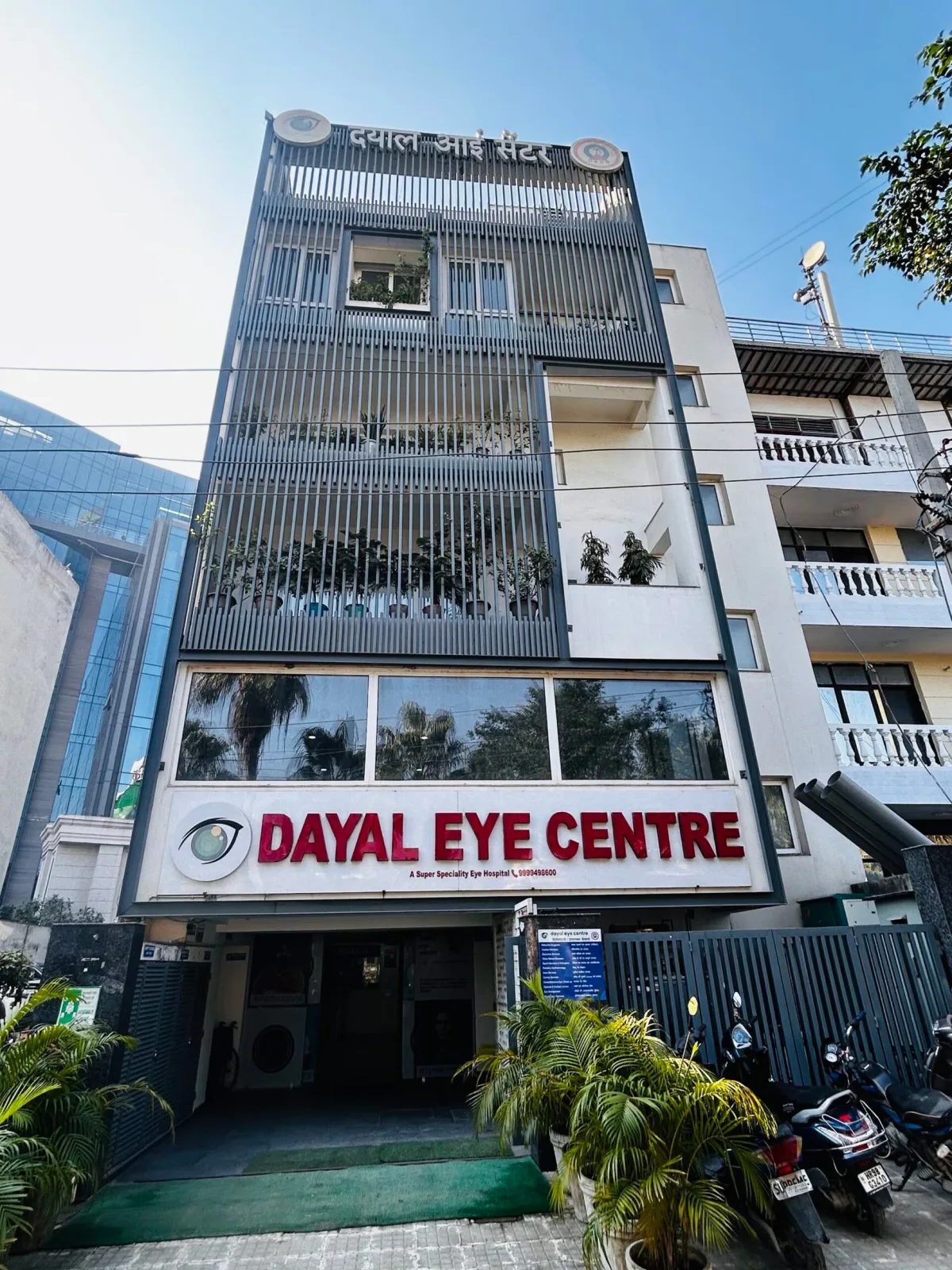
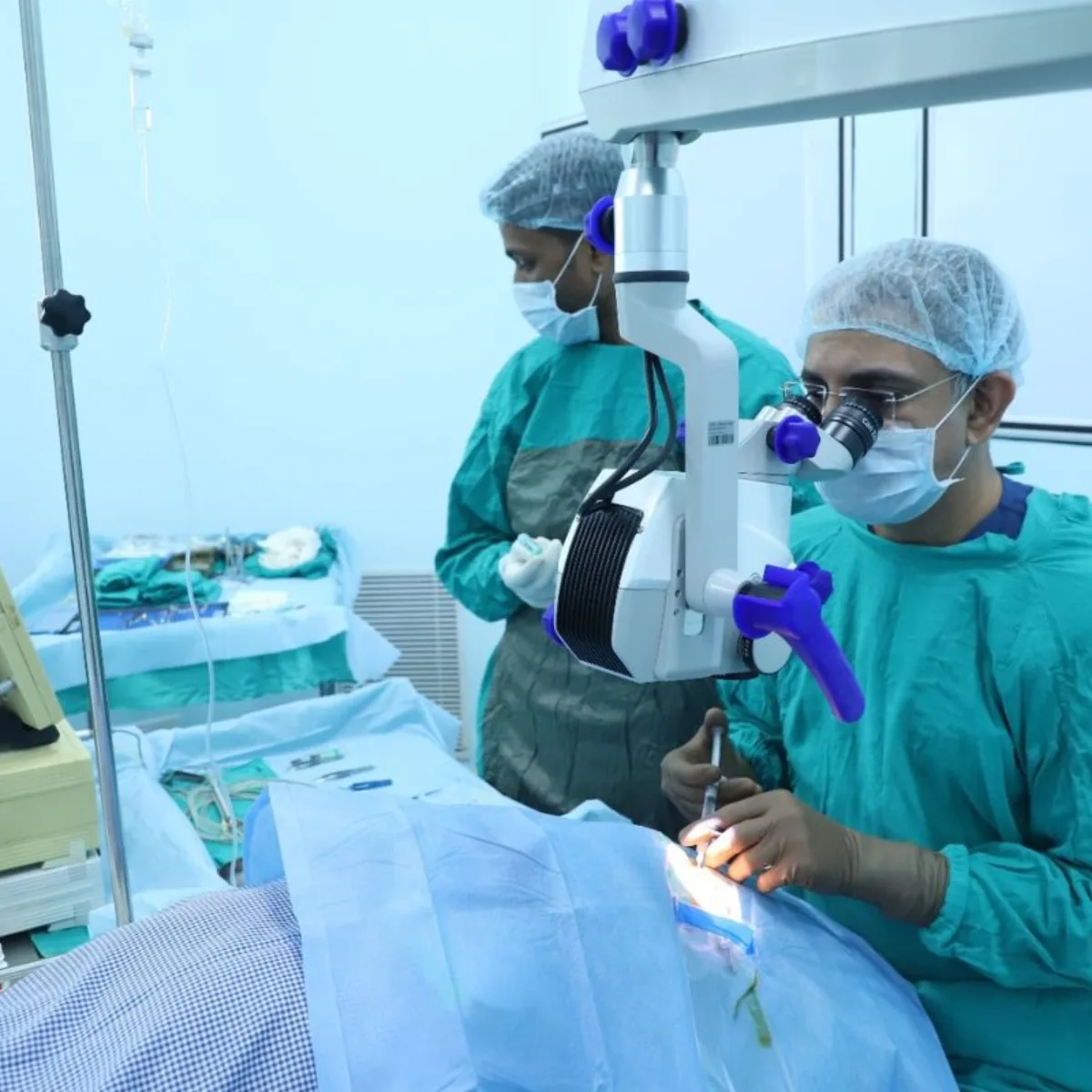
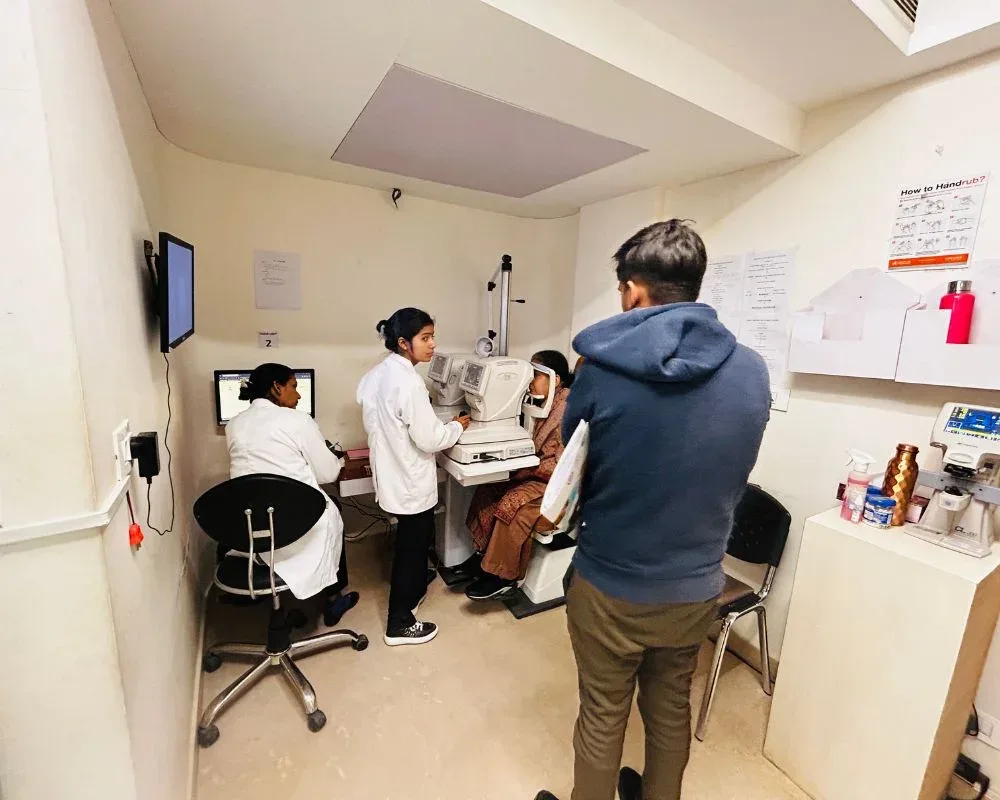
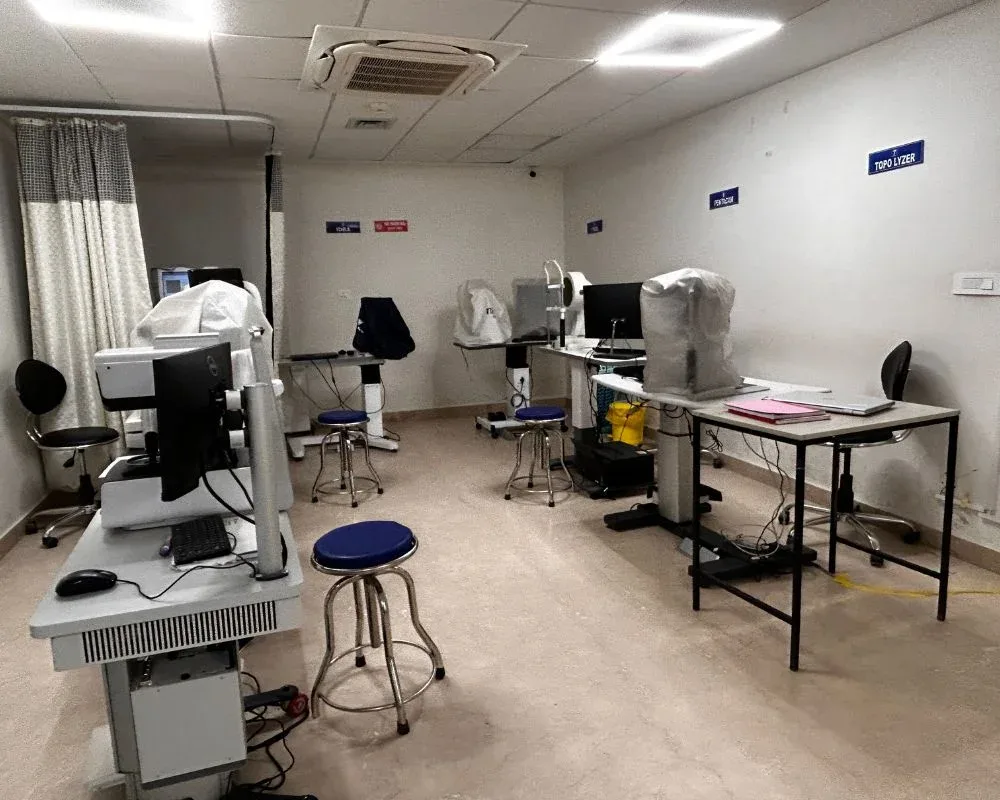
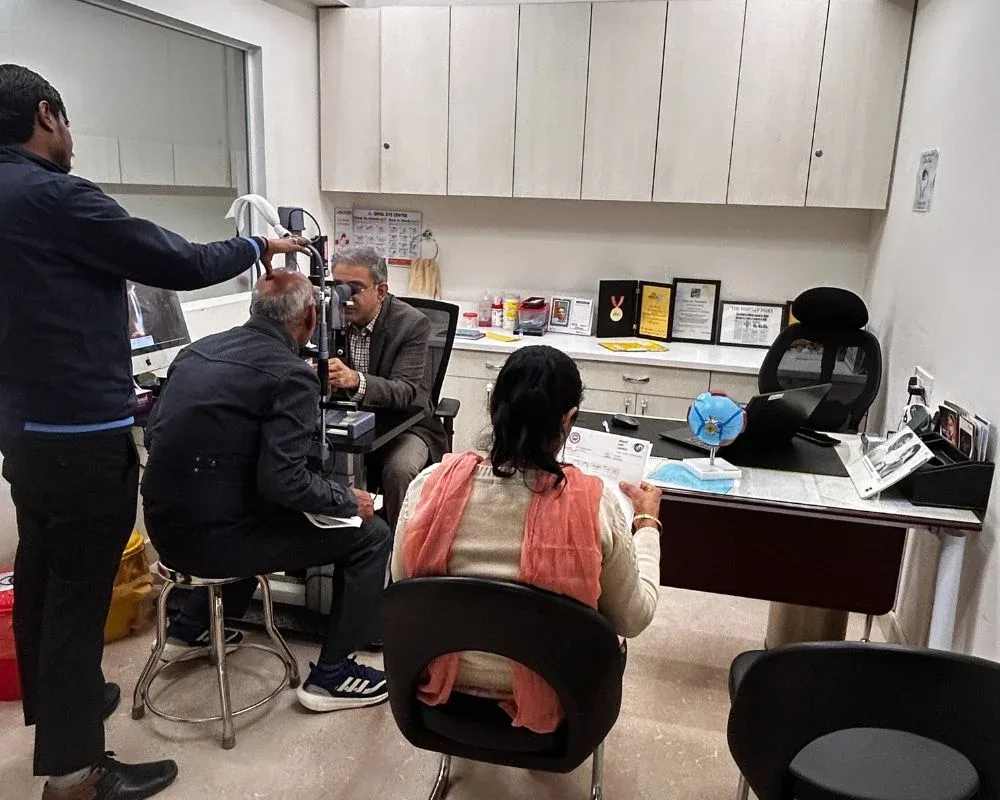
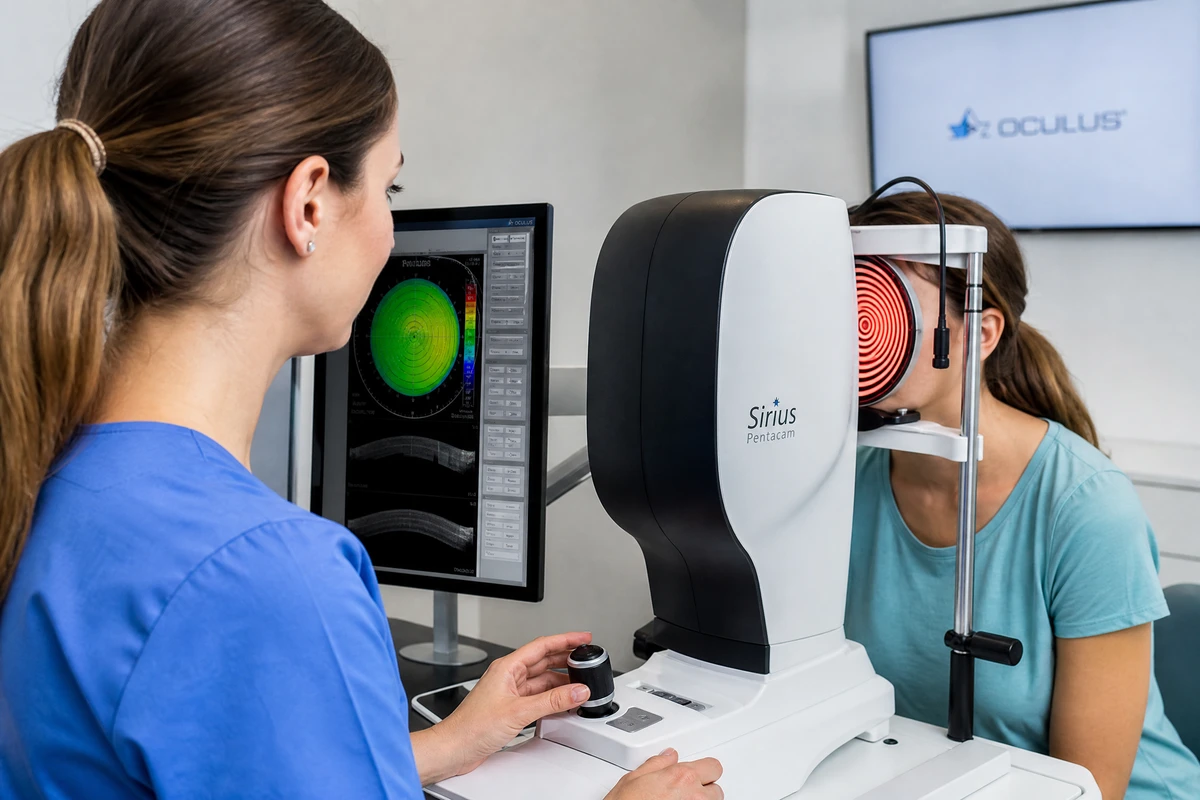
Dayal Eye Centre is a single, NABH-accredited eye hospital in Gurugram — not a chain, and not a separate Farukh Nagar branch. Many of our patients make the short journey because they want their eyes treated by a genuinely senior specialist, on the same technology used at leading centres, at a fair and transparent price.
Signature procedures backed by fellowship-trained surgeons and FDA-approved laser platforms.
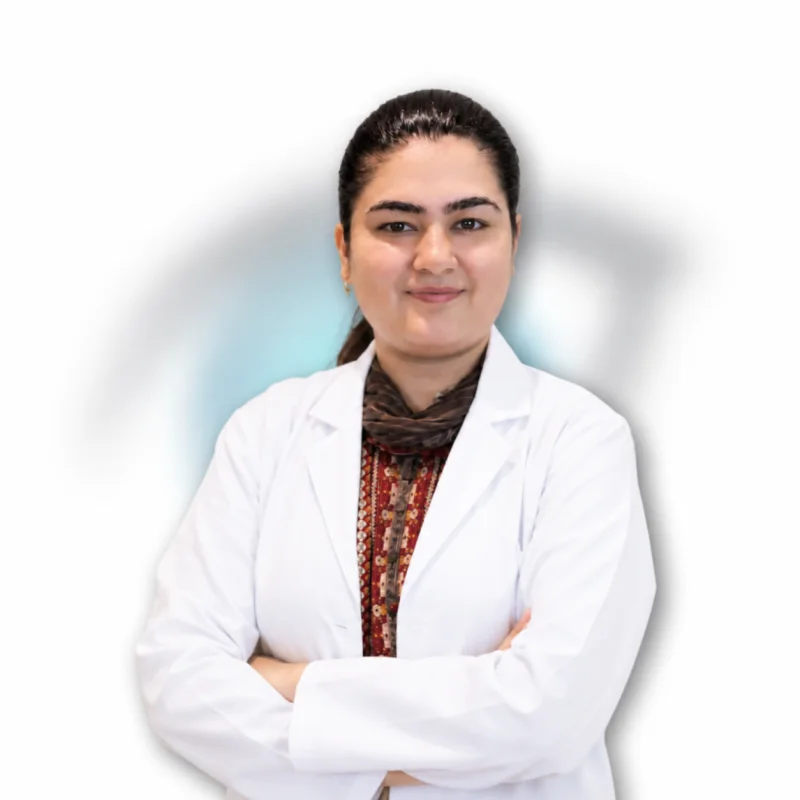
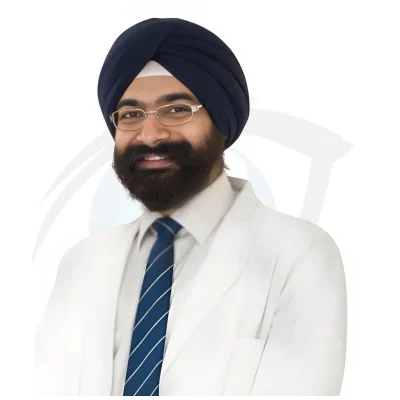
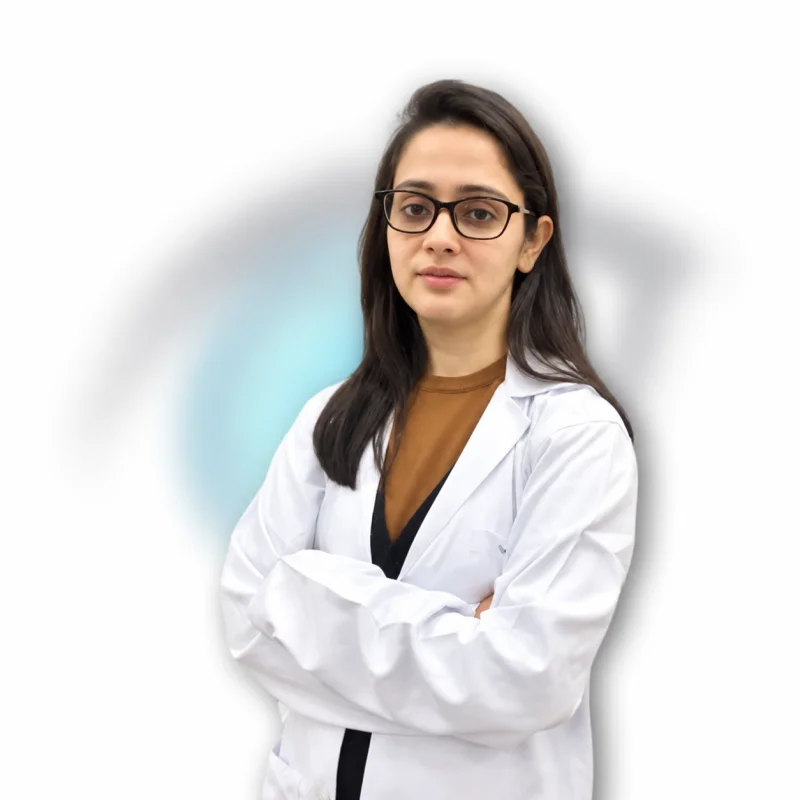
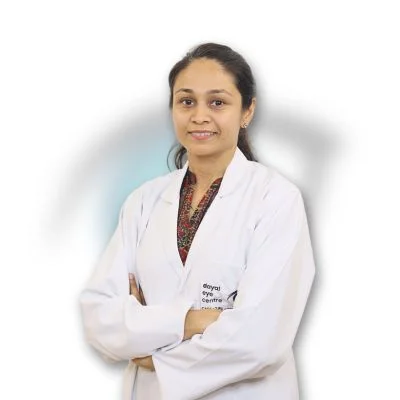
Every sub-specialty is led by a fellowship-trained surgeon — whatever brings you in from Farukh Nagar, you're seen by someone who treats it every day.
Not sure which treatment you need? Schedule a comprehensive eye check-up and our specialists will guide you.
If either of the first two rows applies, go to the nearest eye casualty today and travel later. Distance should never delay an emergency.
| What You Are Noticing | How Soon |
|---|---|
| A blow to the eye, a thorn injury, a spray or chemical splash | Same day — emergency |
| Sudden vision loss, a curtain across your sight, flashes with floaters | Same day — emergency |
| Severe eye pain with redness and haloes around lights | Same day |
| A red, gritty eye with a growing fleshy patch at the corner | Within weeks — likely pterygium |
| Night driving difficult, headlight glare, reading has stopped | Within weeks — likely cataract |
| Diabetes, age 40+, or glaucoma in the family, and no recent check | Within a month, even with no symptoms |
| A child’s eye turning, head tilting, or trouble reading the board | Within weeks — do not wait |
Not sure which of these is you? A single consultation with our doctors tells you exactly where you stand.
FDA-approved and CE-certified surgical and diagnostic systems, in a NABH-accredited setting with three modular operation theatres.
Five senior sub-specialists, trained at AIIMS New Delhi, Aravind Eye Hospital and internationally.
This catchment skews older, and two age-related conditions account for most of what we see from your side of the district. They behave very differently, which is why one is treated late and the other missed entirely.
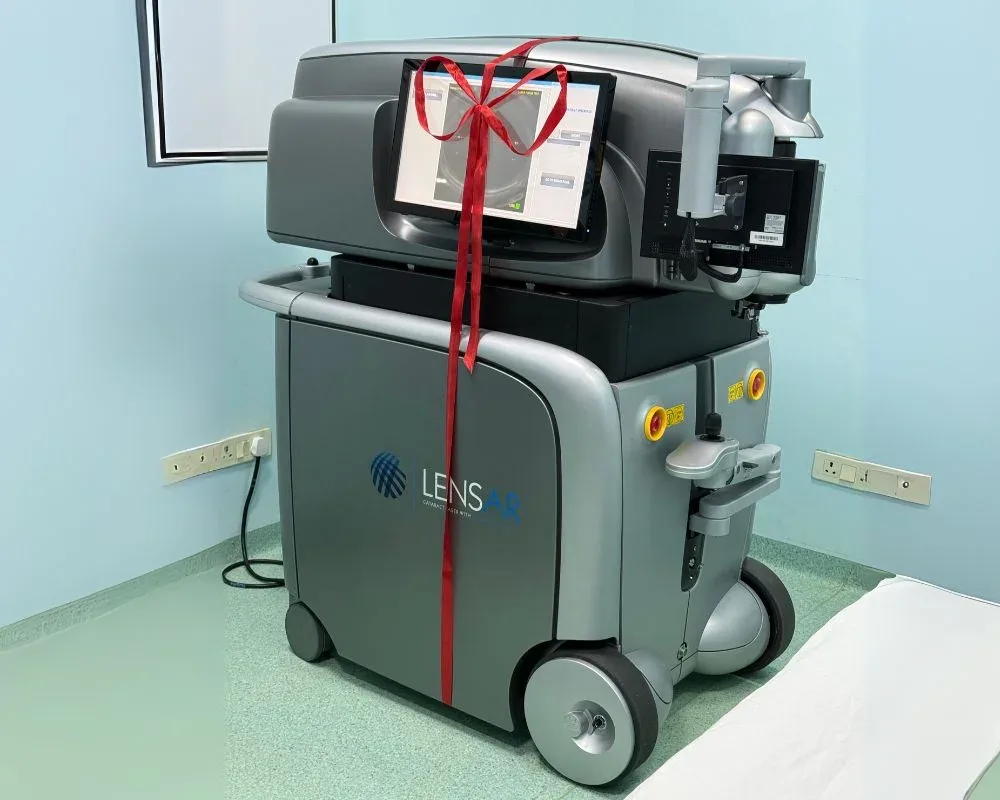
Cataract (motiyabind, safed motia) is clouding of the eye's natural lens. Vision dims slowly, night glare worsens, colours flatten and reading stops. No drop clears it — the clouded lens is replaced with a clear artificial one, an IOL. In phacoemulsification (Phaco, or MICS in its micro-incision form) the surgeon works through a very small opening, softens the cloudy lens with ultrasound and places the new one. That is the standard approach and what most patients have. In FLACS, a femtosecond laser performs some of the finest steps first; it costs more and is not needed in every eye.
The lens matters as much as the technique. A monofocal IOL gives clear vision at one distance, with reading glasses still used; a toric IOL also corrects astigmatism; a multifocal IOL aims to reduce dependence on glasses at more than one distance. Suitability depends on a detailed evaluation — not every patient is a candidate, and we will tell you plainly if you are not.
Glaucoma (kala motia) is the opposite. It takes sight from the edges inward, without pain, while the central vision you test yourself with stays sharp until late. Damage already done cannot be reversed, which is why screening exists — to protect the sight you still have. A pressure check, an optic nerve examination and a field test take one appointment.
Under our outreach programme we screen for cataract, glaucoma and diabetic eye disease close to where people live. If a village or mohalla in Farrukhnagar tehsil would like one, call and we will see what can be scheduled.
Enquire About a CampMuch of this tehsil works in the fields, on tractors and outdoors through the summer, and that changes the eye problems we expect.
Published research consistently links cumulative ultraviolet exposure to earlier cataract and to pterygium — the fleshy, wing-shaped growth that creeps from the corner of the eye onto the cornea. Left alone it can distort the corneal surface, blur vision and keep the eye red and gritty. We treat it by pterygium excision with a conjunctival autograft, which lowers the chance of it returning compared with removal alone.
A corneal foreign body or surface scratch is the commonest field injury we see, and two things make it worse — rubbing, which drags the particle across the cornea, and home remedies such as surma, oil or leftover steroid drops, which can turn a minor abrasion into a serious infection.
Instead: do not rub, rinse gently with clean water, cover the eye and have it examined. Under a slit lamp a foreign body usually comes out in minutes. Come the same day after a thorn or plant injury or a fertiliser splash — plant injuries carry a real risk of fungal infection.
The eye complication diabetes causes gives no warning early on: no pain, no redness, no blurring while the damage begins. By the time vision changes, treatment is harder. Anyone with diabetes should have a dilated retinal examination once a year, and published guidance is consistent that this should begin at diagnosis for type 2 diabetes rather than years later.
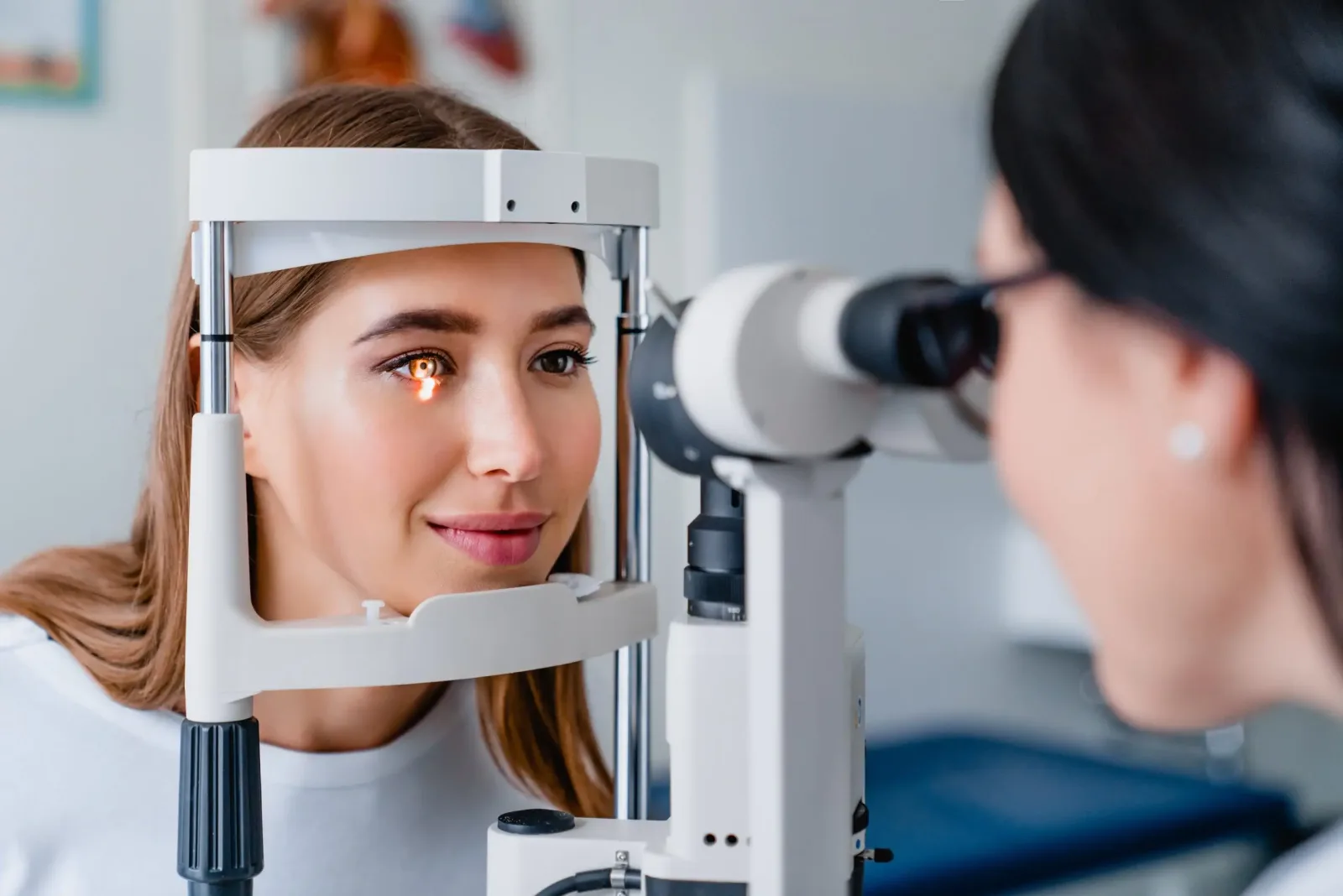
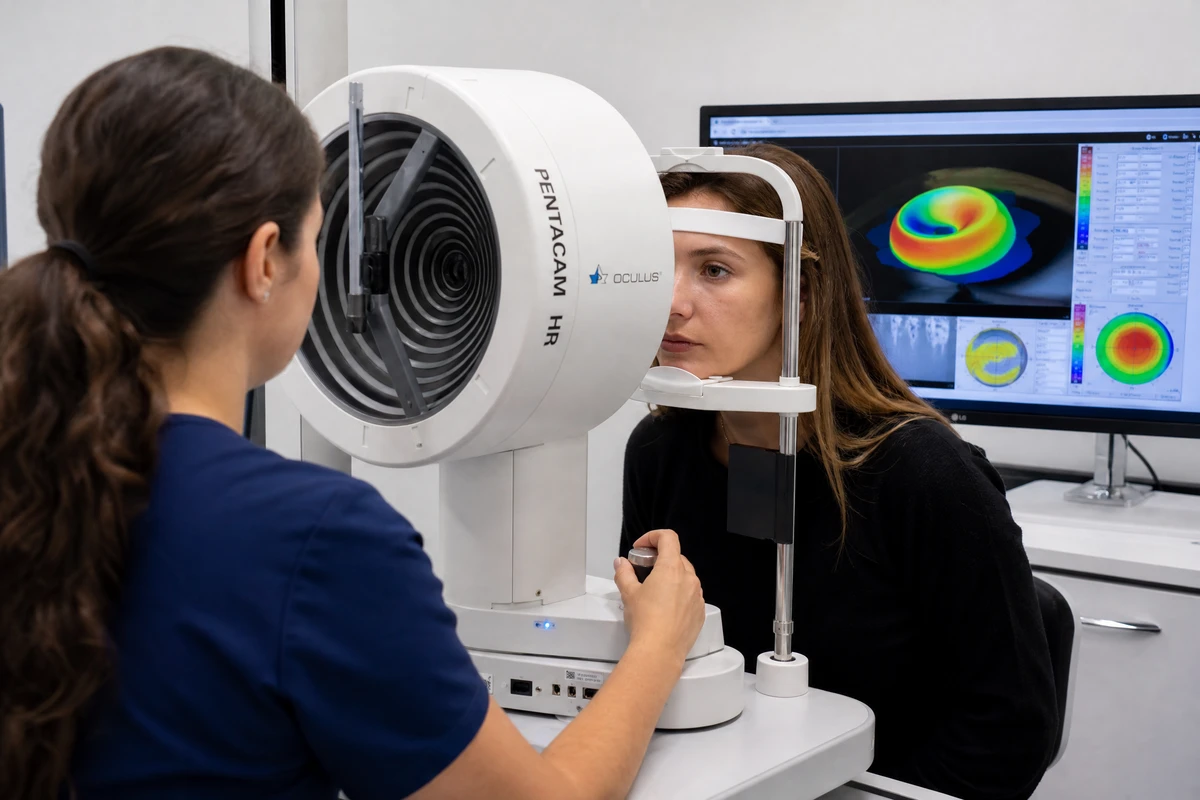
Drops widen the pupil over 30–40 minutes, our retina specialist examines the back of both eyes, and we photograph the retina on the CX-1 Digital Retinal Camera so this year's images can be compared with next year's. Where the macula needs closer study we scan it on RTVue FD-OCT. Diabetic retinopathy is treatable, but earlier is easier — and vision stays blurred afterwards, so bring someone with you.
A child's first eye test should not wait for a complaint. A newborn check, one around age three and one before school starts are the sensible points — earlier if squint, high power or lazy eye runs in the family.
Watch for an eye that turns in or out (bhengapan, squint), a habitual head tilt, one eye closing in bright light, or copying wrongly from the blackboard. Squint is not outgrown and is not only cosmetic: the brain can start ignoring the weaker eye, which is amblyopia, or lazy eye. Amblyopia responds well when treated young and much less well later, so if a school screening has flagged your child, act on it. Dr. Digvijay Singh, who trained 12 years at AIIMS New Delhi, handles paediatric ophthalmology and squint surgery here.
Femto and laser-assisted cataract surgery cost extra. These are indicative starting ranges, subject to an individual consultation and eye examination. Your final cost depends on your eyes, the lens or technology chosen and your investigation findings.
| Procedure | Indicative Starting Range |
|---|---|
| Cataract surgery, per eye (varies by lens) | ₹26,000 – ₹93,000 |
| — Monofocal IOL | ₹18,000 – ₹50,000 |
| — Toric IOL | ₹45,000 – ₹75,000 |
| — Multifocal IOL | ₹15,000 – ₹90,000 |
| Glaucoma laser | ₹35,000 – ₹40,000 |
| Trabeculectomy / drainage implant | ₹30,000 – ₹50,000 |
| Standard LASIK | From ₹40,000 |
| SMILE | From ₹1,25,000 |
| Pre-surgery screening | ₹3,000 – ₹3,500 |
We accept Ayushman Bharat (PM-JAY), the Health Department, Government of Haryana, CGHS and ECHS, plus cashless treatment across empanelled insurers and TPAs — Star Health, Niva Bupa, HDFC ERGO and TATA AIG among them, with TPAs including Medi Assist and MD India. Easy EMI via Savein applies to cataract, retina and LASIK; a nominal processing fee may apply. Bring your PM-JAY, Haryana Government, CGHS, ECHS or insurance card with a government photo ID and any referral letter, and call +91 81786 39701 a day or two ahead so pre-authorisation can start. The full list is on our policies and insurance page.
If you speak for a panchayat, school, temple or gurudwara committee, a farmers' group or a factory anywhere in Farrukhnagar tehsil, write to us or WhatsApp +91 81786 39701 and we will see what can be arranged.
Take the Gurugram–Farrukhnagar Road towards Gurugram city, joining the Jhajjar Road corridor, then on to Sector 15 Part 2 — approximately 25–28 km, typically 45 to 60 minutes. We are beside 32nd Avenue, about 150 metres away, just off NH-48. Tell any driver "32nd Avenue, Sector 15".
| From Farrukhnagar | Detail |
|---|---|
| Approximate road distance | ~25–28 km |
| Approximate drive time | ~45–60 minutes, traffic-dependent |
| Main route | Gurugram–Farrukhnagar Road towards Gurugram city, onto the Jhajjar Road corridor, then Sector 15 Part 2 |
| Public transport | Buses and shared vehicles from Farrukhnagar towards Gurugram Bus Stand / ISBT Sector 12 (~2.5–3 km from us); autos and e-rickshaws from there |
| Finding us | Beside 32nd Avenue, about 150 m away, just off NH-48 — tell any driver “32nd Avenue, Sector 15” |
| Parking and access | On-site parking; ramps and lifts for wheelchair access |
Distances and times are approximate and traffic-dependent; the final stretch inside Gurugram is the slowest at peak hours. Ask for an early slot for a first full evaluation. You will almost certainly be dilated, so near vision stays blurred for a few hours and bright light feels harsh: do not plan to drive yourself back. Bring an attendant or arrange a cab, and carry sunglasses.
"Dayal Eye Centre is a single NABH-accredited eye hospital in Sector 15, Gurugram. We serve patients from Farukh Nagar and across Delhi-NCR; we do not operate a separate branch in Farukh Nagar."
A little planning turns a single-road run into one workable morning. Here's the honest shape of it.
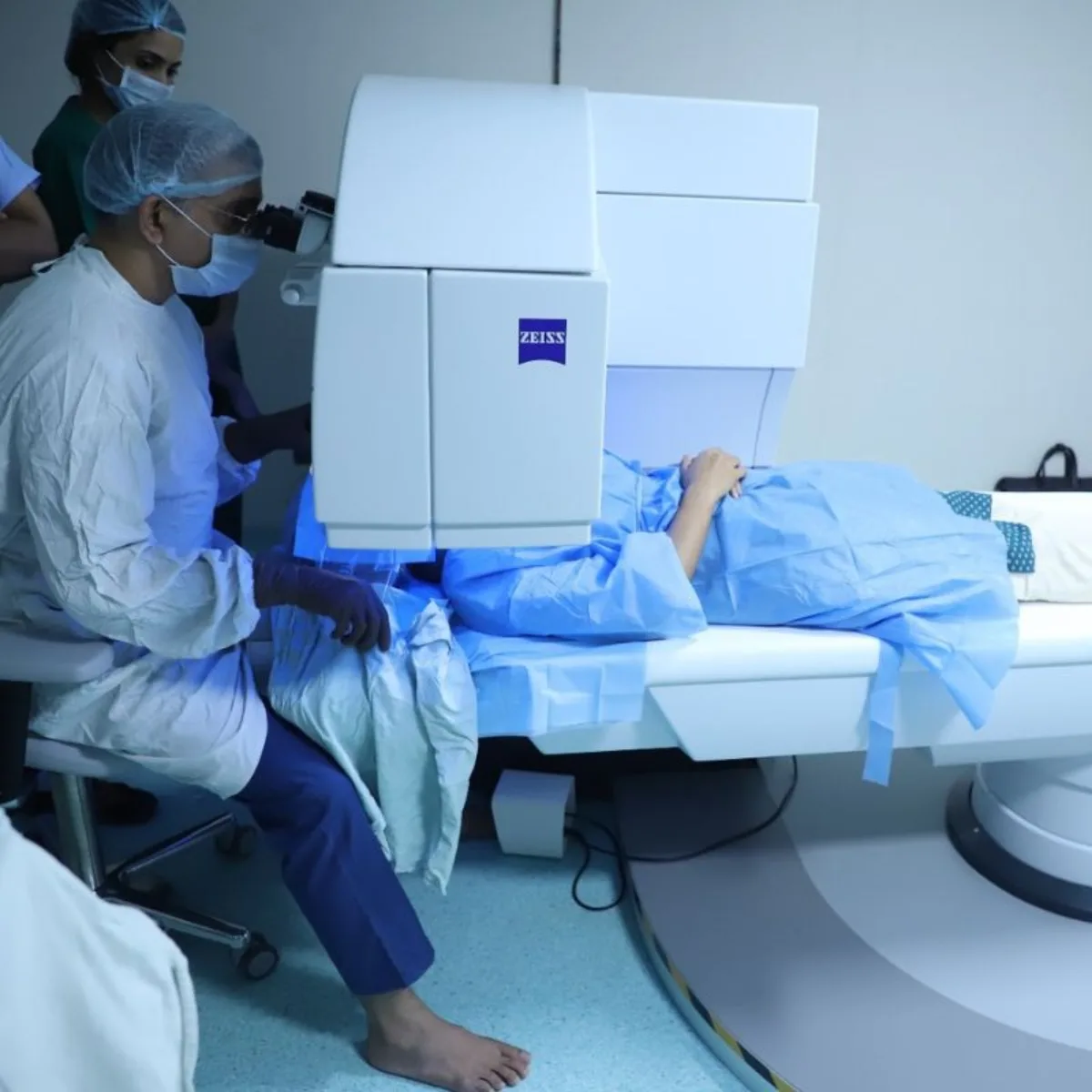
Cataract surgery, laser vision correction and many retina treatments are same-day day care — in by morning, home the same evening. The in-patient ward is there if an overnight stay is advised, which for an elderly patient travelling in from a village is sometimes the calmer choice.
Consultation and workup, the day of surgery, then the first review, with further reviews over the following weeks. The two eyes are done on separate occasions.
Where it is clinically safe, our doctors will combine tests into one visit so you make the drive from Farrukhnagar as few times as possible.
If repeated travel is difficult, say so at the consultation: where it is clinically safe our doctors will combine tests into one visit.
Results: Individual results vary based on eye condition, prescription/power range, corneal thickness, age, overall eye health and healing response. Outcomes shown or described are not a promise of a specific result.
Pricing: All costs are indicative starting ranges and are subject to an individual consultation and eye examination. They are not a quotation.
Medical: This page is for general information and is not a substitute for a medical consultation, diagnosis or treatment. Please consult with our doctors about your own eyes.
Travel: Distances, drive times, routes and shared-transport details are approximate and depend on traffic and current service patterns. Please check live timings before you travel.