NABH Accredited 20+ Years 1.2 Lakh+ Surgeries International Patients Mon–Sat · 8:30 AM–7:30 PM +91 81786 39701
NABH Accredited
Dayal Eye Centre
Contact
Book an AppointmentHow would you like to go ahead?
Self BookingPick your doctor, date and slot. Booking RequestLeave your number — our counsellors call you. Mon–Sat 8:30 am – 7:30 pm · Sunday closed
NABH · Gurugram

Need a second opinion on your eyes?

Leave your number. A specialist calls you back today.

Available now

Call us from your phone

Copy the number, or leave your details and we will call you back.

+91 81786 39701

Mon–Sat · 8:30 AM–7:30 PM · Sector 15, Gurugram
Refractive Condition

Hyperopia (Farsightedness) Treatment in Gurgaon

Farsightedness makes near work tiring and, at higher powers, blurs distance too. Whether your plus power is mild or high, our refractive specialists match the right correction to your eyes — glasses, LASIK, Contoura Vision or a lens-based option — all under one NABH-accredited roof.

NABH Accredited
1.2 Lakh+ Surgeries
LASIK · Contoura · ICL
Specialist-Led
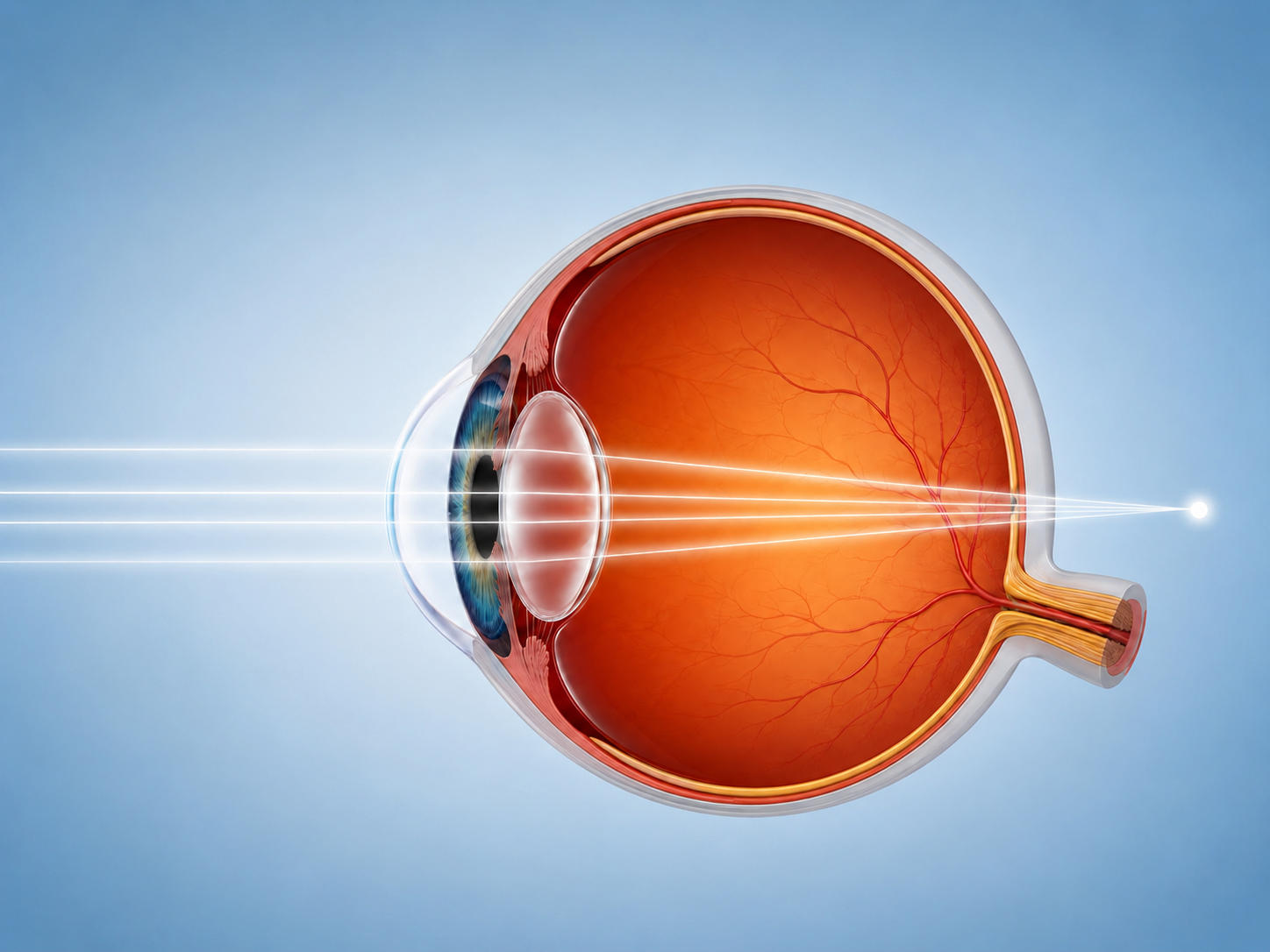
Diagram — how a farsighted eye focuses light behind the retina

In a hyperopic eye, light focuses behind the retina — so near blurs first

In Short

Hyperopia is a refractive error: the eye is slightly too short, or its focusing power too weak, so light comes to a focus behind the retina. Near vision blurs first; with a higher power, distance blurs too, and the eyes tire from constant over-focusing.

It is not a disease of the eye, and in adults it does not go away on its own. But it can be corrected — often with real freedom from glasses — once we know your exact power and the health of your cornea.

Also Called

Farsightedness · Long-sightedness · “Plus power” (+) · Door ka saaf, paas ka number

Specialty

Refractive Services & Paediatric Ophthalmology

20+
Years of refractive expertise in Gurgaon
1.2 Lakh+
Surgeries performed at the centre
4
Ways to correct hyperopia, matched to your eyes
NABH
Accredited multi-speciality eye hospital
Is It You?

Is Hyperopia Treatment Right for You?

In hyperopia the eye is slightly shorter than usual, or its focusing power too weak, so light focuses behind the retina. Close objects — and, at higher powers, distant ones too — look blurry, and the eye’s focusing muscles work overtime to compensate. That constant extra effort is why many farsighted patients notice tired eyes, brow-ache headaches after reading, or difficulty with prolonged near tasks even when distance vision seems fine.

Younger eyes can mask a small plus power by focusing harder, which is why hyperopia often goes unnoticed for years and becomes more obvious with age as the eye’s focusing reserve reduces. A consultation may help if you recognise any of these:

Near work tires you — reading, phones, laptops — and your eyes ache or feel strained by evening.

Your near vision is blurry, and sometimes your distance vision is soft too.

You get headaches around the eyes or brow after focusing tasks.

You already wear a plus-power (“+”) prescription and want to explore reducing your dependence on glasses.

You are an adult with a stable power who wants to know whether laser or lens-based correction suits you.

10.2%

of India’s population lives with uncorrected refractive error — the point of a consultation is to make sure yours is not one of them.

Source: Honavar, Indian Journal of Ophthalmology, 2019. A general research finding, not a figure specific to any patient.

When to see a doctor

Persistent eye strain or headaches after near work, blur that does not settle with rest, a child who squints, tilts the head or has one eye drifting inward, or any sudden change in vision — each deserves a proper eye examination rather than waiting it out.

Your Options

Which Path Suits You? Your Options for Correcting Hyperopia

There is no single right treatment — the choice depends on how much plus power you have, the health and thickness of your cornea, your age and your lifestyle. Because we offer the full ladder of laser and lens-based options under one roof, our surgeons match the method to your eyes, not the other way round.

OptionHow It WorksTends to Suit
Glasses / Contact LensesNon-surgical; a plus-power lens does the focusing for you.Anyone, including children and those not ready for surgery.
LASIK / Contoura Vision (laser)Reshapes the cornea (Alcon WaveLight EX500) to correct the focusing error.Adults with low-to-moderate hyperopia, stable power, healthy and adequately thick cornea.
Phakic IOL / ICLA thin lens placed inside the eye, natural lens untouched; removable.Higher plus powers, thin corneas or dry eyes where laser is not ideal.
Refractive Lens ExchangeThe eye’s natural lens is replaced with a clear artificial lens implant.Older adults, higher powers, or where presbyopia or early lens changes are also present.

This page keeps procedure detail brief — explore LASIK, personalised Contoura Vision and lens-based ICL on their own pages. Whichever route we discuss, the aim is the same: to reduce your dependence on glasses safely, with a plan built around your eyes.

Laser Correction

Can Farsightedness Be Corrected With LASIK?

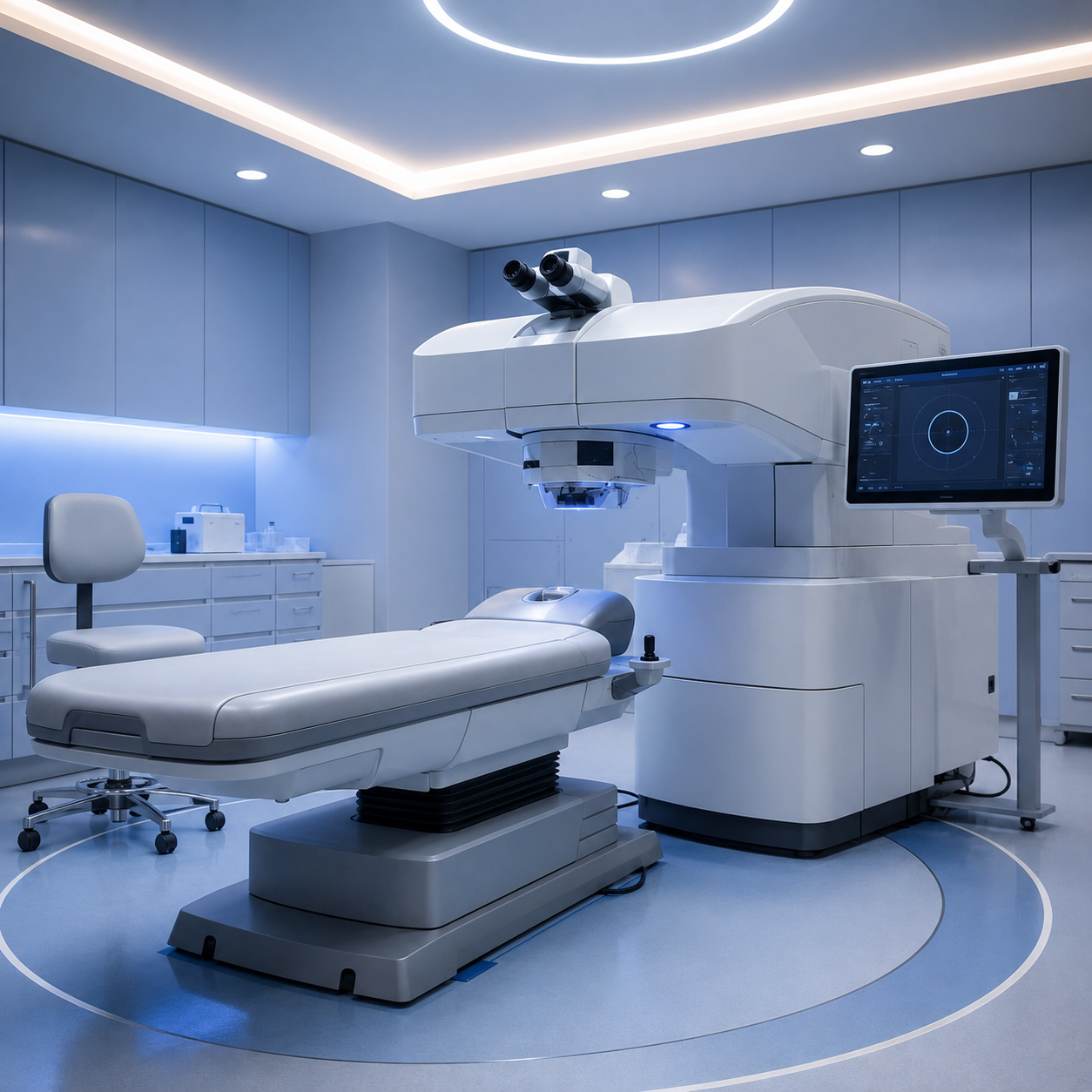
For many patients, yes. Modern excimer lasers steepen the central cornea to bring near — and where needed, distance — vision back into focus. Both LASIK and topography-guided Contoura Vision are used to correct suitable plus powers, often alongside any astigmatism in the same treatment. In well-selected patients, the American Academy of Ophthalmology notes that about 9 in 10 LASIK patients achieve 20/20 to 20/40 vision without glasses.

Laser vision correction suite at Dayal Eye Centre
Lens-Based Routes

What If My Power Is High?

Higher hyperopic powers, thin corneas or very dry eyes can put laser correction outside its effective range — but that does not mean surgery is off the table. For these eyes, a lens-based approach is often the more appropriate path.

When Lens-Based Correction Is Considered

Your plus power is higher than laser can reliably and predictably correct.

Your cornea is too thin, or its shape is not ideal for a laser ablation.

You are prone to dry eye, where a lens-based route is often more comfortable.

Your natural lens is already losing clarity or focusing flexibility with age.

After 40

What Happens After 40 — Hyperopia and Presbyopia

Patients often confuse the two, so let us untangle them. Hyperopia is a refractive error you can have at any age — the eye’s shape focuses light behind the retina. Presbyopia is different: from around 40, the eye’s natural lens gradually stiffens and loses near-focusing flexibility, which is why most people — including those with no glasses number at all — eventually need reading glasses.

For Parents

Hyperopia in Children: Latent Hyperopia and Squint

Most children are naturally a little farsighted, and small plus powers usually cause no trouble. But a higher plus power can hide itself — the child’s strong focusing muscles mask it (called latent hyperopia), so a routine vision screening may look normal while the child quietly strains, avoids reading or gets headaches.


Book a Child Eye Check
The Plan

How We Decide, and What to Expect

Every plan starts with a comprehensive eye evaluation — measuring your exact plus power (with dilation where needed, since hyperopia can hide), mapping your cornea, screening for dry eye, and assessing the health of your retina and lens. Not every eye suits every procedure, and matching you to the right one is the whole point.

Power & Dilation

We measure your exact plus power, with dilation where needed, since hyperopia can hide behind an active focusing system.

Corneal Mapping

The OCULUS Pentacam maps corneal shape and thickness, and we screen for dry eye — the details that decide laser suitability.

Lens & Retina Check

We assess the health of your natural lens and retina, and plan lens-based options with ZEISS IOLMaster 700 biometry.

Individual results and recovery vary based on your eye condition, prescription/power range, corneal thickness, age, overall eye health and healing response. Suitability for any treatment depends on a detailed eye evaluation, and not everyone qualifies. All surgery carries some risk, which your surgeon will discuss with you beforehand.

Cost & EMI

How Much Does Hyperopia Treatment Cost in Gurgaon?

Because hyperopia can be corrected in several ways, there is no single price — your cost depends on which path suits your eyes. As a condition page, this page carries no price table: each procedure page — LASIK, Contoura Vision and ICL — carries its own clear, starting-from range, and our refractive surgery cost page brings the indicative ranges together. Every figure is starting-from and subject to an individual consultation and eye examination.

Get a Costing Built Around Your Eyes

Your exact cost is confirmed only after an examination. Consult our doctors for a clear, personalised estimate and to discuss Easy EMI options.

Book Your Consultation
Why Us

Why Choose Dayal Eye Centre for Hyperopia Treatment?

Refractive care is one of our core strengths — so whichever path your hyperopia needs, laser or lens-based, it is in senior hands.

NABH-accrediteda hospital with three modular operation theatres and an in-patient ward — quality and safety you can verify.

The full ladder under one roofglasses guidance, LASIK, Contoura Vision and lens-based correction — matched to your plus power, not to one machine.

Advanced diagnosticsOCULUS Pentacam corneal mapping and ZEISS IOLMaster 700 biometry to plan your correction accurately.

Specialist-led, unhurried caresenior surgeons assess and treat you, with paediatric support for children’s hyperopia in the same building.

Trusted track record1.2 lakh+ surgeries, 20+ years of experience, and recognition including the Ayushman Bharat Awards (2021 & 2024).

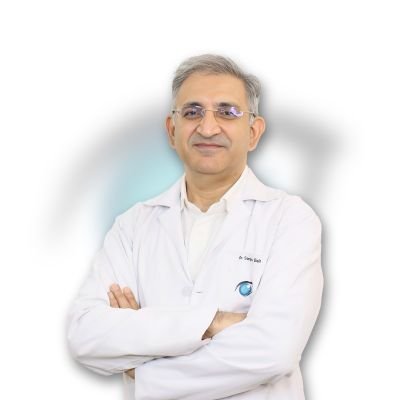
Dr. Sanjeev Bisla, Director & Chief Ophthalmologist
Specialist-Led Care

Dr. Sanjeev Bisla

Director & Chief Ophthalmologist · Phaco, Refractive & Glaucoma

23+ years of experience and 80,000+ cataract surgeries, Aravind-trained — supported by cornea & refractive surgeon Dr. Hem Shah for FemtoLASIK, Contoura, PRK and toric/multifocal lens work.

View Profile
FAQs

Hyperopia, Answered

The questions patients ask us most. For anything specific to your eyes, a consultation gives the clearest answer.

No, though they can feel similar and often overlap after 40. Hyperopia (farsightedness, or a "plus power") is a refractive error you can have at any age, where the eye focuses light behind the retina. Presbyopia is the natural, age-related loss of near-focusing flexibility that usually begins around 40. Many farsighted patients experience both, which your surgeon will factor into your treatment plan.

Often, yes. Depending on your plus power and eye health, options include laser vision correction such as LASIK or Contoura Vision, or a lens-based approach such as a phakic IOL / ICL. The goal is to reduce your dependence on glasses; a detailed evaluation confirms which route suits you.

Not usually in adults. A child’s mild farsightedness can lessen as the eye grows, but an adult plus power tends to stay stable or shift gradually with age. If your near vision is straining, an eye evaluation will tell you your exact power and your options.

Children’s focusing muscles are strong enough to hide part of their plus power (latent hyperopia), so an ordinary reading of the eyes can underestimate it. Dilating (cycloplegic) drops temporarily relax the focusing muscle so we can measure the full power — essential for prescribing the right glasses and for catching accommodative squint early.

Possibly, later in life. Correcting hyperopia can reduce your dependence on glasses for everyday vision, but age-related presbyopia can still make reading glasses necessary with time. Our aim is realistic, glasses-light vision suited to your eyes — your surgeon will explain what is achievable for you.

Laser vision correction is a widely performed, closely studied procedure, and serious complications are uncommon in well-selected patients. That said, no surgery is without risk, which is why we screen your cornea and eye health carefully first and discuss every consideration with you before you decide.

Higher powers, thin corneas or very dry eyes may fall outside the range where laser works well. In those cases, a lens-based option such as a phakic IOL / ICL — or, in older patients, refractive lens exchange — may be a more suitable fit. We will guide you to the most appropriate route for your eyes.

It depends on the path that suits you, so we give a clear, starting-from estimate after your examination rather than a flat quote. Each procedure page and our refractive surgery cost page carry indicative starting-from ranges, always subject to consultation. Easy EMI options are available.

Related: Myopia · Astigmatism · Presbyopia · Eye care glossary

Find Out Which Path Suits Your Farsightedness

Our team will assess your candidacy, explain your options and answer every question — with no pressure to proceed. Our medical counsellors will contact you — no sales, expert consultation.

Book an Appointment
Call +91 81786 39701
WhatsApp

Dayal Eye Centre — 808 B, Galaxy Road, Sector 15 Part 2, Near 32nd Avenue, Gurgaon, Haryana 122001
wecare@dayaleyecentre.in · Mon–Sat 8:30 AM – 7:30 PM · Sunday closed

Medically reviewed by the medical team at Dayal Eye Centre · Last updated: 28 July 2026 · Editorial Policy