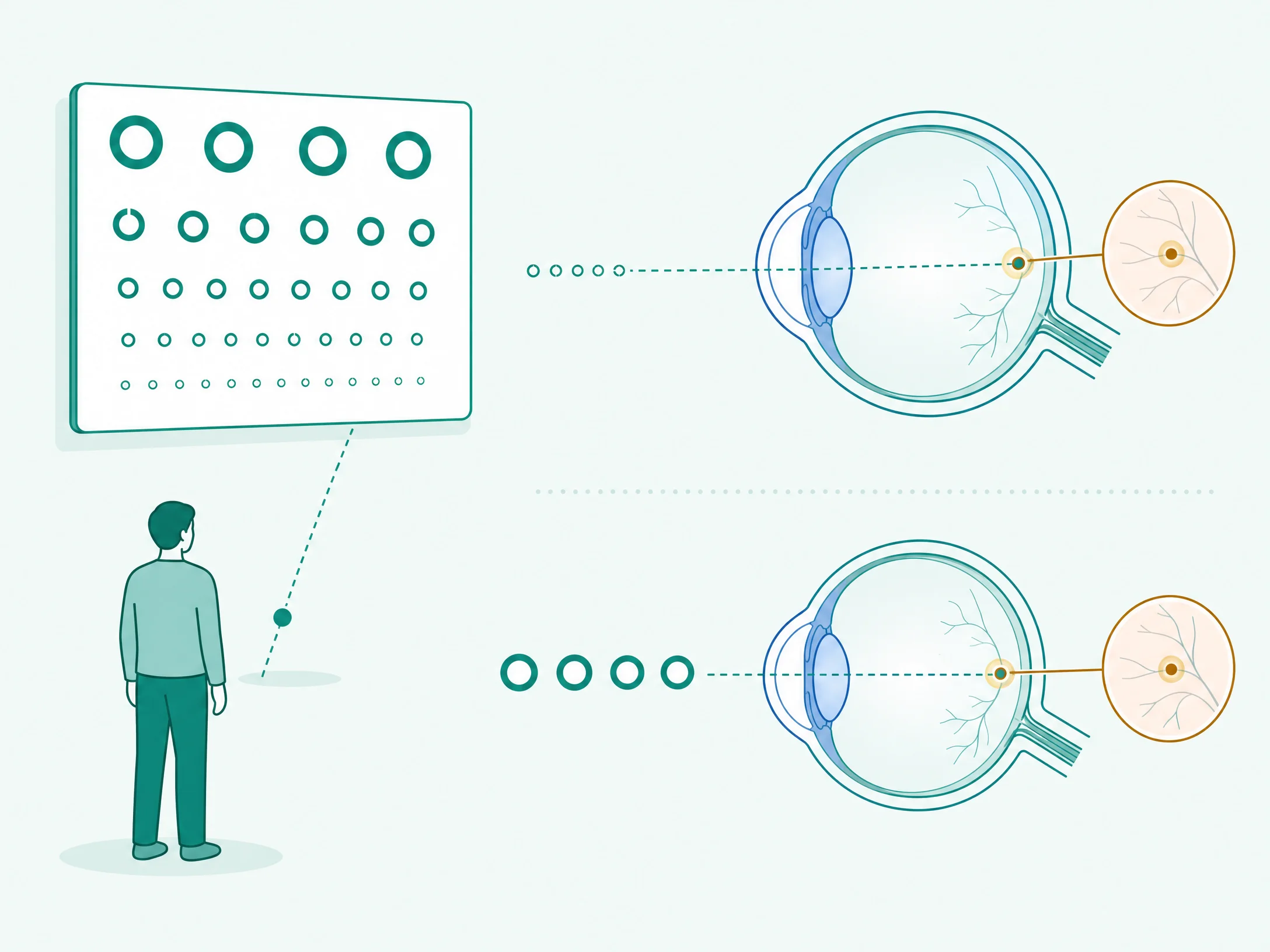
The benchmark for "normal" distance sight: you read at 6 metres what a normal eye reads at 6 metres. It describes clarity at distance only — not your overall eye health.
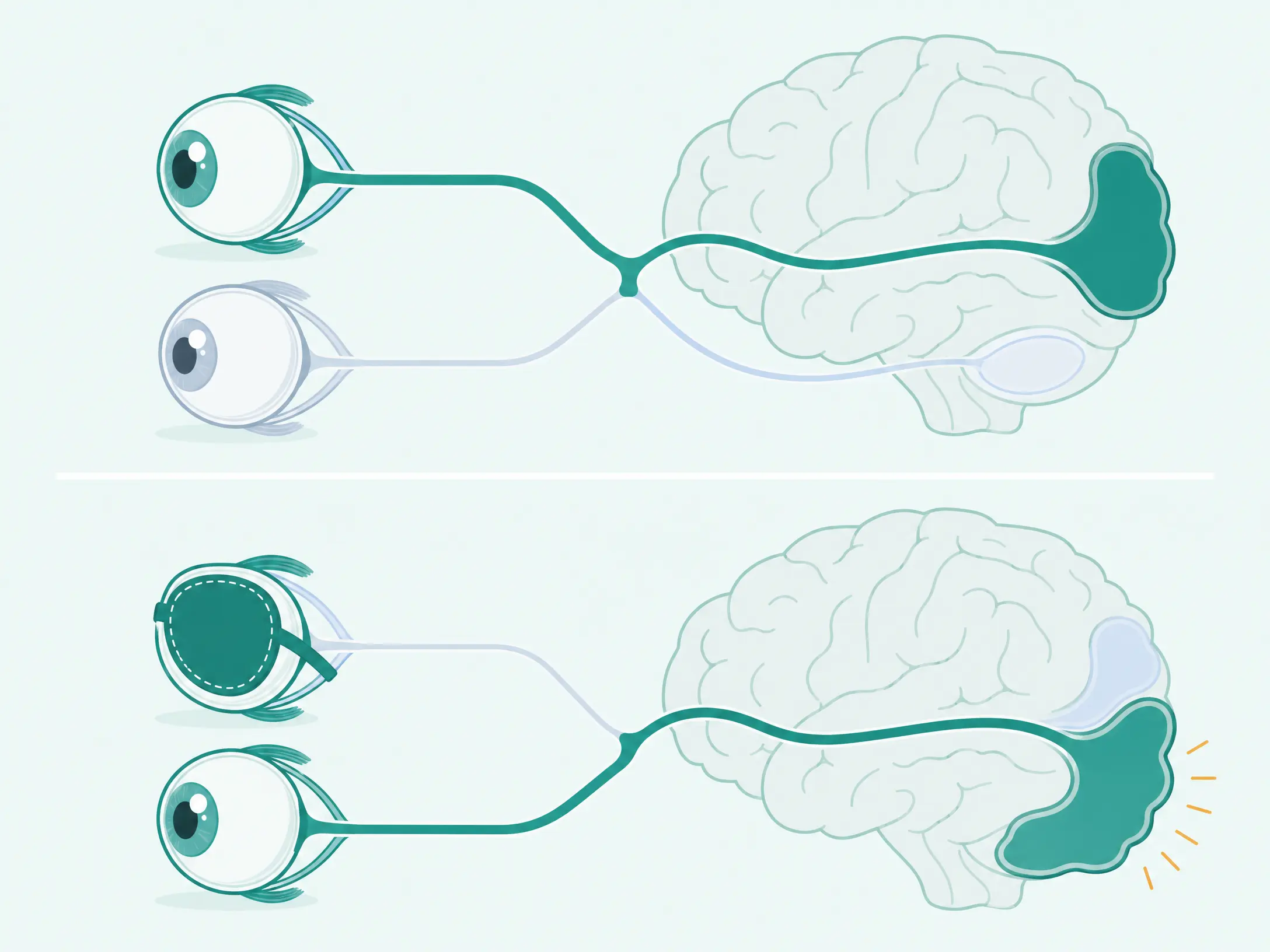
When one eye and the brain don’t develop a strong connection in childhood, so that eye sees weaker even with glasses. Patching the stronger eye trains the weaker one — it works best when treated early.
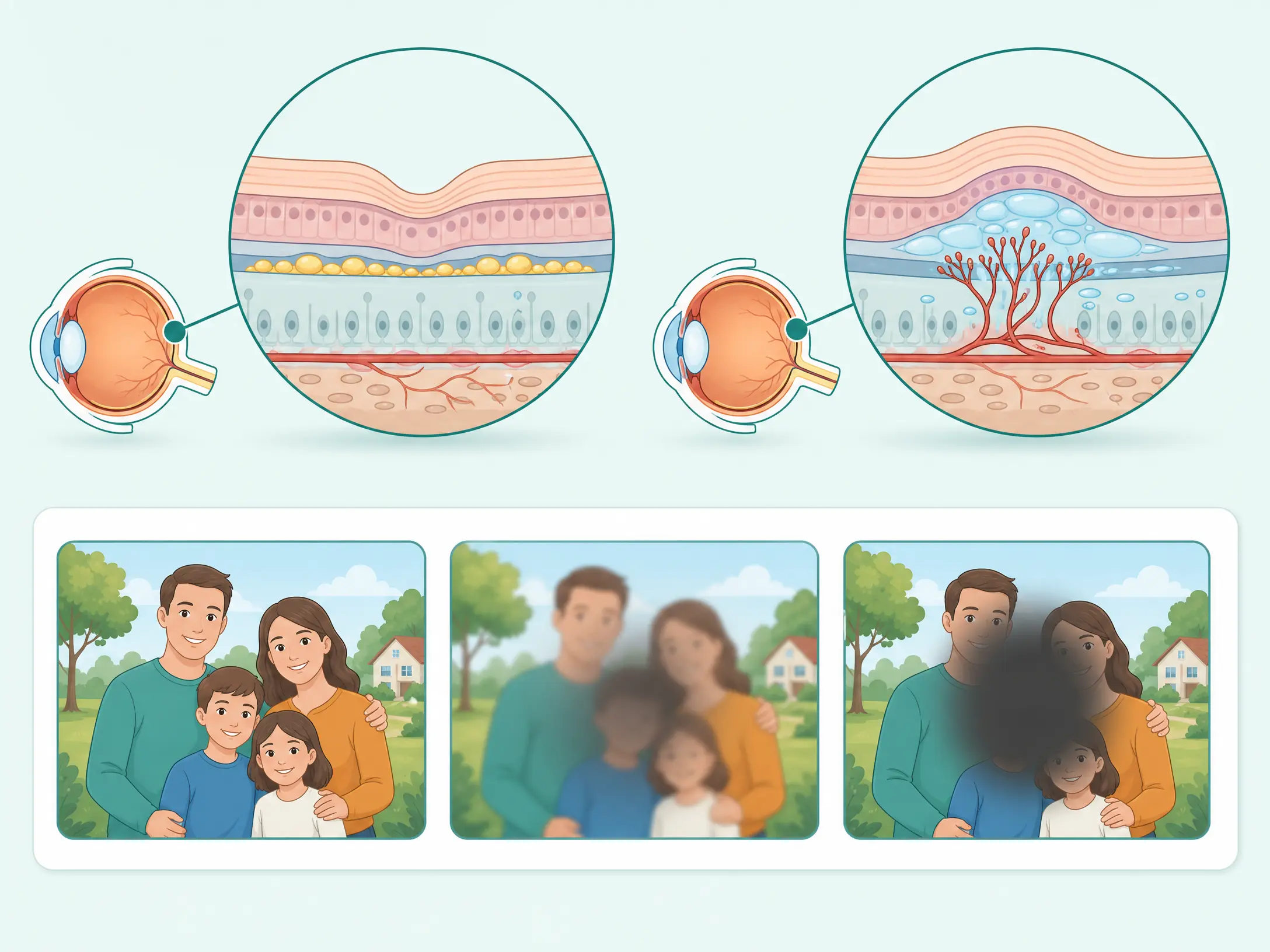
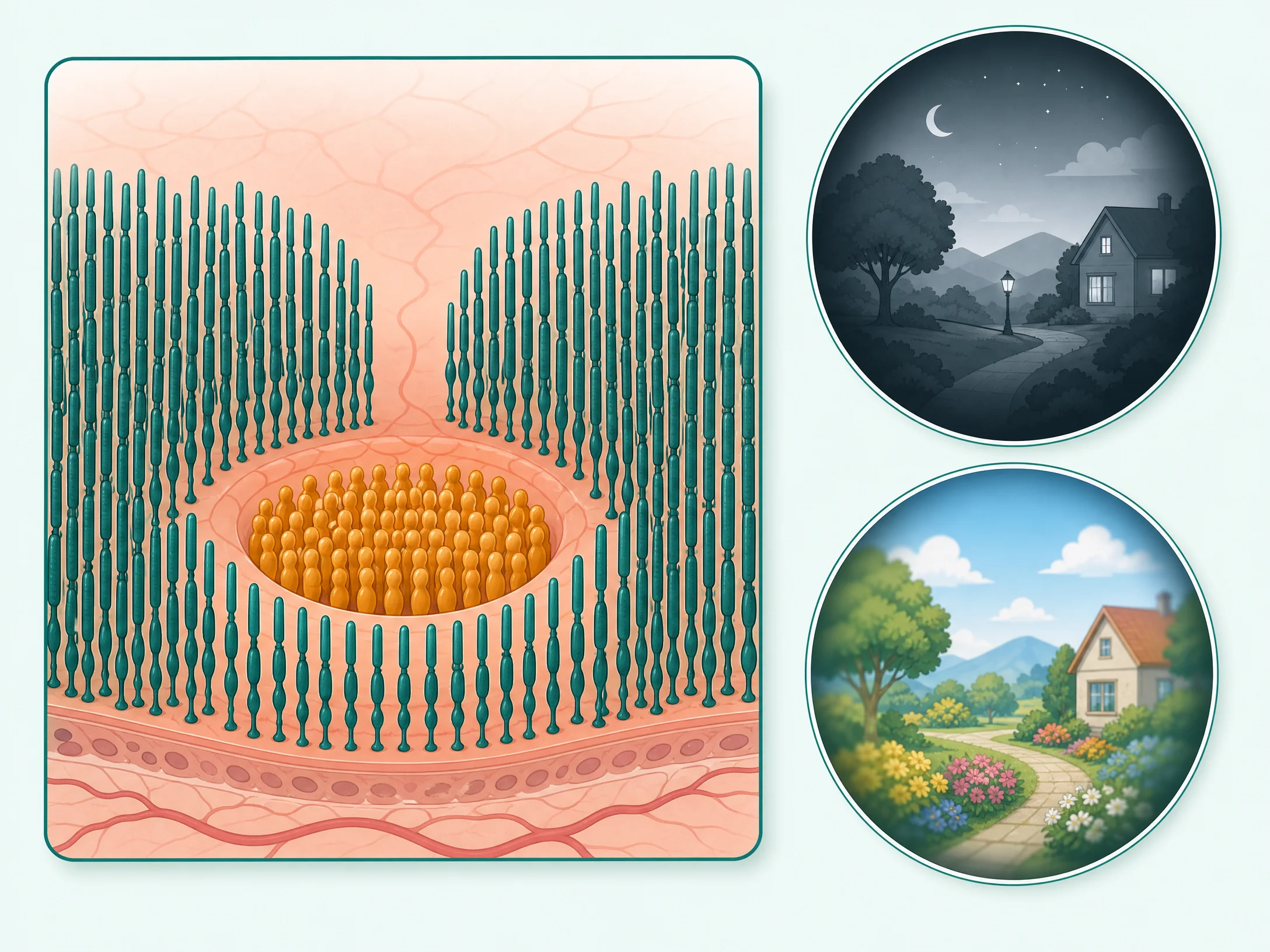
Ageing damage to the macula, the central part of the retina. "Dry" AMD is slow and driven by deposits called drusen; "wet" AMD is faster, from leaky new vessels. It affects central vision while side vision is preserved.
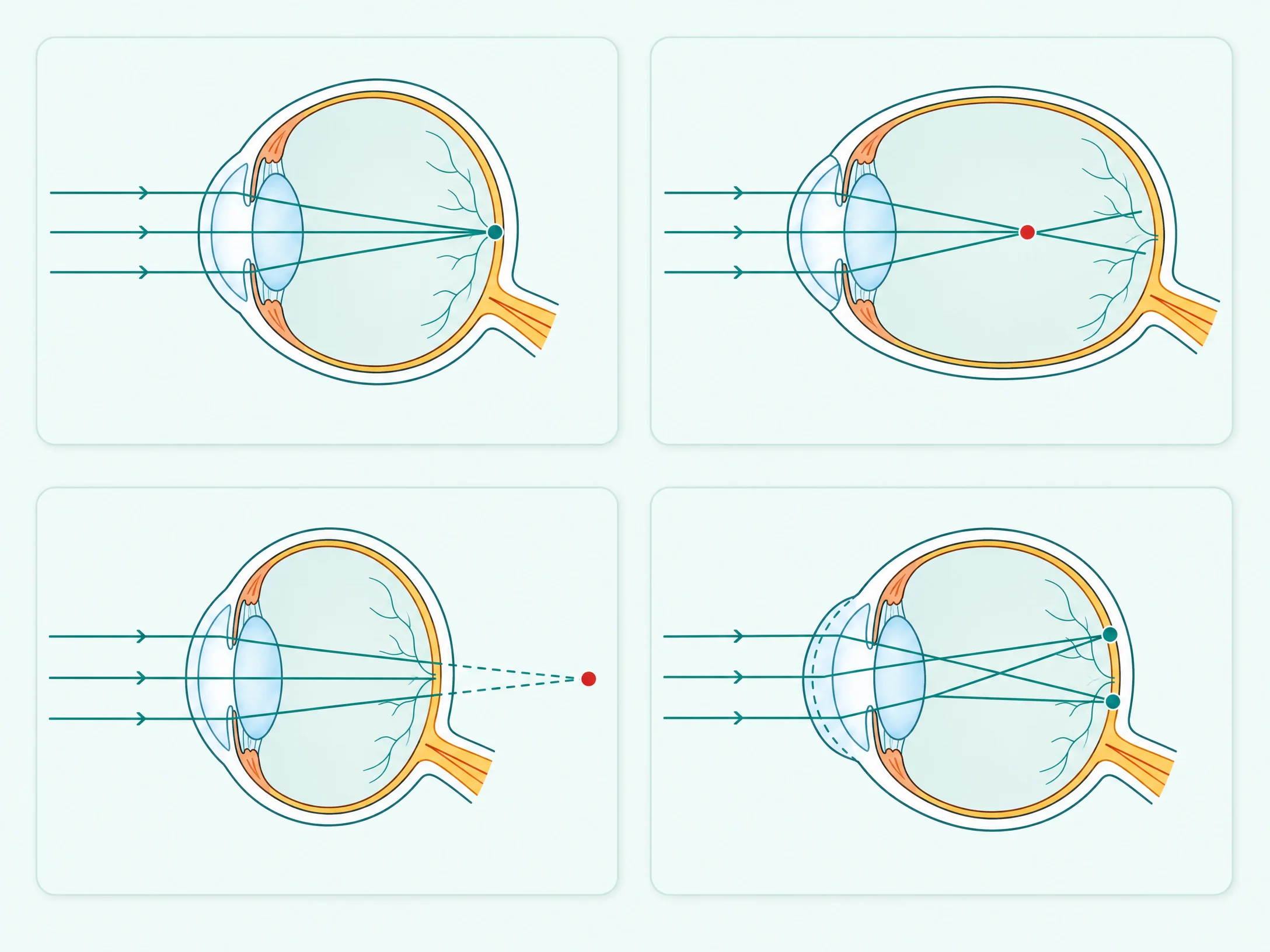
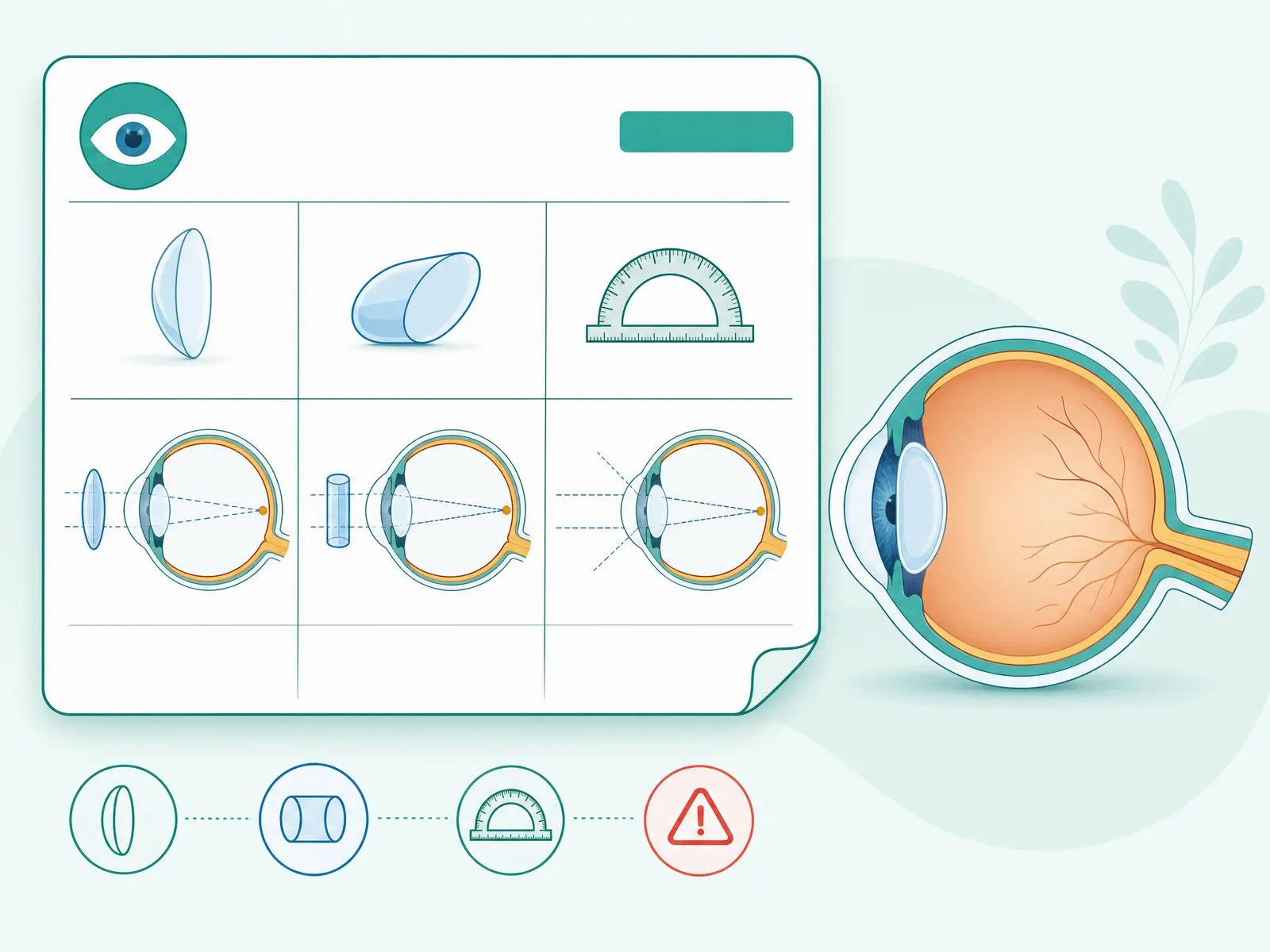
A cornea (or lens) shaped more like a rugby ball than a football, so light focuses at more than one point. The result is blur at all distances, often with some eye strain.
The number from 0 to 180 on your glasses prescription that tells the direction of your astigmatism correction. It only matters alongside a cylindrical (CYL) value.
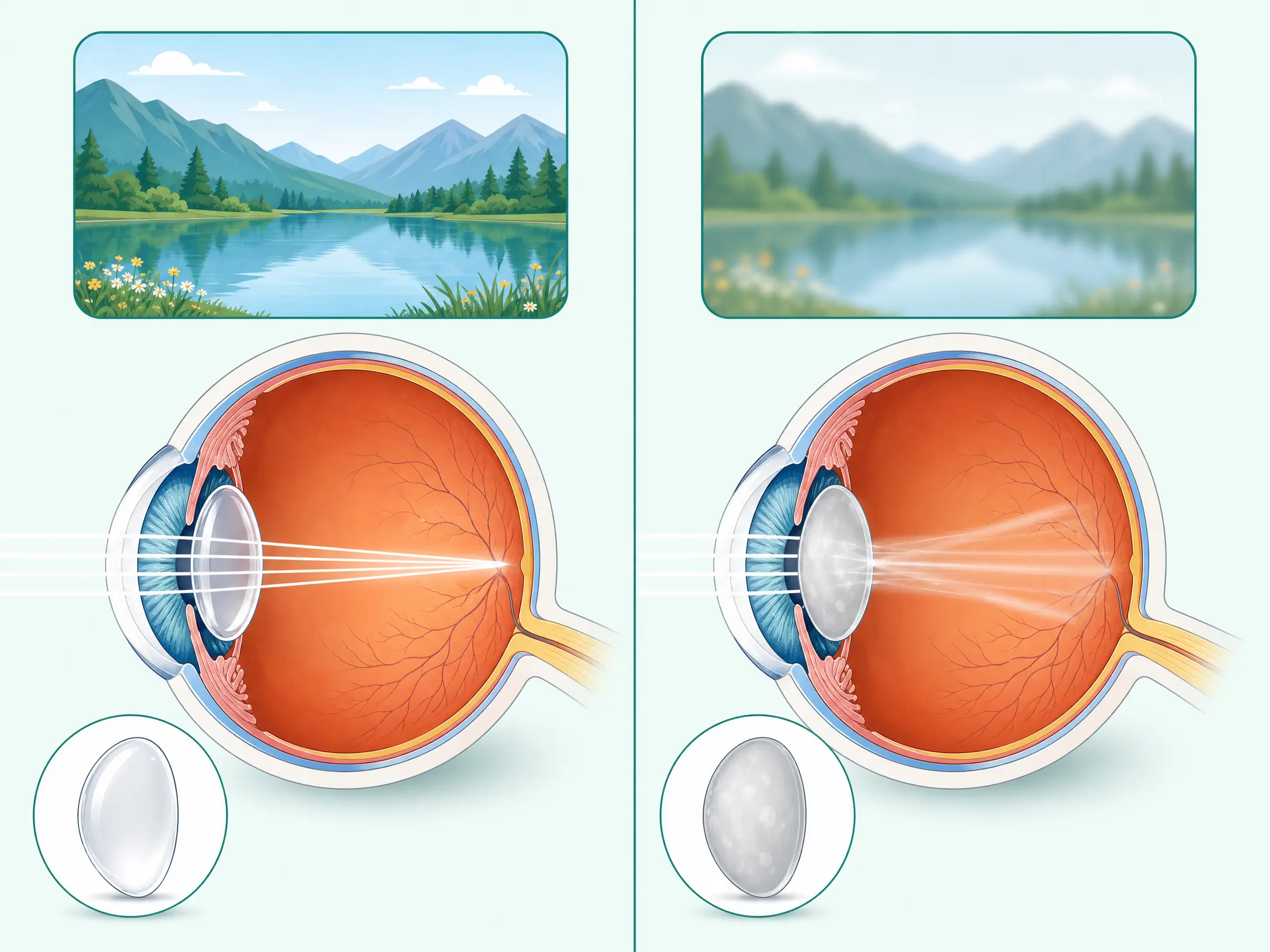
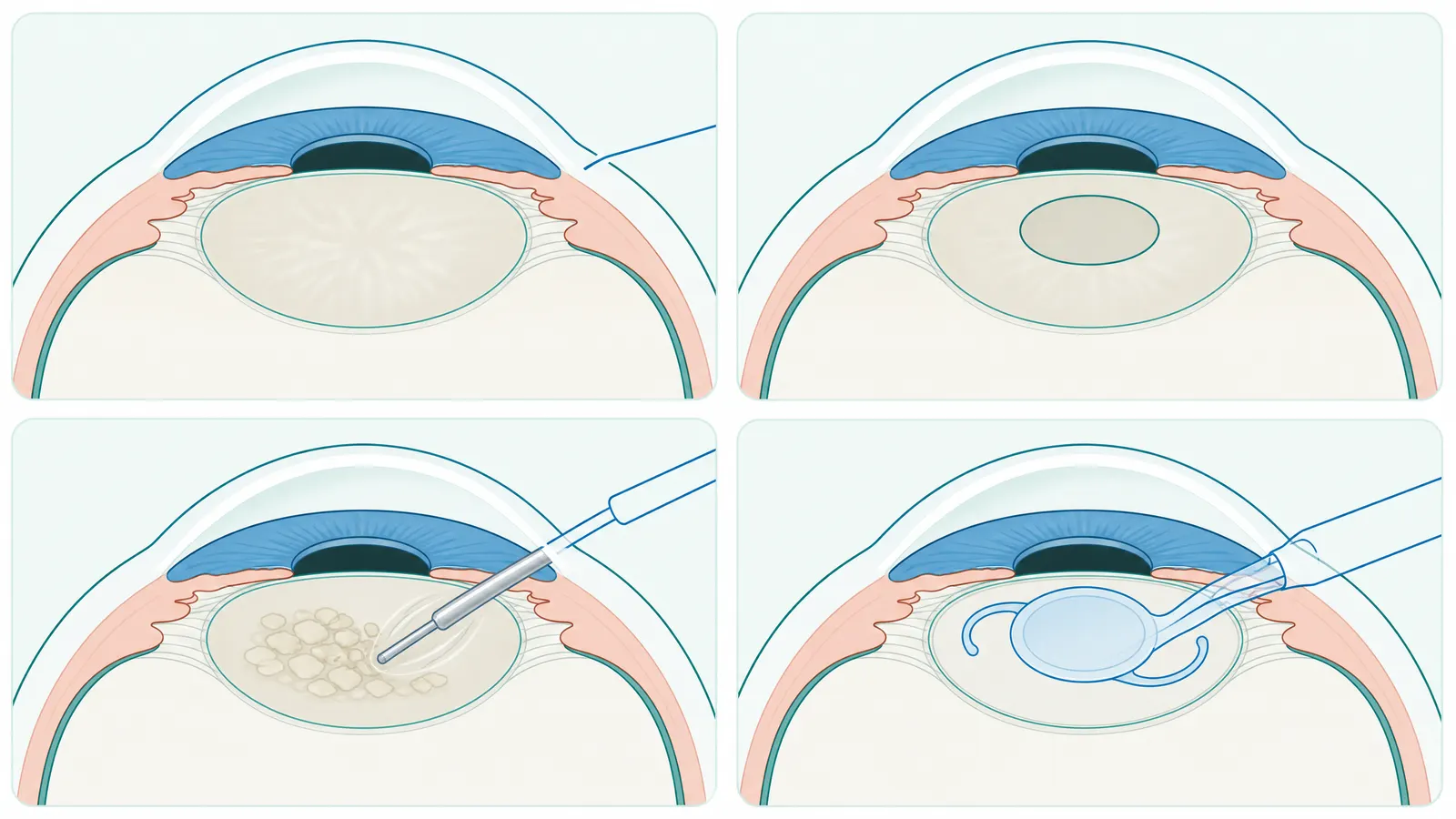
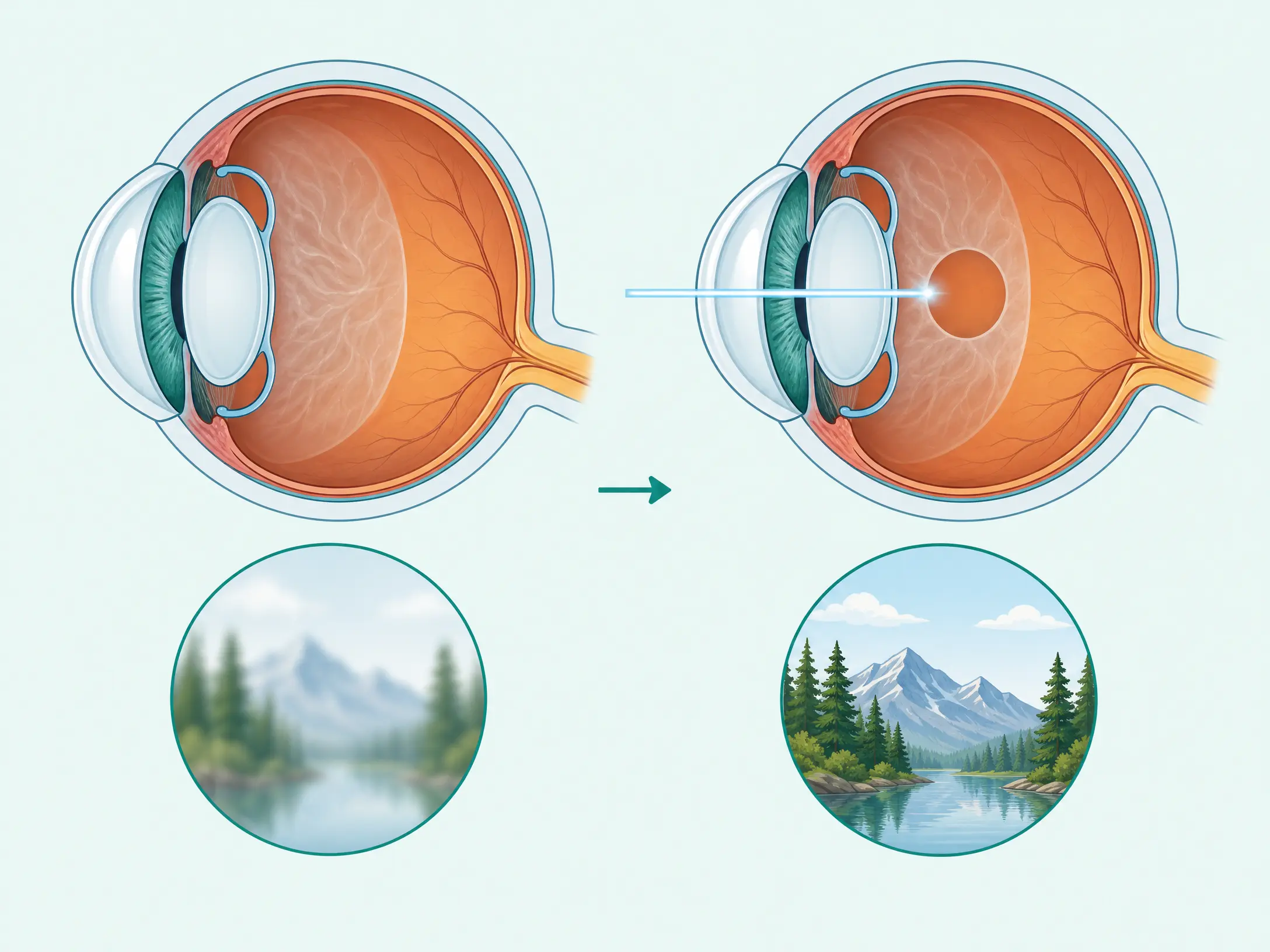
Clouding of the eye’s natural lens, usually with age, making vision dim, hazy or glary. It is corrected by replacing the cloudy lens with a clear artificial one (an IOL) during surgery.
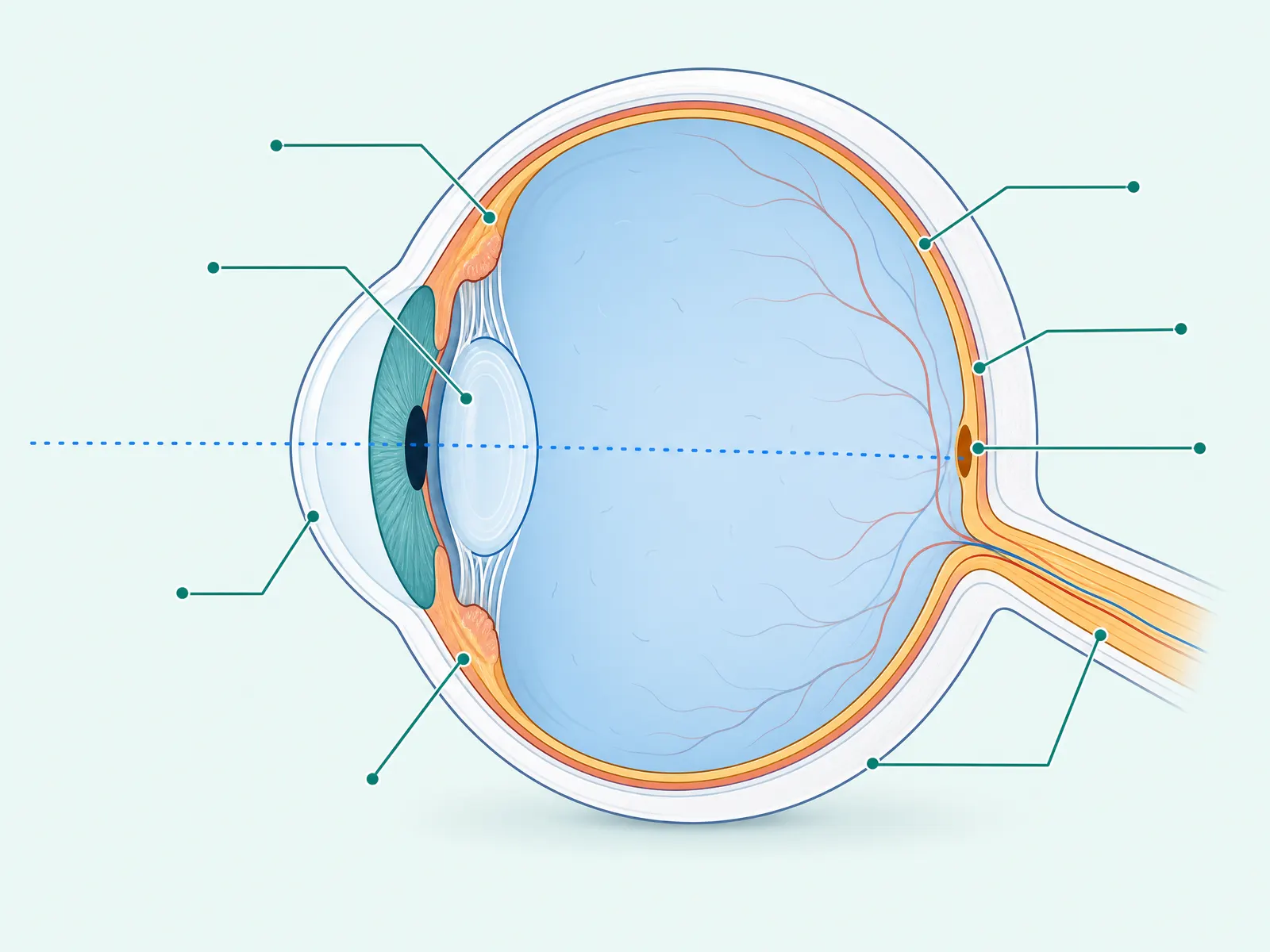
The ring of muscle behind the iris that changes the shape of the natural lens to focus, and produces the fluid that fills the front of the eye.
The clear front dome of the eye. It does most of the eye’s focusing, which is why reshaping it with a laser (LASIK, SMILE, PRK) can correct your vision.
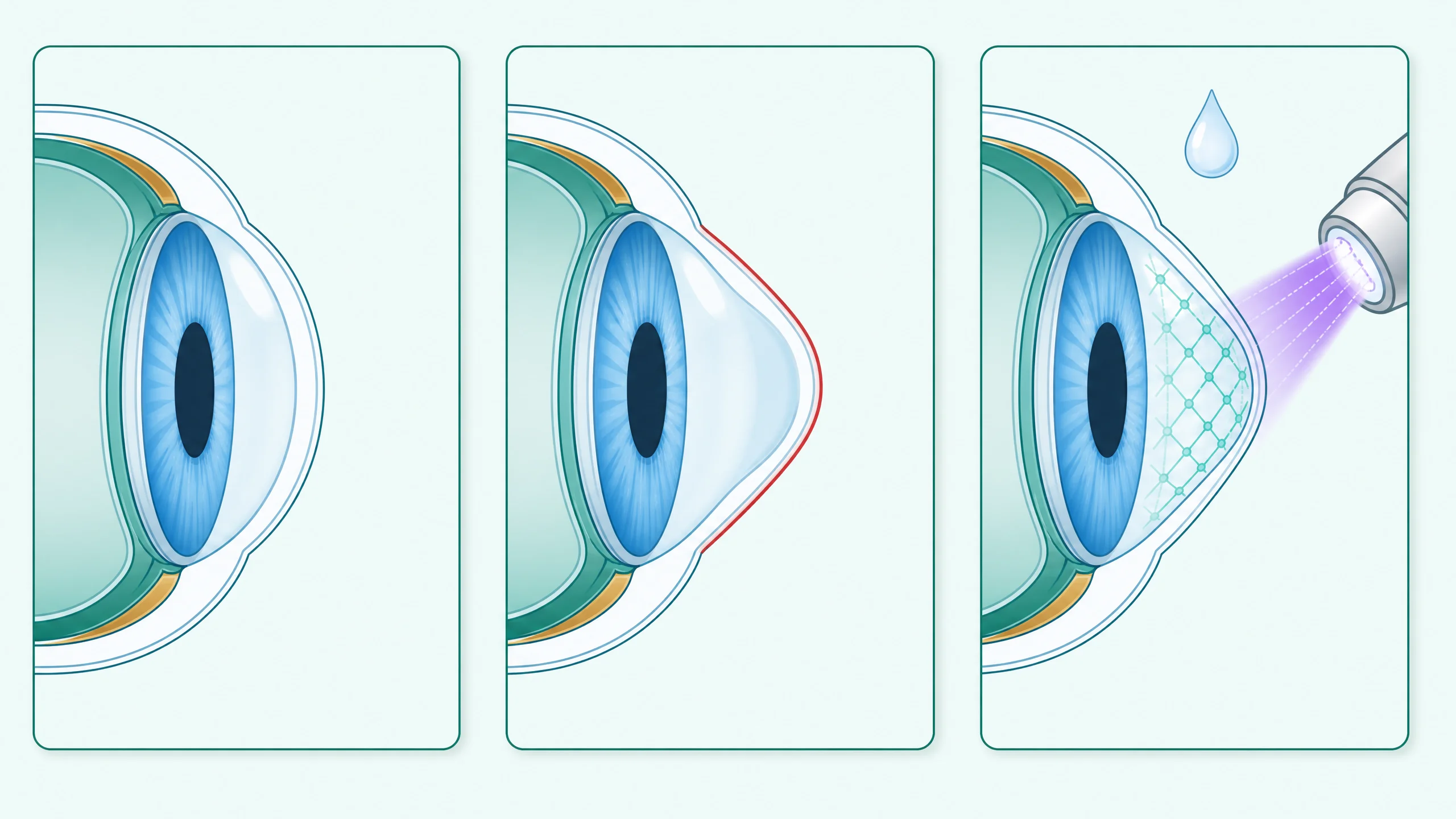
A treatment that strengthens a weak, thinning cornea using vitamin-B2 drops and controlled ultraviolet light. It halts keratoconus from getting worse — it stabilises, rather than reverses.
The part of your prescription that measures the strength of astigmatism. It works together with the AXIS value, which sets its direction.
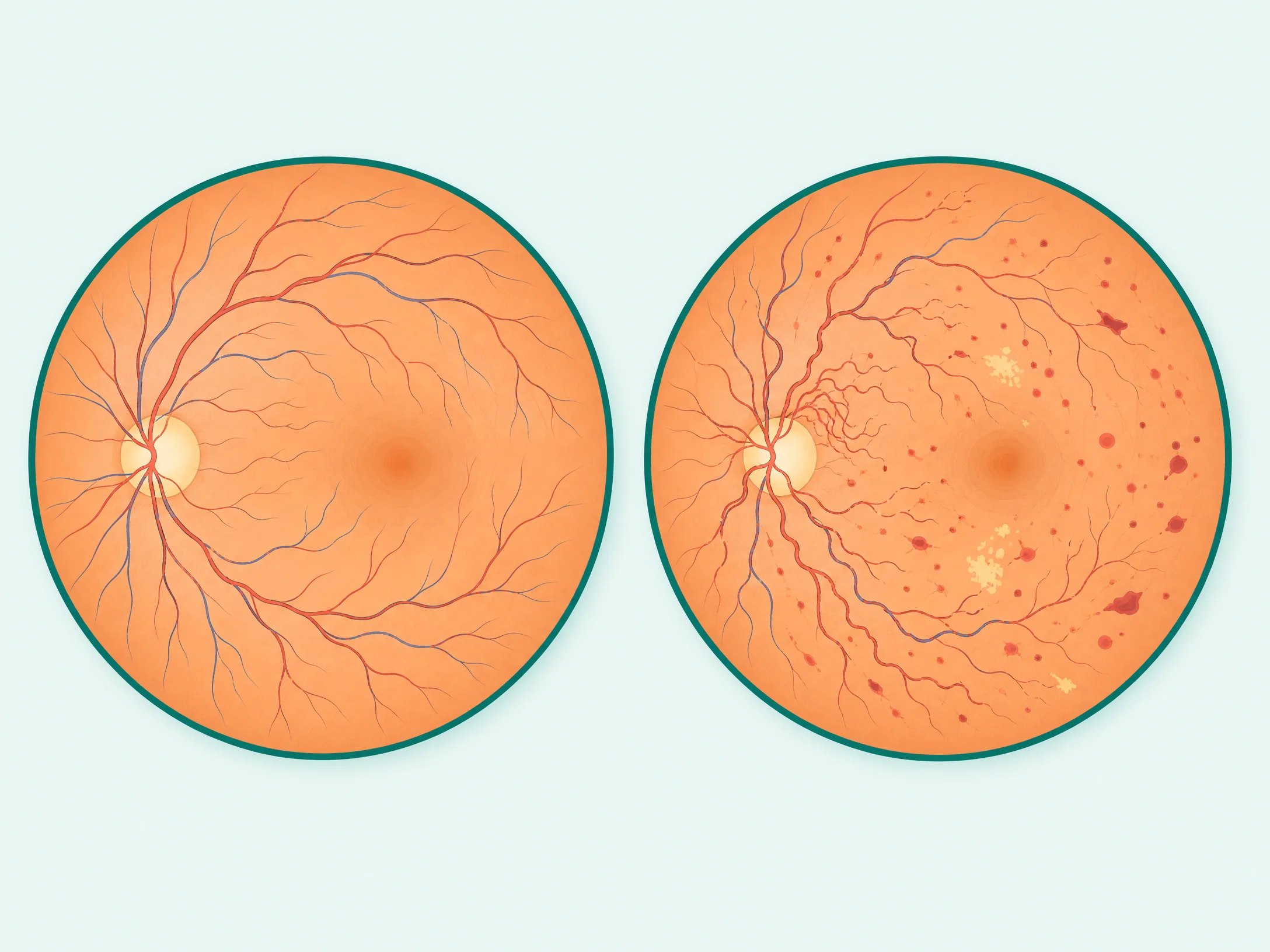
Damage to the retina’s tiny blood vessels caused by diabetes. It often has no early symptoms, so every person with diabetes needs a yearly dilated retina check.
Small yellow deposits that build up under the retina with age. A few are common; many can be an early sign of dry AMD.
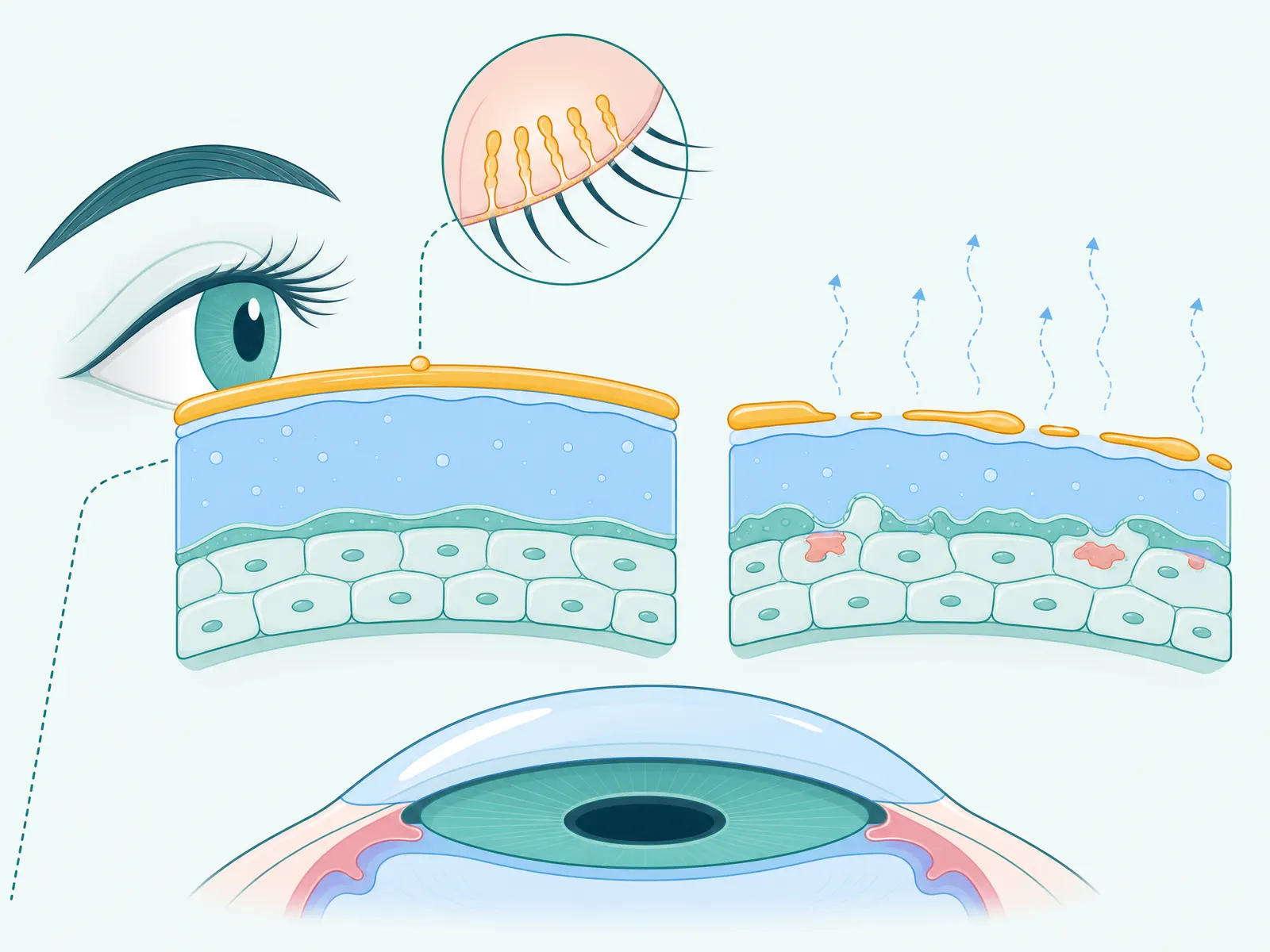
When the tear film is unstable or your eyes don’t make enough good-quality tears, causing burning, grittiness and moments of blur. Very common with screens and air-conditioning.
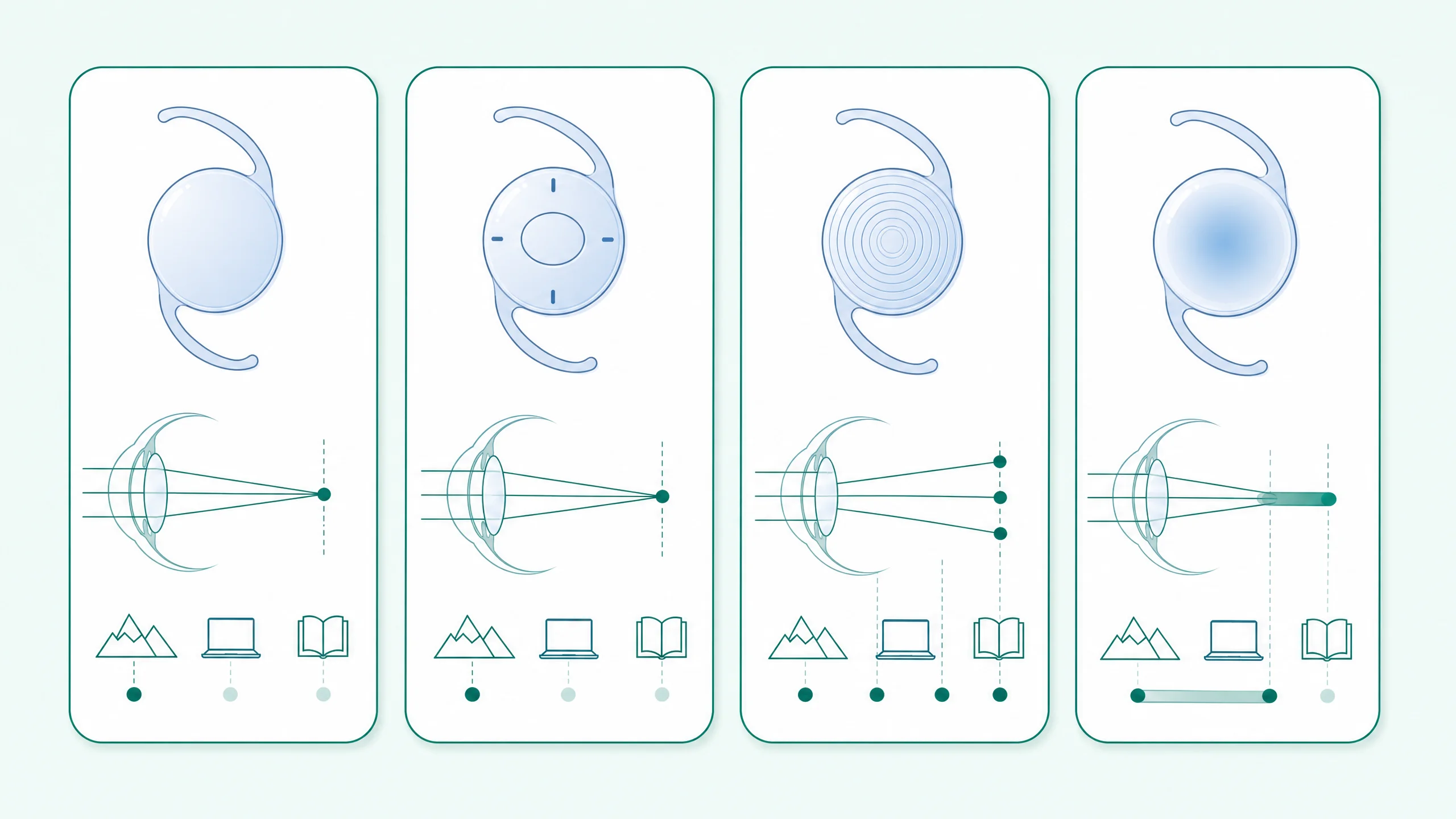
A type of artificial lens that stretches one continuous zone of focus from distance through to arm’s length — good for distance and screen use with fewer visual side-effects than trifocals.
Cataract surgery in which key steps are performed by a computer-guided laser rather than by hand, for added precision on selected eyes.
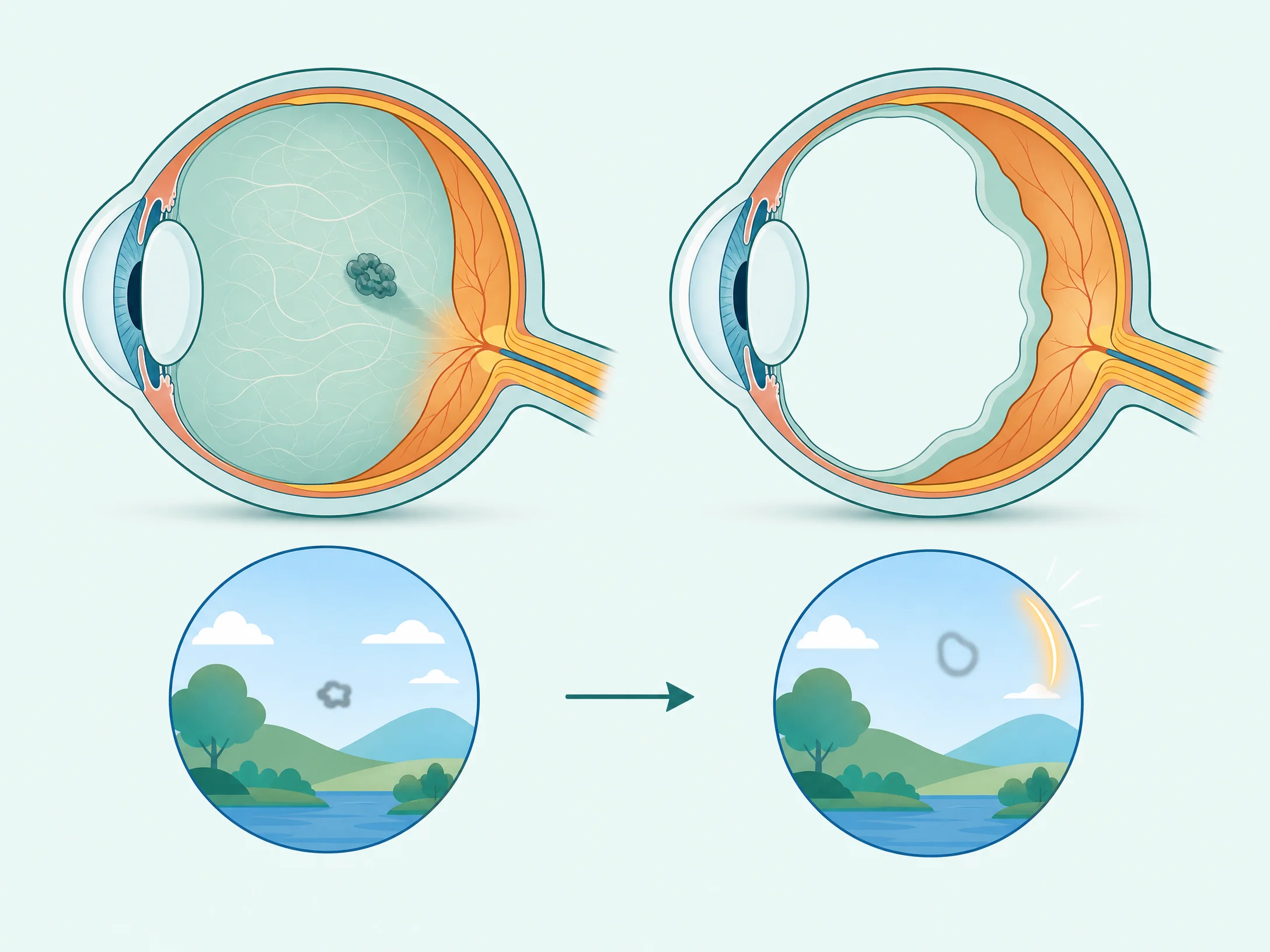
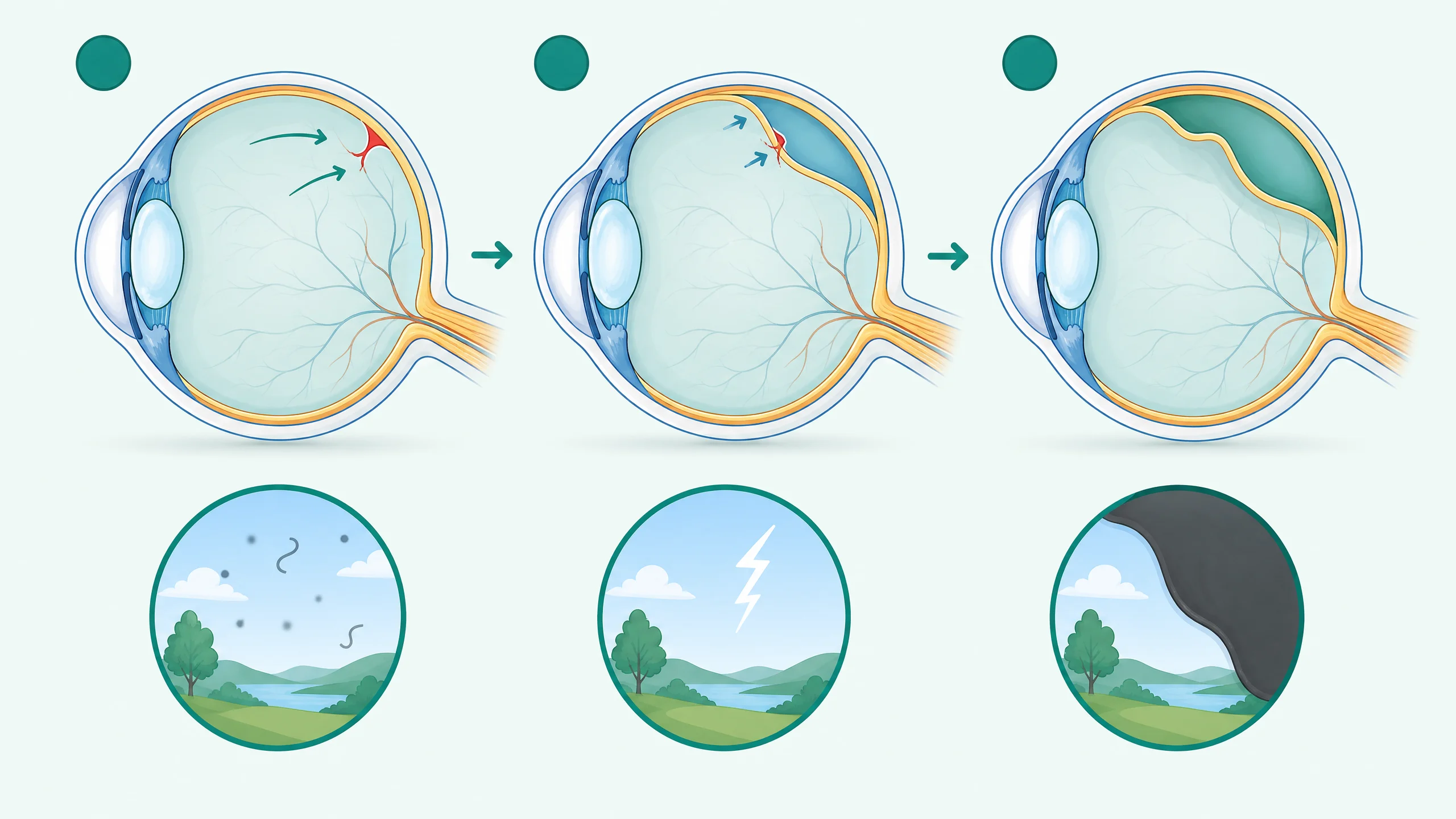
Specks, threads or cobwebs that drift across your vision — shadows cast by clumps in the vitreous gel. Usually harmless, but a sudden shower of floaters or flashes needs a same-day check.
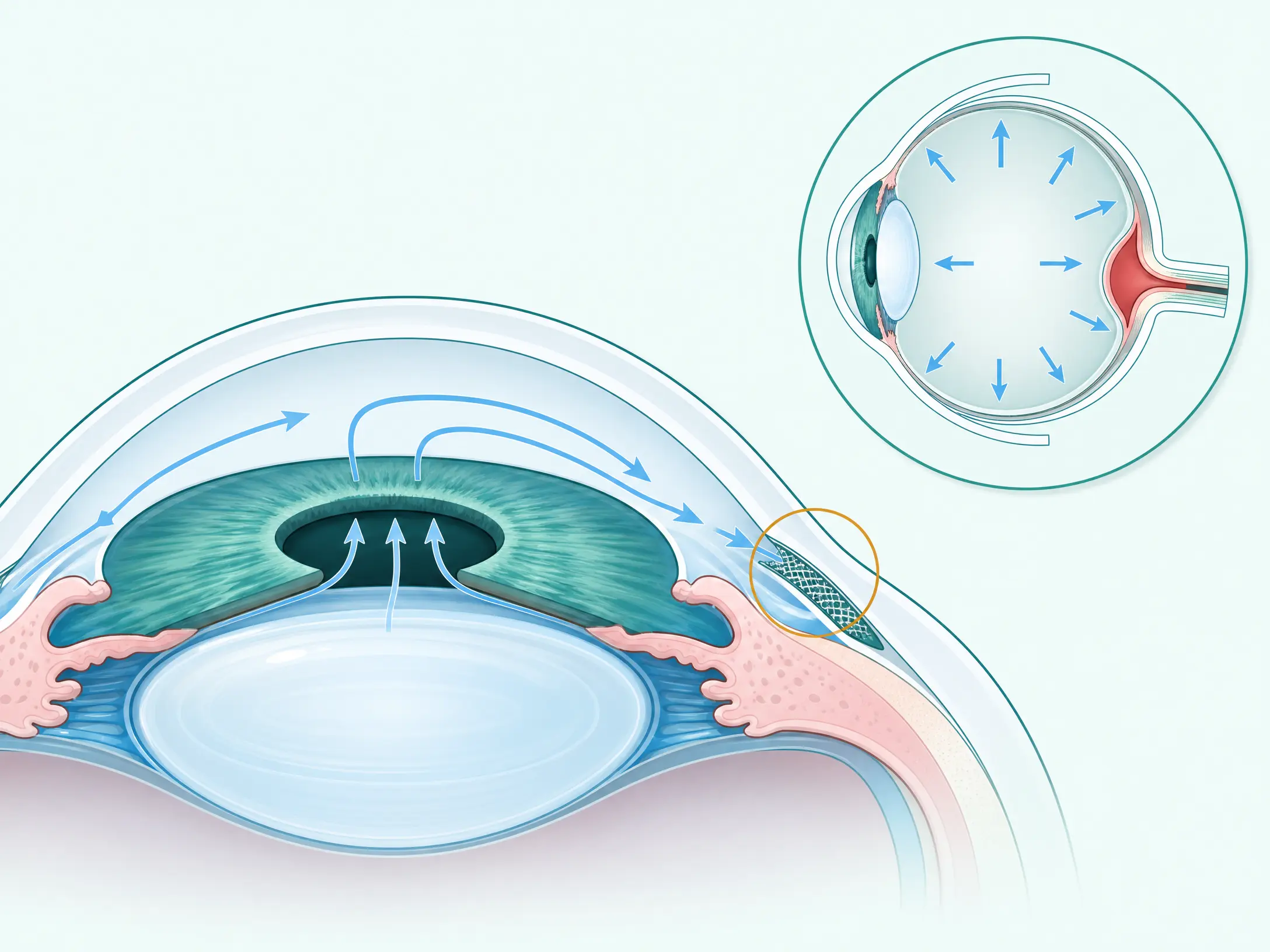
A group of conditions where raised pressure inside the eye damages the optic nerve, silently narrowing vision from the sides inward. Early detection protects the sight you have.
A shorter-than-average eye, so light focuses behind the retina. Near objects blur first, and effort is needed to keep things sharp.
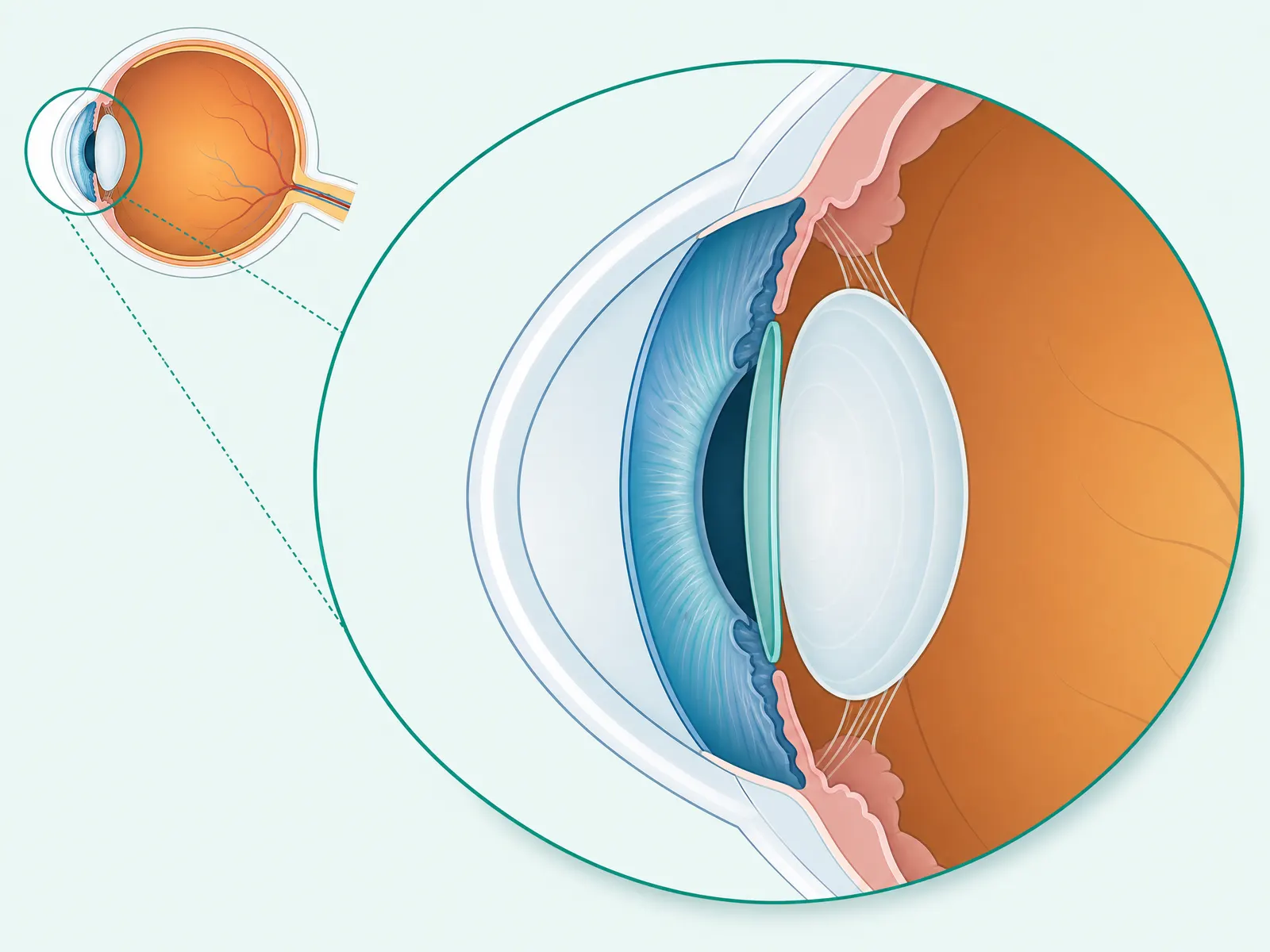
A thin corrective lens placed inside the eye, behind the iris, while your natural lens stays in place. A good option for high powers or corneas too thin for LASIK — and it’s removable.
The clear artificial lens that replaces your cloudy natural lens during cataract surgery. Choices include monofocal, toric, multifocal/trifocal and EDOF designs.
The coloured ring of the eye. Its muscles open and close the pupil to control how much light gets in.
A cornea that gradually thins and bulges into a cone, distorting vision. Caught early it can be stabilised with corneal cross-linking.
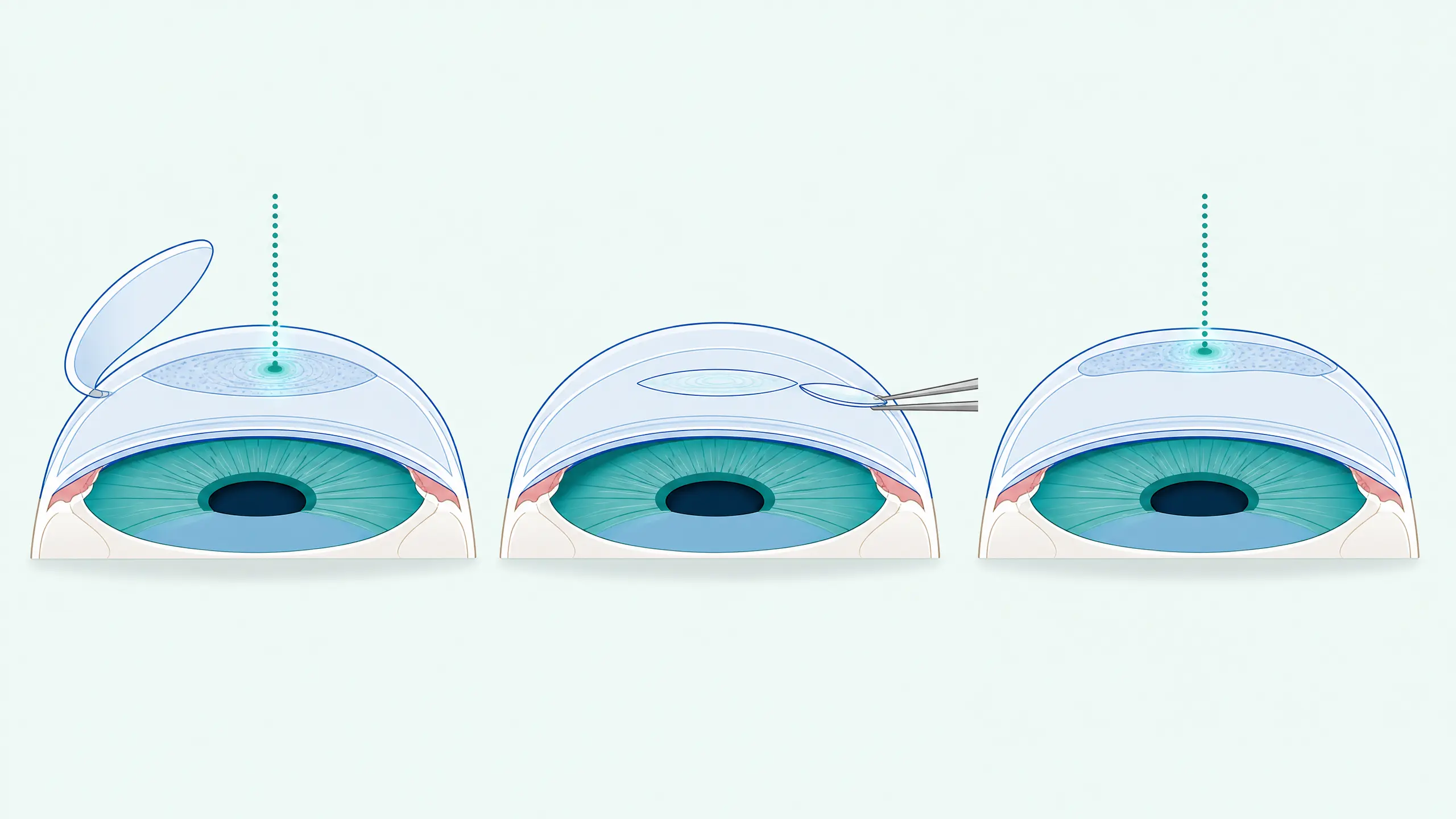
Laser vision correction in which a thin hinged flap is created in the cornea and a laser reshapes the layer beneath — a quick recovery for suitable eyes.
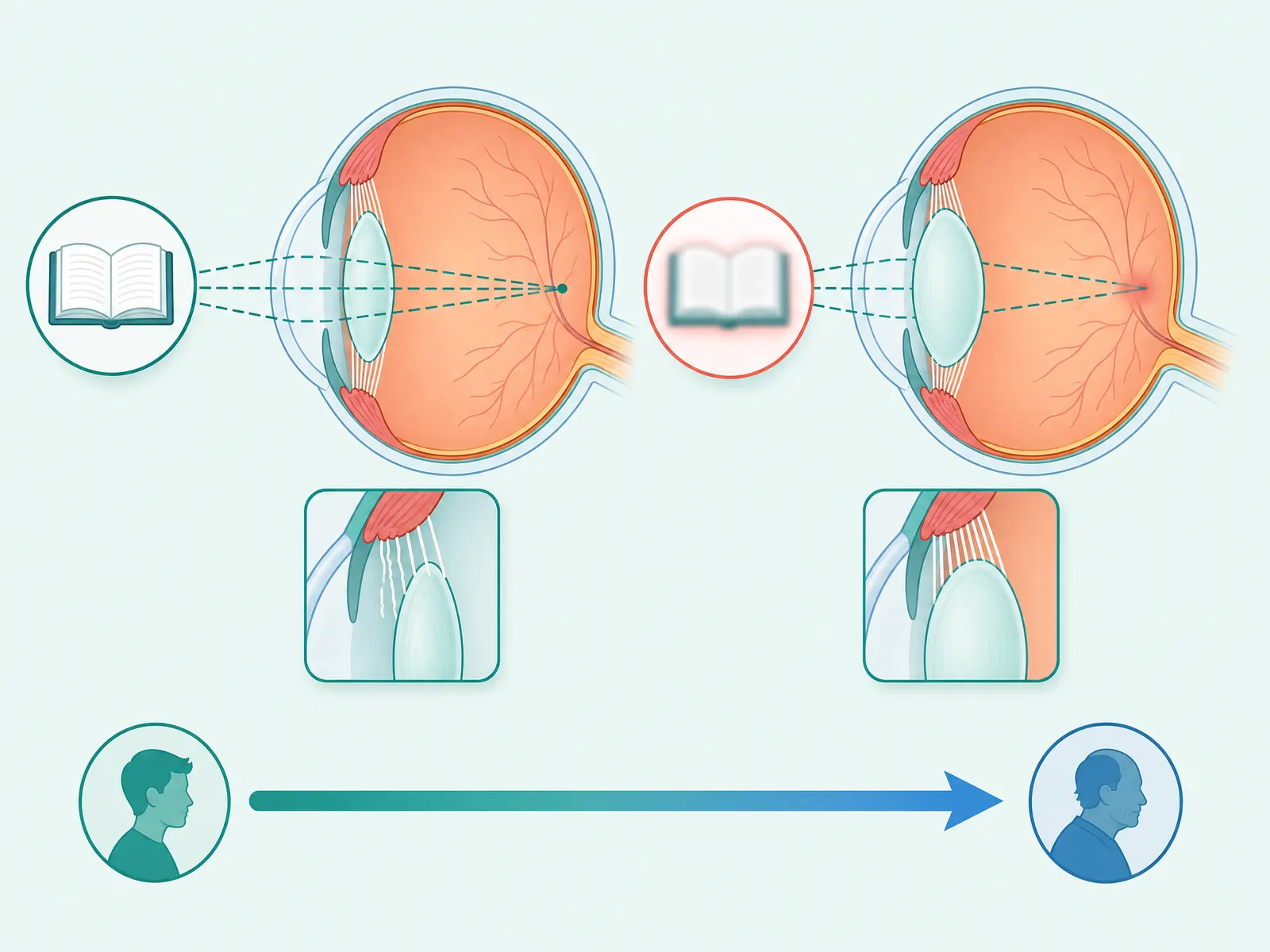
The natural lens sitting behind the pupil that fine-tunes focus. It clouds into a cataract with age and stiffens with age (presbyopia).
The small central part of the retina responsible for sharp, detailed, straight-ahead vision — reading, faces, fine work.
An artificial lens set for a single focus, usually distance. Clear far vision, with reading glasses for near — the most widely used IOL.
An artificial lens with rings that provide several focal points — far, screen and near — reducing dependence on glasses after cataract surgery.
A longer-than-average eye, so light focuses in front of the retina and distant objects blur. Common, rising in children, and correctable with glasses, lenses or laser.
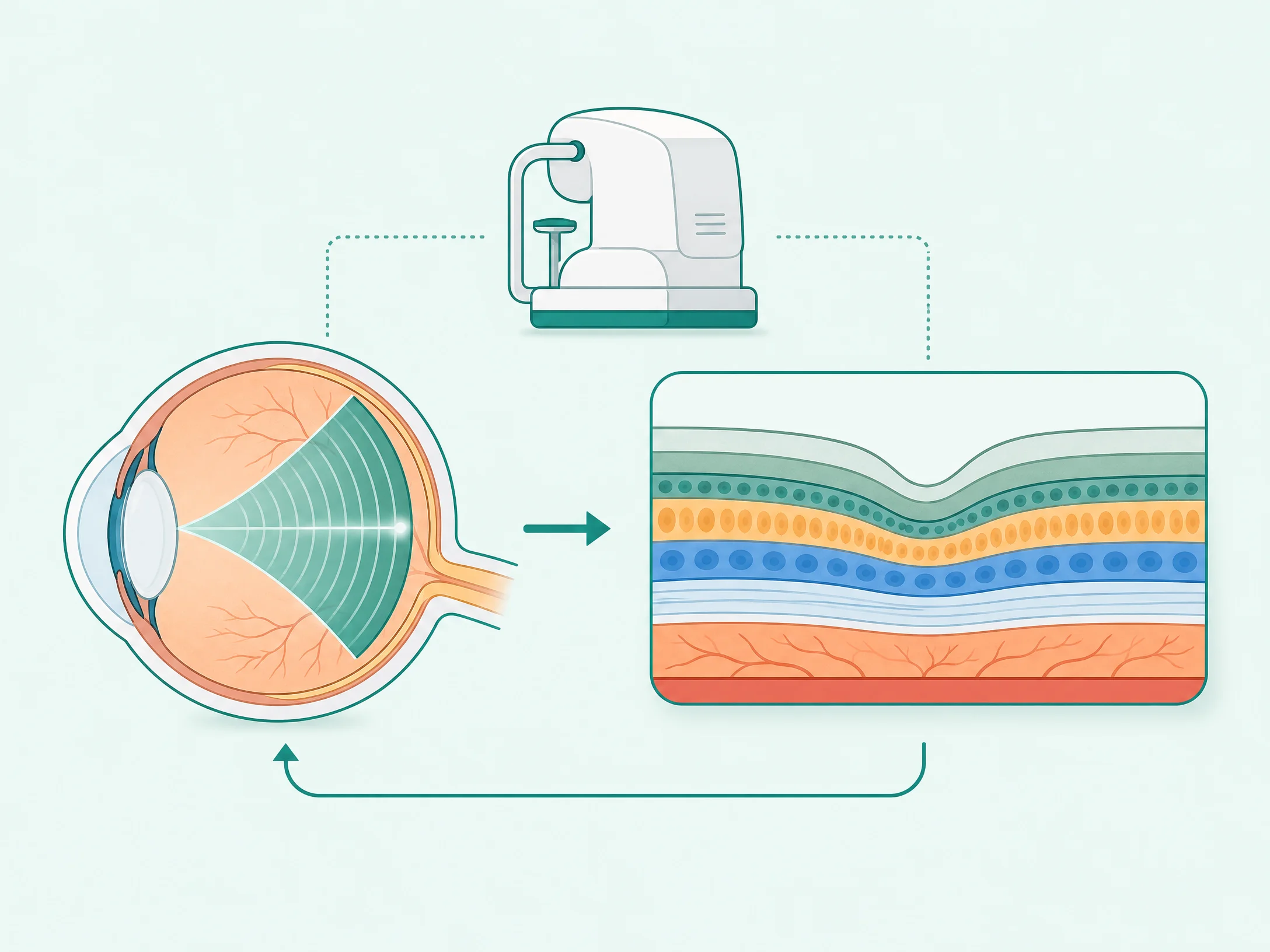
A painless light scan that builds a cross-section of the retina, layer by layer — no touch involved. It detects macula and optic-nerve changes very early.
The cable that carries visual signals from the retina to the brain. Damage to it — as in glaucoma — cannot be reversed, so protecting it matters.
A misting of the thin membrane behind an artificial lens, months or years after cataract surgery. It is not the cataract returning, and it clears in minutes with a YAG laser.
The standard cataract operation: through a tiny keyhole, ultrasound breaks up the cloudy lens, it’s removed, and a folded artificial lens unfolds into place — usually stitchless daycare.
A corrective lens implanted inside the eye while keeping your own natural lens — the category the ICL belongs to. Used for stronger prescriptions.
The natural stiffening of the lens after about age 40, so near focus fades and reading drifts to arm’s length. Everyone experiences it eventually.
Laser vision correction that reshapes the corneal surface directly, with no flap. A good choice for thinner corneas or active lifestyles; recovery is a little slower than LASIK.
The black opening at the centre of the iris that lets light into the eye — widening in dim light and narrowing in bright.
The vitreous gel separating from the retina with age. Common and usually harmless, but new flashes or a burst of floaters should be checked, as it can occasionally tear the retina.
The umbrella term for myopia, hyperopia and astigmatism — where the eye doesn’t focus light precisely on the retina. Corrected with glasses, contact lenses or laser surgery.
The light-sensitive lining at the back of the eye that captures images and sends them to the brain — like the film in a camera.
A sight-threatening emergency where the retina peels away from the back wall of the eye. Warning signs are new floaters, flashes and a dark curtain over vision — seek help the same day.
The tough white outer coat of the eye that protects it and holds its shape.
Flapless laser vision correction: a laser shapes a thin lens of tissue inside the cornea and removes it through a keyhole 2–4 mm opening. Minimal disturbance to the surface.
The classic wall chart of shrinking letters used to measure distance vision. Reading the "6/6" line means normal distance clarity.
The main power on your glasses prescription — a minus value corrects myopia, a plus value corrects hyperopia.
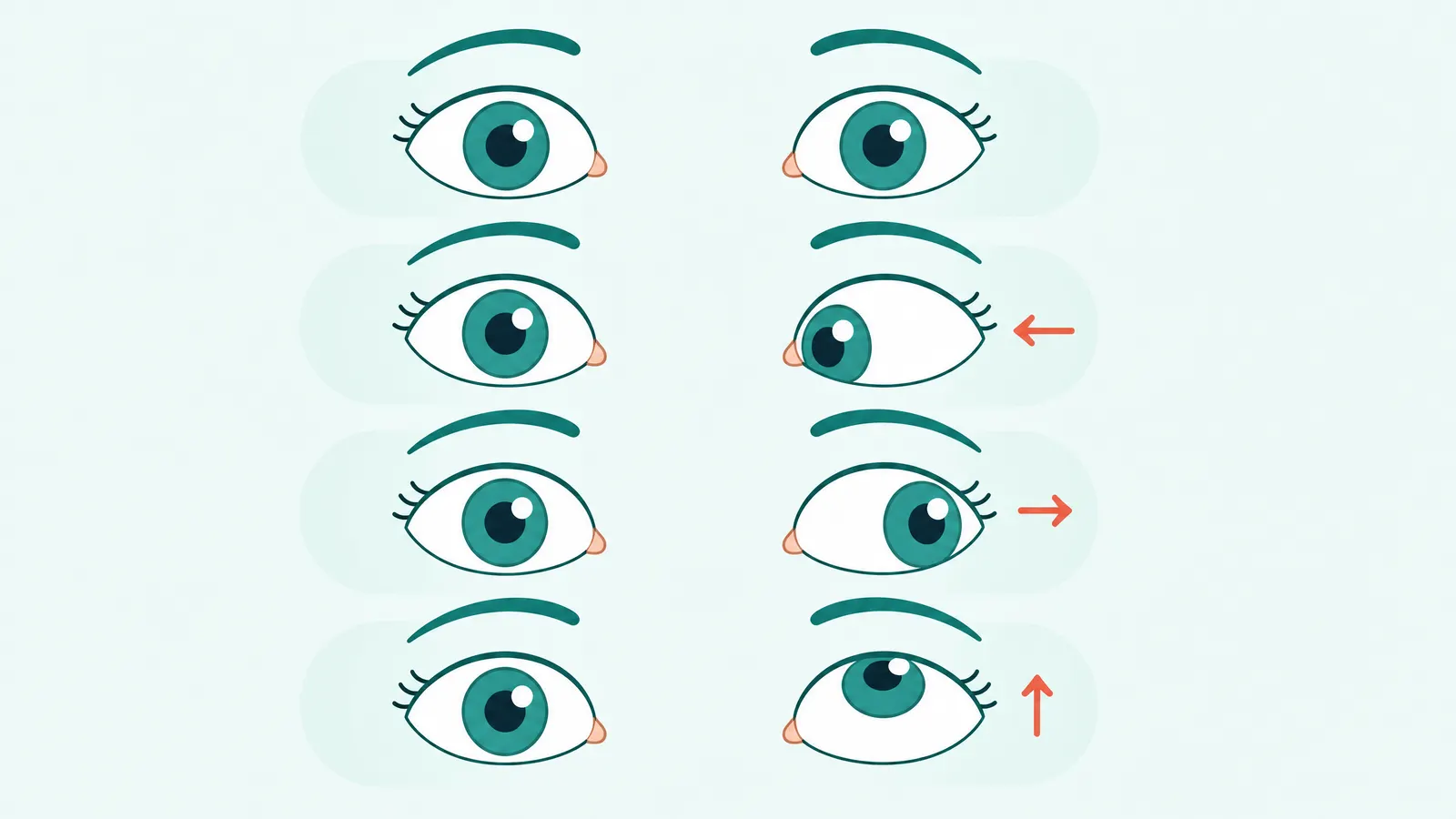
When the two eyes don’t point in the same direction — one may turn in, out, up or down. Treatable at any age, and important to catch early in children.
The thin three-layer coating (oil, water, mucin) that keeps the eye’s surface smooth and comfortable. When it breaks down, dry eye follows.
An artificial lens (or contact lens) built to correct astigmatism, with orientation marks so it sits at the right angle.
A measure of how clearly you see fine detail at distance, recorded as values like 6/6 and tested on a Snellen chart.
Illustration and definitions simplified for education — they don't replace an eye examination. For a diagnosis specific to you, book a consultation with our doctors.
Bring it in — our medical counsellors will explain exactly what it means for your eyes. No Sales, Expert Consultation.
Medically reviewed by Dr. Sanjeev Bisla, MBBS, MS (Ophthalmology), Director — Dayal Eye Centre · Last reviewed: 24 July 2026 · Editorial Policy