



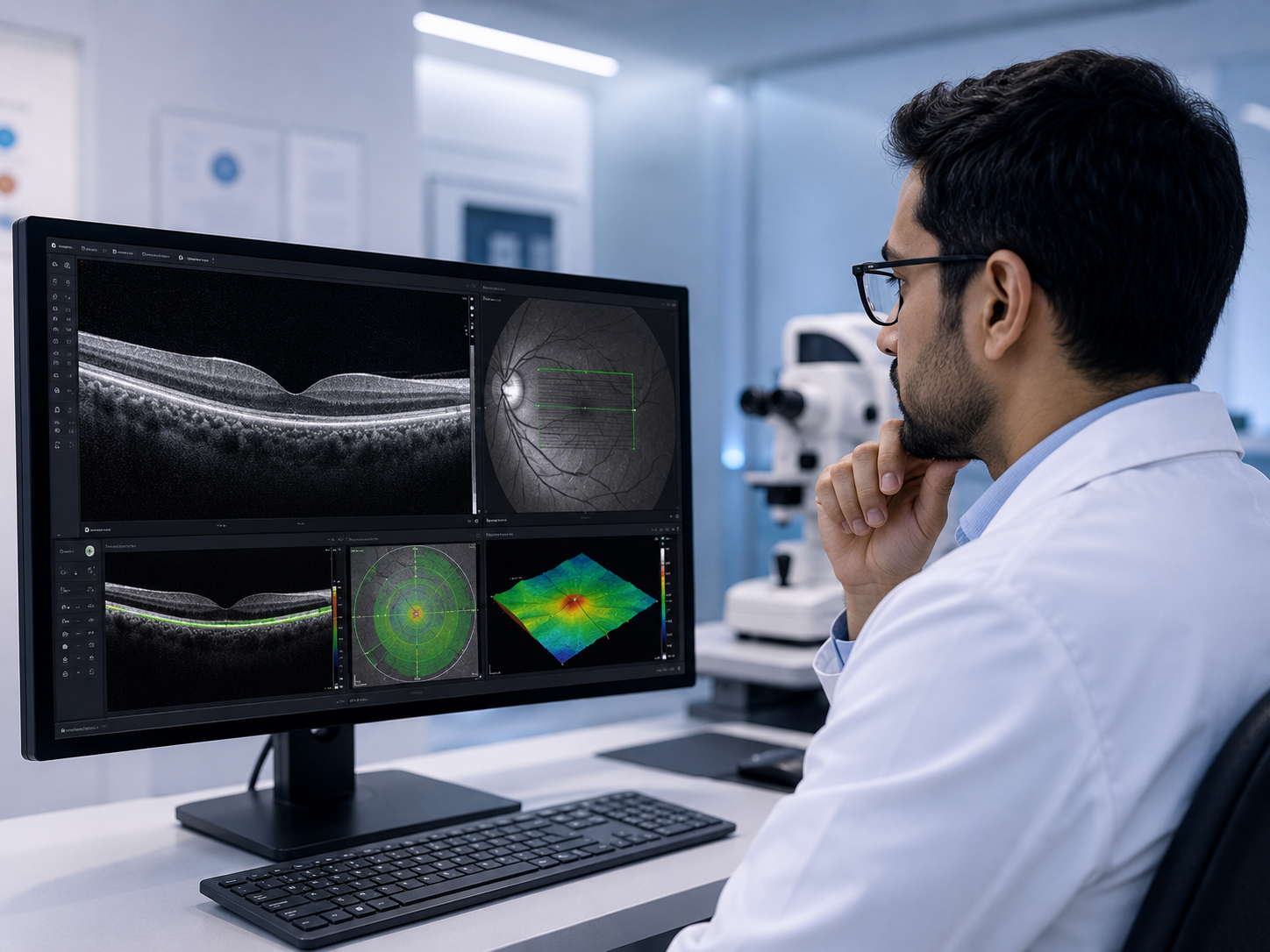
Types of Retinal Diseases
We diagnose and treat the full range of retinal conditions — medical and surgical — in one NABH-accredited centre.
Diabetes-related damage to the retinal blood vessels — the most common retinal condition we see, and often symptom-free until late.
Central-vision loss with age. The “wet” form is less common but accounts for about 90% of severe AMD-related vision loss (AAO), and responds well to timely injections.
The retina separates from the back of the eye — a surgical emergency. Treated the same day wherever possible.
A blocked retinal vein causing swelling and bleeding, usually managed with injections and laser.
Scar tissue or traction distorting central vision — corrected surgically when it starts to affect your reading vision.
An inherited, progressive retinal condition — monitored, supported and managed with low-vision care.
A retinal condition in premature babies. India carries one of the highest ROP burdens in the world, and most ROP-related blindness is preventable with timely screening and treatment.
A tear in the retina, often heralded by a sudden shower of floaters — sealed with laser before it becomes a detachment.
Sources: wet-AMD share of severe AMD vision loss — American Academy of Ophthalmology; ROP burden — Blencowe et al. 2016, GBD 2021.
What is Retina?
The retina is the thin, light-sensitive layer at the back of your eye. It works like the film in a camera: it captures the light entering your eye and sends those signals to your brain, which turns them into the image you see. When the retina is damaged — by diabetes, ageing, a tear, or an injury — that signal breaks down, and vision can blur, distort or disappear in part of your field.
Retina treatment is the medical and surgical care we use to repair that damage and stabilise vision. Depending on the condition, that can mean laser therapy, medicated injections into the eye, or retinal surgery such as a vitrectomy. Because retinal tissue does not regenerate the way skin does, timing matters — treating a problem early usually protects far more sight than treating it late. If you have been told you have a retinal condition, or you are living with diabetes and haven’t had your retina checked, our specialists can examine the back of your eye in detail and tell you plainly where you stand.
Causes of Retinal Diseases
Retinal disease can start for several reasons. Knowing which applies to you helps us plan the right treatment.
Diabetes and high blood pressure: uncontrolled blood sugar damages the tiny blood vessels of the retina — this is diabetic retinopathy, and in India roughly one in six people with diabetes (about 16.9%) has some degree of it, with around 3.6% at a sight-threatening stage (Vashist et al., population study). High blood pressure causes similar vessel damage.
Ageing: age-related macular degeneration (AMD) affects the central retina and is a leading cause of vision loss after 50.
Inherited conditions: genetic disorders such as Usher syndrome, Stargardt disease and retinitis pigmentosa can progressively damage the retina.
Eye injuries and trauma: a blow to the eye can tear or detach the retina.
After eye surgery or with age: scar tissue can form on the retina (macular pucker).
Inflammation and infection: certain autoimmune conditions or cytomegalovirus retinitis can also harm the retina.
If any of these apply to you, or you’re experiencing symptoms, consult with our doctors for an expert diagnosis and a treatment plan matched to your condition. You can read more about how the retina works on our blog.
Symptoms of Retinal Diseases
Retinal problems often cause no pain, which is exactly why they get missed. See a specialist promptly if you notice:
Floating specks, dots or cobweb-like shapes (floaters), especially a sudden shower of them
Flashes of light in your side vision
Blurred or distorted vision — straight lines looking wavy or bent
A dark curtain, shadow or missing patch in your side (peripheral) vision
Sudden or gradually worsening vision loss
A sudden increase in floaters and flashes, or a curtain moving across your vision, can signal a retinal tear or detachment — an emergency. Do not wait for it to settle. Contact Dayal Eye Centre the same day so we can examine your retina.
Same-Day Retina Check — Call NowRetinal Specialists in Gurgaon
Retinal care is a super-specialty, and it is led here by fellowship-trained vitreoretinal surgeons.

Together with our wider team, they deliver retinal care backed by advanced imaging and modern surgical equipment. Book your consultation to get a complete diagnosis and an honest plan for your eye.
How Are We the Best for Retinal Treatment in Gurgaon?
Diagnosis
Accurate retinal treatment starts with an accurate look inside your eye. Your assessment with us typically includes:
Medical history review — diabetes, blood pressure, previous eye problems — because these shape retinal disease.
Detailed eye examination — focused on the retina and macula.
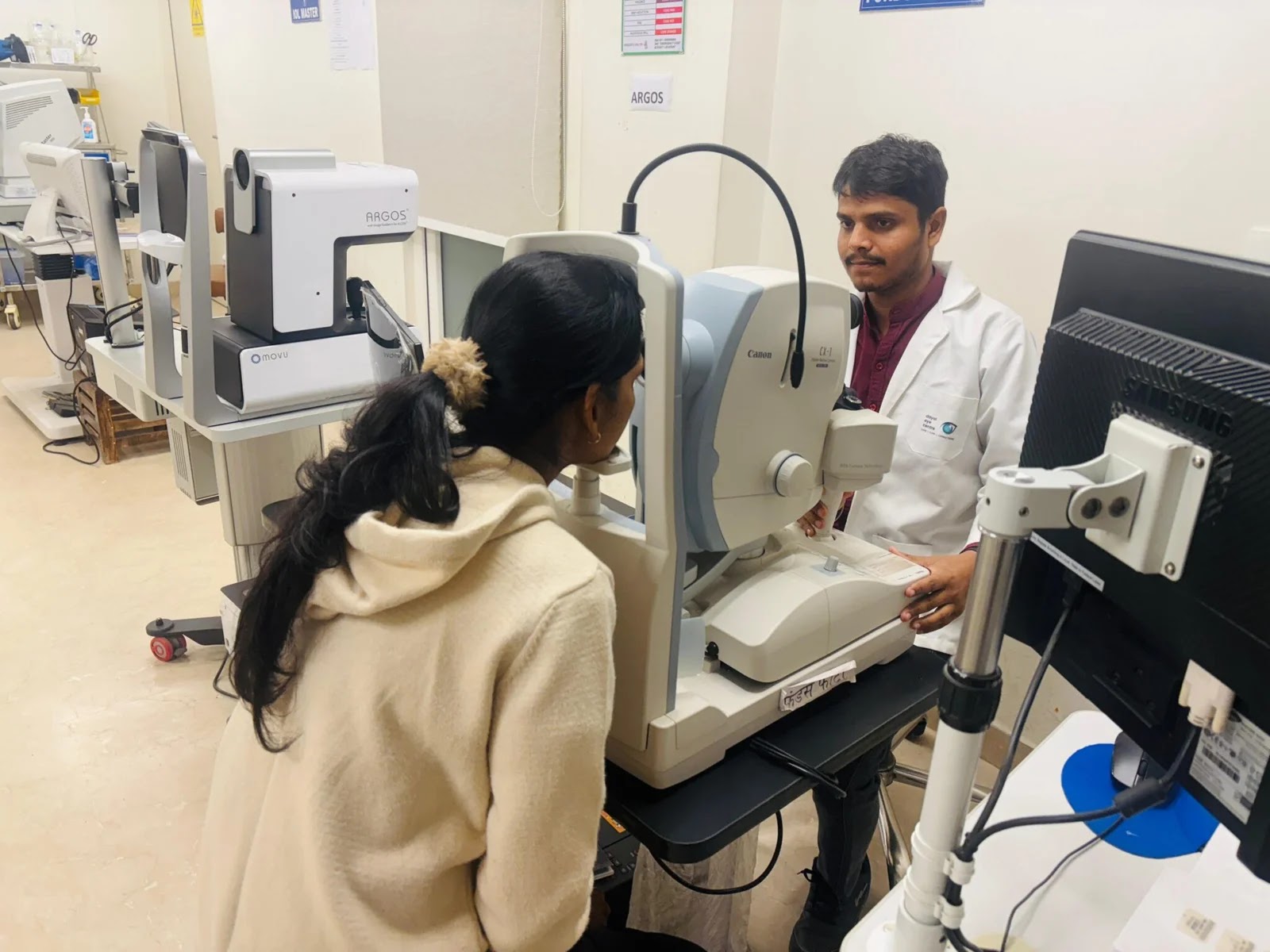
Dilated fundus exam — we use eye drops to widen your pupil so we can examine the retina thoroughly.
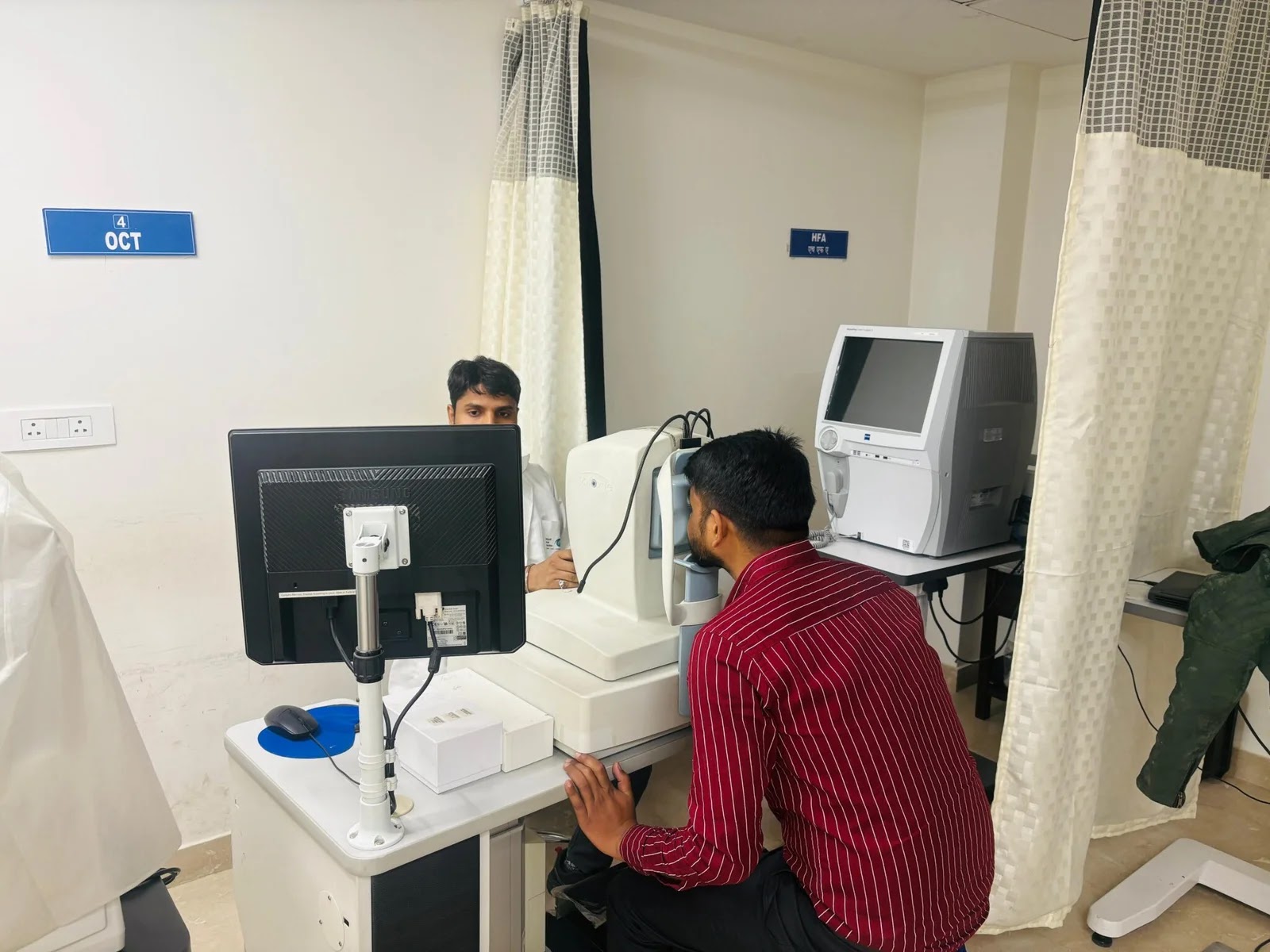
Optical Coherence Tomography (OCT) — a quick, non-contact scan that captures high-resolution, cross-section images of your retina.
OCT angiography — a dye-free scan that maps the blood flow in your retina in 3D.
Fluorescein angiography — a dye test that shows leaking or blocked retinal blood vessels.
B-scan ultrasound — used when bleeding or a dense cataract blocks a clear view of the retina.
The Imaging Behind Your Retina Diagnosis
Named platforms, in-house — so your scans, your treatment and your follow-up all happen under one roof.
Patient’s Feedback
 2,508 reviews
Individual results vary. Outcomes depend on your diagnosis, how early treatment began, whether the macula was affected and your overall eye health. Testimonials shared with patient consent, initials only.
More Details About Retinal Surgery in Gurgaon
Total Cost
The cost of retinal surgery depends on your diagnosis, the procedure required (injection, laser or surgery), the technique, and whether one or both eyes need treatment. Because every retina is different, we confirm your cost only after an examination — and we explain what is included before you decide. See the detailed cost note below, and speak to our team about cashless and Easy EMI options.
Cost for Retinal Detachment surgery in Gurgaon
As a guide, retinal (retinal detachment) surgery in Gurgaon commonly starts from around ₹51,000 and ranges up to about ₹85,000 per eye, depending on the technique used and the complexity of your case. This is an indicative starting range, not a fixed quote — your final cost is confirmed after a consultation and eye examination, and depends on the procedure, any implants (such as gas or silicone oil), and follow-up care.
Individual results and costs vary based on your eye condition, the type of procedure, whether one or both eyes are treated, and your overall eye health. Please consult our doctors for a personalised assessment.
Pyment Options Available in Dayal Eye Centre
We aim to make retinal treatment affordable and accessible:
Spread the cost of retinal treatment into comfortable monthly instalments — our counsellors set it up for you.
Direct settlement with a wide range of insurers and TPAs, with pre-authorisation handled by our team.
Including support for eligible public-sector panels and scheme beneficiaries.
Our billing team will walk you through the options that apply to you. Consult with our doctors and ask about payment plans when you book.
Frequently Asked Questions
Answers to the questions patients ask most about retinal conditions, treatment, recovery and cost in Gurgaon.
Medically reviewed by Dr. Neelam Khatwani, MBBS, DNB (Gold Medalist) — Vitreo-Retina & Uvea Surgeon, Dayal Eye Centre · Last reviewed: 31 July 2026 · Editorial Policy