Oculoplasty is plastic and reconstructive surgery of the structures around the eye — the eyelids, the tear drainage system, the eye socket (orbit) and the bones behind it. It is performed by an ophthalmologist with additional fellowship training, because millimetres here decide both how you see and how you look.
Half of what we do restores function — lifting a lid off the pupil, unblocking a tear duct, rebuilding after trauma or a tumour. The other half is aesthetic — removing hooded skin, eye bags and dark hollows. Both are done in the same NABH-accredited theatre, usually as day care.
Oculoplastic surgery · Eyelid surgery · Ophthalmic plastic surgery · Orbit & oculofacial surgery
Oculoplasty, Orbit & Ocular Aesthetics
Most people live with these for years, assuming nothing can be done or that it is “only cosmetic”. Both halves below are treated by the same specialist, in the same sitting where appropriate.
These affect how your eye works and are usually insurance-covered.
An upper eyelid that droops over the pupil, so you raise your brow or tilt your head back to see.
Constant watering that runs down the cheek, or a sticky discharge and swelling near the inner corner.
Lashes rubbing against the eye, or a lid that has fallen away from the eyeball leaving it exposed.
A lump, ulcer or a lash-line lesion that bleeds, crusts or keeps growing.
An eye that looks pushed forward, or double vision after a blow to the face.
A child whose eyelid covers part of the pupil, or who tilts the chin up to see.
Elective, self-paid, and just as carefully planned.
Hooded upper lids that make eye make-up disappear and the face look tired.
Puffy lower lids or eye bags that are there from the moment you wake up.
Dark circles caused by a hollow under the eye rather than by pigment.
Crow’s feet and fine lines that deepen every time you smile.
Eyes that look asymmetric in photographs — one lid noticeably lower than the other.
Being told you look exhausted or unhappy when you feel neither.
Oculoplasty is measured in millimetres and judged in the mirror for the rest of your life. It deserves a dedicated surgeon, not an occasional one.
Orbit · Oculoplasty · Ocular Aesthetics
MBBS, MD (AIIMS), FICO (UK), FAICO (Oculoplasty)
MD in Ophthalmology from Dr. R.P. Centre, AIIMS New Delhi, followed by an Oculoplasty and Ocular Aesthetics fellowship at Leicester University, UK. She now works exclusively in periocular plastic and reconstructive surgery — seventeen years in, this is all she does.
Five reasons specific to eyelid, tear duct and orbital surgery — not a general hospital list.
Not a general ophthalmologist who occasionally operates on lids — periocular plastic and reconstructive surgery is the whole of her practice.
The same team that repairs a lid after trauma also does the cosmetic work, so form and function are planned in one sitting rather than in sequence.
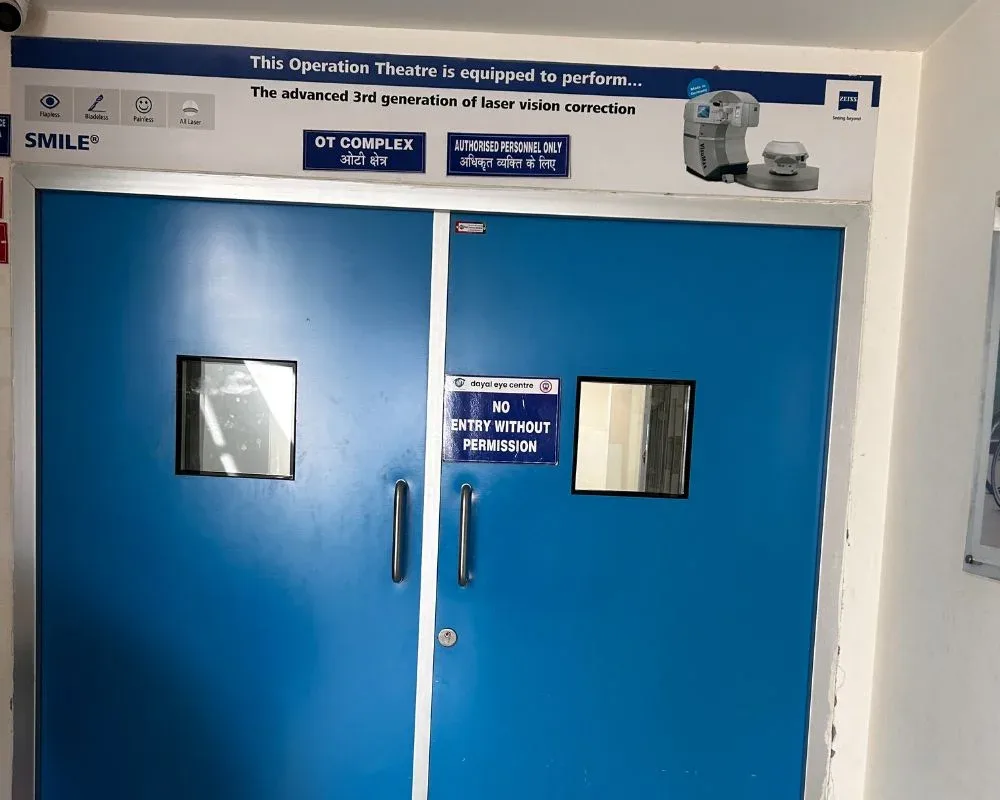
Audited infection control, laminar flow and full anaesthesia support — needed for orbital, paediatric and general-anaesthesia cases.
Cornea, retina, glaucoma and paediatric colleagues on hand for when a lid problem turns out to be more than a lid problem.
An itemised estimate before admission, cashless where your policy allows, and Easy EMI for elective aesthetic work.
Watering, redness and irritation can come from the lids, the tear duct or the ocular surface. One consultation sorts out which, and you are seen by the right sub-specialist the same day where possible.
Meet the full specialist teamEleven procedures across eyelid, tear duct, orbit and aesthetics — all under one roof, all performed by a fellowship-trained oculoplasty surgeon.
Ptosis, DCR, entropion, ectropion, tumours, trauma, thyroid eye disease and socket surgery exist to protect vision and comfort. These are medical procedures, documented as such, and are usually claimable through your health insurance — our desk handles the paperwork, cashless where your policy allows.
Blepharoplasty, Botox and tear-trough fillers are elective and self-paid. We approach them conservatively: the aim is to look rested rather than altered, and we will tell you plainly when a procedure will not give you what you are hoping for.
Eyelid surgery is measured surgery. Before anything is planned we record lid height and crease position, levator muscle function, tear film and corneal health, and — where relevant — how the lids sit against your own facial proportions.
For watering eyes we syringe the tear passage to confirm where the blockage is. For orbital problems we correlate the examination with a CT or MRI scan. You leave the first visit knowing which procedure is being recommended, why, and what it will cost.
What a comprehensive eye check includesYou report fasting as advised. The surgeon marks the eyelid with you sitting upright — lid position changes when you lie down, so this is done before, not on the table.
Most procedures use local anaesthesia with light sedation, so you are comfortable and awake enough to open and close the eye when asked. Children and orbital work use general anaesthesia.
Thirty to ninety minutes for most eyelid and tear duct procedures. Incisions follow the natural crease, lash line or the inside of the lid wherever the anatomy allows.
For ptosis and lid surgery the height and contour are checked against the other side during the procedure and adjusted before closing — the reason local anaesthesia is preferred.
Two to three hours of observation, cold compresses, drops and a written aftercare sheet. You go home the same day and are reviewed the next morning.
Ranges below are indicative for Gurgaon and cover the surgeon, theatre, anaesthesia and routine follow-up. Your written estimate is confirmed after examination.
| Procedure | Type | Insurance | Indicative Cost |
|---|---|---|---|
| Chalazion / small lid lesion | Functional | Usually covered | ₹8,000 – ₹18,000 |
| Entropion / ectropion repair | Functional | Usually covered | ₹30,000 – ₹55,000 |
| DCR — external | Functional | Usually covered | ₹35,000 – ₹60,000 |
| DCR — endoscopic | Functional | Usually covered | ₹50,000 – ₹85,000 |
| Ptosis correction (per eye) | Functional | Covered if vision affected | ₹45,000 – ₹85,000 |
| Eyelid tumour excision & reconstruction | Functional | Usually covered | ₹60,000 – ₹1,50,000 |
| Socket surgery with custom prosthesis | Functional | Usually covered | ₹60,000 – ₹1,40,000 |
| Orbital fracture repair | Functional | Usually covered | ₹85,000 – ₹1,80,000 |
| Orbital decompression (thyroid eye disease) | Functional | Usually covered | ₹1,20,000 – ₹2,50,000 |
| Upper lid blepharoplasty (both eyes) | Aesthetic | Not covered | ₹55,000 – ₹1,10,000 |
| Lower lid blepharoplasty (both eyes) | Aesthetic | Not covered | ₹65,000 – ₹1,25,000 |
| Botox (per session) | Aesthetic | Not covered | ₹12,000 – ₹25,000 |
| Tear-trough filler (per syringe) | Aesthetic | Not covered | ₹25,000 – ₹45,000 |
Figures are per procedure unless stated, and assume day-care surgery. Bilateral surgery, general anaesthesia, implants, prostheses and inpatient stay are quoted separately.
The questions patients ask us most before eyelid, tear duct and orbital surgery.
Related: Dr. Saurbhi Khurana · Comprehensive eye checkup · Insurance & cashless · Eye care glossary
Medically reviewed by Dr. Saurbhi Khurana, Oculoplasty & Orbit Surgeon · Last reviewed: 26 July 2026 · Editorial Policy