NABH Accredited 20+ Years 1.2 Lakh+ Surgeries International Patients Mon–Sat · 8:30 AM–7:30 PM +91 81786 39701
NABH Accredited
Dayal Eye Centre
Contact
Book an AppointmentHow would you like to go ahead?
Self BookingPick your doctor, date and slot. Booking RequestLeave your number — our counsellors call you. Mon–Sat 8:30 am – 7:30 pm · Sunday closed
NABH · Gurugram

Need a second opinion on your eyes?

Leave your number. A specialist calls you back today.

Available now

Call us from your phone

Copy the number, or leave your details and we will call you back.

+91 81786 39701

Mon–Sat · 8:30 AM–7:30 PM · Sector 15, Gurugram
Eye Condition

Myopia (Nearsightedness) — Symptoms, Causes & Treatment in Gurgaon

If distant things look blurred while close-up work stays sharp, that is myopia — the most common vision problem we see, and one of the most treatable. Whether it is a child whose power keeps rising or an adult ready to leave glasses behind, our specialists find the right plan for your eyes.

NABH Accredited
20+ Years
Child Myopia Management
All Correction Options
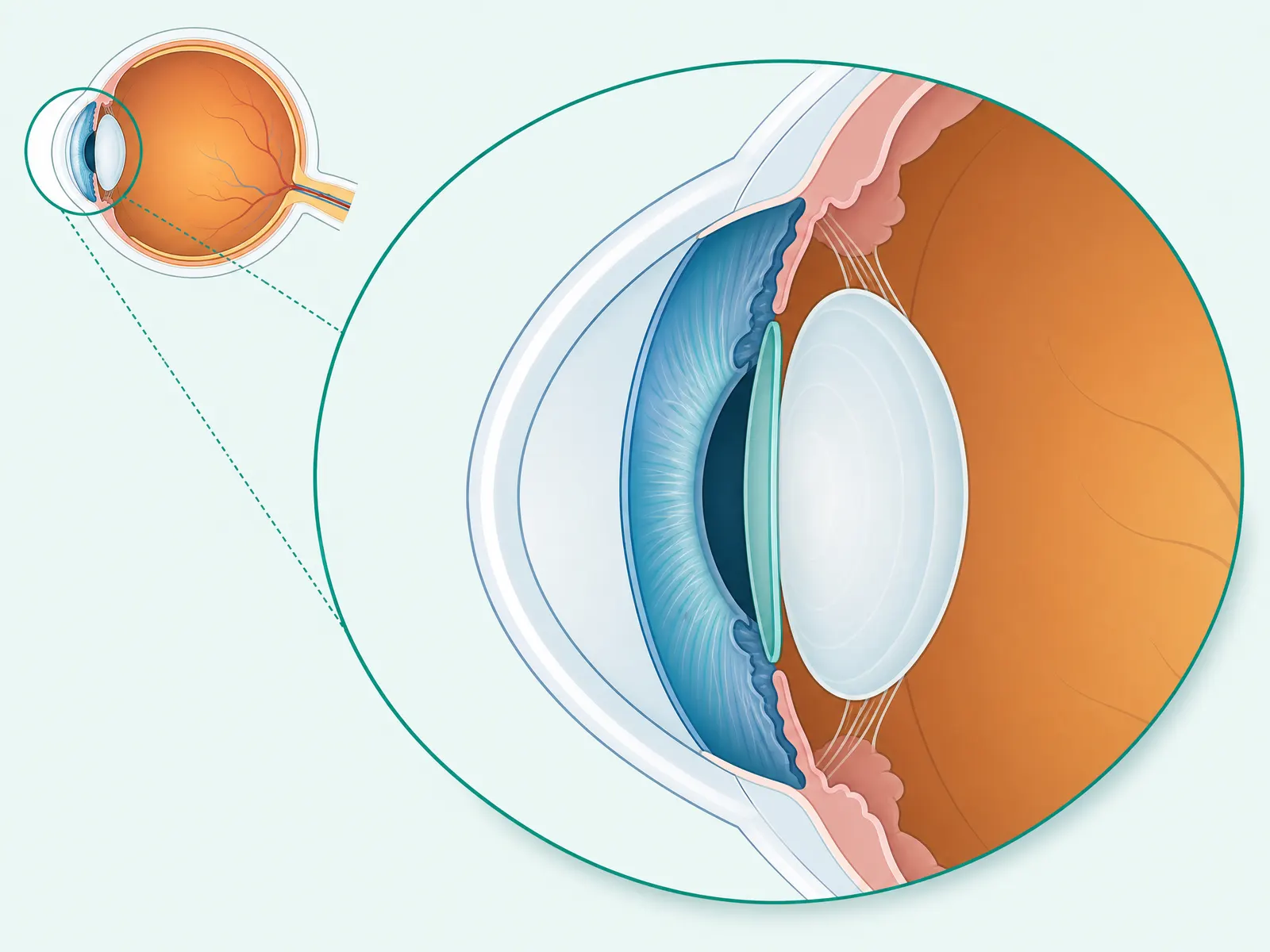
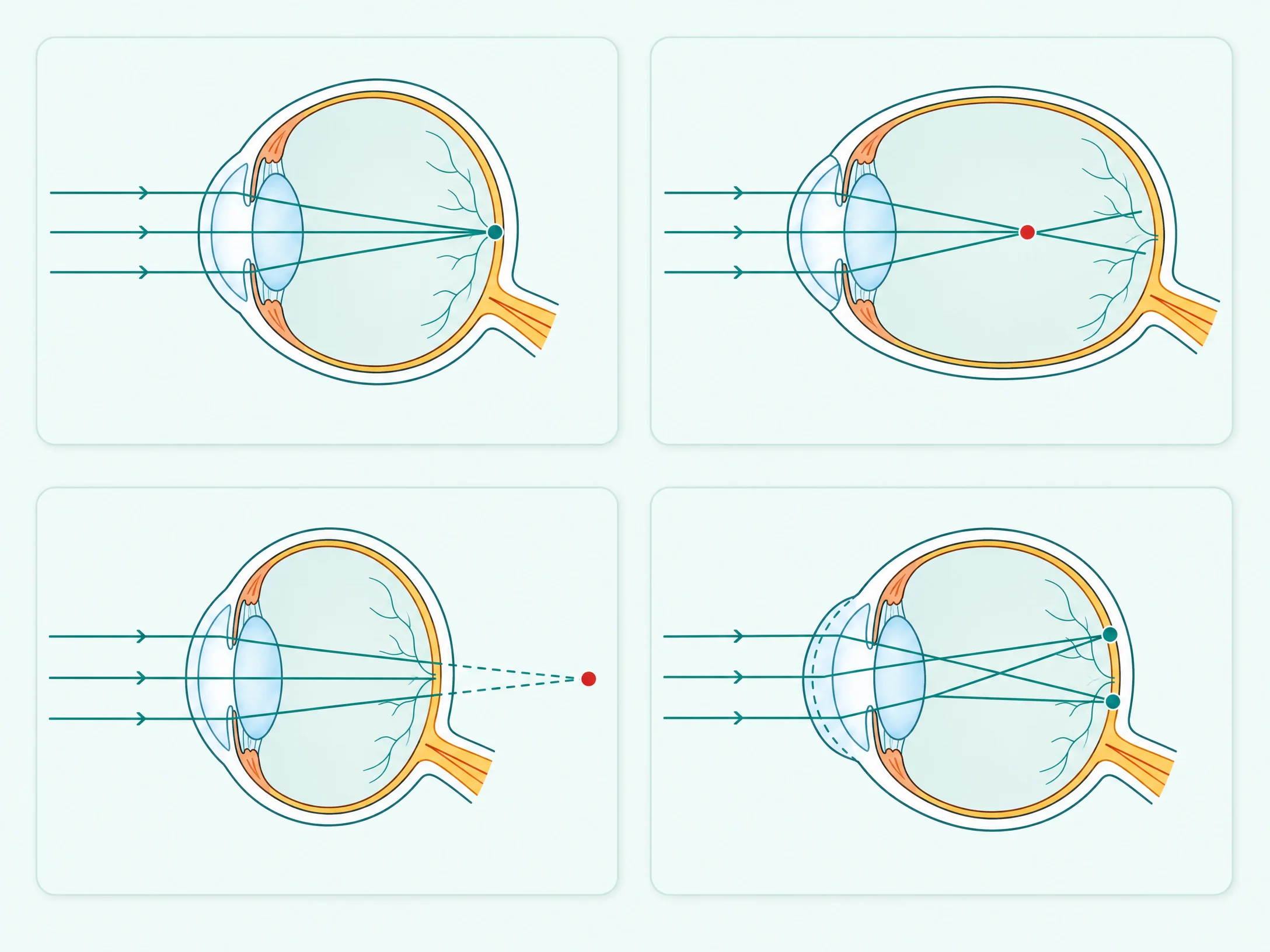
How myopia focuses light in front of the retina instead of on it

In a myopic eye, light focuses in front of the retina — so distance blurs

In Short

Myopia is a refractive error: the eyeball grows slightly too long, or the cornea curves too steeply, so light focuses just in front of the retina instead of on it. Distance vision blurs; near vision usually stays clear.

It is not a disease of the eye and it is not caused by reading in dim light. It cannot be reversed by exercises or drops — but it can be corrected, and in children its progression can be slowed.

Also Called

Nearsightedness · Short-sightedness · “Minus power” · Door ka number

Specialty

Refractive Services & Paediatric Ophthalmology

20+
Years of specialist eye care in Gurgaon
1.2 Lakh+
Surgeries performed at the centre
6
Ways myopia can be corrected or controlled here
NABH
Accredited multi-speciality eye hospital
Symptoms

How Do You Know If You Have Myopia?

Adults usually notice it themselves. Children almost never do — they assume the world looks this way for everyone, so parents and teachers are often the first to spot it.

Signs in Adults & Teenagers

Distant boards, road signs and number plates look blurred while your phone stays sharp.

You narrow your eyes to make far-away things clearer.

Headaches or aching eyes after driving, meetings or a long day of screens.

Night driving feels harder — headlights glare and edges lose definition.

You need to sit closer to the television than others in the room.

Your glasses or lens power has changed more than once in recent years.

Signs in Children — A Parent’s Checklist

Any one of these is worth an eye check.

Sitting very close to the television, or holding books and tablets close to the face.

Screwing up the eyes or tilting the head to look at the board.

Copying from the blackboard has become slow, or marks have quietly dropped.

Frequent eye rubbing, blinking or complaints of headache after school.

Losing interest in outdoor games and sport that need distance vision.

Sitting at the front of the class to see, or asking friends what is written.

Causes

What Causes Myopia?

Clear vision depends on light landing exactly on the retina. In a myopic eye the eyeball is slightly too long from front to back, or the cornea is curved too steeply — either way, light comes to a focus just short of the retina and distance images blur.

Most myopia begins in childhood, between roughly six and fourteen years, as the eye grows. It typically increases through the growing years and settles in the late teens or early twenties.

Genetics matter most — a child with one myopic parent is at higher risk, and with both parents higher still. Environment then shapes how fast it progresses.

Risk Factors

Family historythe strongest single factor; risk rises with one myopic parent and rises further with two.

Ageonset is most common between six and fourteen, and progression tracks the growing years.

Prolonged near worklong hours of reading, study and screens without breaks are linked to faster progression.

Little time outdoorschildren who spend less time in daylight are at higher risk — outdoor time appears protective.

Urban living and schooling pressureboth are associated with the rising rates of childhood myopia seen across India and Asia.

Types & Grades

How Much Myopia Do You Have?

Myopia is measured in dioptres (D) — the minus number on your prescription. The grade guides both which treatments suit you and how closely your retina needs watching.

Up to −3.00 D
Low myopia

Usually corrected easily with glasses, contact lenses, Ortho-K or laser vision correction. Retinal risk is close to that of a normal eye.

−3.00 to −6.00 D
Moderate myopia

Most correction options still apply. Regular checks matter, and corneal thickness decides whether laser or an ICL is the safer route.

Beyond −6.00 D
High myopia

Correction is very possible, often with an ICL. The priority alongside vision is lifelong retinal monitoring, because the eye is stretched.

Degenerative (Pathological) Myopia

A small proportion of very high myopia keeps progressing into adulthood and stretches the retina and choroid enough to affect vision permanently. It needs long-term retinal monitoring rather than correction alone — our OCT imaging and dilated retinal examination are used to track it.

Diagnosis

How Myopia Is Diagnosed

Confirming myopia takes minutes; deciding what to do about it takes a full workup. A comprehensive examination measures not just your number but the shape, thickness and length of your eye — the details that determine which treatments are safe for you.

In children we use cycloplegic refraction — drops that relax the focusing muscle — because an active young focusing system can otherwise disguise the true power.

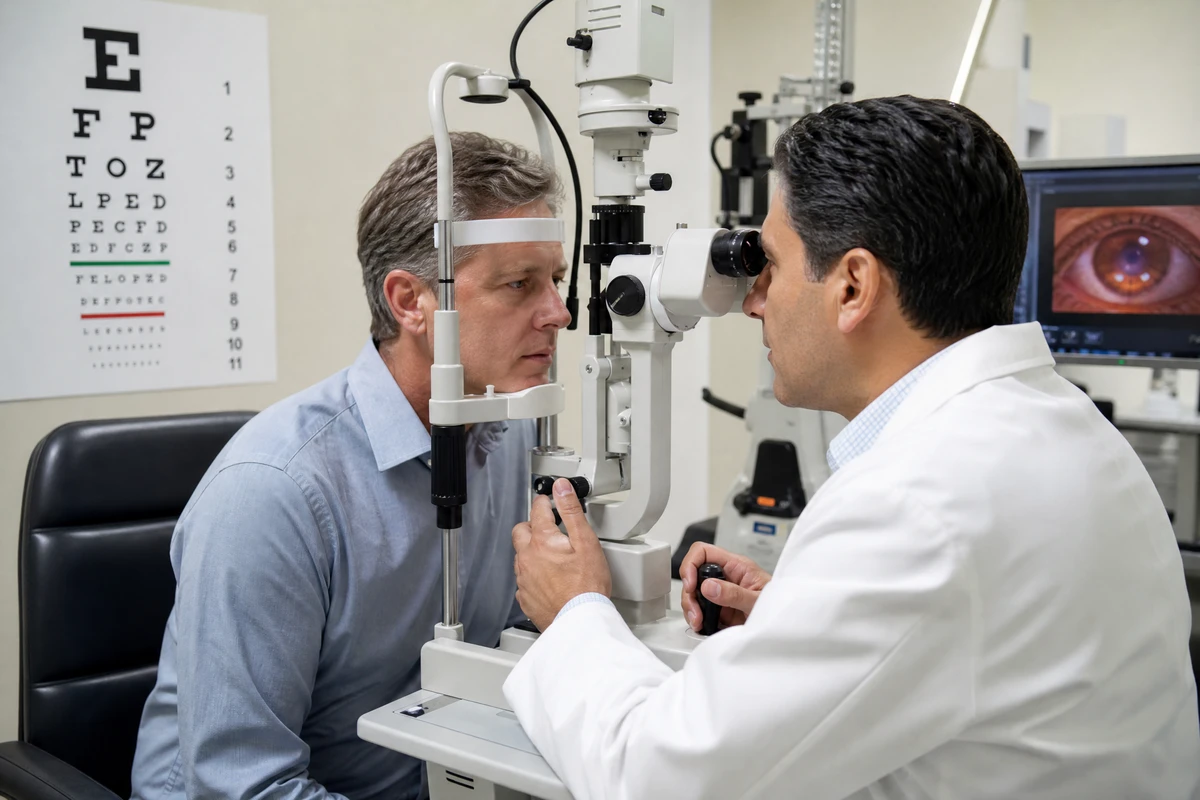
What a comprehensive eye check includes
Visual acuity testing during a myopia assessment at Dayal Eye Centre
Visual acuity testing on a vision chart at Dayal Eye Centre

Visual Acuity Test

The vision chart — how much detail each eye can resolve at distance, with and without correction.

Subjective refraction being performed to find the exact power

Refraction

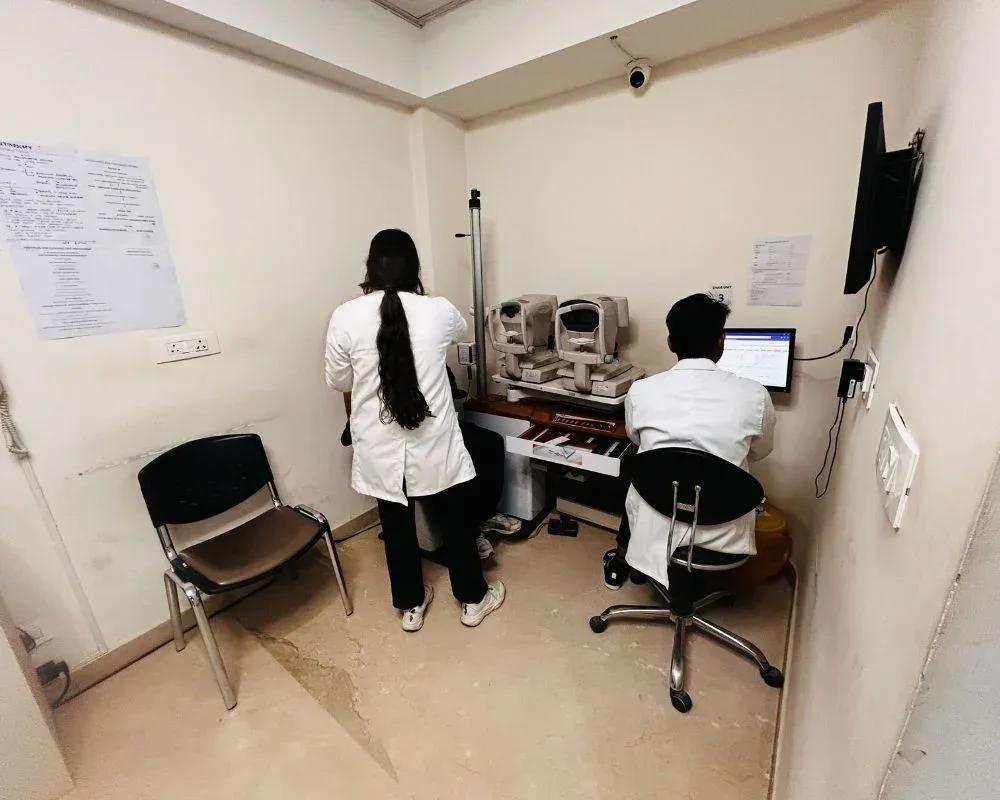
Autorefractor followed by subjective refraction to arrive at the exact power that gives you your clearest vision.

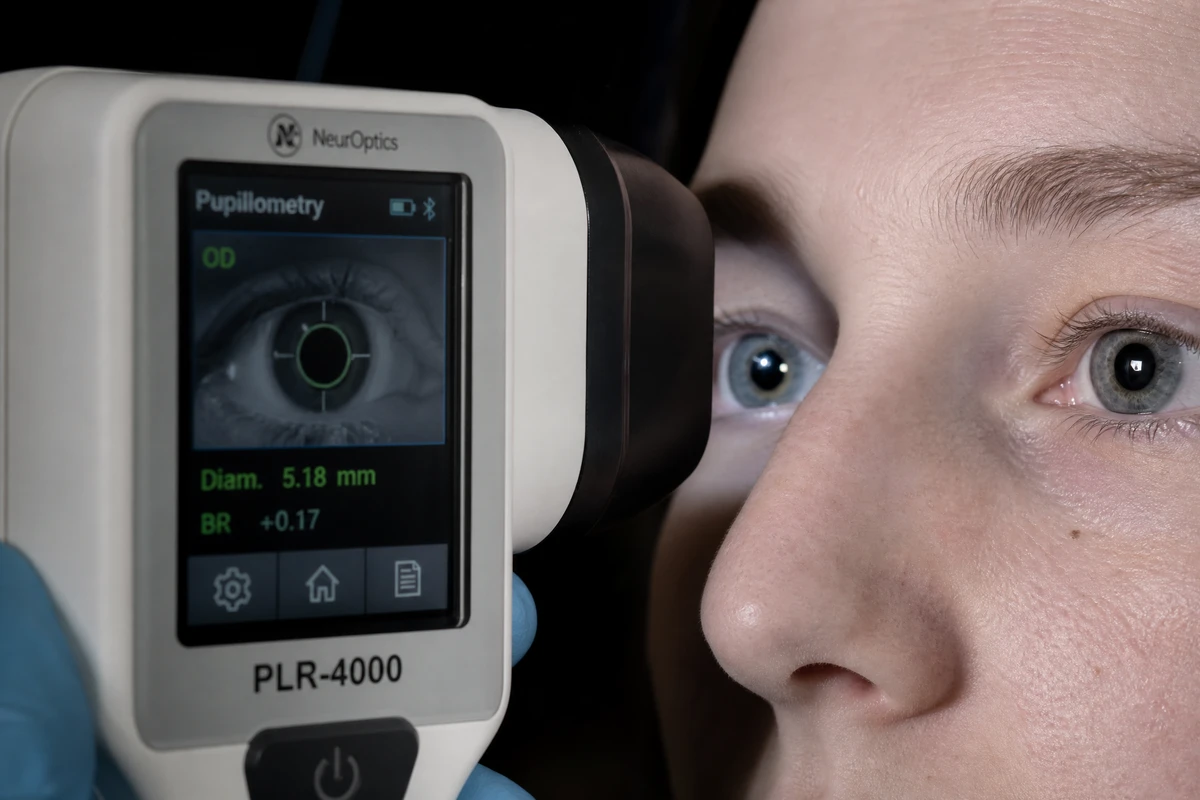
Pupil assessment before cycloplegic refraction

Cycloplegic Refraction

Drops relax the focusing muscle so a child’s true power is measured. Standard for young patients.

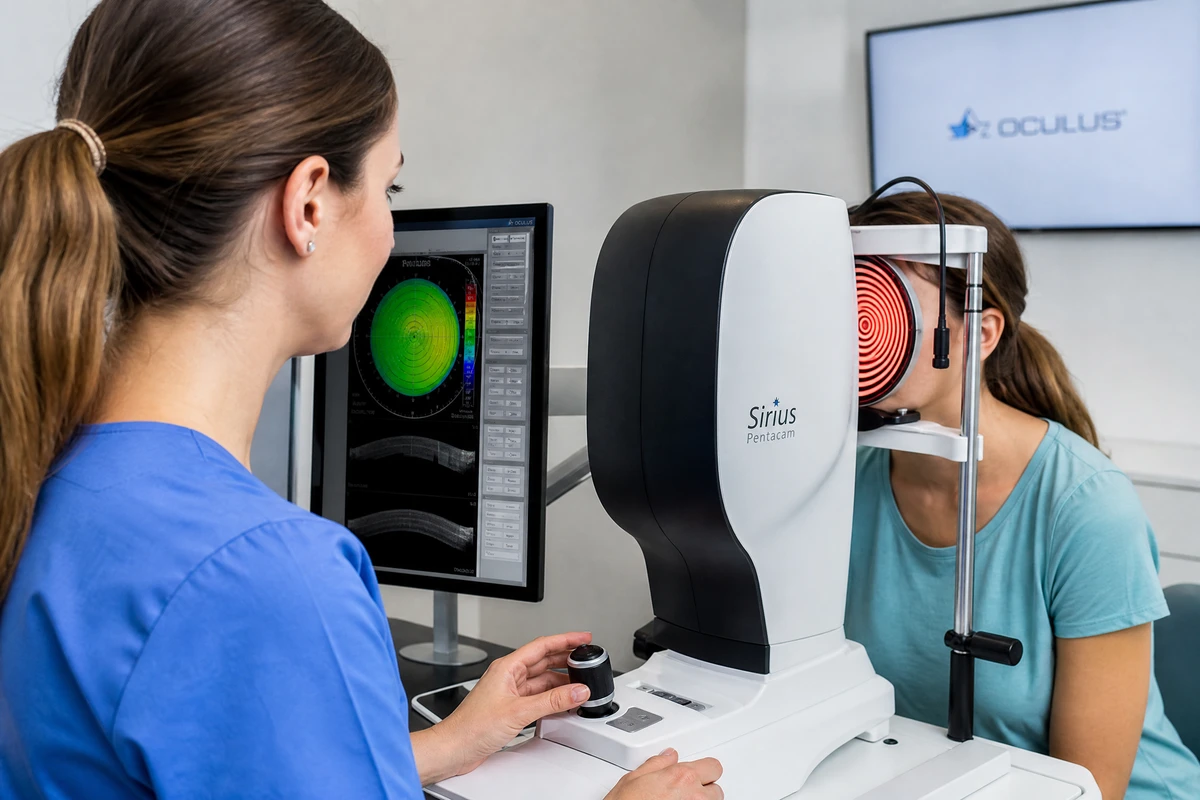
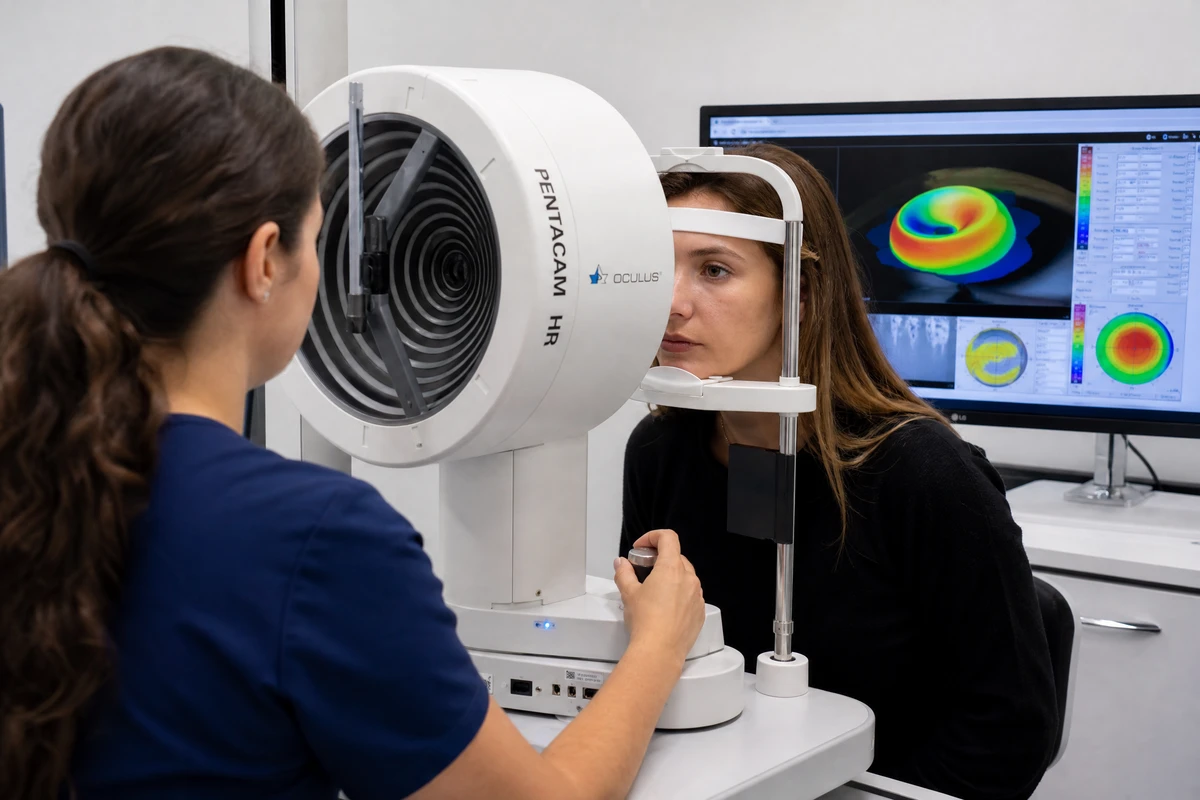
Corneal topography scan mapping the shape of the cornea

Corneal Topography

The OCULUS Pentacam maps corneal shape and thickness — essential before laser or an Ortho-K fitting.

Biometry measuring the axial length of the eye

Axial Length Measurement

The ZEISS IOLMaster 700 measures the length of the eye — the number that tracks whether a child’s myopia is truly progressing.

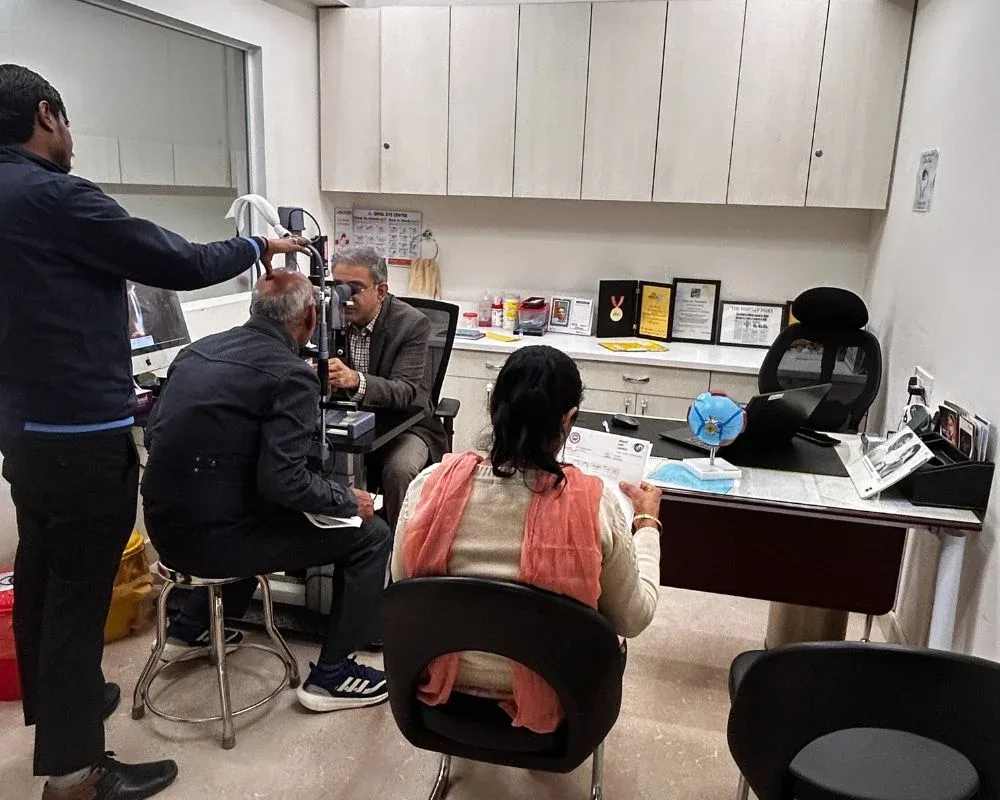
Slit-lamp and dilated retinal examination at Dayal Eye Centre

Dilated Retinal Examination

A close look at the peripheral retina for thinning, holes or tears. Non-negotiable in high myopia.

Treatment

How Myopia Is Treated

There is no single best treatment — only the one that fits your age, your number, your cornea and your life. Here is the full range available at our centre, and who each option usually suits.

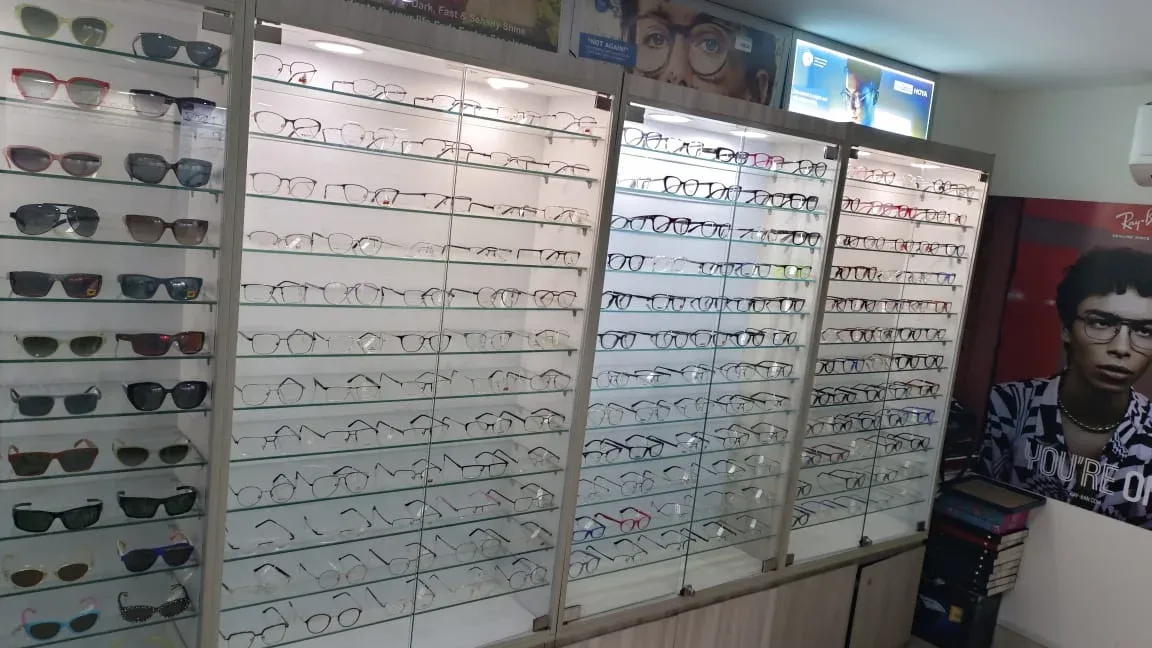
Spectacle frames at the Dayal Eye Centre optical counter Non-surgical

Spectacles

The simplest, safest correction, suitable at any age and the starting point for almost every child. Modern lens designs can also form part of a myopia-control plan.

Best for: All ages, any power

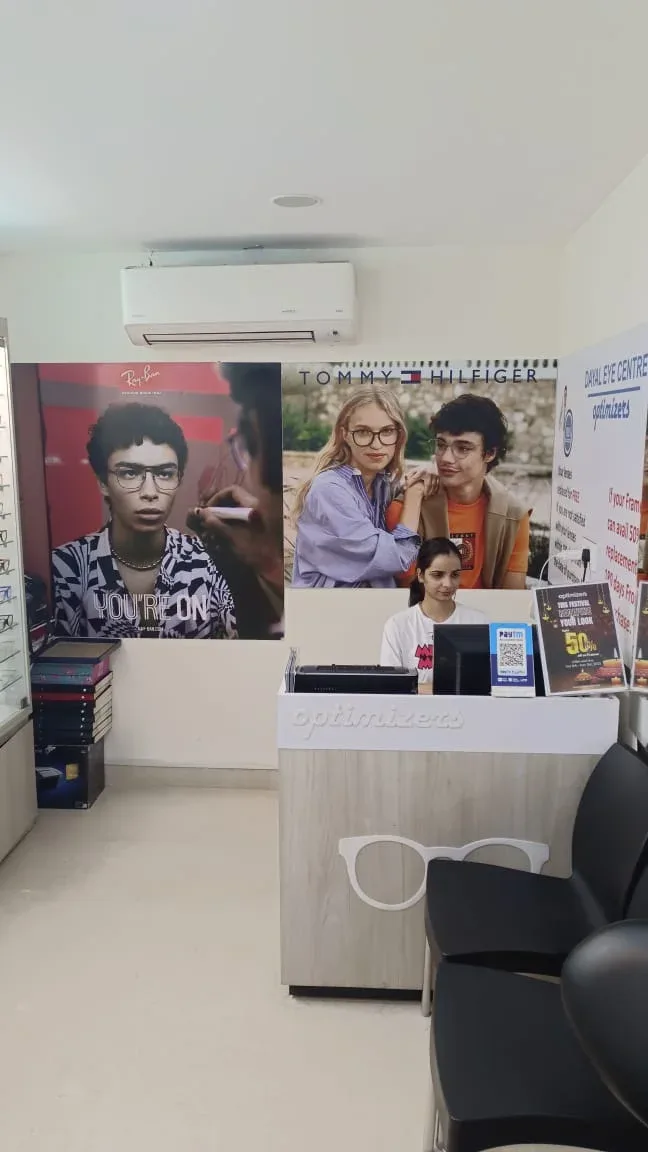
Contact lens and optical counter at Dayal Eye Centre Non-surgical

Contact Lenses

Daytime soft lenses give a wider field of view than glasses and suit sport and work where frames get in the way. They need disciplined hygiene and periodic review.

Best for: Teens and adults who prefer glasses-free days

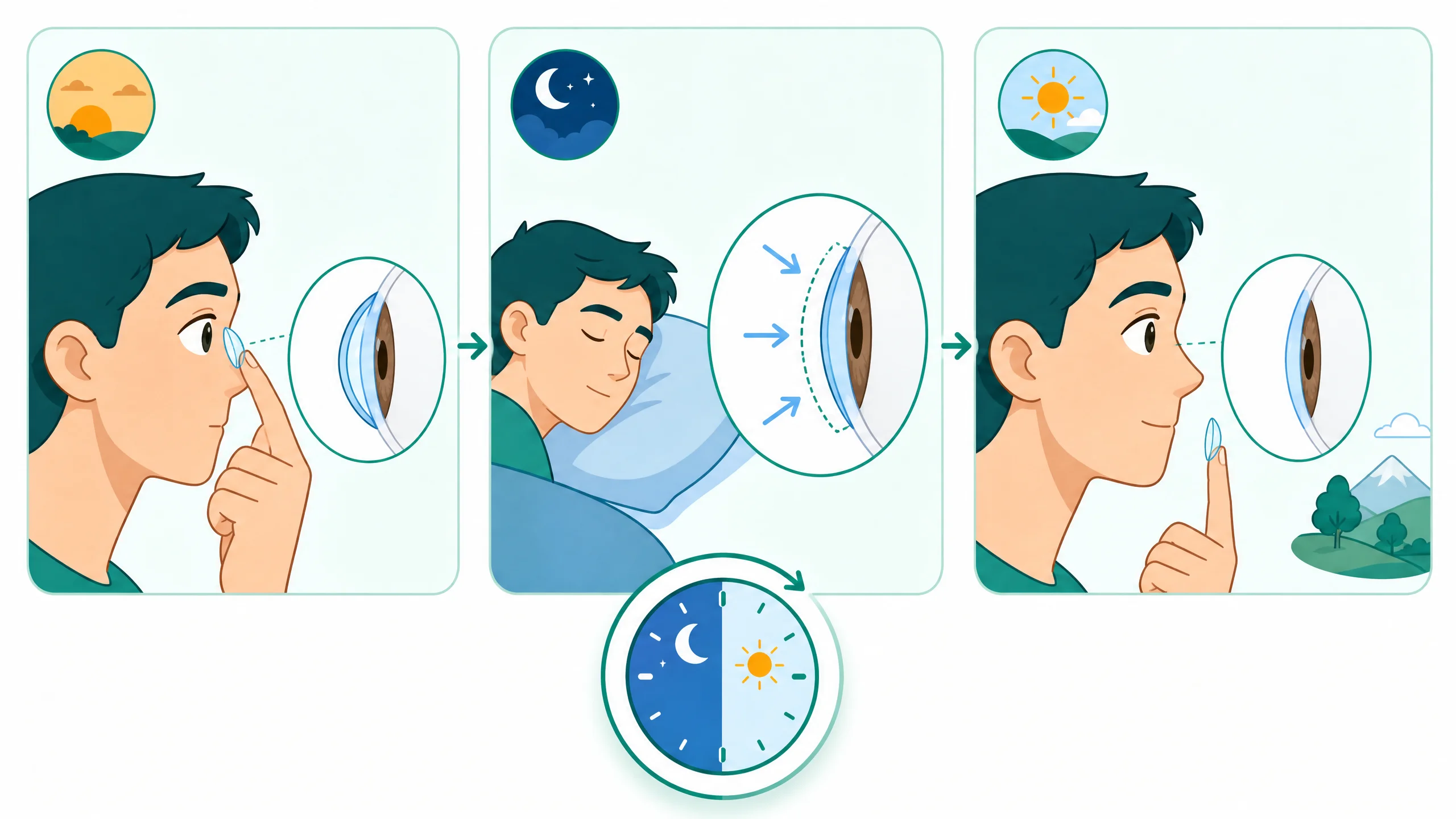
How Ortho-K lenses reshape the cornea overnight Non-surgical · Reversible

Ortho-K Lenses

Custom lenses worn only at night gently reshape the cornea while you sleep, giving clear vision through the day. Reversible, and widely used in childhood myopia management.

Best for: Children with rising power; adults not ready for surgery

About Ortho-K
Prescribed eye drops used in childhood myopia management Medical

Low-Dose Atropine

A nightly eye drop, prescribed and supervised by a specialist, used alongside glasses to slow how quickly a child’s myopia advances. It does not remove existing power.

Best for: Children with documented progression

Discuss with a specialist
Laser vision correction being performed at Dayal Eye Centre Surgical · Permanent

LASIK, SMILE & Contoura Vision

A one-time laser procedure that reshapes the cornea to correct your power. We are the only centre in Gurgaon offering Contoura Vision and SMILE under one roof.

Best for: Adults 18+ with a stable prescription and adequate corneal thickness

About laser vision correction
An implantable collamer lens positioned inside the eye Surgical · Lens-based

ICL (Implantable Lens)

A soft corrective lens placed inside the eye, without removing corneal tissue. The usual answer when the power is high or the cornea is too thin for laser.

Best for: High myopia, thin corneas, dry-eye-prone patients

Check your suitability

Not everyone is a candidate for every option. Suitability, benefits and risks depend on your prescription, corneal thickness and shape, age and overall eye health, and can only be determined after a detailed evaluation with our doctors.

For Parents

When a Child’s Power Keeps Rising

Glasses correct today’s vision but do not slow tomorrow’s increase. Myopia management is a separate plan, and the earlier it starts, the more years of progression there are to influence. Our specialists build it around your child.

Annual Tracking

Power and axial length recorded each year, so progression is measured rather than guessed at.

Ortho-K Lenses

Overnight lenses studied specifically for slowing progression, with clear glasses-free days as a bonus.

Low-Dose Atropine

A specialist-supervised nightly drop used alongside glasses where progression is documented.

Outdoor Time

Around two hours of daylight a day, plus breaks from near work — small, free and genuinely protective.

Book a Child Myopia Assessment

Myopia management may slow progression in many children; it is not a cure and does not guarantee that a child’s power will stop increasing.

Why It Matters

Complications of High Myopia

A highly myopic eye is a longer eye, and a longer eye has a thinner, more stretched retina. That raises the lifetime risk of several conditions — which is exactly why a dilated retinal examination belongs in your routine check, whether or not you wear glasses comfortably.

Retinal detachmenta stretched, thinner retina is more prone to tears and detachment, which is a surgical emergency.

Myopic macular degenerationstretching at the centre of the retina can permanently affect detailed vision in very high myopia.

Early cataractcataract tends to appear earlier in highly myopic eyes than in others.

Glaucomathe risk of raised eye pressure damaging the optic nerve is higher, so pressure checks matter.

See a doctor urgently

Warning Signs You Should Not Wait On

These are not part of ordinary myopia. If any appear — especially with a high number — get examined the same day.

!

A sudden shower of new floaters — dots, threads or cobwebs drifting across your vision.

!

Flashes of light, especially in the corner of your vision or in the dark.

!

A dark curtain or shadow moving across part of your field of vision.

!

A sudden drop in vision, or straight lines that begin to look wavy or bent.

!

Eye pain with redness, haloes around lights, or vision that clouds over quickly.

Call +91 81786 39701
Daily Habits

Can Myopia Be Prevented or Slowed?

Habits will not remove an existing number, and no exercise reverses myopia. But in growing children, how the eyes are used every day genuinely influences how fast the power climbs.

Two Hours Outdoors

Daylight exposure is the best-supported protective habit for children. Outdoor play counts; so does the walk to school.

The 20-20-20 Break

Every 20 minutes of near work, look at something about 20 feet away for 20 seconds. It eases strain and breaks sustained focus.

Reading Distance

Books and screens roughly an elbow’s length from the eyes, not resting on the nose. Sustained very-close work is the pattern to avoid.

Good Light

Dim light does not cause myopia, but it does cause strain and encourages children to move closer to the page.

Screen Limits That Stick

Age-appropriate limits with real breaks work better than blanket bans — particularly for study-heavy schedules.

An Annual Eye Check

The only way to catch a rising power early enough to act on it. Book it with the school year, not after the marks drop.

Why Us

Why Choose Dayal Eye Centre for Myopia Care?

Every option under one roofglasses, contact lenses, Ortho-K, atropine, LASIK, SMILE, Contoura Vision and ICL — so the advice is not shaped by what we happen to offer.

Contoura Vision and SMILE togetherthe only centre in Gurgaon offering both, which widens what is possible for your cornea.

Paediatric myopia managementaxial length tracking and a written control plan, not just a new prescription every year.

Retina care in-househigh myopia is followed with OCT and dilated examination by our retina team, in the same building.

NABH-accredited, 20+ yearssenior specialists, 1.2 lakh+ surgeries, and transparent pricing with Easy EMI arranged by our counsellors.

Dr. Digvijay Singh, refractive and cornea specialist at Dayal Eye Centre
Specialist-Led Care

Dr. Digvijay Singh

Cornea & refractive services

Every myopia plan here is decided by a senior specialist from your own measurements — never a standard package.

View Profile
FAQs

Myopia, Answered

The questions patients and parents ask us most. For anything specific to your eyes, a consultation gives the clearest answer.

Myopia itself is a change in the shape and length of the eye, so it cannot be reversed. What can be corrected is the vision — permanently in adults with a stable prescription through laser vision correction or an ICL, and temporarily with glasses, contact lenses or Ortho-K. In children, treatment focuses on slowing how fast the power increases.

For most people myopia progresses through childhood and the teenage years and settles in the late teens to early twenties. Some adults continue to see small changes. A prescription that has stayed stable for about a year is usually required before laser vision correction.

Prolonged close work — phones, tablets and study — is associated with faster progression, and limited time outdoors is a well-recognised risk factor. Genetics play a large part too. Regular outdoor time, breaks from near work and annual eye checks are the practical steps parents can take.

High myopia stretches the retina and raises the lifetime risk of retinal detachment, myopic degeneration, glaucoma and early cataract. It does not mean these will happen, but it does mean a dilated retinal examination should be part of your routine eye check.

No exercise, diet or drop removes an existing glasses number. Ortho-K lenses correct vision overnight without surgery, but the effect is temporary and maintained by continued wear. In children, low-dose atropine and Ortho-K are used to slow progression, not to remove the existing power.

It depends on your age, the amount of myopia, your corneal thickness and shape, and your lifestyle. Adults with stable low-to-moderate myopia often suit LASIK, SMILE or Contoura Vision; high myopia or thin corneas may suit an ICL; children are managed with glasses plus a myopia-control plan. The choice is made after a detailed examination.

A vision check is recommended before starting school, and then annually — earlier if you notice squinting, sitting close to the television, holding books very near, or a drop in school performance. Children rarely report blurred vision themselves because they assume everyone sees the way they do.

Cost depends entirely on the treatment chosen — glasses and contact lenses, an Ortho-K fitting, laser vision correction or an ICL are very different. Your exact cost is confirmed after examination, and Easy EMI options are available.

Related conditions: Hyperopia · Astigmatism · Presbyopia · Eye care glossary

Find Out What Your Number Really Needs

One examination tells you your exact power, the health of your retina, and every correction option open to you. Our medical counsellors will contact you — no sales, expert consultation.

Book an Appointment
Call +91 81786 39701
WhatsApp

Dayal Eye Centre — 808 B, Galaxy Road, Sector 15 Part 2, Near 32nd Avenue, Gurgaon, Haryana 122001
wecare@dayaleyecentre.in · Mon–Sat 8:30 AM – 7:30 PM · Sunday closed

Medically reviewed by the medical team at Dayal Eye Centre · Last reviewed: 26 July 2026 · Editorial Policy