




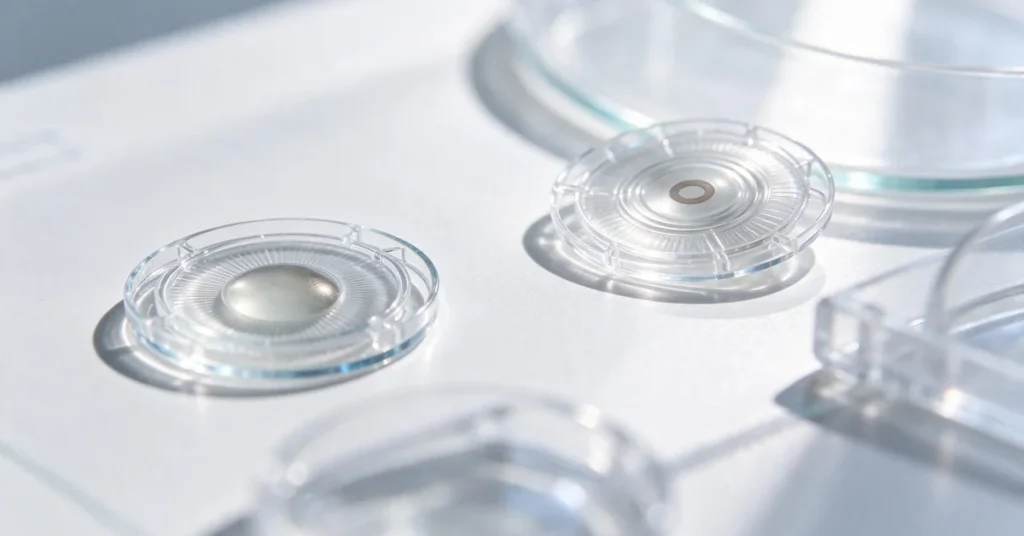
During cataract surgery, the cloudy natural lens is replaced with an intraocular lens (IOL), a small, clear artificial lens that stays in the eye. The lens you choose is one of the biggest factors in the cataract lens price in India, and the choices can feel confusing. If you are comparing quotes for a parent, or wondering whether a premium lens is worth it, you are not alone. This guide explains the main lens types, who each suits, what affects the cost and how insurance helps.
What is an intraocular lens?
An intraocular lens takes over the focusing job of the natural lens once the cataract is removed. It is folded, placed through a tiny opening and unfolds inside the eye during cataract surgery in Gurgaon.
Most modern lenses are made of soft, foldable acrylic and are designed to stay in the eye without any care from you. You will not feel the lens once the eye has healed.
Lenses differ in how they focus light. Some give one clear distance, some spread focus across several distances and some correct astigmatism as well. The power of the lens is calculated from careful eye measurements before surgery.
Choosing a lens is really choosing how you want to see after surgery.
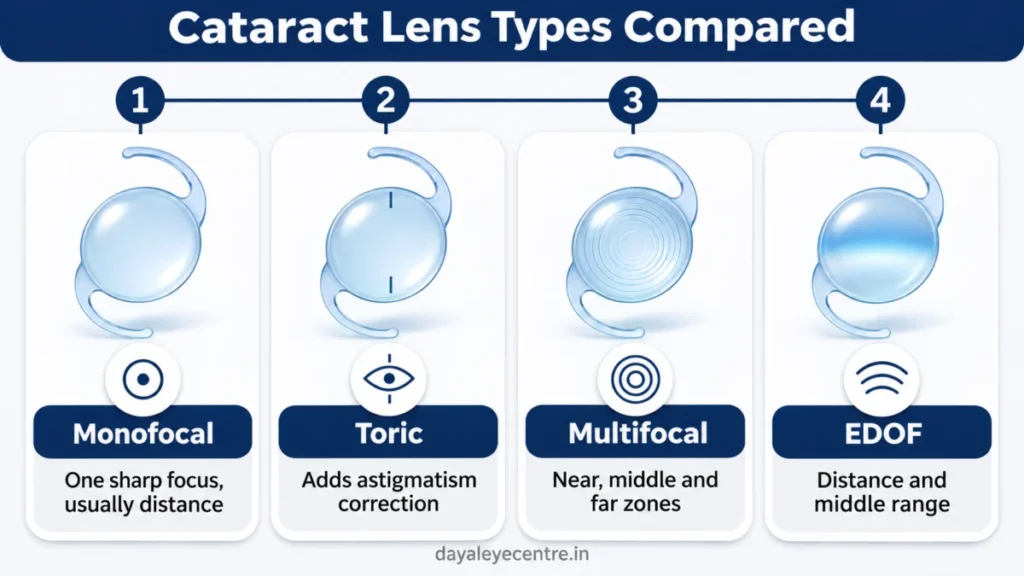
Types of cataract lenses compared
| Lens type | What it does | Often suits | Trade-offs |
|---|---|---|---|
| Monofocal | One sharp focus, usually for distance | Most people, night drivers, those happy to use reading glasses | Reading glasses usually needed for close work |
| Toric | Adds astigmatism correction to a monofocal or premium lens | People with moderate to high astigmatism | Must sit at a precise angle in the eye |
| Multifocal or trifocal | Several focus zones for near, middle and far | People keen to reduce glasses use | Glare and halos around lights, especially at night |
| Extended depth of focus (EDOF) | One stretched focus for distance and middle range | Computer users, active adults | Reading glasses may still be needed for fine print |
Toric lenses correct astigmatism, the uneven curve of the cornea that blurs vision at all distances. They need careful measurement so the lens can be lined up correctly.
Multifocal and EDOF lenses aim to reduce the need for reading glasses caused by presbyopia, the age-related loss of near focus. They suit some eyes better than others.
Each lens type gives something and asks for something in return.
Which lens suits your eyes and lifestyle?
The right lens depends on your eye measurements, the health of your retina and how you use your eyes each day. Guidance on choosing a lens implant notes that multifocal and EDOF lenses are generally not recommended for people with glaucoma or macular degeneration, because they let in less light.
Before surgery, the IOLMaster 700 measures the length of the eye and the shape of the cornea so the lens power can be calculated. Your surgeon will also ask about your work, hobbies and driving.
For example, a retired accountant who reads a lot and drives at night may be happiest with a monofocal lens and reading glasses. A younger professional who spends the day on a laptop may prefer an EDOF lens. Results for reading without glasses vary from person to person, so no lens can promise freedom from glasses.
The right lens is the one that fits your eyes and your daily life, not the most expensive one.
What affects the cataract lens price?
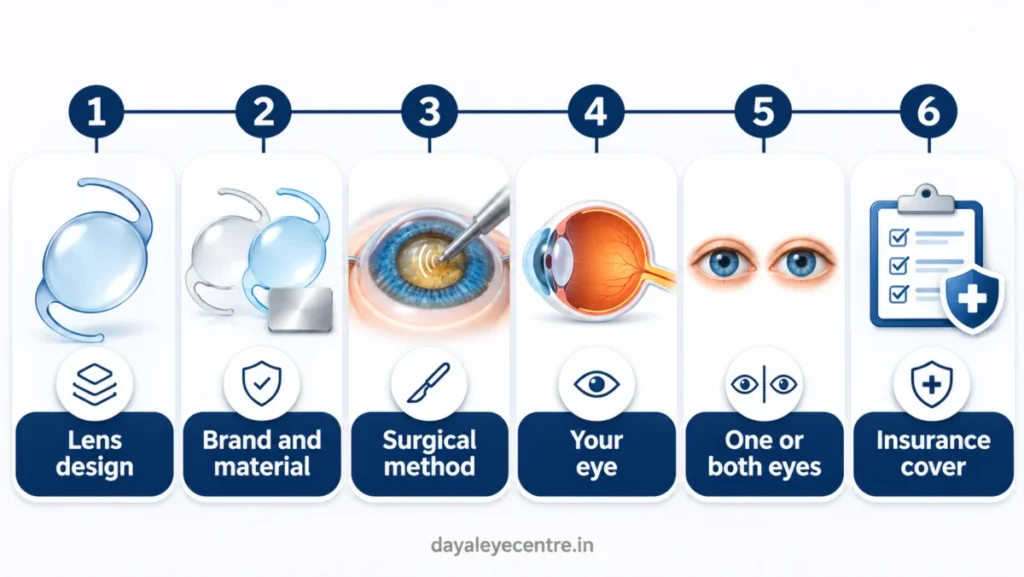
The price of a lens, and of the surgery around it, depends on:
- Lens design. Monofocal lenses cost the least, and toric, multifocal and EDOF lenses cost more.
- Brand and material. Different manufacturers and materials are priced differently.
- Surgical method. Laser-assisted surgery costs more than standard phacoemulsification.
- Your eye. Extra tests or a complex cataract can add to the total.
- One or both eyes. Each eye is priced separately.
- Insurance cover. Many policies cover a standard lens in full but only part of a premium lens.
Two people can be quoted very different totals for the same operation simply because they chose different lenses.
Indicative cost at Dayal Eye Centre
Dayal Eye Centre lists cataract surgery at an indicative Rs 25,000 to Rs 1,10,000 per eye, depending on the technology, the lens and the complexity of the eye. The final cost is a written, itemised quote after the pre-operative evaluation. Current figures are on our cataract surgery cost in Gurgaon page.
The quote shows the lens and the surgery as separate items, so you can compare options clearly. Ask your surgeon to explain the difference in vision as well as in price before you decide.
An itemised quote lets you see exactly what the lens adds to the total.
Insurance, CGHS and EMI for premium lenses
We offer cashless treatment through more than 40 empanelled insurers and TPAs, and our TPA desk on +91 99588 71802 confirms your out-of-pocket amount before admission. CGHS, ECHS, Ayushman Bharat (PM-JAY) and Haryana Government schemes are accepted, and EMI options are available.
Standard lenses are commonly covered, while premium lenses may be covered only in part, depending on your policy. Government employees and pensioners using CGHS or ECHS should ask our TPA desk which lens options their scheme includes. Our guide to government schemes for cataract surgery explains what the main schemes include.
Knowing your cover before you choose a lens keeps the decision about vision rather than paperwork.
This article is general information. An ophthalmologist needs to examine your eyes to advise on your own case.
Choosing your cataract lens
Monofocal lenses are reliable and cost the least, while toric, multifocal and EDOF lenses offer more range at a higher price and with some trade-offs. The right choice depends on your eye measurements, your eye health and how you live. To compare options with a written quote, book a cataract evaluation at Dayal Eye Centre in Sector 15, Gurugram.
Frequently asked questions
Which cataract lens is the cheapest?
A standard monofocal lens usually costs the least. Most people with one use reading glasses for close work.
Is a multifocal lens worth the extra cost?
It can be for people keen to reduce glasses use and with otherwise healthy eyes. Glare and halos at night are possible, so discuss your driving and work first.
Can I have a different lens in each eye?
Sometimes. Some people have one eye set for distance and the other for near, which your surgeon may suggest after testing.
Does the lens need replacing later?
The lens is designed to stay in the eye and does not usually need replacing. Hazy vision months or years later is usually a clouding behind the lens, treated with a short laser procedure.
Will I need glasses after cataract surgery?
Many people still use glasses for some tasks, depending on the lens. Your surgeon will explain what to expect with each option.
Do I need a toric lens if I have astigmatism?
Not always. A toric lens is usually considered for moderate to high astigmatism, and your measurements will guide the choice.
Does insurance cover premium lenses?
Cover varies by policy. Our TPA desk can tell you what your plan pays before surgery.

Director and Chief Ophthalmologist of Dayal Eye Centre, with more than two decades of experience and over 80,000 cataract surgeries — one of the most experienced eye surgeons in Gurgaon.