

Laser cataract surgery, also called femtosecond laser-assisted cataract surgery (FLACS), uses a computer-guided laser for some of the steps a surgeon would otherwise do by hand. It usually costs more than standard phacoemulsification (phaco), so laser cataract surgery cost in India is one of the first questions families ask. If you are planning surgery for yourself or a parent, you probably want to know whether the extra cost buys a better result. This guide explains how the two methods differ, what the evidence shows, what affects the price and how insurance can help.
What is laser cataract surgery (FLACS)?
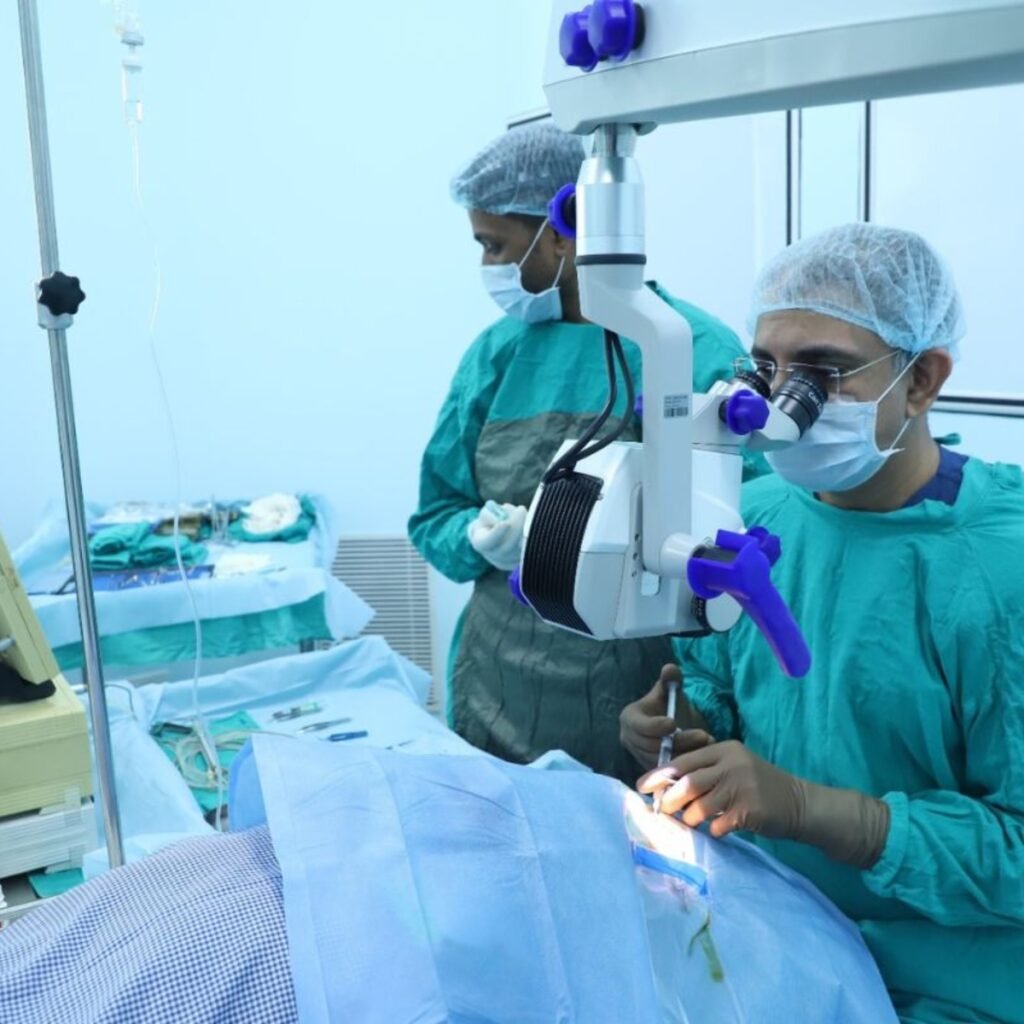
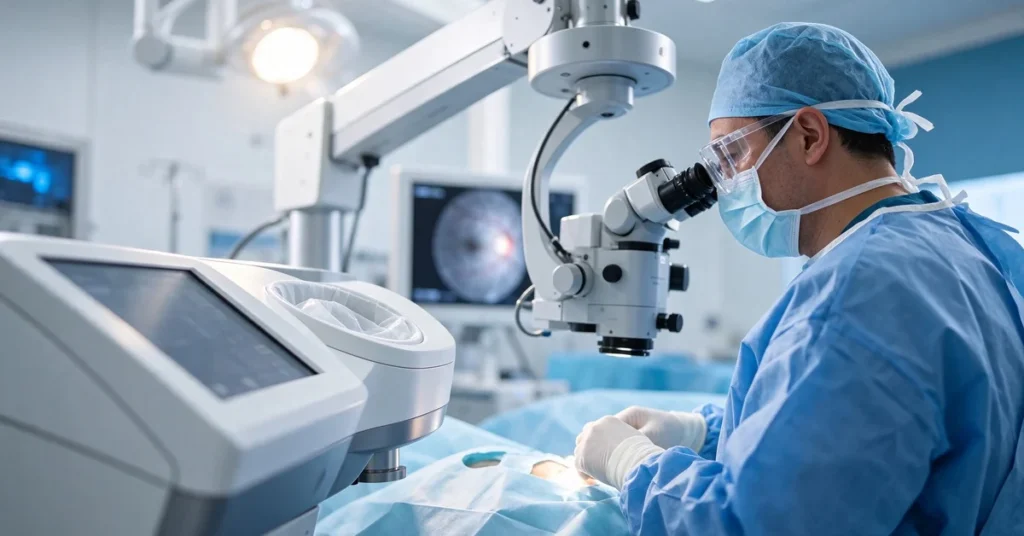
In cataract surgery, the cloudy natural lens is removed and replaced with an intraocular lens (IOL), a clear artificial lens. In FLACS, a femtosecond laser makes the small corneal openings, the round opening in the lens capsule and the first breakup of the cataract. The surgeon then removes the softened cataract with ultrasound and places the new lens, just as in phaco.
So FLACS is not a different operation. It is the same surgery with a laser taking over a few of the early steps, which is why it is sometimes called robotic cataract surgery. Our page on FLACS cataract surgery in Gurgaon explains how we use it, and our guide to types of cataract surgery covers the other methods.
FLACS changes how a few steps are done, not the overall goal of the operation.
FLACS vs phaco: how they compare
| FLACS (laser-assisted) | Phaco (standard) | |
|---|---|---|
| Corneal openings and capsule opening | Made by laser | Made by the surgeon by hand |
| Breaking up the cataract | Laser first, then ultrasound | Ultrasound |
| Lens implant | Same range of lenses | Same range of lenses |
| Availability | Fewer centres, needs a laser platform | Widely available |
| Cost | Higher | Lower |
A review of 42 clinical trials, covering 5,831 adults, found probably little or no difference between the two in complications, vision after surgery or quality of life. Laser surgery had lower odds of a tear in the back of the lens capsule, about four fewer per 1,000 operations, though that evidence was of low certainty. The same review found laser surgery may be less cost-effective.
For most people, both methods give similar results, and the choice depends on the eye and on budget. Our article on traditional vs laser cataract surgery goes through the techniques in more detail, and phacoemulsification cataract surgery in Gurgaon describes the standard method.
The laser adds precision to some steps, but it does not make standard surgery a poor choice.

What affects laser cataract surgery cost?
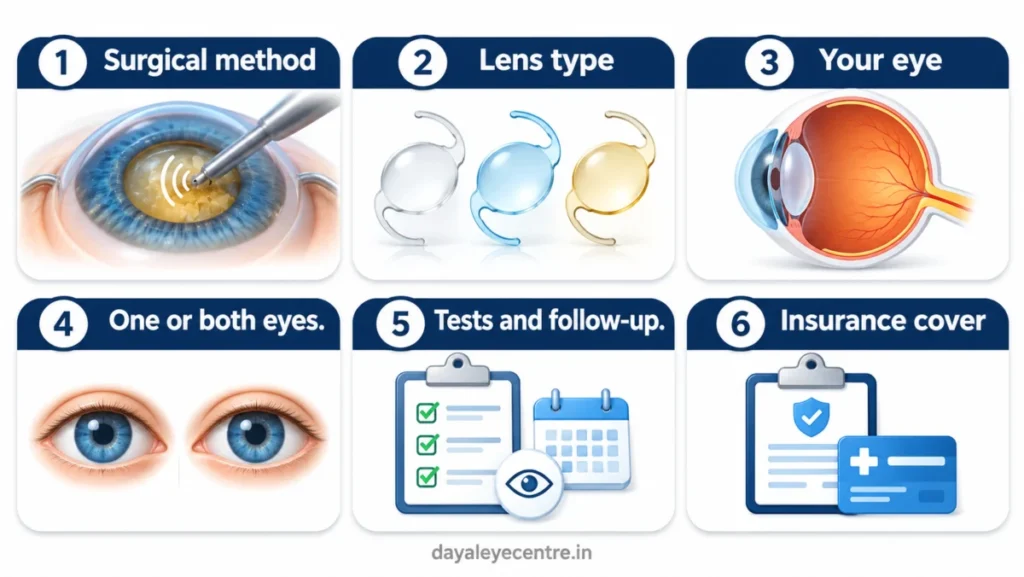
The final cost depends on several things, not on the laser alone:
- The surgical method. FLACS adds the cost of the laser platform and its single-use parts.
- The lens. A standard monofocal lens costs less than toric, multifocal or extended depth of focus lenses.
- The condition of the eye. A dense cataract, a small pupil or another eye condition may need extra steps or tests.
- One or both eyes. Each eye is usually priced separately.
- Tests and follow-up. Eye measurements, scans and post-operative visits form part of the total.
- Insurance or scheme cover. Your policy decides how much you pay yourself.
A retired teacher with a moderate cataract and no astigmatism may need only standard surgery with a monofocal lens. A software engineer with high astigmatism who wants less dependence on glasses may choose a laser-assisted operation with a toric lens. The two quotes will look very different, and both can be the right plan.
The lens and the eye itself often shape the cost as much as the laser does.
Cataract surgery cost at Dayal Eye Centre
At Dayal Eye Centre, cataract surgery is listed at an indicative Rs 25,000 to Rs 1,10,000 per eye, depending on the technology, the lens and the complexity of the eye. The final cost is a written, itemised quote after the pre-operative evaluation. You can see current figures on our cataract surgery cost in Gurgaon page.
The pre-operative evaluation includes a full examination and precise eye measurements. Your surgeon will then explain whether FLACS offers a real advantage for your eye, and what each option will cost.
A written quote after the evaluation is the only reliable figure for your own surgery.
Insurance, CGHS, ECHS and EMI
Dayal Eye Centre offers cashless treatment through more than 40 empanelled insurers and third-party administrators (TPAs). Our TPA desk, on +91 99588 71802, handles approvals and tells you the out-of-pocket amount before admission. CGHS, ECHS, Ayushman Bharat (PM-JAY) and Haryana Government schemes are accepted, and EMI options are available.
Cover for laser-assisted surgery and premium lenses varies by policy, so check what your plan includes before you decide. Our guide to government schemes for cataract surgery explains the main schemes.
Checking your cover early avoids surprises on the day of surgery.
Who may benefit from FLACS?
FLACS may suit some people with astigmatism, some complex cataracts or those choosing premium lenses, where precise openings can help the lens sit well. It is not necessary for everyone, and standard phaco remains a safe, well-proven option for most eyes.
Your surgeon will weigh the density of the cataract, the corneal shape and your vision goals. If a parent is anxious about cost, ask the surgeon to explain both quotes side by side.
The right method is the one that suits your eye, your goals and your budget, decided after an examination.
This article is general information. An ophthalmologist needs to examine your eyes to advise on your own case.
Planning your cataract surgery
Laser-assisted and standard cataract surgery give similar results for most people, and laser surgery costs more. The lens, the condition of the eye and your insurance cover shape the final price as much as the method does. To find out which option suits you and what it will cost, book a cataract evaluation at Dayal Eye Centre in Sector 15, Gurugram.
Frequently asked questions
Is laser cataract surgery better than phaco?
Research suggests results are similar for most people. Laser surgery may help in some eyes, and your surgeon will advise after an examination.
Does insurance cover laser cataract surgery?
Many policies cover cataract surgery, but cover for the laser and premium lenses varies. Our TPA desk can confirm your out-of-pocket amount before admission.
Is laser cataract surgery blade-free?
The laser makes the first openings, but surgery still uses fine instruments to remove the cataract and place the lens. Numbing drops keep you comfortable, and most people feel only light pressure.
How long does recovery take after laser cataract surgery?
Recovery is generally similar to standard surgery. Your doctor will give you an aftercare plan and check your eye at follow-up visits.
Can both eyes be done at the same visit?
Usually each eye is operated on separately, a short time apart. Your surgeon will plan the timing for your eyes.
Is FLACS available for every type of cataract?
Not always. A small pupil or certain eye conditions can make the laser less suitable, and standard phaco may be the better choice.
Does the laser change which lens I can have?
No. The same range of lenses can be used with both methods. The lens is chosen from your eye measurements and needs.

Director and Chief Ophthalmologist of Dayal Eye Centre, with more than two decades of experience and over 80,000 cataract surgeries — one of the most experienced eye surgeons in Gurgaon.