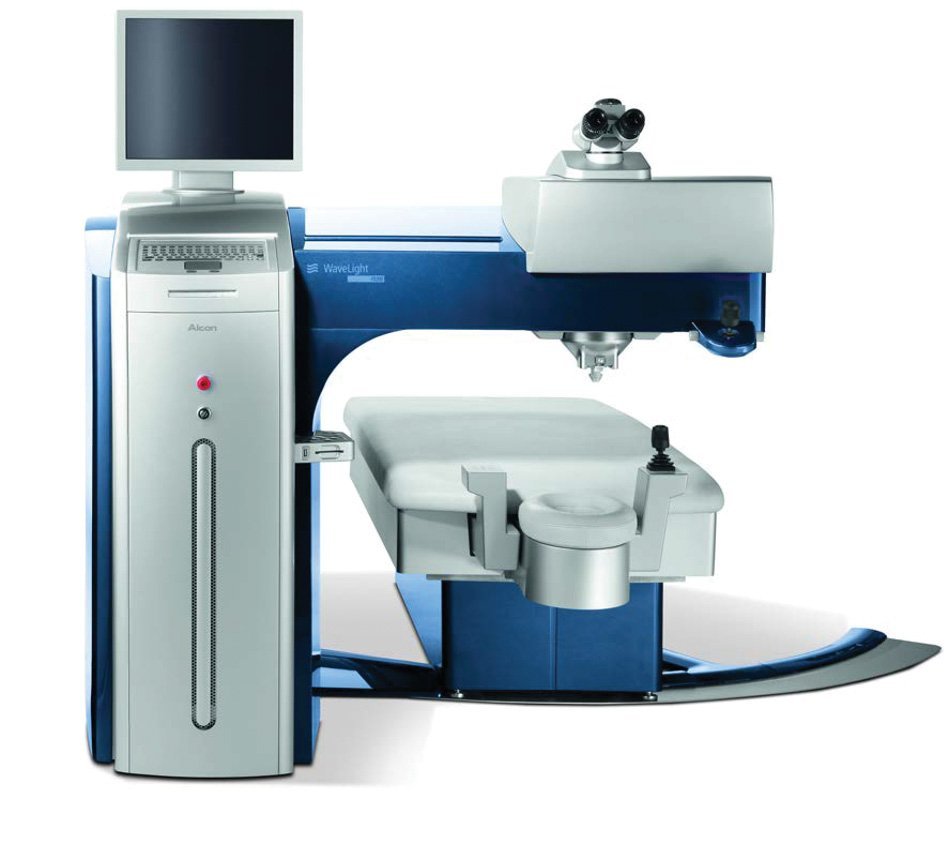
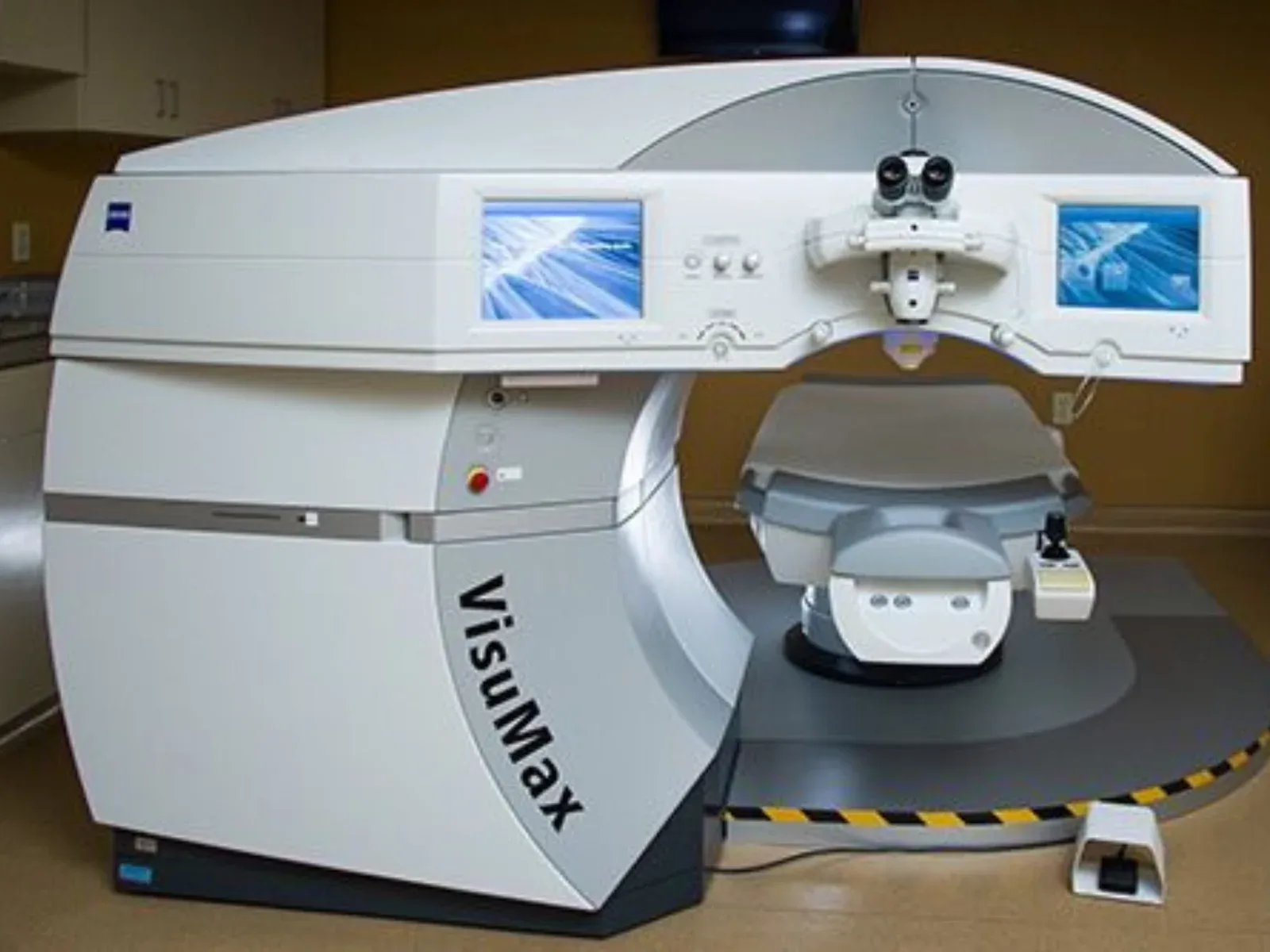
Three of the seven vision-correction options we run. Your evaluation decides which one belongs to your cornea.
Bladeless femtosecond flap plus excimer laser reshaping. Suited to a wide range of myopia, hyperopia and astigmatism, with quick visual recovery for most patients.
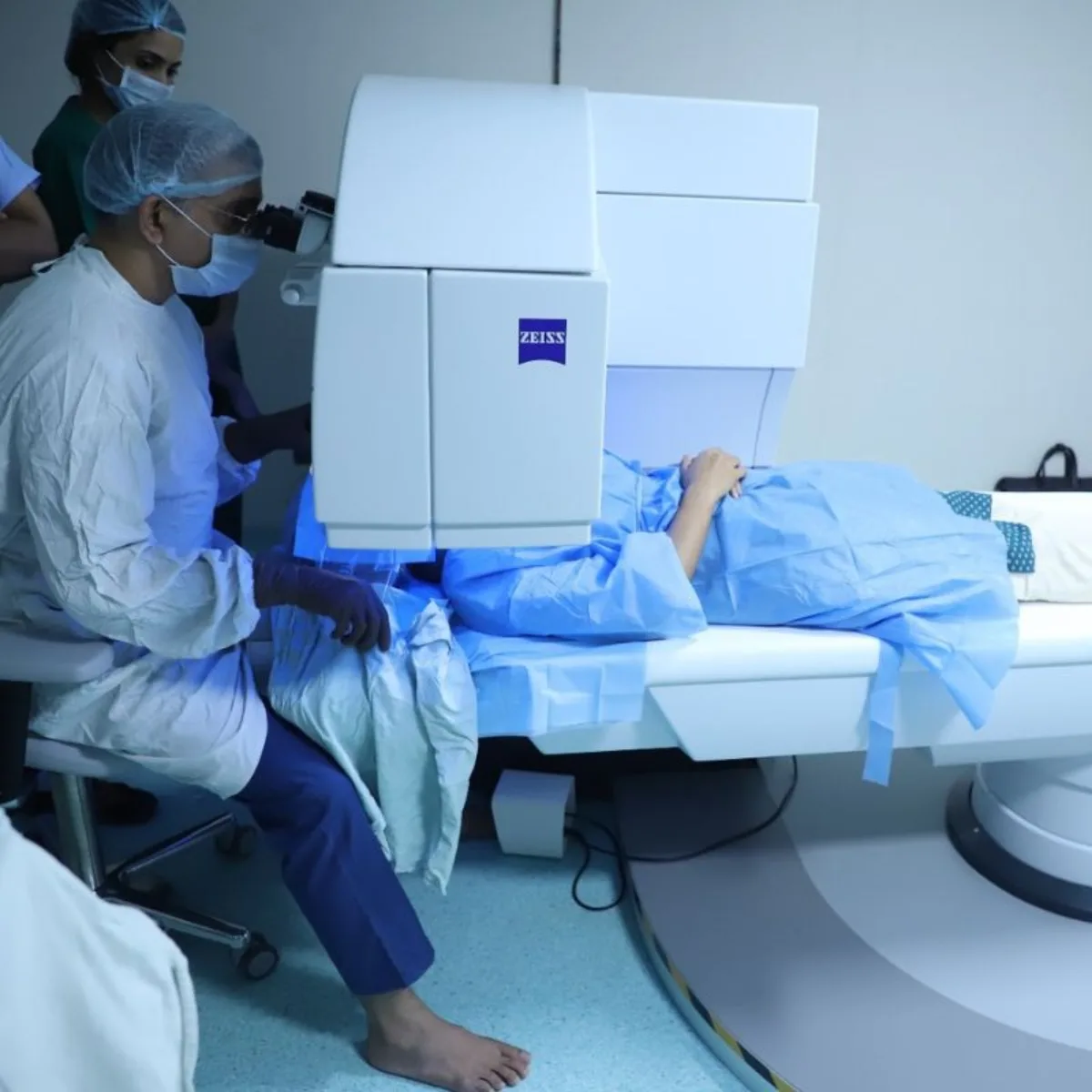
Know MoreKeyhole, flapless correction through a small incision on the Zeiss VisuMax. Often preferred for myopia with astigmatism, and for people who are active or prone to dry eye.
Know MoreTopography-guided LASIK on the Alcon WaveLight EX500, which maps thousands of points across your cornea so the correction follows your own surface rather than a standard profile.
Know MoreDayal Eye Centre is NABH-accredited and empanelled for cashless settlement with the insurers and third-party administrators below.


Laser vision correction is usually an elective procedure, so insurance cover for it is limited and depends entirely on your policy. Our billing desk will confirm exactly what applies to you before you commit to anything. Cataract, retina, glaucoma and oculoplasty procedures are covered far more widely. See Policies and Insurance.
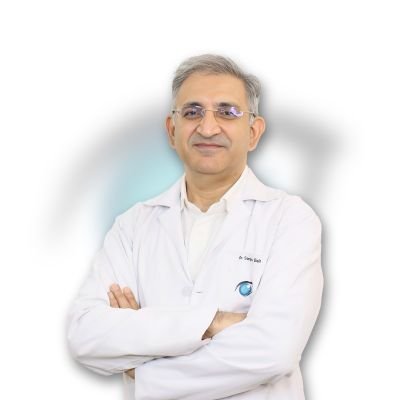
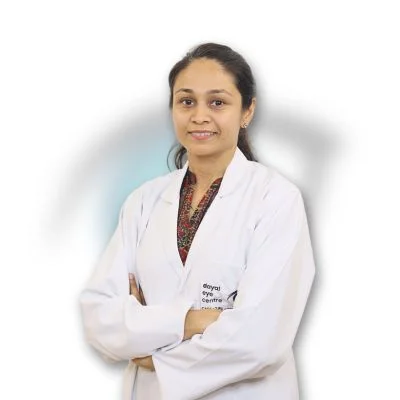
Refractive surgery at Dayal Eye Centre is performed by fellowship-trained surgeons, led by Dr. Sanjeev Bisla, MBBS, MS (Ophthalmology), with cornea and refractive surgeon Dr. Hem Shah. The surgeon who examines you is the surgeon who operates, and the same team sees you through every follow-up.

Leads the refractive service and performs LASIK, Contoura and SMILE; 23 years in practice in Gurgaon.

Around 15 years in cornea and anterior segment — leads corneal assessment, keratoconus screening and refractive planning for laser and ICL candidates.
If surgery is not right for you yet — or not right at all — these are the options we actually offer, in the order we usually discuss them.
Rigid lenses worn while you sleep, reshaping the cornea temporarily for clear daytime vision. Reversible, and used for myopia control in children.
Ortho-K lenses →For very high powers or corneas that cannot safely take laser treatment, a corrective lens is placed inside the eye instead.
About ICL →Still the right answer for an unstable power, a very thin cornea, or anyone who would rather not have surgery. We will say so plainly.
Book an eye test →Dry eye, allergy or lid disease is treated before any refractive decision. Sometimes that alone improves comfort and clarity enough.
Talk to us →Fellowship-trained specialists across cornea, retina, oculoplasty, paediatric and squint care — all in one building, so a refractive evaluation never needs a referral elsewhere.
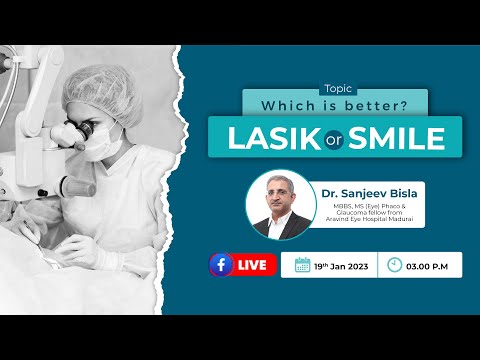
Our surgeons explain, in plain language, what happens before and after refractive surgery. Nothing plays automatically — tap a card to play the video right here.
At Dayal Eye Centre we have spent more than twenty years doing one thing: eye care, in one place, by senior specialists. Our refractive service runs the Zeiss VisuMax for ReLEx SMILE and the Alcon WaveLight EX500 for Contoura Vision — the same platforms used at leading refractive centres worldwide — and the laser procedures we perform use systems that carry regulatory approval for the corrections they are used for.
What that means for you is simple. You are evaluated by the surgeon who will operate, on diagnostics that sit in the same building, and told honestly whether laser vision correction is the right answer for your eyes — including when it is not.
Running both flagship refractive platforms in the same theatre matters for one practical reason: it removes the pressure to make your eyes fit the machine that happens to be installed. A centre with only an excimer laser will steer you toward LASIK. A centre with only a femtosecond platform will steer you toward SMILE. Here, your corneal map decides, and the surgeon can recommend SMILE, Contoura, Femto LASIK, a surface procedure or an implantable lens on clinical grounds alone.
Specs removal refractive treatment is a group of procedures that correct the focusing error causing your blurred vision, so you depend less on glasses and contact lenses. Laser procedures reshape the cornea; lens-based procedures place a corrective lens inside the eye. Both are day-care procedures done under numbing drops, and which one suits you is decided by a detailed eye examination.
Your eye focuses light through the cornea and the natural lens onto the retina. When the shape of the eye or the curve of the cornea puts that focal point slightly in front of or behind the retina, the image blurs — a refractive error. Glasses and contact lenses move the focal point from outside the eye. Refractive treatment moves it from within, by adjusting the curvature of the cornea or by adding a lens inside the eye.
At Dayal Eye Centre this is done as day-care surgery. You are awake, numbing drops are used throughout, the laser treatment itself takes a few minutes per eye, and you go home the same day with someone accompanying you. Most patients describe pressure and mild discomfort rather than pain.
What we cannot tell you from a web page is whether it is right for your eyes. That answer comes from corneal mapping, a power measurement, a dry-eye assessment and a retinal check — which is what a refractive evaluation is for.
Most vision problems corrected by specs removal are refractive errors — myopia, hyperopia, astigmatism and presbyopia — caused by the length of the eyeball or the curvature of the cornea putting light out of focus on the retina. Family history, prolonged near work and certain health conditions influence how they develop and progress.
Myopia (nearsightedness) — distant objects blur because the eye is longer than average or the cornea too steeply curved. This is the most common reason people seek specs removal. Myopia →
Hyperopia (farsightedness) — close work strains and blurs because the eye is shorter than average or the cornea too flat. Hyperopia →
Astigmatism — an unevenly curved cornea or lens blurs vision at more than one distance. Astigmatism →
Presbyopia — the age-related loss of near focus that begins for most people around 40. Glossary →
Important to understand: laser vision correction does not treat presbyopia, and reading glasses may still be needed after 40 whether or not you have had surgery.
Refractive error runs in families. A parent with significant myopia raises the likelihood in a child, which is why children of short-sighted parents benefit from earlier and more regular screening.
Sustained near work — screens, reading, close detail — and limited time outdoors are associated with the development and progression of myopia, particularly in children. This matters locally: refractive error is very common in India, with an estimated 10.2% of the population carrying an uncorrected refractive error, roughly 54.5 million people.1
Diabetes can make the eye’s power fluctuate, and untreated dry eye, keratoconus or a corneal scar all change what correction is safe. Each of these is checked before surgery is offered, and treated first where needed.
The usual signs are blurred vision at distance or near, squinting to focus, eye strain and headaches after screen work, difficulty seeing while driving at night, and glare or halos around lights. Frequent changes of spectacle power and one eye seeing better than the other are also common. Any of these is a reason to have your eyes examined, not a reason to assume surgery.
Blurred distance vision — road signs, boards or faces are unclear until you get closer.
Blurred near vision — reading or close detail needs more light or more distance than it used to.
Squinting — narrowing your eyes to pull an image into focus.
Eye strain — aching, heavy or tired eyes after screen work or reading.
Headaches — usually frontal, and usually worse at the end of a long working day.
Glare and halos — rings or streaks around headlights and streetlamps, especially at night.
Night-driving difficulty — lane markings and distances are harder to judge after dark.
Frequent power changes — your spectacle prescription keeps moving between check-ups.
One eye working harder — covering one eye shows a clear difference between the two.
We perform seven types of specs removal at Dayal Eye Centre. Four are laser procedures that reshape the cornea — Femto LASIK, Contoura Vision, ReLEx SMILE and surface treatments such as PRK, TransPRK and Epi-Contoura. One is lens-based (ICL) for powers or corneas that laser cannot treat safely. Ortho-K lenses are a non-surgical alternative. Corneal thickness, power and dry eye decide which are open to you.
| Procedure | How it works | Flap | Best suited for | Visual recovery | Read more |
|---|---|---|---|---|---|
| Femto LASIK | A femtosecond laser makes a blade-free flap; an excimer laser reshapes the cornea underneath. | Femtosecond flap | A wide range of myopia, hyperopia and astigmatism with adequate corneal thickness. | 1–2 days | LASIK → |
| Contoura Vision | Topography-guided excimer treatment on the WaveLight EX500, mapped across 22,000+ corneal points. | Femtosecond flap | Power plus visual complaints such as glare, halos or night-driving difficulty. | 1–2 days | Contoura → |
| ReLEx SMILE | A lenticule is shaped inside the cornea and removed through a 2–4 mm incision on the Zeiss VisuMax. | No flap | Myopia with astigmatism, active lifestyles, dry-eye-prone eyes. | 1–3 days | SMILE → |
| PRK / TransPRK | The surface layer is removed and the cornea reshaped directly, with no flap and no incision. | No flap, surface | Thinner corneas, occupations with impact risk, some retreatments. | 5–7 days | PRK → |
| Epi-Contoura / LASEK | Surface treatment carried out with topography-guided precision for selected corneas. | No flap, surface | Corneas unsuited to a flap but needing customised correction. | 5–7 days | Surface options → |
| ICL (implantable lens) | A soft corrective lens is placed inside the eye; no corneal tissue is removed. | Not applicable | Very high powers, thin or irregular corneas, laser-unsuitable eyes. | 2–4 days | ICL → |
| Ortho-K (non-surgical) | Rigid lenses worn overnight temporarily reshape the cornea; the effect reverses when you stop. | Not applicable | Children and teenagers, myopia control, adults not ready for surgery. | No surgery | Ortho-K → |
Across published studies, about 9 in 10 LASIK patients reach uncorrected vision in the 20/20 to 20/40 range,2 and a review of 19 studies covering 2,198 patients reported 95.4% patient satisfaction.3 Flapless SMILE has been shown in a meta-analysis to disturb the ocular surface and corneal nerves less than femtosecond LASIK.4 Individual outcomes vary with your prescription, corneal health and aftercare.
Specs removal suits adults over 18 whose spectacle power has been stable for at least a year, whose corneas are healthy and thick enough, and who are not pregnant or breastfeeding. It is usually deferred for keratoconus, a thin or irregular cornea, uncontrolled dry eye, active eye infection and some autoimmune or healing disorders — where a lens-based option may still work.
This is not a diagnosis and it does not decide anything. It simply tells you whether a refractive evaluation is worth booking.
Answer the questions above to see what we would suggest as a next step.
Book your evaluationYou are over 18 and your spectacle power has been stable for at least a year.
Your cornea is thick enough and regular on topography.
Your eyes are otherwise healthy — no active infection, inflammation or untreated dry eye.
You are not pregnant or breastfeeding.
You understand what the procedure can and cannot do, including near vision after 40.
Roughly one in five people who come to us for laser correction is advised against it, or advised to wait. That conversation is part of the evaluation.
Keratoconus, or a cornea that is too thin or irregular for safe laser treatment.
A prescription that is still changing year on year.
Uncontrolled dry eye, lid disease or allergy — treated first, reviewed later.
Autoimmune or healing disorders, or medication that impairs healing.
Pregnancy and breastfeeding — power can shift, so we wait.
Named platforms, installed here. Every refractive procedure at Dayal is planned and performed on the machines below.
The decision comes before the laser. These are the diagnostic systems that decide whether you can be treated, and with which technique.
3D corneal tomography — thickness, curvature and early keratoconus screening before any laser decision.
Ray-tracing that separates corneal from lens-based blur, so we treat the right cause.
Biometry for lens-based correction, including ICL and refractive cataract planning.
Retinal and optic-nerve imaging — important because high myopia carries retinal risk of its own.
Four things we do differently, in the order you will experience them.
Before any laser is discussed, we complete a refractive work-up and read it with you on screen. Corneal thickness, topography, pupil size, tear film and the retina all have to agree before surgery is offered.
Corneal mapping on the OCULUS Pentacam plus iTRACE ray-tracing, so an irregular or thin cornea is caught before it becomes a problem.
A dry-eye assessment as standard — untreated dry eye is one of the commonest reasons we treat first and operate later.
A dilated retinal check, because high myopia carries retinal risk that laser correction does not remove.
You are told which procedures your cornea can safely take, and which it cannot.
“I had a -6 power and wanted SMILE. They mapped my cornea, explained why it suited me, and the follow-up calls came without me chasing anyone.”
“They told my sister she was not a candidate and explained exactly why. That honesty is the reason I came back for my own surgery.”
“Night-driving glare was my worry. It was discussed properly before surgery, not brushed aside, and the written estimate matched the final bill.”
Shared with written patient consent and published with initials only. Individual results vary — outcomes depend on your prescription, corneal health, age and adherence to post-operative care. These are patient experiences, not a prediction of your result.
Refractive surgery at Dayal Eye Centre starts from Rs. 35,000 and goes up to Rs. 1,25,000 for both eyes, depending on the technique and the platform used. Every figure below is a starting-from price for both eyes and is confirmed only after your examination — corneal thickness, power and the technique that suits you all move the final number.
| Procedure | Type | Technology | Starting from |
|---|---|---|---|
| Microkeratome (MK) LASIK | Blade, flapped | Excimer — wavefront optimised | Rs. 35,000 |
| MK Contoura LASIK | Blade, flapped | Excimer — topography-guided | Rs. 52,000 |
| PRK, Epi-Contoura, Streamlight | Bladeless, flapless, surface | Excimer — topography-guided | Rs. 60,000 |
| Femto Contoura LASIK | Bladeless, flapped | Femtosecond + excimer | Rs. 95,000 |
| ReLEx SMILE | Bladeless, flapless | Zeiss VisuMax femtosecond | Rs. 1,25,000 |
| ICL (implantable lens) | Lens-based | Phakic intraocular lens | Quoted after evaluation |
Blade-free flap with the option of topography-guided Contoura treatment, both eyes.
Get your exact quotePrices are indicative starting-from figures for both eyes as of July 2026 and may change. They exclude screening tests, medicines and any additional treatment your eyes need. No price quoted online is a final quotation — your written estimate is issued after your refractive evaluation. See our treatment costs page for the full list.
The questions our refractive counsellors are asked most often in Gurgaon, answered plainly.
Medically reviewed by Dr. Sanjeev Bisla, MBBS, MS (Ophthalmology), Director — Dayal Eye Centre · Last reviewed: 31 August 2026 · Editorial Policy · Ethics Policy