






Femto LASIK offers precise vision correction through computer-controlled laser technology. The procedure takes about 30 minutes per eye and provides better accuracy compared to traditional methods.
Your success with Femto LASIK depends on proper preparation and following aftercare instructions carefully. You’ll need to stop wearing contact lenses 5-7 days before surgery. After the procedure, your vision will stabilize over three to six months with proper care.
Talk with your eye doctor about whether Femto LASIK is right for you. This guide explains what happens before, during and after surgery – from initial preparation to recovery. Understanding each step helps ensure the best possible outcome for your vision correction.
Understanding Femto LASIK Technology
Our natural eye works like a camera lens, with the cornea focusing light onto the retina. Femto LASIK technology uses ultra-precise laser pulses—measured in quadrillionths of a second—to reshape this cornea for better vision.
How Femto LASIK differs from traditional LASIK
The main difference lies in the corneal flap creation process. Traditional LASIK uses a mechanical blade, which can sometimes create uneven flap thickness. Femto LASIK, however, uses advanced laser technology to create a precise, uniform flap. This precision helps prevent complications like irregular astigmatism.
The procedure combines two specialized lasers working together. First, the femtosecond laser creates tiny bubbles within your corneal tissue to separate the flap. Then, the excimer laser reshapes the exposed cornea to correct your vision.
Benefits of bladeless technology
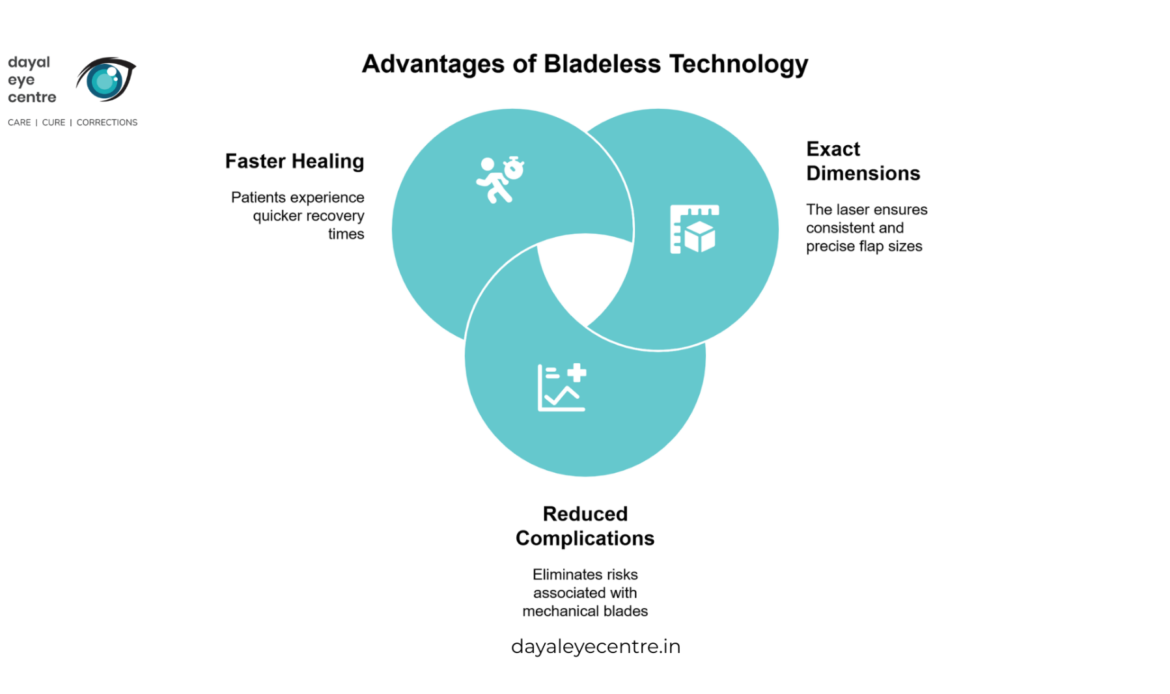
Bladeless Femto LASIK offers several advantages:
- The laser creates flaps with exact dimensions, leading to more predictable results
- Without mechanical blades, there’s less risk of flap complications and infections
- Most patients heal faster due to precise laser incisions
The VisuMax® femtosecond laser system helps patients who couldn’t have LASIK before, including those with thin corneas or irregular corneal shape.
Latest advancements in laser eye surgery
These days with the advent of newer technology, Femto LASIK procedures have become more precise and customized. Smart laser systems now track even tiny eye movements to maintain accuracy. The ELITA system from Johnson & Johnson introduces smooth incision techniques that preserve corneal strength.
The MEL® 80 Excimer laser makes treatments more comfortable for patients while speeding up recovery. We can now tailor the procedure to each patient’s unique eye characteristics.
The corneal layer separation takes only 15-20 seconds. This quick and precise approach means less irritation and better comfort during healing. Talk with your eye doctor about whether these advanced options might be right for you.
Essential Pre-Surgery Steps
To determine whether you have suitable eyes for Femto LASIK, your doctor will review your medical history and symptoms, and perform a comprehensive eye examination. This careful evaluation helps ensure the best possible outcome from your surgery.
Initial consultation requirements
Your eye doctor will conduct several tests during your evaluation:
- Measure corneal thickness (should be about 550 microns)
- Check for conditions like keratoconus through special imaging
- Test your current vision stability
- Examine eye health using a slit-lamp
- Check eye pressure levels
- Look for any dry eye problems
Contact lens restrictions
Contact lenses can change your cornea’s shape, affecting surgical measurements. You’ll need to stop wearing contacts before your evaluation:
- Soft contact lenses: Stop 2 weeks before evaluation
- Toric soft or RGP lenses: Remove 3 weeks before
- Hard lenses: Stop 4 weeks prior
This waiting period lets your cornea return to its natural shape. During this time, you’ll wear your glasses instead.
Medical history disclosure
Like any surgery, your doctor needs to know your complete medical history. Tell your doctor about:
- All medications you take, including over-the-counter drugs
- Any acne medications containing isotretinoin (stop 1 month before)
- Past eye surgeries or conditions
- Health issues like diabetes or thyroid problems
- All medications for ongoing conditions
Some medications need special consideration. For example, if you take Prednisone, Imitrex, or Cardarone, tell your eye doctor at your first visit. Most regular medications can continue as normal.
The day before surgery, don’t use any makeup, creams, or lotions near your eyes. Make sure someone can drive you home after the procedure – your vision will be temporarily blurry.
Preparing Your Body and Mind
Like preparing for any surgery, getting ready for Femto LASIK involves both physical and mental preparation. The way we take care of ourselves before surgery affects how well our eyes heal afterward.
Hydration and nutrition guidelines
Our body needs proper hydration to keep every cell working well. Good hydration helps prevent the temporary eye dryness that many patients notice after LASIK surgery.
Your diet plays a key role in healing. Try to eat foods rich in:
- Vitamin A – found in sweet potatoes, carrots, spinach
- Omega-3 – present in salmon, walnuts, flaxseeds
- Vitamin C – abundant in citrus fruits, berries, tomatoes
You don’t need to fast before surgery, but light meals help maintain your energy. Stay away from alcohol and caffeine – they can dehydrate you and affect how medications work during the procedure.
Sleep and rest requirements
A good night’s sleep helps your body prepare for surgery. The way smudgy lenses causes blurring of vision, lack of sleep can affect how well you handle the procedure. Try these steps:
First, keep regular sleep times as your surgery date approaches. Then, develop a calming bedtime routine – maybe some caffeine-free tea or a warm bath. While sleep medications aren’t recommended, ask your doctor if melatonin might help.
Managing surgery anxiety
Concerned about eye surgery? That’s normal. Many patients feel nervous before their procedure. Write down your questions for your surgeon – this helps clear your mind and ensures you get the answers you need.
When anxiety builds, try this breathing exercise:
- Take a deep five-second breath
- Hold it for five seconds
- Let it out slowly for five seconds
Talk with others who’ve had LASIK – their experiences often provide reassurance. Bring someone you trust to your procedure for support and to help with transportation.
Remember, the actual laser treatment takes just 15 minutes. Our advanced tracking systems adjust for any tiny eye movements, ensuring precise results.
To stay calm, finish important tasks before your surgery day. Find activities you enjoy to keep your mind occupied. These simple steps help manage pre-operative anxiety while keeping a balanced view of the procedure.
What Happens During Surgery
Cataract surgery is generally done on an outpatient basis, and the same applies to Femto LASIK. Understanding what happens during the procedure helps you feel more confident about your surgery.
Step-by-step procedure walkthrough
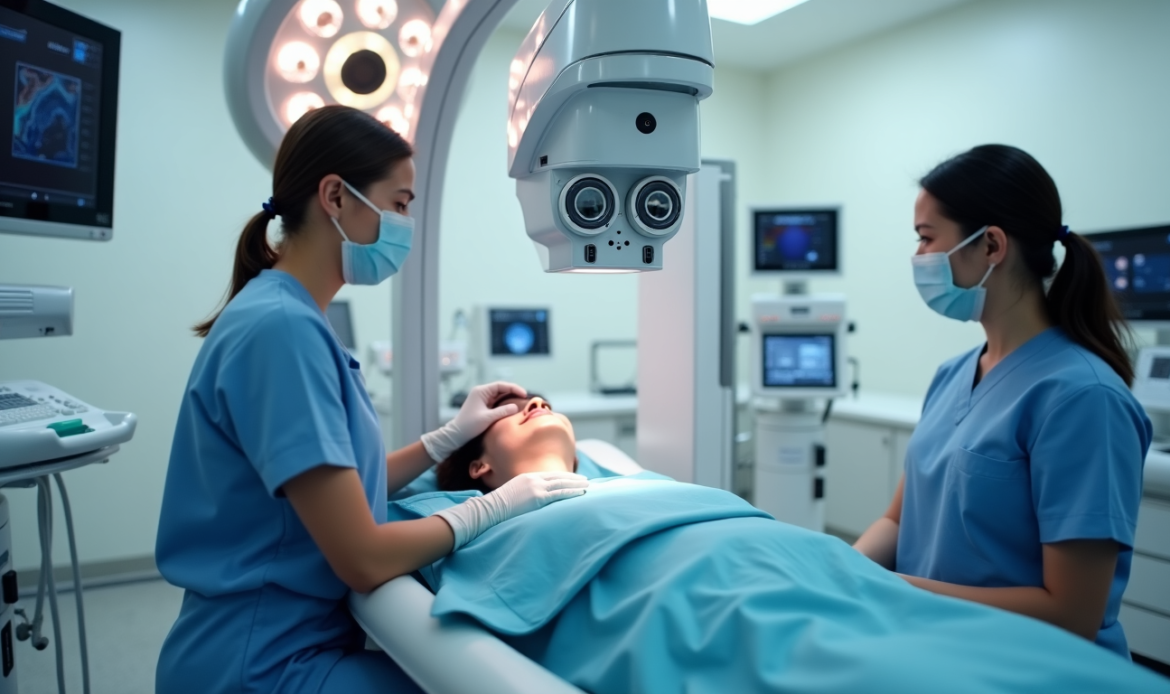
You’ll recline in a specialized chair under the laser system. Your surgeon first puts numbing eye drops to ensure your comfort. A small device gently holds your eyelids open to prevent blinking.
Next comes a suction ring over your pupil and a glass lens to keep your eye steady. You might feel slight pressure and notice dimmed vision – these sensations are normal.
The procedure uses two different lasers:
- Creating the corneal flap: The femtosecond laser makes a precise, thin flap in your cornea’s outer layer. This bladeless approach helps you heal faster.
- Reshaping your cornea: After carefully lifting the flap, the excimer laser reshapes the corneal tissue underneath. You might hear soft clicking sounds and notice an odor like burning hair – this happens when the laser works on your corneal tissue.
Finally, your surgeon puts the corneal flap back in place. Like any other tissue in our body, it heals naturally without stitches.
Duration and comfort measures
The way smudgy lenses causes blurring of vision, proper positioning during surgery affects its precision. The entire procedure takes about 15-20 minutes per eye, though the laser works for only 3 minutes on each eye.
To keep you comfortable and ensure precise treatment:
- Advanced Eye Tracking: Computer systems watch for tiny eye movements and adjust the laser accordingly
- Your surgeon talks with you throughout the procedure
- The surgical team monitors everything through a microscope
After surgery, you’ll get protective shields for your eyes. These shields prevent accidental rubbing while your corneal flap heals.
We can achieve precise results thanks to computer-controlled technology. This makes Femto LASIK a reliable choice for vision correction.
Recovery Timeline and Care
After LASIK surgery, your healing journey depends on following proper care instructions. The way smudgy lenses causes blurring of vision, not following aftercare guidelines can affect your recovery results.
First 24 hours after surgery
Right after surgery, you might feel mild discomfort – like burning, itching, or a feeling of sand in your eyes. These symptoms usually go away within hours. Keep wearing your protective eye shields to prevent accidental rubbing.
Make sure to schedule your follow-up visit within 24-48 hours after surgery. Your doctor will remove the shields, test your vision, and check how well you’re healing. You’ll get eye drops to prevent infection and reduce inflammation.
Week 1 recovery guidelines
Your first week plays a key role in healing. Your eye doctor will ask you to:
- Keep water away from your eyes for at least a week
- Skip eye makeup, creams, or facial products
- Use your prescribed eye drops as directed
- Wear sunglasses outside for protection
Most patients return to work within 1-2 days. Your vision might change temporarily, and you might see halos around lights at night. Light exercise is fine after a week, but avoid contact sports and swimming.
Long-term healing process
Complete healing takes three to six months. Your vision gradually becomes clearer and more stable. Keep attending follow-up appointments for at least six months so your doctor can monitor your progress.
Your healing typically follows this pattern:
Weeks 2-4:
- Vision starts becoming stable
- Some discomfort or dryness might continue
- Slowly return to regular activities
Months 1-3:
- Vision keeps improving
- Less sensitivity to light
- Fewer side effects
Months 4-6:
- Vision becomes fully stable
- Corneal tissue finishes healing
- Most temporary symptoms resolve
Keep caring for your eyes throughout recovery. Use artificial tears for dryness, and wear protective eyewear during sports or risky activities. Most importantly, don’t skip your follow-up appointments – they help your doctor catch and address any concerns early.
Remember, healing varies among patients. Some see stable vision within weeks, while others need several months. Talk with your eye doctor about whether surgery is right for you, and follow their instructions carefully for the best possible outcome.
Conclusion
Femto LASIK helps restore clear vision through precise laser technology. Like any eye procedure, success depends on proper preparation before surgery and careful attention to recovery guidelines.
Talk with your eye doctor about whether Femto LASIK is right for you. Most patients see better vision within days, though complete healing takes three to six months. Your doctor will guide you through each step, from initial evaluation to final recovery.
Our natural lens is like a camera lens – crystal clear in most of us. When vision problems develop, Femto LASIK offers a reliable solution through advanced technology and experienced surgical care. Ready to learn more? Book an appointment with our experienced eye specialists to discuss your vision correction options.
Remember that each person’s eyes heal differently. Following your doctor’s instructions carefully – from pre-surgery preparation to post-operative care – helps ensure the best possible outcome. With proper care and patience during recovery, you can achieve the clear vision you’re looking for.
FAQs
1. What precautions should I take before Femto LASIK surgery?
Stop wearing contact lenses for several days before the examination and surgery, with soft lenses requiring 3-7 days and hard lenses 7-14 days. Avoid using certain medications like acne treatments, and refrain from wearing makeup or fragrances on the day of surgery.
2. What are the post-operative care instructions for Femto LASIK?
After surgery, avoid exposing your eyes to water for a few weeks, including swimming pools. Don’t use eye makeup until your surgeon approves. Wear sunglasses outdoors for UV protection, and follow your doctor’s instructions regarding eye drops and follow-up appointments.
3. How long does it take to recover from Femto LASIK?
While many patients notice significant vision improvements within days, complete recovery typically takes three to six months. Vision stabilizes gradually, with most temporary side effects resolving within this period. Regular follow-up appointments are crucial for monitoring progress.
4. Can I use digital devices after Femto LASIK surgery?
It’s generally recommended to avoid using digital devices for at least 24 hours after the procedure to prevent eye strain and dryness during the initial recovery period. Always follow your surgeon’s specific instructions regarding screen time.
5. When can I return to work after Femto LASIK?
Most patients can return to work within 24-48 hours after the surgery. However, vision may fluctuate temporarily, and you might experience some visual effects like halos around lights. It’s important to discuss your specific situation with your surgeon for personalized advice on resuming work and other activities.

Director and Chief Ophthalmologist of Dayal Eye Centre, with more than two decades of experience and over 80,000 cataract surgeries — one of the most experienced eye surgeons in Gurgaon.