



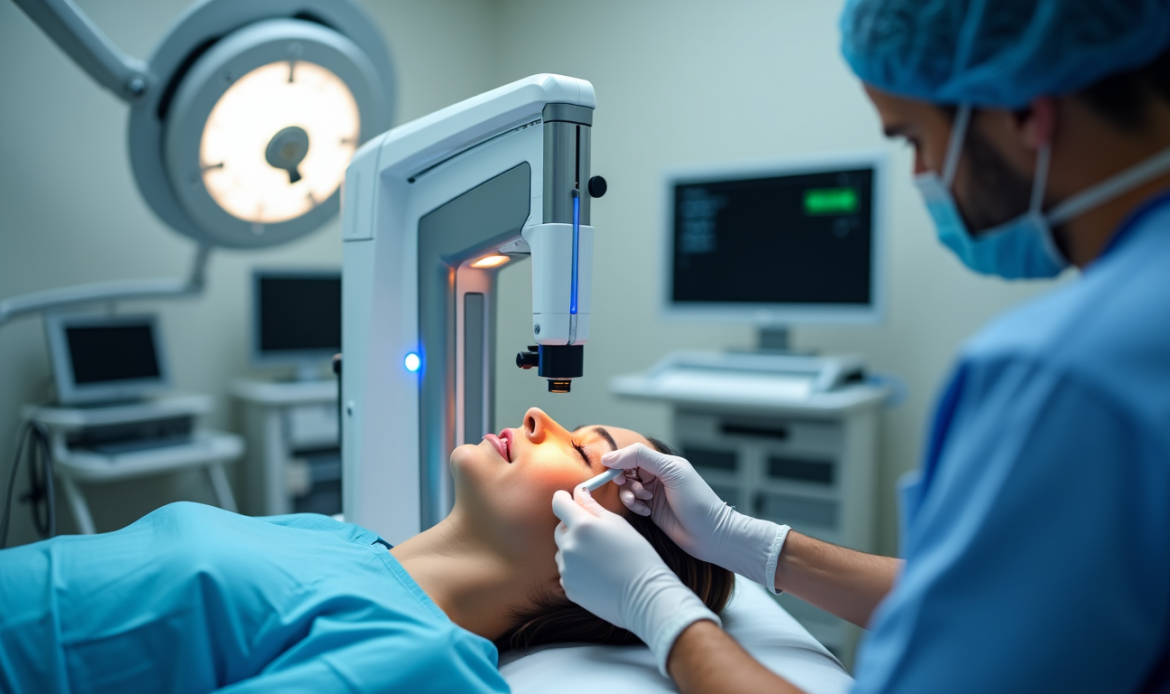
Femto LASIK has transformed the landscape of vision correction. The procedure boasts a remarkable 95% success rate in vision improvement. This advanced laser technique brings better precision and safety than traditional methods.
The surgery costs between $1,000 to $3,000 per eye. Most patients see this as a smart investment in their vision health. The procedure takes only 30 minutes per eye. Patients usually notice clearer vision within 24 hours and resume their regular activities in just a couple of days.
This detailed piece covers all aspects of Femto LASIK surgery. You’ll learn about the procedure steps, recovery process, and long-term advantages. The guide helps you decide if Femto LASIK suits your vision needs, whether you have nearsightedness, farsightedness, or astigmatism.
Understanding Femto LASIK Surgery
Femto LASIK stands out as a remarkable breakthrough in laser eye surgery. Its use of advanced femtosecond laser technology has set new standards for vision correction procedures.
What makes it different from traditional LASIK
The main difference between Femto LASIK and traditional LASIK comes down to how doctors create the corneal flap. Traditional LASIK uses a mechanical blade called a microkeratome. Femto LASIK, on the other hand, uses a cutting-edge femtosecond laser that makes the procedure completely bladeless.
Femto LASIK brings several benefits:
- Better accuracy when creating flaps, which leads to more predictable results
- Lower risk of complications related to flap creation
- Most patients heal faster
This bladeless approach has made the procedure much safer. The technique also lets surgeons tailor the treatment to each patient’s unique eye structure.
How the femtosecond laser works
The femtosecond laser uses an amazing process of ultra-short pulses that last just quadrillionths of a second. These precise pulses create tiny gas bubbles that gently separate the corneal tissue to form an even flap.
The laser’s technical complexity includes:
- Infrared laser pulses at 1053nm wavelength
- Free electrons and ionized molecules generation
- Acoustic shock waves that precisely break up treated tissue
The technology has come a long way. Today’s femtosecond lasers have improved their [firing frequency from 10-kHz in 2002 to 150-kHz](https://eyewiki.org/Femtosecond_Lasers_and_Laser_Assisted_in_Situ_Keratomileusis_(LASIK). These improvements mean faster flap creation and less energy needed per pulse, which creates smoother corneal stromal beds.
The surgery starts with careful positioning. Doctors center a suction ring over the pupil to keep the eye still. They then use a glass contact lens to flatten the cornea, which ensures perfect contact for the laser. A computer confirms everything is properly centered before treatment begins.
The femtosecond laser’s precision causes [collateral damage that is one million times less](https://eyewiki.org/Femtosecond_Lasers_and_Laser_Assisted_in_Situ_Keratomileusis_(LASIK) than traditional Nd:YAG lasers. This incredible accuracy helps surgeons create thinner, more uniform flaps with consistent measurements.
The technology goes beyond simple vision correction. Doctors now use femtosecond lasers for many eye procedures, including astigmatic keratotomy, creating channels for corneal implants, and fixing presbyopia. This versatility shows how the technology has transformed modern eye surgery.
Step-by-Step Procedure Guide
A successful Femto LASIK procedure needs careful preparation and precise execution. Here’s a detailed look at each phase of this advanced vision correction surgery.
Original eye examination
Your trip to better vision starts with a detailed eye assessment that determines if you qualify for the procedure. The examination covers:
- A detailed review of medical history and family eye health
- Complete vision assessment and corneal mapping
- Measurement of corneal thickness and structure
- Analysis of tear film quality and tear duct function
Patients must have a stable prescription for at least one year to qualify for the procedure. Your doctor will assess intraocular pressure and examine your retina to give a full picture of your eye health.
Creating the corneal flap
The actual procedure begins with numbing eye drops after confirming eligibility. Your surgeon performs these precise steps:
The patient reclines and focuses on a target light to keep the eye steady. A suction ring centers over the pupil, and corneal applanation follows. The femtosecond laser operates at 200 kHz with specific pulse energies – 0.7 μJ for the flap bed and 0.85 µJ for the side cut.
This bladeless approach creates a thin, protective flap approximately 120 μm thick with a side cut angle of 115°. The technique substantially reduces complication risks and helps patients heal faster.
Reshaping the cornea
The surgeon lifts the newly created flap gently to access the corneal stroma. An excimer laser reshapes the cornea with precision to correct specific vision problems:
A computer-guided system will give a precise corneal reshaping that allows light to focus accurately on the retina. Each eye typically needs just a few minutes.
Final steps and immediate care
The surgeon repositions the flap carefully, which sticks naturally without stitches. The whole ordeal usually takes less than 30 minutes.
Right after surgery, patients receive:
- Protective eye shields to prevent accidental rubbing
- Antibiotic and steroid eye drops
- Artificial tears for lubrication
Patients might feel mild discomfort, light sensitivity, and tearing in the first few hours. Vision may blur at first but usually improves dramatically within 24-48 hours.
Your medical team schedules a check-up within 1-2 days to track your healing. Patients should avoid eye rubbing and stay away from activities that could raise infection risks during recovery.
Recovery Timeline and Care
Your vision recovery after Femto LASIK follows a clear timeline. A good understanding of each recovery stage helps you heal better and achieve the best results.
First 24 hours after surgery
The numbing effects fade within 30 minutes after the procedure, and patients see things a bit blurry. You might feel burning, itching, or like something is stuck in your eye.
Your care routine should include:
- Wearing protective eye shields except during eye drop application
- Taking a 2-4 hour nap after reaching home
- Staying away from heavy activities
- Using lubricating drops according to instructions
Your doctor will check your eyes and test your vision within 48 hours. You can’t drive during this time because your vision isn’t clear enough yet.
Week 1 healing process
The first week plays a crucial role in your recovery. Your vision gets better faster, though some ups and downs are normal. Take care of your eyes by:
- Using prescribed eye drops to fight infection and reduce swelling
- Not touching or rubbing your eyes
- Protecting your eyes with sunglasses outdoors
- Avoiding pools, hot tubs, and water activities
Light exercise becomes okay after a week, but stay away from contact sports. Most people go back to work and daily activities within 24-48 hours. All the same, night driving needs extra care because your eyes might be sensitive to glare.
Long-term recovery expectations
Your eyes heal slowly over several months. The corneal flap keeps healing, but your vision becomes stable much sooner. Important points to remember:
- Your vision improves the most after one week
- Vision becomes fully stable around 6 weeks
- Regular check-ups continue for 6 months or more
You might notice some temporary effects like:
- Dry eyes
- Light sensitivity
- Halos around lights
- Small changes in vision
These effects usually go away within weeks as healing continues. Call your surgeon right away if you feel severe eye pain.
Regular follow-up visits help track your healing progress and address concerns quickly. Most patients reach their final vision outcome between three to six months.
Real Benefits of Femto LASIK
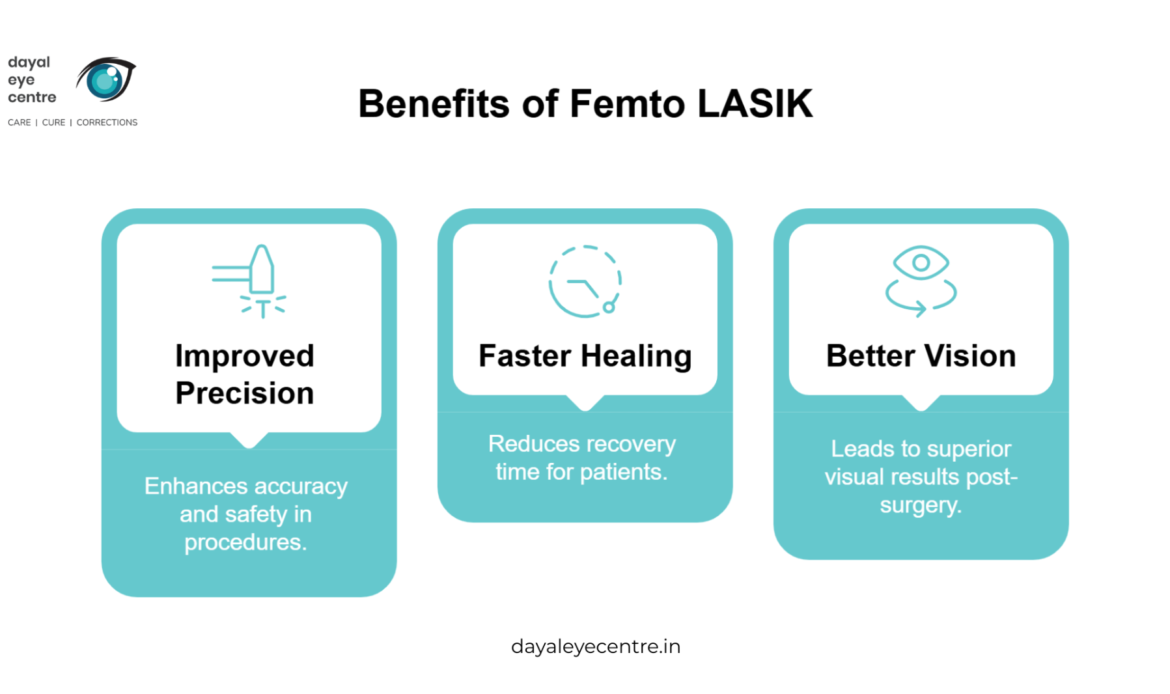
Scientific studies show how Femto LASIK outperforms traditional vision correction methods. This advanced procedure stands out because it offers better precision, faster healing, and superior vision results.
Improved precision and safety
The femtosecond laser technology offers unmatched accuracy when creating corneal flaps. Surgeons use ultrafast laser pulses to achieve consistent flap dimensions. This minimizes irregularities that could affect vision quality.
Clinical data reveals these safety advantages:
- The bladeless approach reduces flap-related complications by a lot
- Eye-tracking systems make immediate adjustments during the procedure
- Smart LASIK systems analyze patient data to predict post-operative outcomes
Research shows Femto LASIK patients have fewer post-operative side effects, especially with dry eyes and night vision issues. Computer-controlled technology lets ophthalmologists customize treatment based on each patient’s vision problems.
Faster healing time
Femto LASIK’s precision helps speed up recovery. Studies reveal impressive healing milestones:
Clinical trials show better early visual outcomes. Patients achieve much better uncorrected distance visual acuity (UDVA) scores of 0.03 ± 0.06 just one day after surgery. These improvements stay stable, with excellent vision scores of 0.02 ± 0.05 after one week.
Healing benefits go beyond the original recovery. Research shows Femto LASIK patients experience:
- Less post-operative discomfort
- Faster return to daily activities
- Lower risk of corneal tissue trauma
Better vision outcomes
The largest longitudinal study verifies Femto LASIK’s superior visual results. A complete analysis revealed:
- 90% of patients achieved vision within ±0.25 D of emmetropia after 12 months
- 100% of patients reached vision within ±0.50 D of emmetropia
- All study participants got an uncorrected distance visual acuity of 1.0 on the decimal scale
Advanced optical performance measurements prove Femto LASIK works better through:
- Lower Objective Scatter Index (OSI) values of 0.83±0.53
- Higher Modulation Transfer Function (MTF) scores of 40.17±8.33
- Better Predicted Visual Acuity (PVA) measurements
Femto LASIK works well for vision problems of all types. Clinical data confirms successful outcomes in treating mild, moderate, and high myopia. Long-term studies show patients managed to keep their improved vision without any cases of keratectasia after 12 months of follow-up.
Modern LASIK systems now use artificial intelligence to improve treatment precision. These smart systems analyze big amounts of patient data. This helps surgeons develop more accurate treatment plans and predict post-operative outcomes reliably.
Cost and Value Analysis
You need to understand the financial aspects of Femto LASIK to make a smart decision. Several key factors affect how much you’ll invest in this advanced vision correction procedure.
Average femto lasik surgery cost
Femto LASIK surgery costs vary significantly in different parts of India. The procedure costs between ₹75,000 to ₹1,50,000 for both eyes. Several factors create this price difference:
- Location – Big cities usually have higher prices
- Doctor’s experience and reputation
- Technology and equipment quality
- Hospital or clinic facilities
Budget clinics charge ₹75,000 – ₹90,000, while mid-range hospitals cost ₹90,000 – ₹1,20,000. Premium eye centers charge between ₹1,20,000 – ₹1,50,000.
Here’s what you’ll pay in major Indian cities:
- Delhi: ₹80,000 – ₹1,50,000
- Mumbai: ₹90,000 – ₹1,50,000
- Bangalore: ₹85,000 – ₹1,40,000
- Chennai: ₹75,000 – ₹1,30,000
Insurance and payment options
Most health insurance policies see Femto LASIK as an elective procedure and don’t cover it under standard plans. However, you might get insurance coverage if:
- Your refractive power is 7.5 Diopters or more
- You have vision problems from injuries or accidents
- You develop refractive errors after surgical complications
You have several payment options if insurance doesn’t cover your procedure:
- No-cost EMI plans from various banks
- Medical loans with simple paperwork
- Hospital’s own financing plans
Long-term cost benefits
Femto LASIK’s upfront cost might seem high, but it saves money over time. Let’s look at the financial advantages:
The procedure eliminates regular expenses for glasses and contact lenses. You won’t need to pay for:
- Yearly eye checkups
- New prescriptions
- Frame replacements
- Contact lens solutions and supplies
The surgery also adds value through:
- Lower risk of eye infections that contact lens users often face
- Less time spent taking care of vision aids
- Better job opportunities that need perfect vision
Your payment covers everything you need:
- Pre-surgery checkups
- The main procedure
- Medicines after surgery
- Follow-up visits
Stay away from cheap deals that might hide costs or involve less experienced doctors. Look for trusted clinics that show clear pricing and have experienced surgeons using modern technology.
Ask for a detailed cost breakdown before booking your surgery. This will help you understand the total cost and avoid surprise expenses during treatment.
Conclusion
Femto LASIK delivers lasting vision correction with impressive clinical results and high patient satisfaction. Scientific studies show its remarkable safety record. Over 90% of patients achieve their desired vision outcomes within 12 months.
This procedure combines precision with quick recovery time and long-lasting results. The cost ranges from ₹75,000 to ₹1,50,000 for both eyes. Many patients find the investment worthwhile since they save money by eliminating recurring expenses on contact lenses and glasses.
Recent advances in medical technology have made Femto LASIK safer and better than before. Computer-guided systems reshape your cornea with precision. Smart eye-tracking features add extra safety during the procedure.
Would you like to experience clear vision without glasses or contact lenses? Schedule your consultation at Daya Eye Center to discover if Femto LASIK matches your vision correction needs. Our expert team will assess your eyes and create a treatment plan that fits your specific requirements.
FAQs
1. What are the main advantages of Femto LASIK over traditional LASIK?
Femto LASIK offers improved precision and safety due to its bladeless approach using a femtosecond laser. This results in more accurate corneal flap creation, reduced risk of complications, and typically faster healing times for patients.
2. How long does it take to recover from Femto LASIK surgery?
Most patients notice significant vision improvement within 24-48 hours after surgery. However, complete healing can take several weeks. The majority of individuals can return to work and regular activities within 1-2 days, but it’s important to follow your doctor’s post-operative care instructions.
3. What is the success rate of Femto LASIK in achieving desired vision outcomes?
Clinical studies show that over 90% of Femto LASIK patients achieve their desired vision outcomes within 12 months of the procedure. Many patients report improved vision within the first 24 hours after surgery.
4. How much does Femto LASIK typically cost in India?
The cost of Femto LASIK in India generally ranges from ₹75,000 to ₹1,50,000 for both eyes. Prices can vary based on factors such as the clinic’s location, the surgeon’s expertise, and the technology used.
5. Is Femto LASIK covered by insurance?
Most health insurance policies consider Femto LASIK an elective procedure and do not cover it under standard plans. However, coverage may be available in specific cases, such as when refractive power equals or exceeds 7.5 Diopters or for vision problems resulting from injuries or accidents.
Director and Chief Ophthalmologist of Dayal Eye Centre, with more than two decades of experience and over 80,000 cataract surgeries — one of the most experienced eye surgeons in Gurgaon.