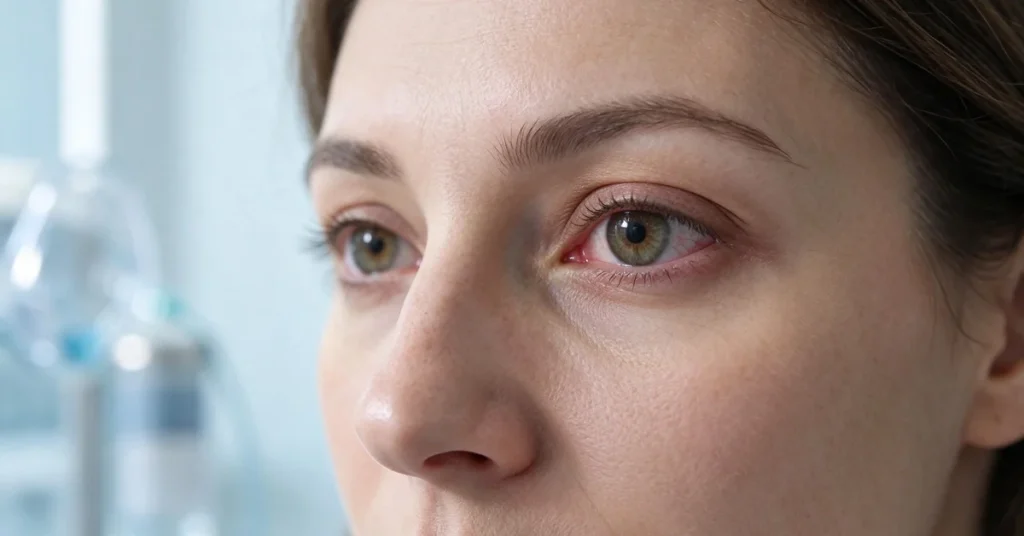








Eye twitching is a small, involuntary flicker of the eyelid muscle, usually in one upper or lower lid. It is very common and, in most people, harmless and short-lived. Still, if your eyelid has been jumping for days during a busy week, it’s natural to wonder whether something is wrong. This guide explains the common causes, simple steps that help, the rarer types of twitching and when to see a doctor.
What is eye twitching?
The everyday eyelid twitch is called myokymia. It is a fine, repeated contraction of the muscle that closes the eyelid, and it usually affects one eye at a time. It is felt more often in the lower lid, and others rarely notice it, even when it feels strong to you.
Spasms often come and go for a few days and then stop on their own. Most people have this type of twitch now and then, and many don’t notice when it ends.
A simple eyelid twitch is common, annoying and usually harmless.
Common causes of eye twitching
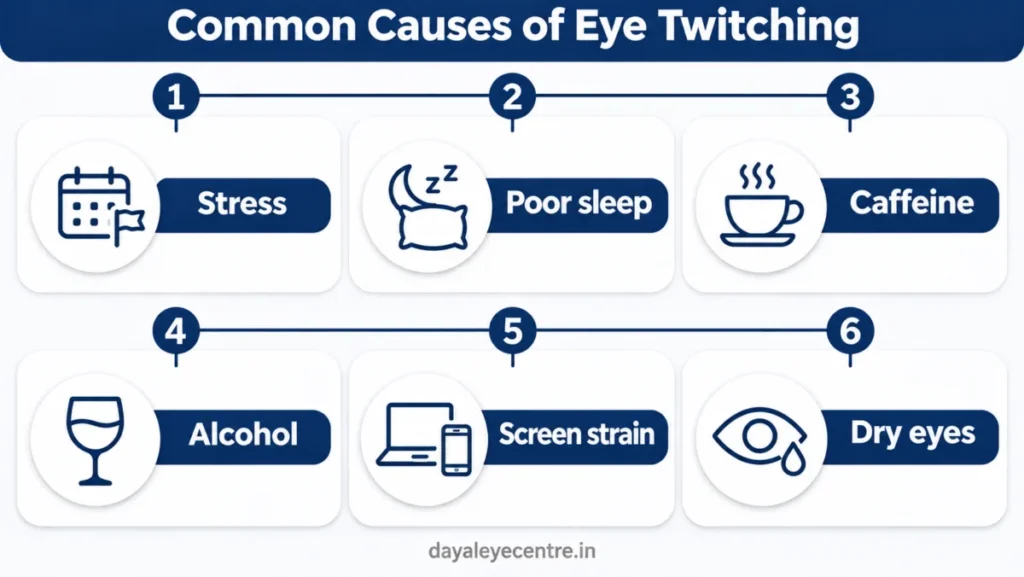
The exact cause is not always clear, but certain triggers often make twitching more likely:
- Stress, such as a deadline week or a family worry
- Tiredness and poor sleep
- Caffeine, from too many cups of tea, coffee or energy drinks
- Alcohol
- Screen strain, from long hours at a laptop or phone
- Dry or irritated eyes
Picture an analyst in Cyber City working late through a quarter-end, living on coffee and four hours of sleep. A twitch in the lower lid is a familiar sign of that kind of week. Long screen hours are a common cause of eye strain, and our clinic for digital eye strain in Gurgaon can check for it.
Dryness that keeps coming back may need dry eye disease treatment in Gurgaon.
Uncorrected vision can play a part too, because squinting to see clearly tires the muscles around the eye.
Blurred vision or frequent headaches can be symptoms of refractive error that a simple eye test can pick up. Most twitches trace back to everyday strain on the body and eyes.
Simple steps that help a twitch settle
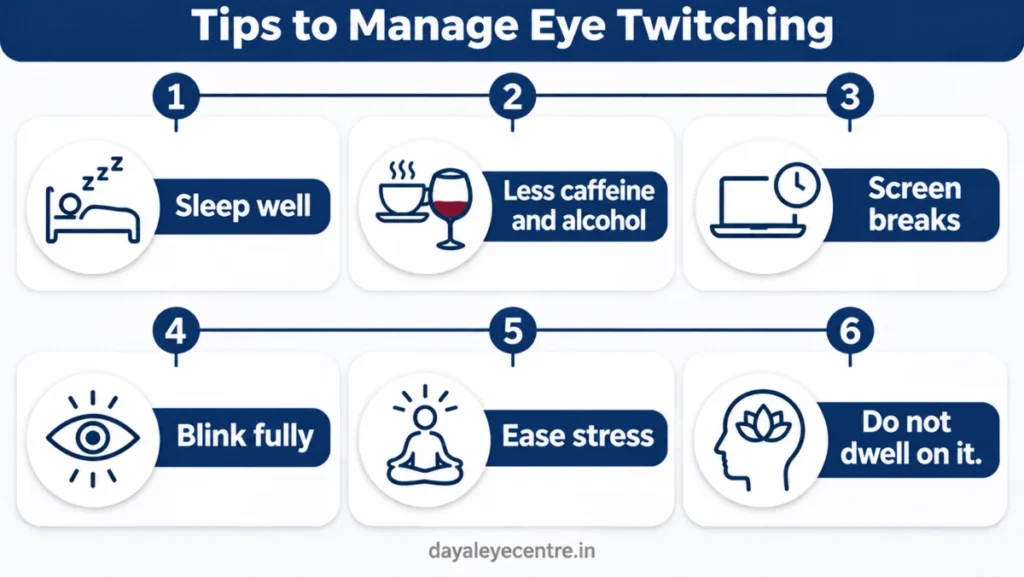
A simple twitch usually fades once the trigger eases. These steps can help:
- Aim for regular, sufficient sleep for a few nights.
- Cut back on caffeine and alcohol.
- Take short screen breaks and look into the distance every so often.
- Blink fully during screen work, and ask your eye doctor about dryness.
- Find small ways to ease stress, such as a walk or a short break.
- Try not to focus on the twitch, because worrying about it can make it feel worse.
These habits fit well with other eye care tips for working professionals. They cost nothing and help the eyes in other ways too.
A balanced diet supports overall nutrition for eye health, although no single food stops a twitch. Rest, fewer stimulants and kinder screen habits settle most twitches.
When eye twitching is more than a twitch
Two less common conditions can look like a simple twitch at first. Benign essential blepharospasm starts as increased blinking of both eyes and can lead to the eyelids squeezing shut. It is different from the temporary twitching caused by tiredness, stress or caffeine.
Hemifacial spasm affects the muscles on one side of the face. Twitching may start around the eye and then spread to the cheek or mouth on the same side.
Health information on eyelid twitch notes that in most cases twitches stop within a week. Twitching that lasts longer, involves both eyes or spreads across the face needs an examination.
Twitching in both eyes, forced closure or spread to the face is a reason to be examined.
How doctors treat persistent twitching
Treatment starts with finding the cause. An eye doctor will examine the eyelids and eye surface, check vision and look for dryness or irritation, and may suggest a neurology opinion where needed.
When dryness, an eyelid problem or an out-of-date prescription is behind the twitch, treating that cause often lets the twitch fade. New glasses or treatment for a dry eye surface can help the twitch settle.
For blepharospasm and hemifacial spasm, small injections that relax the overactive muscle are a common treatment. The effect wears off over time, so the injections are usually repeated. At Dayal Eye Centre, eye botox in Gurgaon is offered for these conditions after assessment by our oculoplasty team, with input from our neuro-ophthalmology specialist where needed.
Persistent twitching can usually be eased once its type is clear.
When to see a doctor
Book an eye examination if:
- The twitching has not settled within a few weeks
- Your eyelid closes completely with each twitch
- You have difficulty opening the eye
- Other parts of your face or body twitch
- The eye is red, swollen or has a discharge
- Your upper eyelid droops
For example, a parent who notices their own eyelid now shuts tight several times a minute while driving should not wait for it to pass.
Seek in-person eye care straight away for sudden double vision, sudden loss or dimming of vision, or severe eye pain with redness. Call Dayal Eye Centre on +91 81786 39701 during opening hours, or go to the nearest hospital emergency department.
A twitch that stays, spreads or comes with other symptoms deserves a proper check.
This article is general information. An ophthalmologist needs to examine your eyes to advise on your own case.
Calming a twitching eye
Most eye twitching is a simple, harmless twitch linked to stress, tiredness, caffeine or screen strain, and it settles with rest and small habit changes. Twitching that lasts for weeks, closes the eye or spreads to the face needs an examination. If yours will not settle, book an eye examination at Dayal Eye Centre in Sector 15, Gurugram.
Frequently asked questions
Is eye twitching a sign of a serious illness?
Rarely. Most twitches are harmless and fade within days, but twitching with drooping, weakness or spread to the face should be checked.
How long does an eye twitch last?
Most simple twitches come and go for a few days and then stop. If one lasts more than a few weeks, see a doctor.
Can lack of sleep cause eye twitching?
Yes. Tiredness is one of the most common triggers, and catching up on sleep often helps.
Does drinking less tea or coffee help?
It often does. Caffeine can make the eyelid muscle more likely to twitch.
Can screen time cause eye twitching?
Long screen sessions can strain and dry the eyes, which may trigger twitching. Regular breaks and full blinks help.
Can children get eye twitching?
Yes. Most twitches in children are harmless, but see a doctor if the twitch lasts, involves frequent blinking or comes with other symptoms.
Do eye drops stop twitching?
Lubricating drops may help when dryness is the trigger. Ask your eye doctor before using any drops.