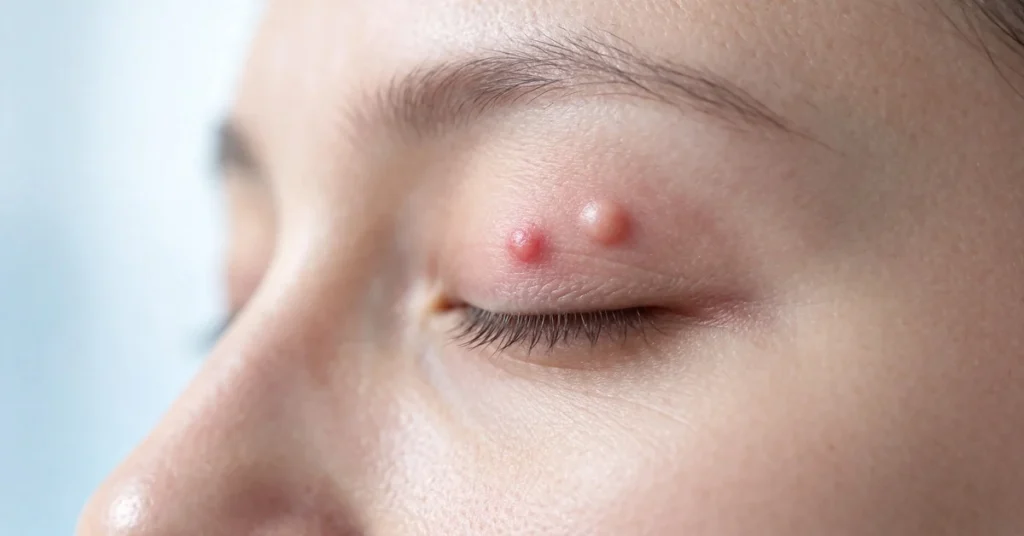







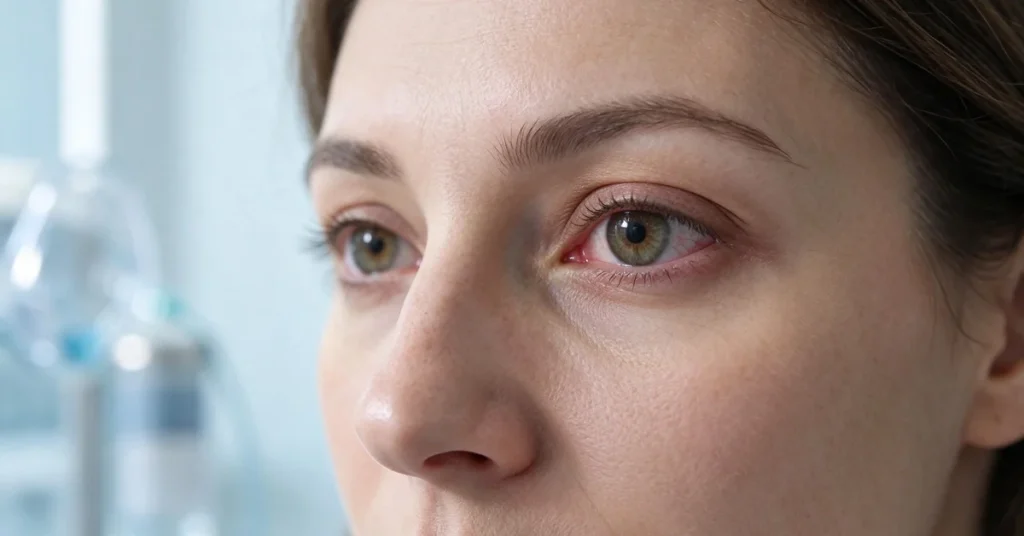
Eye flu is the everyday name for conjunctivitis, an inflammation of the conjunctiva, the thin clear layer over the white of the eye and the inner eyelids. It makes the eye red, watery or sticky, and some types spread easily. If someone at home or at work has woken up with a red eye, it’s natural to wonder who is next. This guide explains how to recognise eye flu, how it spreads, what care helps and when it needs an eye doctor.
What is eye flu, and is it the same as the flu?
Despite the name, eye flu is not influenza. Conjunctivitis can be caused by a virus, bacteria or an allergy, and inflamed blood vessels in the conjunctiva turn the white of the eye pink or red.
Viral conjunctivitis is the most common type, while allergic conjunctivitis does not spread from person to person. Chemicals, contact lens wear and a loose eyelash can also cause it.
Knowing the type of eye flu tells you whether the people around you need protecting.
Eye flu symptoms: what you may notice
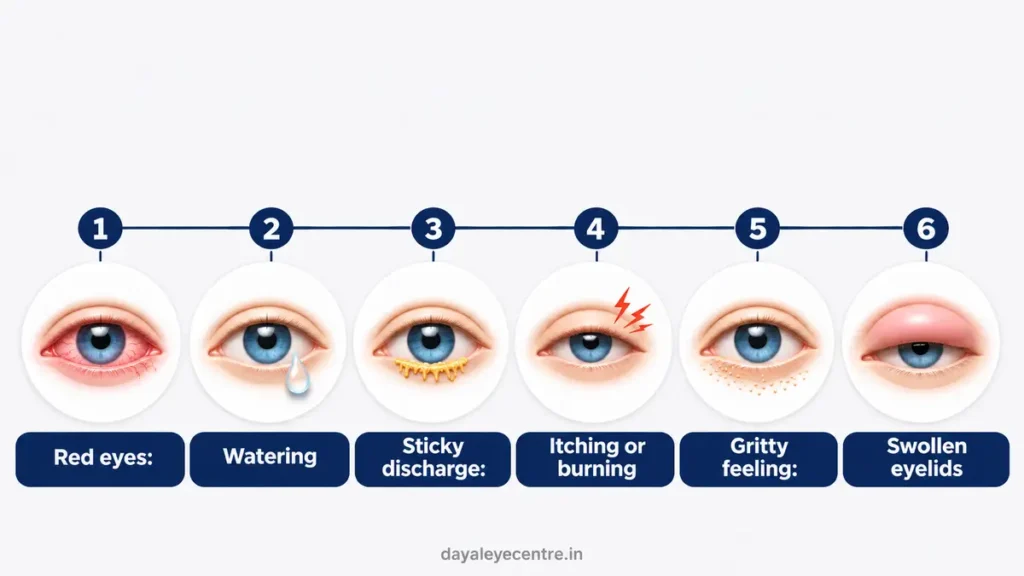
Eye flu can affect one eye or both. Common signs include:
- Redness of the white of the eye or the inner eyelid
- Watering
- Sticky discharge that can crust on the lashes
- Itching or burning
- A gritty feeling, as if something is in the eye
- Swollen eyelids
In a study of 793 patients from the 2023 outbreak, seen at five centres across India, 74.5 percent had both eyes affected and 60.4 percent had swollen eyelids.
Viral, bacterial or allergic: how they usually differ
| Viral | Bacterial | Allergic | |
|---|---|---|---|
| Usual trigger | A virus, often alongside a cold | Bacteria | Dust, pollen or pet dander |
| Typical discharge | Watery | Thick, with pus | Watery |
| Spreads to others | Yes | Yes | No |
| Often comes with | Cold-like symptoms | Lids stuck together on waking | Strong itching, sneezing |
These patterns overlap, so watch the discharge and the itch, but let an examination settle the cause.
How does eye flu spread?
Viral and bacterial eye flu spread through contact. Germs in tears and discharge reach the hands when someone rubs an eye, then pass on through handshakes, towels, pillowcases, phones and eye drop bottles.
Picture a team in Udyog Vihar sharing keyboards and a pantry hand towel. One person rubs a watery eye, and within days two colleagues have red eyes too. Washing hands before touching your face belongs alongside other everyday eye care tips for working professionals.
Eye flu travels on hands and shared items, so that is where prevention starts.
How long does eye flu last, and when is it contagious?
Most eye flu settles on its own. Viral eye flu usually lasts 7 to 14 days without treatment, but public health guidance on conjunctivitis notes it can take 2 to 3 weeks or longer. Mild bacterial conjunctivitis often clears in 2 to 5 days, though full recovery can take up to 2 weeks.
The sources we reviewed give no fixed number of contagious days. As a practical rule, treat the eye as able to spread infection while it is red, watery or sticky.
For most people, eye flu runs its course within one to two weeks, and hygiene matters throughout.
How is eye flu diagnosed and treated?
An eye doctor usually diagnoses eye flu with a slit-lamp examination, a microscope with a bright, narrow beam. It also helps rule out look-alike conditions such as dry eye, a corneal infection or inflammation inside the eye. If dryness turns out to be the cause, dry eye disease treatment in Gurgaon follows a different plan.
Antibiotics do not work against viral conjunctivitis. A systematic review of clinical trials found that bacterial conjunctivitis often improves on its own, with antibiotics giving only a modest benefit.
A study of the 2023 outbreak in India found that patients given lubricating drops alone recovered fastest, in an average of 4.61 days. Patients given steroid drops took longest, at 6.5 days, and the authors concluded that antibiotic drops were unnecessary in that outbreak.
Self-treatment carries real risk. A report in an Indian ophthalmology journal described seven severe corneal infections in July and August 2023. All followed unsupervised use of steroid and antibiotic drops for conjunctivitis, so use any drops, including leftovers, only on an eye doctor’s advice.
The right treatment comes from an examination, not a guess.
Caring for eye flu at home
These steps ease discomfort and protect the people you live with:
- Wash your hands with soap and water for at least 20 seconds, before and after touching your eyes.
- Wipe away discharge with a fresh, wet cotton pad, a separate one for each eye.
- Rest a cool, clean cloth over closed eyes for a few minutes to soothe them.
- Keep your own towel and pillowcase, and wash them often in hot water with detergent.
- Do not share eye drops or eye makeup, and never use one bottle for an infected and an uninfected eye.
- Pause contact lenses until your eye doctor says it is safe.
Try not to rub your eyes, because rubbing carries discharge to your hands and the other eye. It also helps to stay out of swimming pools until the eye settles.
Clean hands and unshared items do most of the work at home.

Can you go to school or work with eye flu?
Health authorities differ here. Some suggest returning once there is no fever or other symptoms and your doctor agrees, especially if your work involves close contact. Others say adults and children need not stay off unless they feel very unwell.
In practice, follow your eye doctor’s advice and your school’s or employer’s policy. If you do return while the eye is still red, keep your hands clean and use your own towel.
There is no single rule, so let your doctor and your school or workplace guide the timing.
When to see an eye doctor
Some signs suggest more than simple conjunctivitis. See an eye doctor if eye flu comes with:
- Eye pain
- Sensitivity to light
- Blurred vision that does not clear when you wipe away discharge
- Intense redness
- Symptoms that get worse or do not improve
- A weakened immune system
Also see a doctor if symptoms have not cleared within 7 days. A newborn with red or sticky eyes should see a doctor straight away.
Seek in-person eye care straight away for severe eye pain with redness, headache, nausea or haloes, sudden loss or dimming of vision, an eye injury or sudden double vision. Call Dayal Eye Centre on +91 81786 39701 during opening hours, or go to the nearest hospital emergency department. For a chemical splash, rinse the eye with clean running water while you arrange care.
Pain and light sensitivity can mean the cornea, the clear front window of the eye, is involved. When an examination finds this, our cornea team, including Dr. Hem Shah, provides corneal infection treatment in Gurgaon.
Contact lens wearers with a painful red eye, people with diabetes and older adults should be seen sooner. Regular eye exams for seniors make it easier to tell when a red eye is something new. If you are unsure where to go, our guide on how to choose an eye doctor in Gurgaon explains what to look for.
Pain, light sensitivity or blurred vision turn eye flu from a home-care problem into a same-day visit.
This article is general information. An ophthalmologist needs to examine your eyes to advise on your own case.
Getting your eyes back to comfortable
Most eye flu settles within one to two weeks with simple care, clean hands and unshared towels. Skip leftover drops, and watch for pain, light sensitivity or blurred vision. If your symptoms are not improving or a warning sign appears, book an eye examination at Dayal Eye Centre in Sector 15, Gurugram.
Frequently asked questions
Can eye flu spread by looking at someone?
No. Eye flu spreads through contact with tears, discharge or items an infected person has touched, not through eye contact.
Should I wear dark glasses during eye flu?
Dark glasses can make bright light more comfortable. They do not treat the infection or stop it spreading.
Can I use eye drops left over from last time?
It is safer not to. Leftover drops may be the wrong type, and unsupervised steroid drops have been linked to severe corneal infections.
Can eye flu affect my vision?
Discharge can blur vision briefly until you blink or wipe it away. Blurring that does not clear, or comes with pain, needs an examination.
Can I get eye flu again?
Yes. Having eye flu once does not stop you catching it again, so keep up hand hygiene during outbreaks.
Is eye flu dangerous for babies?
Red or sticky eyes in a newborn need a doctor straight away, because infections at this age can be serious. Older children with pain or light sensitivity should also be seen.
Should I stop wearing contact lenses?
Yes, until your eye doctor says it is safe. Throw away disposable lenses and cases used during the infection.

Head of Cornea at Dayal Eye Centre — a cornea and phaco surgeon with 15 years of experience, specialised in cornea and anterior segment at Aravind Eye Hospital, Madurai.