




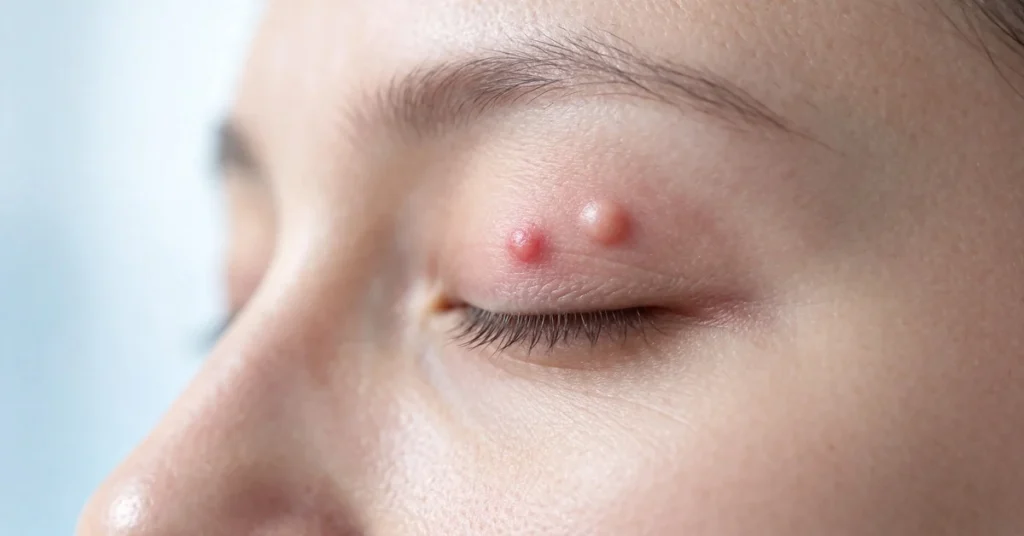
A stye and a chalazion are both small lumps on the eyelid, and in the mirror they can look almost the same. The stye vs chalazion difference matters, though, because one is an infection and the other is a blocked oil gland. If you have woken up with a sore, swollen eyelid before an important meeting, you probably want to know whether it will settle on its own. This guide explains how to tell the two apart, how to care for them safely at home and when to have a lump checked.
What is a stye?
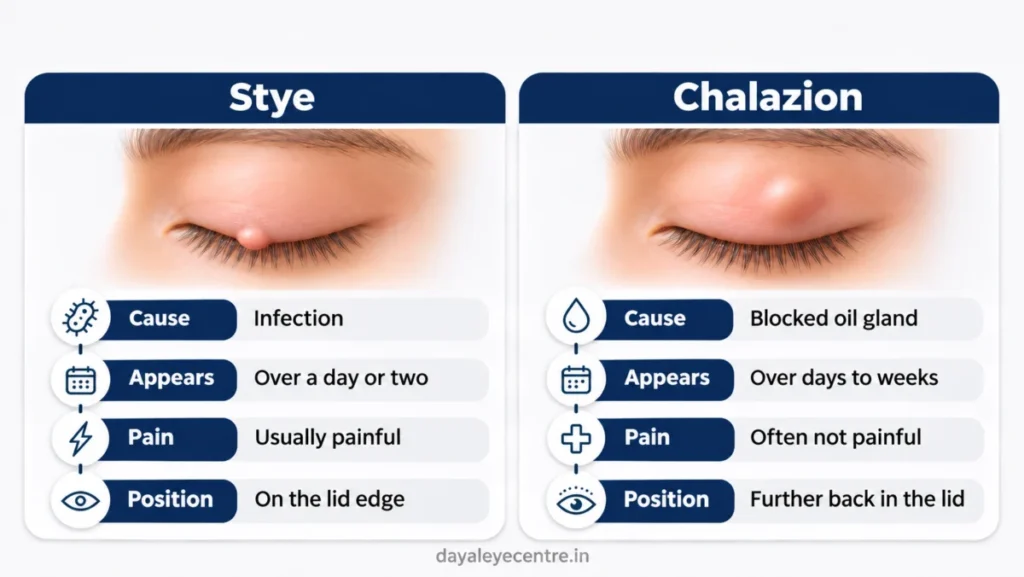
A stye is a small infection at the base of an eyelash or in an oil gland of the eyelid. It usually appears over a day or two as a red, tender lump that may form a yellow, pus-filled point. An external stye sits on the edge of the lid, while an internal stye forms on the inner surface.
Styes are often painful, and the eye may water or feel gritty. Vision itself should not be affected. They are common at any age and are often linked to rubbing the eyes with unwashed hands or using old eye makeup.
Most styes clear without treatment within about a week, often after they burst and drain. A stye is quick to appear, sore to touch and usually short-lived.
What is a chalazion?
A chalazion is a lump that forms when one of the meibomian glands, the tiny oil glands inside the eyelid, becomes blocked. It is not an infection. It grows more slowly than a stye, over days to weeks, and usually sits a little further back from the lash line.
A chalazion is often not painful, or only mildly tender, after the first few days. It can follow an internal stye, and it is more common in people with blepharitis, a long-term inflammation of the eyelid edges. Because the same oil glands keep the tear film healthy, a doctor may also check for gland problems linked to dry eye disease treatment.
Healthy skin and glands are part of overall nutrition for eye health, though diet alone does not clear a lump. A chalazion is a slow, firm bump caused by a blocked gland, and it usually does not hurt.
Stye vs chalazion: the key differences
| Stye | Chalazion | |
|---|---|---|
| Cause | Infection of a lash follicle or oil gland | Blocked oil gland, no infection |
| How fast it appears | Over a day or two | Over days to weeks |
| Pain | Usually painful | Often not painful after the first few days |
| Position | On the lid edge or just inside | Further back in the lid |
| Pus point | Often | Usually not |
These clues help, but they overlap, and an eye doctor can tell the two apart in a short examination.
Safe home care for eyelid bumps
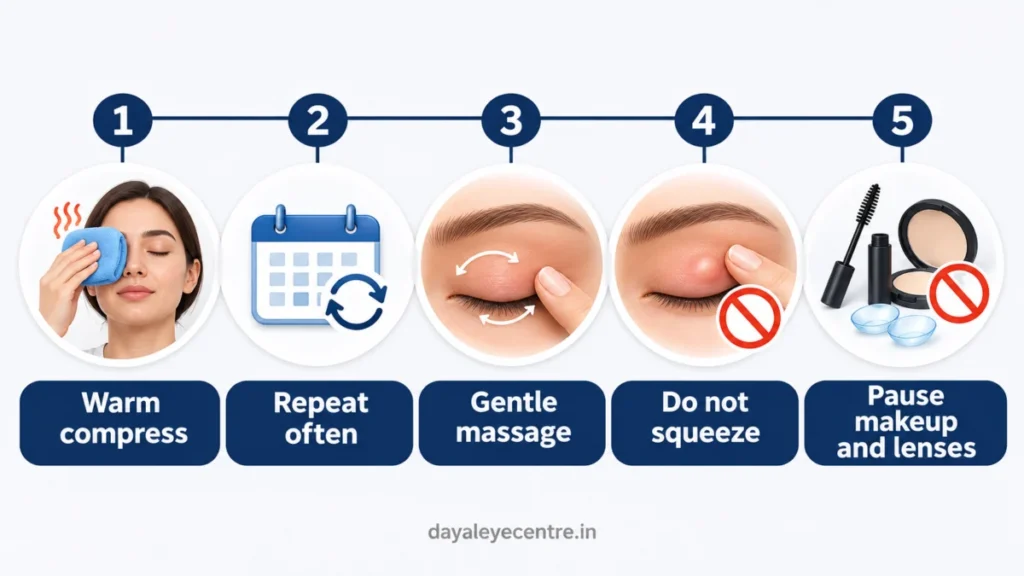
Warm compresses are the first step for both. Soak a clean cloth in warm water and test it on the back of your hand so it is not too hot. Hold it over the closed eye for 5 to 10 minutes. Public health advice on styes suggests repeating this 3 or 4 times a day and gently massaging the area.
Do not squeeze the lump or pull out an eyelash yourself, because this can spread infection. Keep the eyelid clean, and pause eye makeup and contact lenses until the bump has settled. These habits sit naturally alongside other eye care tips for working professionals, such as washing hands before touching your face.
Antibiotics are generally not needed for a simple stye and do not help an uncomplicated chalazion. Warm compresses do most of the work.
Gentle heat, clean hands and patience settle most eyelid bumps.
How an eye doctor treats stubborn bumps
Some chalazia stay firm for weeks despite compresses. An eye doctor may then drain the lump through a tiny cut on the inside of the eyelid, under local anaesthetic. Another option is a small injection to reduce the inflammation. Both are short procedures done in the clinic.
Our oculoplasty treatment in Gurgaon covers these eyelid procedures, led by our oculoplasty and orbit specialist, Dr. Saurbhi Khurana. A lump that keeps returning in the same place may be sent for a small tissue test to rule out other causes.
A bump that will not clear is usually simple to treat once it has been examined.
When to see an eye doctor
See an eye doctor if a stye does not improve after a week or two of home care, or if a chalazion has not gone after 4 to 6 weeks. Also book a visit if the lump keeps coming back in the same spot, changes the eyelashes or affects your vision. An oculoplastic surgeon in Gurgaon can examine the eyelid closely.
Seek care the same day if the eyelid becomes very swollen and painful, or if redness spreads across the lid and cheek. Seek in-person eye care straight away for severe eye pain with redness or a sudden loss of vision. Call Dayal Eye Centre on +91 81786 39701 during opening hours, or go to the nearest hospital emergency department.
Older adults with a new lid lump should not wait it out. Regular eye exams for seniors make new changes easier to spot.
A lump that lingers, returns or spreads deserves an examination.
This article is general information. An ophthalmologist needs to examine your eyes to advise on your own case.
Getting your eyelid back to normal
A stye is a quick, painful infection, while a chalazion is a slower, firmer blocked gland, and both usually respond to warm compresses. Avoid squeezing, keep the area clean and give home care a fair trial. If a lump will not settle or keeps returning, book an eyelid examination at Dayal Eye Centre in Sector 15, Gurugram.
Frequently asked questions
Can a stye turn into a chalazion?
Yes. An internal stye can leave a firm lump behind after the infection settles. That lump is then treated as a chalazion.
Are styes contagious?
Styes are not usually passed from person to person. Still, avoid sharing towels and eye makeup while you have one.
Can I wear eye makeup with a stye or chalazion?
It is better to stop until the lump has settled. Replace old eye makeup that may carry bacteria.
How long does a chalazion last?
Many settle within a few weeks with warm compresses. Some take longer and may need drainage if they do not shrink.
Should I pop a stye?
No. Squeezing can spread infection into the eyelid and make the swelling worse.
Why do I keep getting styes?
Repeated styes are often linked to blepharitis or oily eyelid glands. Daily lid hygiene helps, and an eye doctor can look for an underlying cause.
Can children get a stye or chalazion?
Yes, both are common in children. Use only gently warm compresses, and see a doctor if the lid swells a lot or your child seems unwell.