A high power or a thin cornea does not always mean surgery is off the table. Book an ICL consultation and consult with our doctors about your candidacy, the lens options and what results are realistic for your eyes.
ICL stands for Implantable Collamer Lens — the most widely known type of phakic intraocular lens, meaning a lens added inside the eye while your own natural lens stays in place. It corrects high nearsightedness (myopia — a high minus “glasses number”), and specific lens designs also correct astigmatism. Because the correction sits inside the eye rather than on the cornea, we often consider ICL exactly when laser is not ideal.
Candidacy framing consistent with US FDA labelling for implantable collamer lenses and American Academy of Ophthalmology guidance on phakic IOLs for high refractive error. Only a detailed evaluation can confirm.
Am I a Candidate? Book Your AssessmentA high glasses number: Particularly high myopia — at or beyond the comfortable range for laser correction.
Thin or borderline corneas: Corneal mapping shows LASIK or SMILE is less suitable; if keratoconus is suspected, the cornea is stabilised first (for example with CXL) before any refractive decision.
Prone to dry eyes: A corneal laser procedure may be less comfortable — the ICL leaves the corneal surface untouched.
A high myopia power, thin corneas or a borderline corneal shape can make LASIK or SMILE less suitable on corneal mapping. Some patients in this group have early corneal-shape changes that need a cornea opinion first — if keratoconus is suspected, we stabilise the cornea (for example with corneal cross-linking, CXL) before any refractive decision is made.
If a detailed check shows ICL is not ideal, we will say so honestly and talk you through alternatives — laser reshaping with LASIK or SMILE, or a flapless surface option like PRK for thinner corneas within laser range. Being guided to the right procedure, rather than pushed into one, is part of specialist-led care.
“Phakic IOL” (phakic intraocular lens) is the category; the ICL is its best-known member. Phakic simply means your own natural lens stays in the eye — the implant is added in front of it to correct your glasses number. That is the crucial difference from cataract surgery, where the natural lens is removed and replaced: a phakic IOL is a vision-correction option for a healthy eye, not a cataract treatment.
A phakic IOL is added in front of your natural lens, which stays in place. In cataract surgery the natural lens is removed and replaced. This page is about vision correction for a healthy eye.
Laser procedures subtract corneal tissue to change focus. A phakic IOL adds a lens instead — the cornea and your natural lens stay intact, and the correction remains removable.
An ICL is a soft, flexible lens made from Collamer — a proprietary collagen-containing biocompatible material designed to sit quietly inside the eye without being sensed by it. Think of it as a contact lens that lives inside the eye rather than on its surface, working together with your natural lens to focus light on the retina.
With a lens that lives inside the eye, the measurements matter as much as the surgery — so much of the important work happens before the day itself. This is where an accredited hospital set-up shows.
Tomography of the cornea and anterior segment, including anterior chamber depth — the internal space the lens needs to sit safely.
Precise optical measurements used in sizing and power planning for the lens. Read about the IOL Master 700.
Checking the health of the cornea’s inner cell layer, which we also monitor at reviews after surgery.
Ruling out cataract, uncontrolled glaucoma, retinal issues and any active disease before we recommend an intraocular procedure.
From these measurements your surgeon selects the lens size and power — what surgeons call planning the vault, the small clearance between the ICL and your natural lens. Careful sizing here is the single biggest factor in a comfortable long-term result, and it is why we will not shortcut the workup.
ICL is a quick, daycare (walk-in, walk-out) procedure — no overnight admission. The implantation itself usually takes around 15 to 20 minutes per eye, though you should plan a couple of hours at the centre for preparation and post-procedure checks, and arrange for someone to accompany you.
Numbing drops keep the eye comfortable — you feel pressure and awareness rather than sharp pain.
Your surgeon makes a tiny, self-sealing opening at the edge of the cornea — usually no stitches needed.
The folded ICL is gently inserted and positioned behind the iris and in front of your natural lens.
After post-procedure checks you go home the same day; follow-up visits confirm the lens is sitting well and your eye pressure is normal.
Numbing drops keep the eye comfortable — you feel pressure and awareness rather than sharp pain. The tiny opening at the edge of the cornea is self-sealing, so there are usually no stitches, and you go home the same day. Your surgeon will advise whether to treat both eyes together or a few days apart.
Many patients notice a clear improvement within a day or two, though some watering, light sensitivity or mild haze in the first few days is normal. You will have eye drops and a simple do’s-and-don’ts routine — no rubbing the eye, protection from dust and water, and a short break from swimming, eye make-up and contact sport. Follow-up visits confirm the lens is sitting well and your eye pressure is normal.
Individual results and recovery vary based on your eye condition, prescription/power range, eye anatomy, age, overall eye health and healing response. The timelines above are typical and can vary from person to person.
Because we offer laser and lens-based options under one roof, our surgeons can match the method to your eyes rather than fitting every eye to one procedure. The table below is a simple guide; the right choice is always confirmed after a detailed evaluation. For the reasoning in depth, read why an ICL can be a better fit than LASIK for some eyes.
| Procedure | How it works | Well suited for | Removes corneal tissue? | Removable? |
|---|---|---|---|---|
| ICL (phakic IOL) | A soft Collamer lens is placed inside the eye, in front of your natural lens | High myopia and high powers, thin corneas, dry-eye-prone eyes | No — the cornea is left untouched | Yes — the lens can be removed or exchanged |
| LASIK | A laser reshapes the cornea under a thin flap | Low-to-moderate powers with adequate corneal thickness | Yes — a small amount of corneal tissue | No — reshaping is not reversed |
| SMILE (ReLEx SMILE) | Flapless, keyhole laser reshaping of the cornea | Myopia with or without astigmatism, dry-eye-prone and active patients | Yes — a small lenticule of tissue | No — reshaping is not reversed |
In short: laser procedures reshape the cornea and suit low-to-moderate powers, while ICL adds a lens inside the eye and often suits higher powers, thinner corneas or dry-eye-prone eyes. Neither is superior in the abstract — the right procedure is the one that fits your eyes. (A flapless surface option, PRK, covers a further group of laser-range eyes where a flap is the concern.)
ICL is a well-established procedure used worldwide for many years, and serious complications are uncommon in carefully selected patients. But it is intraocular surgery — a procedure inside the eye — so it carries a different risk profile from corneal laser surgery, and no surgery is without risk. Being open about this is part of how we help you decide. The specifics we will discuss with you honestly:
Vault and sizing. Occasionally the lens sits higher or lower than planned and may need repositioning or exchange — this is precisely why the pre-operative sizing workup is so detailed.
Eye pressure. In some eyes the internal pressure can rise, so we check it after surgery and at every review.
Cataract and the corneal cell layer. Over the long term there is a small possibility of early cataract change or gradual endothelial cell loss, which is why periodic lifelong check-ups are part of living with an ICL — we monitor both at your reviews.
Night-vision effects. Some patients notice glare or haloes around lights early on; these typically settle as the eye adapts.
Infection or inflammation. As with any intraocular procedure the risk is small, but it is real, and we will tell you exactly what warning signs to report.
The goal we set with you is realistic: to reduce your dependence on glasses for everyday life, not to promise a fixed outcome. Reading glasses may still be needed later in life as age-related near blur (presbyopia) sets in. Your surgeon will explain what is achievable for your specific eyes.
The honest answer: ICL cost is not a flat figure, and we do not quote one online. It depends on the specific lens your eyes need — standard or toric (astigmatism-correcting) — your prescription, and whether one or both eyes are treated. Because every lens is individually sized and powered for your eye, your exact cost is confirmed only after an individual consultation, eye examination and lens planning. We would rather give you an accurate, personalised estimate than an inaccurate number on a webpage.
The lens type (standard or toric), your prescription, and whether one or both eyes are treated. Every lens is individually sized and powered for your eye after the diagnostic workup.
What we can promise is transparent, up-front costing once your eyes have been assessed.
Refractive surgery is usually elective, so insurance cover is generally limited — but Easy EMI (via Savein) helps you spread the cost comfortably.
For context on how laser-based alternatives are priced, see our refractive surgery cost in Gurgaon page.
Pricing note: all costs are subject to an individual consultation and eye examination; no fixed quotes are provided online.
Every eye — and every lens — is different, so your exact ICL cost is confirmed only after an examination. Consult with our doctors for a clear, personalised estimate and to discuss Easy EMI.
Refractive surgery is our flagship strength, and precise lens sizing and planning matter more in ICL than in almost any other refractive procedure. Our set-up is built for exactly that.
Three modular operation theatres and an in-patient ward — quality and safety systems you can verify.
You are assessed and treated by senior surgeons, with time to ask questions and no pressure to proceed.
Corneal mapping and anterior chamber depth on the OCULUS Pentacam, biometry on the Zeiss IOL Master 700 for accurate lens sizing.
ICL/phakic IOL, LASIK, Contoura, SMILE and surface PRK — so a lens-based option is recommended only when it genuinely suits your eyes.
1.2 lakh+ surgeries, 20+ years of experience, and recognition including the Ayushman Bharat Awards (2021 & 2024).
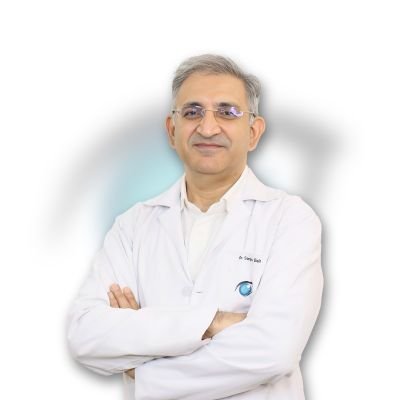
Medically reviewed by Dr. Sanjeev Bisla, MBBS, MS (Ophthalmology), Director — Dayal Eye Centre · Last updated: 28 July 2026 · Editorial Policy