






What a Cataract Actually Is
The natural lens inside your eye is meant to be crystal clear. With age — and sometimes with diabetes, steroid use or injury — the proteins in that lens slowly cloud over. That clouding is a cataract. It is not a film that grows over the eye, and no drop, diet or exercise can reverse it.
Because the change is gradual, most people adapt without noticing: brighter reading lights, giving up night driving, a little more squinting. By the time family members point it out, the cataract has usually been shaping daily life for years.
Signs Your Cataract Is Progressing
Watch for these day-to-day changes:
- Halos and glare around headlights — night driving feels unsafe
- Colours look faded or yellowish
- Frequent changes in your glasses prescription that never quite help
- Needing much brighter light to read
- Double or ghosted vision in one eye
Any one of these is a reason for a dilated eye exam — not because it is an emergency, but because knowing exactly where you stand lets you plan surgery on your terms, not in a rush.
When Is the Right Time for Surgery?
The old advice was to wait until the cataract “matured”. Modern phacoemulsification and femto-laser (FLACS) surgery has made that thinking obsolete — in fact, a very dense, mature cataract makes surgery longer and slightly riskier, not easier.
“The right time for cataract surgery is when your vision stops you doing something you care about — driving, reading, recognising faces. Not a number on a chart.”
— Dr. Sanjeev Bisla, 80,000+ cataract surgeries
Waiting has real costs: a higher risk of falls and fractures, giving up independence on the road, and — in advanced cataracts — a lens too dense for the gentlest surgical techniques. If your corrected vision is below 6/12, or glare limits you even with good chart readings, it is time to have the conversation.
Choosing Your Lens (IOL Options)
Surgery replaces your clouded lens with an artificial intraocular lens (IOL) — and the lens you choose decides how you see for the rest of your life. Broadly, your options are:
| Lens type | Best for | Glasses afterwards |
|---|---|---|
| Monofocal | Sharp distance vision on a budget | Reading glasses needed |
| Toric | Correcting astigmatism at the same time | Reading glasses needed |
| Multifocal / Trifocal | Distance, computer and reading in one lens | Mostly glasses-free |
| EDOF | Smooth distance-to-arm’s-length range, fewer halos | Occasional readers |
There is no single “best” lens — there is a best lens for your eyes, your work and your habits. Scans like the ZEISS IOLMaster 700 and iTrace let us measure your eye precisely and match the lens to how you actually live. Cashless insurance and Easy EMI options cover every lens category.
What Happens on Surgery Day
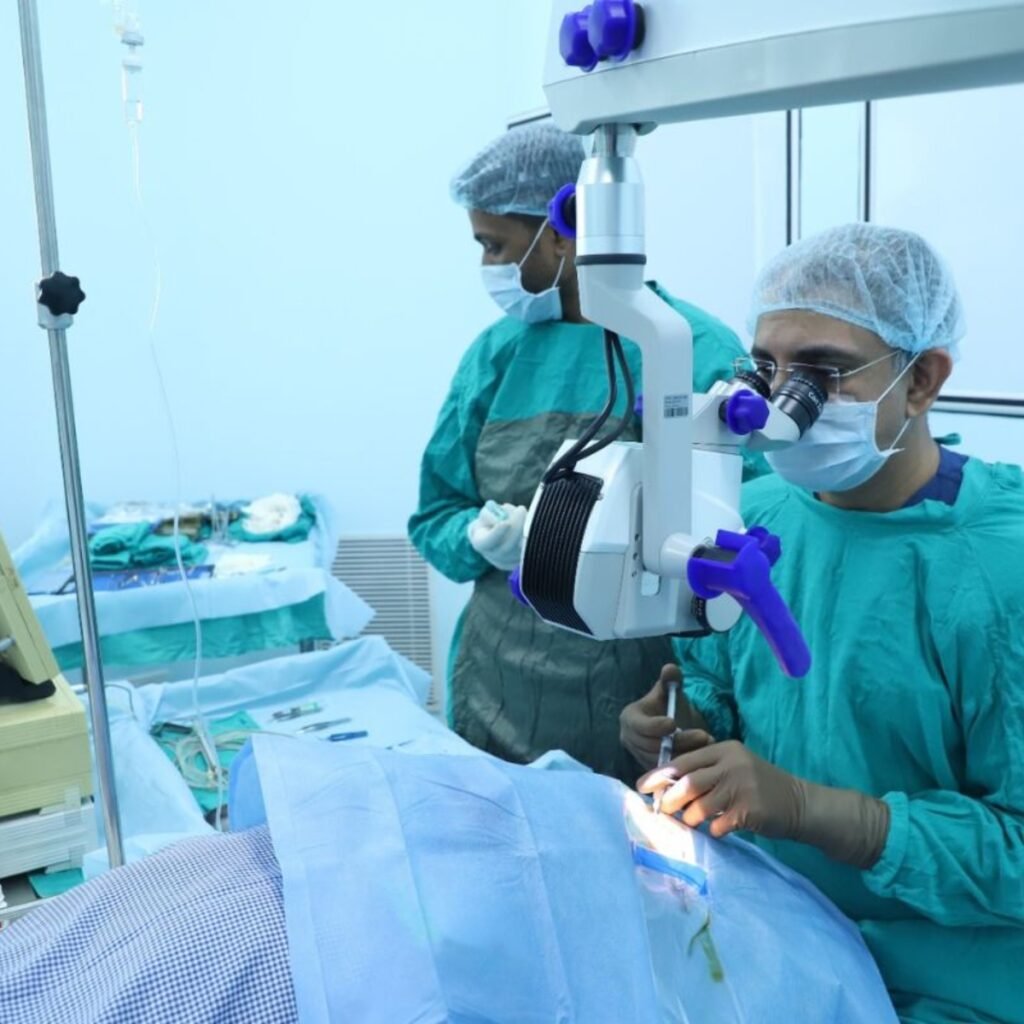
Cataract surgery is a daycare procedure — you walk in and walk out the same day. The surgery itself takes about 10–15 minutes under numbing drops; there is no injection, no stitches and no bandage in most cases. With FLACS, key steps are performed by a femtosecond laser for added precision.
You will need someone to drive you home, and you can expect noticeably clearer vision within 24–48 hours as the dilating drops wear off.
Recovery: The First Four Weeks
- Days 1–3: Use your drops on schedule; wear the protective shield while sleeping. Reading, TV and walking are fine.
- Week 1: No eye rubbing, no head bath, no splashing water into the eye. Office work is usually fine after 2–3 days.
- Weeks 2–4: Resume light exercise; avoid swimming and dusty environments. Your final glasses check (if needed) happens around week 3–4.
If you have a cataract in both eyes, the second eye is typically operated 1–2 weeks after the first, once the first eye is stable.
Key Takeaways
- You do not need to wait for a cataract to “mature” — waiting makes surgery harder, not easier.
- The right time is when vision limits your daily life: driving, reading, glare at night.
- Your lens choice matters as much as the surgery — get measured, then decide.
- Recovery is quick: most people are back to normal work within a week.

Director and Chief Ophthalmologist of Dayal Eye Centre, with more than two decades of experience and over 80,000 cataract surgeries — one of the most experienced eye surgeons in Gurgaon.