Retinopathy of Prematurity (ROP) Treatment in Gurgaon
If your baby was born early or with a low birth weight, retinopathy of prematurity (ROP) — abnormal growth of the blood vessels in the retina, the light-sensitive layer at the back of the eye — is one of the most important things to have checked in the first few weeks of life. At Dayal Eye Centre in Gurgaon, our vitreoretinal and paediatric eye specialists screen for and treat ROP using wide-field digital retinal imaging, laser photocoagulation and anti-VEGF injections, so treatable disease is caught within the short window when it matters most.
Baby discharged with a follow-up ROP screening advised? Don’t skip it — consult with our doctors or call/WhatsApp +91 81786 39701.
NABH
Accredited multi-speciality eye hospital
20+
Years of specialist eye care in Gurgaon
1.2 Lakh+
Eye surgeries performed at the centre
3-in-1
Laser, anti-VEGF & vitreoretinal surgery under one roof
Overview
What is Retinopathy of Prematurity?
Retinopathy of prematurity (ROP) is an eye condition that affects premature babies — most often those born before about 31 weeks of pregnancy, or weighing under roughly 2.5 kg at birth. In a baby born too early, the blood vessels that feed the retina have not finished growing. After birth they can begin to grow in a disorganised, abnormal way.
In most babies this settles on its own; in some, the abnormal vessels progress and, if not treated in time, can scar and pull on the retina, leading to retinal detachment and lasting vision loss.
Because early ROP causes no outward signs, it can only be found through a proper retinal examination — which is why every at-risk baby needs timely screening. At Dayal Eye Centre, we screen and, where needed, treat ROP under one roof as part of our retina treatment service in Gurgaon.
~1.7 million
babies are born under 2,500 g in India each year — one of the world’s largest populations of at-risk infants, and an estimated 500 children lose their sight to ROP annually when it is missed.
Honavar, Indian Journal of Ophthalmology, 2019; Gilbert, cited in Maedica, 2023.
Causes & Risk Factors
Causes and Risk Factors
ROP develops because premature birth interrupts the normal growth of the retina’s blood vessels — the earlier and smaller the baby, the higher the risk. These are the main factors our specialists weigh when deciding who needs screening, and how urgently. Which of them applies to your baby?
01
Prematurity
The earlier the birth, the higher the risk. Gestational age under 32 weeks is significantly associated with developing ROP.
02
Low Birth Weight
Babies weighing under about 1,500 g are at greatest risk; Indian studies report ROP in a large share of very-low-birth-weight babies.
03
Oxygen Therapy
Oxygen support is often life-saving, but high or unstable oxygen levels can disrupt normal retinal vessel growth.
04
Other Neonatal Illness
Infections or sepsis, anaemia, blood transfusions, breathing difficulty and a generally unstable early course all add to the risk.
Note: Having a risk factor does not mean your baby will develop significant ROP — it means screening is important so that anything treatable is found early. Gestational age under 32 weeks and a birth weight under about 1,500 g are the factors most strongly linked to ROP (Maedica, North India, 2023).
Symptoms
Symptoms
Early ROP produces no visible symptoms — your baby’s eyes usually look completely normal, which is exactly why screening cannot be skipped. Signs tend to appear only once the disease is advanced, and may include:
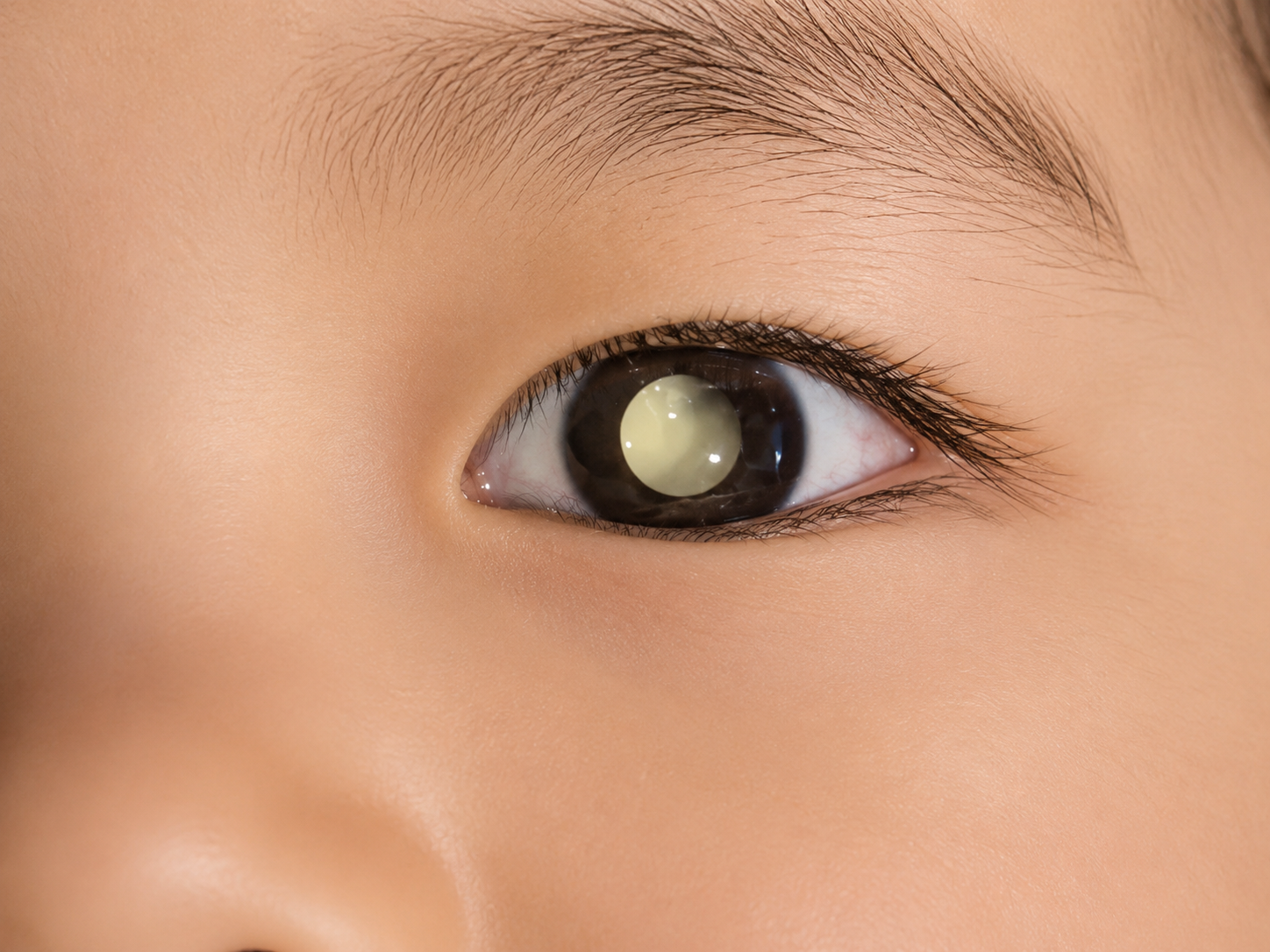
A white or greyish appearance in the pupil.
Eyes that turn, cross or do not move together — squint (strabismus).
Abnormal, jerky or wandering eye movements (nystagmus).
A baby who does not seem to fix on or follow faces, light or objects.
A normal-looking eye still needs screening
Don’t Wait For Signs to Appear
By the time these signs are visible, valuable treatment time may already have passed. A normal-looking eye is never a reason to delay the retinal check your neonatologist or eye specialist has advised. If a follow-up screening was recommended, please call us to schedule promptly.
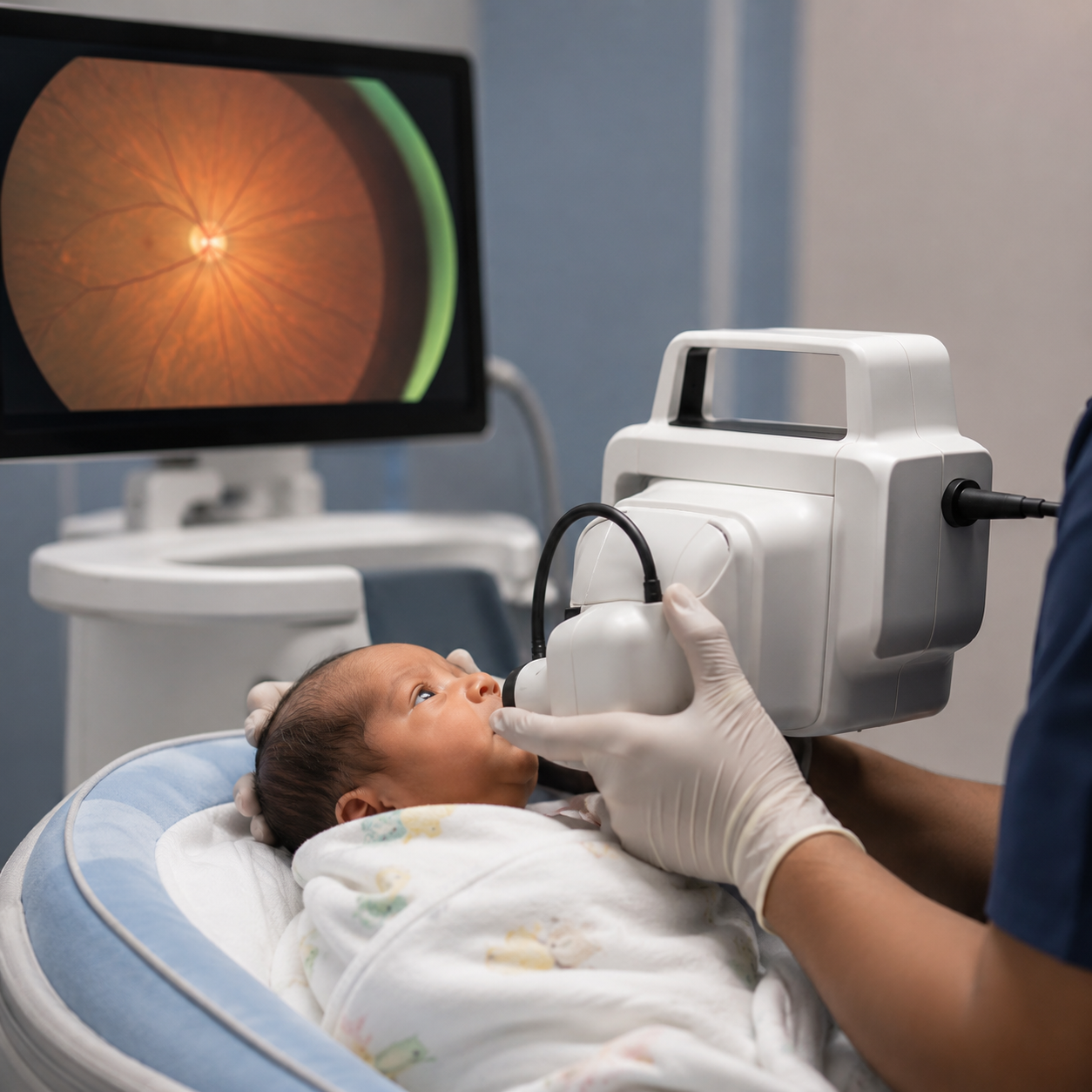
ROP is diagnosed with a dilated retinal examination by an eye specialist. Screening usually begins around 3 to 4 weeks after birth (or by 30 days of age, whichever is earlier) and is repeated at the intervals the doctor advises until the retina has fully matured. At Dayal Eye Centre we combine wide-field digital paediatric retinal imaging with indirect ophthalmoscopy to record the zone, stage and severity of the disease in each eye, so any change is caught between visits.
Doctors describe ROP in stages 1 to 5 — from a faint line between the healthy and under-developed retina, up to a fully detached retina — and note “plus disease”: dilated, twisted vessels that signal more active, higher-risk disease. A fast-progressing form called aggressive posterior ROP needs especially prompt attention. Not every stage needs treatment, which is why regular monitoring matters as much as the treatment itself.
Treatment options we may recommend
Option
What it involves
Typically considered for
Monitoring / observation
Most mild ROP resolves on its own as the retina matures. We keep the baby under close review with repeat imaging rather than treating unnecessarily.
Mild ROP (the majority of cases)
Laser photocoagulation
Laser is applied to the under-developed peripheral retina to stop the abnormal vessels from growing. The long-established standard treatment for higher-risk ROP.
Type 1 / threshold ROP
Anti-VEGF injection
A medicine injected into the eye to reduce abnormal vessel growth. Can be preferred in certain posterior zones or very small babies, and may need longer follow-up as vessels finish growing.
Selected cases, doctor-assessed
Vitreoretinal surgery
For advanced disease with retinal detachment, surgery (vitrectomy and/or scleral buckle) aims to relieve traction and reattach the retina.
Stage 4–5 (detachment)
~9 in 10
treated eyes have their ROP stopped by laser treatment, research reports — though outcomes depend on the stage at which treatment is given.
Cleveland Clinic.
Our aim with any of these options is to reduce the risk of vision loss — the earlier treatable disease is found, the more we can do. Treatment is delivered under the care of our retina and paediatric eye team, and the right approach is decided only after a full examination of your baby’s eyes.
Disclaimer: ROP treatment is time-sensitive and highly individual. The stage of disease, birth history and overall health of the baby all affect what is advised and what outcome is realistic. Suitability for any treatment is confirmed only after a detailed retinal examination; individual results vary.
Prognosis
Prognosis
With timely screening and treatment, the outlook for babies with ROP is encouraging. Most babies with mild ROP need no treatment at all and go on to have normal or near-normal vision, and even babies who do need treatment usually do well when it is given in time (National Eye Institute; Cleveland Clinic).
Because children who had ROP are somewhat more likely to develop nearsightedness (myopia), squint or a lazy eye as they grow, ongoing eye check-ups through childhood remain important. Severe, untreated ROP, on the other hand, can lead to significant vision loss — which is why we place so much emphasis on not missing the screening window.
For comprehensive care of ROP and other retinal conditions, our specialists guide you through each stage of treatment and follow-up.
Follow-up Protects the Result
Regular medical consultations with an eye specialist are essential to ensure timely intervention and the best possible vision outcomes for your child. Regular follow-up as your child grows lets us find and manage issues such as glasses power, squint or a lazy eye early.
The cost of ROP care in Gurgaon depends on what your baby actually needs — screening alone, laser, an anti-VEGF injection, or surgery for advanced disease — as well as the number of sittings and follow-ups required. Because ROP is time-critical and unique to each baby, we do not publish a fixed price. The table below shows what each service is for; the exact cost is confirmed only after your baby is examined.
Service
Indicative cost
Purpose
Retinal screening (wide-field imaging)
Indicative, per session
Screening & documentation
Laser photocoagulation
Indicative, per eye / session
Treatment-requiring ROP
Anti-VEGF injection
Indicative, per eye / dose
Selected cases
Vitreoretinal surgery
Quoted after assessment
Advanced (stage 4–5)
Because ROP screening for premature babies is a recognised child-health priority, screening and treatment may also be available through government newborn and child-health programmes; our team can tell you what applies in your situation. Disclaimer: prices are approximate and subject to change. The final cost is determined after a consultation and examination, and depends on the stage of ROP, the treatment required, the number of sittings and any tests. Insurance and scheme coverage varies by policy. This is not a fixed quote.
Payment & Support Options
Easy EMI options (via Savein) for eligible treatment plans.
Cashless insurance and TPA support where your policy covers the treatment.
CGHS / ECHS / Ayushman Bharat / Haryana Government schemes, subject to eligibility.
Want to know what your baby’s screening or treatment will cost? We’ll explain what’s included before anything begins.
ROP care depends on two things: catching treatable disease inside a narrow window, and having laser, injection and surgical options ready under one roof if the disease progresses. At Dayal Eye Centre we bring both together for the families of Gurgaon and Delhi-NCR.
NABH-accredited eye hospital — 20+ years of experience and 1.2 lakh+ eye surgeries behind every screening and treatment decision.
Dedicated retina service — wide-field digital retinal imaging, laser photocoagulation, anti-VEGF and vitreoretinal surgery available in-house.
Prompt, time-critical screening — for premature and low-birth-weight babies, coordinated with your neonatal team.
One centre, one team — continuity of care from first screening through treatment and childhood follow-up.
Meet Our Retina Specialist
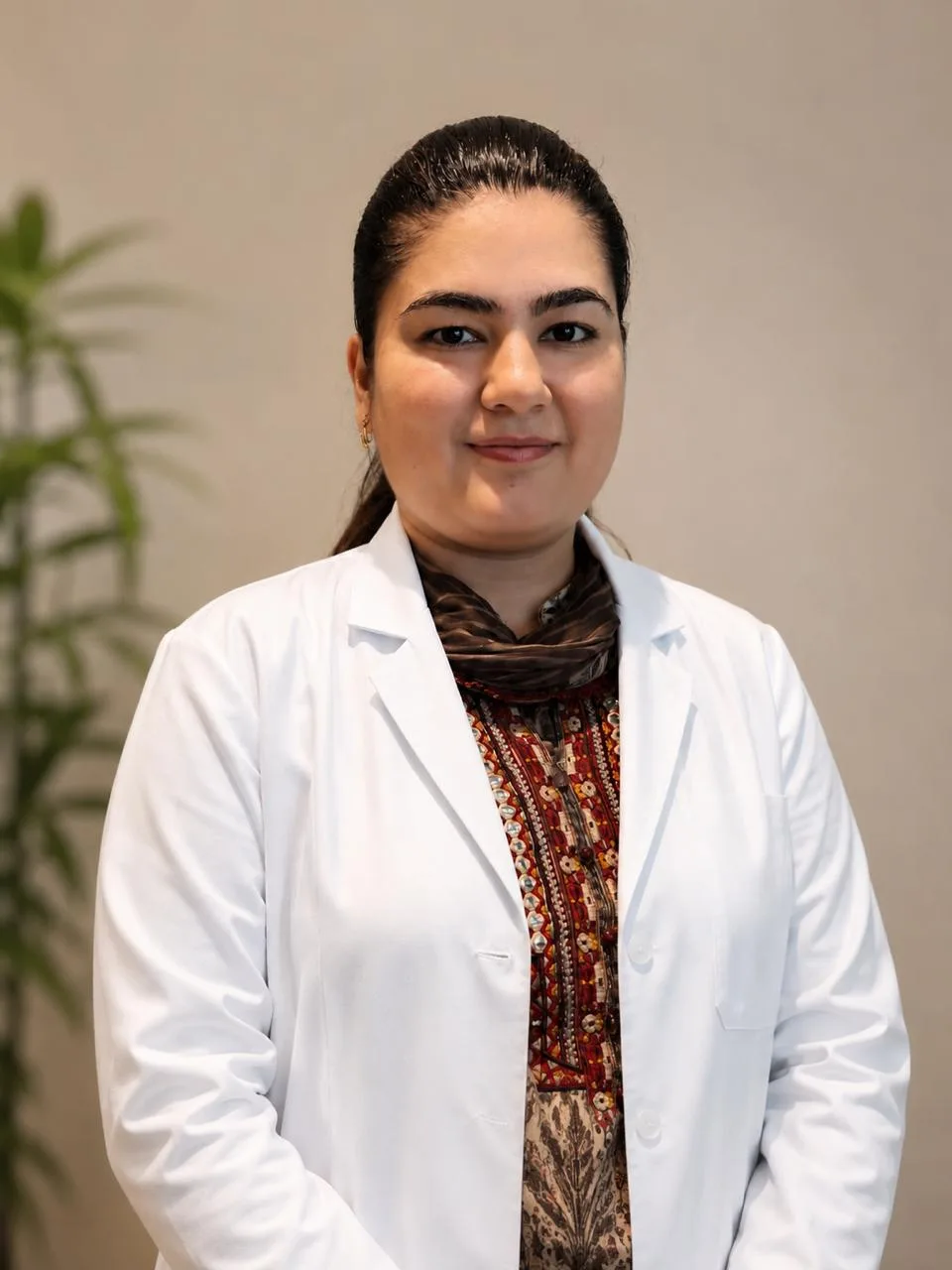
Dr. Neelam Khatwani
MBBS; DNB (Gold Medalist)
Leads retinal care at Dayal Eye Centre as a fellowship-trained vitreo-retinal surgeon and ROP specialist. ROP screening and treatment are delivered by our retina and paediatric eye team using wide-field imaging, laser and anti-VEGF.
The questions parents ask us most about ROP. For anything specific to your baby, a consultation gives the clearest answer.
Laser is the long-established standard treatment for treatment-requiring ROP and is carried out by experienced specialists, usually with your baby monitored closely throughout. As with any procedure there are risks, and these are explained to you beforehand. The purpose of treating in time is to reduce the risk of severe vision loss. Whether laser is right for your baby is decided only after a full retinal examination.
Both are used to control abnormal vessel growth, and each suits different situations. Laser treats the under-developed edge of the retina; anti-VEGF injections can be preferred for certain zones or very small babies but may need longer follow-up as the vessels finish growing. There is no single “best” choice for every baby — our specialists recommend the option that fits your baby’s stage and zone of disease.
Most babies with ROP have mild disease that settles on its own, and most babies who need treatment do well when it is given in time (National Eye Institute; Cleveland Clinic). Severe ROP that is missed or left untreated can cause serious vision loss, which is exactly why timely screening and follow-up are so important. Catching it early is what gives your baby the best chance of good vision.
In many babies, especially with milder ROP, the retina finishes developing normally and no treatment is needed — we simply monitor closely with repeat imaging. Treatment is advised only when the stage, zone and “plus disease” indicate a higher risk. This is why regular examinations matter as much as the treatment itself.
Screening usually begins around 3 to 4 weeks after birth, or by 30 days of age, whichever is earlier, for babies born prematurely or at a low birth weight. It is then repeated at the intervals your specialist advises until the retina has fully matured. Please follow the exact schedule given for your baby — the timing is chosen to catch any change at the right moment.
Children who had ROP are somewhat more likely to develop nearsightedness (a glasses number), squint or a lazy eye as they grow. Many of these are very manageable when found early, which is why we recommend eye check-ups through childhood even after the ROP itself has settled.
ROP screening and treatment are handled by our retina and paediatric eye team, led by our vitreoretinal specialist, using wide-field retinal imaging, laser and anti-VEGF. Consult with our doctors to arrange a screening appointment for your baby.
It depends on what your baby needs — screening, laser, an injection or surgery — and the number of sittings involved, so we confirm the cost after examining your baby rather than quoting a fixed price. Easy EMI, cashless insurance and government schemes such as Ayushman Bharat may apply. Our team will walk you through the options.
Disclaimer: This page is for general information and does not replace a medical consultation. ROP is a time-critical condition; if your baby was born prematurely or at a low birth weight, please arrange the retinal screening advised by your neonatologist or eye specialist. Individual results vary.
Read More About Conditions
Explore related retina conditions we treat:
Age-related Macular Degeneration (AMD)
Wear-and-tear damage to the macula that blurs central vision — monitored and treated by our retina team.
ROP screening is one more thing on a long NICU checklist — and a reassuring one to have done in time. Consult with our doctors, or speak to your paediatrician about a referral.
 Vision Correction
 Cataract
 Retina
 Glaucoma & Cornea
 Paediatric & Speciality
 Oculoplasty