Retinitis Pigmentosa (RP) is a group of inherited retinal disorders that gradually damage the light-sensitive cells (photoreceptors) at the back of the eye. It usually begins by affecting your side (peripheral) vision and your ability to see in low light, and in later stages can also affect the central vision used for reading and recognising faces. Because RP is genetic, it often runs in families and can appear in childhood, the teenage years or early adulthood — though how quickly it progresses varies a great deal from person to person.
RP is the most common inherited retinal disease. It affects an estimated 1 in 3,000 to 4,000 people worldwide, and Indian population studies have reported it to be even more common here — one large study in rural South India found RP in roughly 1 in 1,000 people. If you have a family history of night blindness or early vision loss, an eye examination with a retina specialist is worthwhile even before symptoms feel serious, because early diagnosis opens up more options for monitoring, genetic testing and support.
What we can do for you at Dayal Eye Centre: confirm the diagnosis with specialist testing, understand your specific pattern of RP, guide you on genetic testing and counselling, treat complications such as cataract or retinal swelling, and connect you with low-vision rehabilitation so daily life stays as independent as possible. Explore our full range of retina treatments to see how RP care fits within our wider retinal service.
RP symptoms usually appear slowly and worsen over years rather than days. Recognising them early helps us start monitoring and support sooner. Individuals with RP may experience:
Difficulty seeing in low light or the dark is often the earliest symptom, and frequently the first thing families notice.
A gradual narrowing of the visual field, sometimes described as “tunnel vision.”
Seeing flashes of light or shimmering in your field of vision.
Difficulty adjusting when moving from bright to dim surroundings and back again.
In more advanced stages, tasks such as reading or recognising faces become harder.
This is the question we hear most, and it deserves an honest answer. RP progresses differently in every person. Many people retain useful central vision for years or decades, and a large number keep some vision throughout life rather than losing it entirely. What matters is being assessed by a retina specialist so you understand your pattern and can plan around it. If you have noticed worsening night vision or a shrinking field of view, consult with our doctors for a detailed evaluation.
An accurate diagnosis does two things: it confirms whether the condition is RP, and it maps how far it has progressed so we can plan the right support. See what a full assessment includes on our comprehensive eye examination page. At Dayal Eye Centre, diagnosis involves:
Assessing your visual acuity and visual field to measure the extent and pattern of vision loss, along with a dilated retinal examination. See what a full assessment includes on our comprehensive eye examination page.
Measures the electrical responses of the retina’s photoreceptor cells to light, and is one of the most important tests for confirming RP and gauging how the retina is functioning.
A quick, comfortable scan that gives detailed cross-sectional images of the retina, helping us detect structural changes and complications such as macular swelling.
Wide-field photographs document the characteristic pigment changes in the retina and give us a baseline to compare against at future visits.
Identifying the specific gene change behind your RP can clarify the likely course, inform family planning, and tell us whether you may be eligible for gene-specific therapies or clinical trials. We guide you on when testing is worthwhile and help arrange it through a specialised laboratory.
RP can be inherited in different ways and is linked to changes in a large number of genes. Knowing your specific gene change is what determines whether newer, gene-targeted treatments could ever apply to you — so testing is increasingly part of a modern RP work-up, not just a research exercise.
ERG, OCT, visual-field testing and retinal imaging — the tests that confirm RP and map its stage — under one roof.
Book an evaluationRP care is about protecting and maximising the vision you have, not one single operation. Here is what modern, specialist-led management looks like.
Let us be clear and honest up front: there is no definitive cure for RP today, and no treatment can reverse vision that has already been lost. What specialist care can do is protect the vision you have, manage complications that themselves cause avoidable vision loss, keep you eligible for emerging therapies, and support your day-to-day independence.
Devices such as specialised glasses, magnifiers and adaptive technologies enhance your remaining vision and make everyday activities easier. Learn more on our low vision treatment page.
Some studies suggest high-dose vitamin A palmitate may slow progression in certain types of RP. Because high doses can be harmful, this should only ever be taken under medical supervision, after your RP type and overall health have been assessed.
People with RP develop cataract earlier than average, and cystoid macular oedema (CMO) is a common, treatable cause of blurred central vision. Cataract surgery in RP eyes is generally safe and can help, but carries a higher-than-usual chance of triggering macular swelling — which is why it should be done by a retina-aware surgeon who watches closely.
There is no operation that cures RP itself. “Surgery” usually means one of three things: cataract surgery for an RP-related cataract, surgical delivery of a gene therapy for specific mutations, or a retinal implant. Gene therapy and implants are available only in specific situations at specialised centres — we evaluate your case and refer where it genuinely fits.
Research into RP is moving quickly. One gene therapy is already approved internationally for inherited retinal disease caused by a specific gene change (RPE65), delivered surgically under the retina — a landmark that shows gene-targeted treatment is possible for the right patients. Retinal implants (“bionic eye” devices) and stem-cell approaches aim to restore some vision and are being studied in trials. Most of these remain investigational; our role is to keep you accurately informed, ensure your genetic diagnosis is on record, and connect you to legitimate options as they mature.
Note: it is essential to consult an eye care professional for personalised advice and before starting any treatment regimen, including vitamin supplementation. Individual results vary based on your RP type, genetic cause, stage, age and overall eye health.
Living well with RP is about more than the eye itself — it is about staying independent and supported. Our approach is multifaceted.
Learning to navigate your surroundings safely and confidently as your field of vision changes.
Counselling and support-group connections to help with the emotional side of progressive vision change, for patients and families alike.
Practical adaptations at home and work so daily routines stay manageable.
At Dayal Eye Centre, we offer comprehensive care for retinal conditions, including retinitis pigmentosa — from advanced diagnostic evaluation to personalised management plans tailored to your needs. Specialised glasses, magnifiers and adaptive low vision treatment help you make the most of remaining vision. For more on our wider retinal care, visit our retina treatment page, or consult with our doctors to build a plan around your vision.
There is no single “price of RP treatment,” because care is built around diagnosis, monitoring and managing specific complications rather than one operation. The indicative ranges below help you plan; they are a starting point, not a fixed quote, and your final plan is confirmed only after an examination with our retina specialist.
We help make care manageable with Easy EMI (via Savein), cashless treatment across our empanelled insurers and TPAs, and government/PSU schemes. Insurance and scheme coverage varies by policy — our team will help you check what yours covers.
Figures above are indicative starting points and may change based on your specific condition, the tests and treatments actually required, and your chosen lens or device. Final costs are shared after a consultation and examination. Insurance and scheme coverage varies by policy.
RP is a long-term condition, so the team you choose matters. Families across Gurgaon and the wider Delhi-NCR trust us because our care is genuinely specialist-led and continuous.
Fellowship-trained retina specialist leading diagnosis and long-term management — you see an experienced sub-specialist, not a rotating panel.
NABH-accredited, single-centre care with advanced retinal diagnostics — ERG, OCT and retinal imaging — under one roof.
20+ years and 1.2 lakh+ surgeries of institutional experience, with three modular OTs and an in-patient ward on site.
Honest, unhurried guidance on genetic testing, realistic expectations and legitimate emerging options — never over-promised.
Affordable, supported access with cashless insurance, Easy EMI and government schemes.
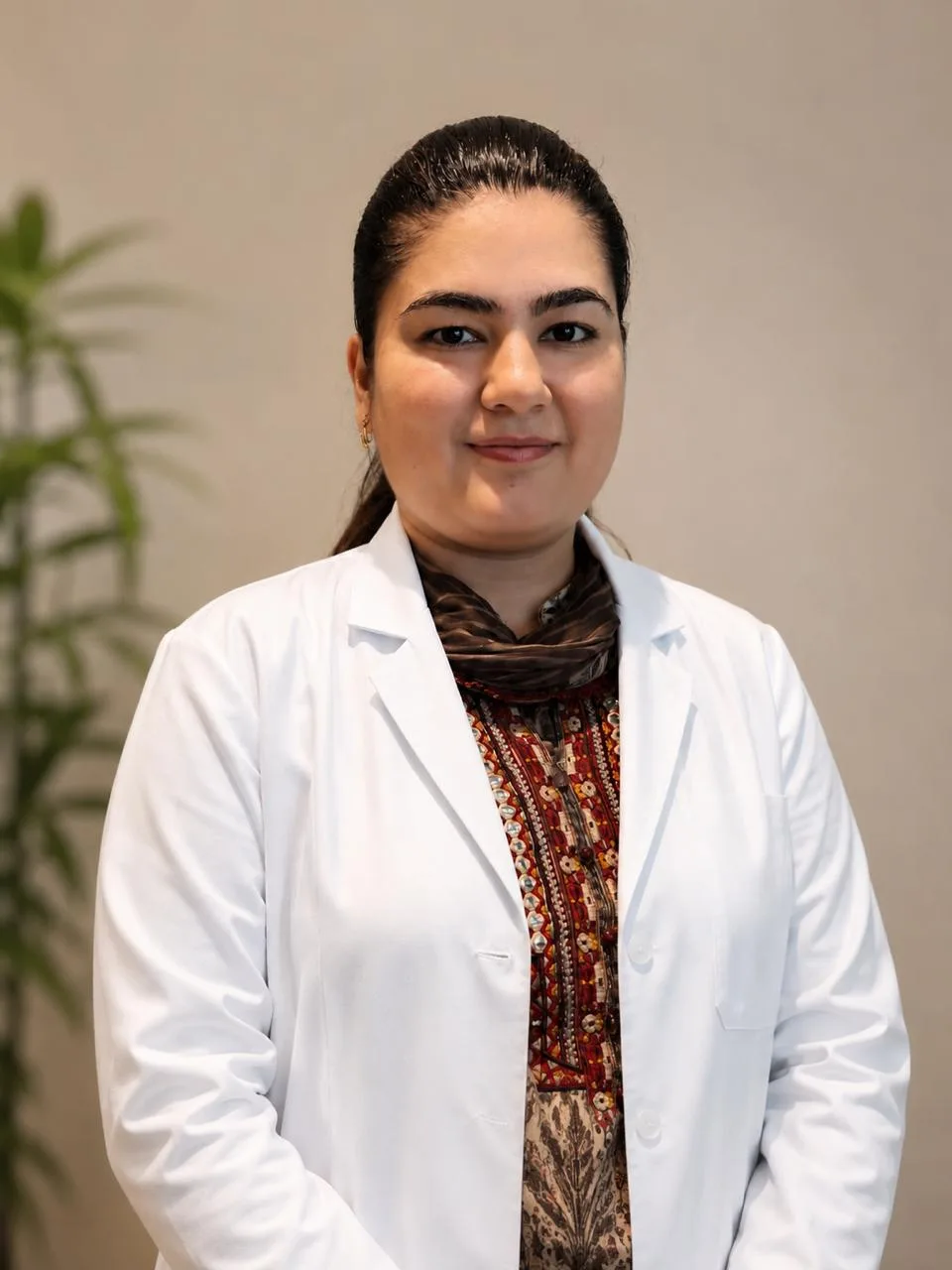
MBBS, DNB (Gold Medalist)
Dr. Khatwani is a fellowship-trained vitreo-retinal surgeon with 8+ years of experience across medical and surgical retina. She leads retinal care — including inherited retinal conditions such as RP — and earned a gold medal in her postgraduation.
Read full profileThe questions patients and families ask us most about retinitis pigmentosa. For anything specific to your eyes, a consultation gives the clearest answer.
Individual results depend on your RP type, genetic cause, stage, age and overall eye health. Statistics quoted are from published research, not a promise of any individual outcome.
Not every RP-related problem needs surgery, and not everyone is a candidate; suitability is decided only after a detailed examination.
All surgery carries some risk — for example, a higher chance of macular swelling after cataract surgery in RP eyes. Your surgeon will discuss the specifics for your eye.
Prices are indicative starting ranges, subject to consultation and examination; insurance and scheme coverage varies by policy.
This page is for information and does not replace a consultation. Please consult a qualified eye specialist for diagnosis and treatment specific to your condition.
Medically reviewed by Dr. Neelam Khatwani, Vitreo-Retinal Surgeon, Dayal Eye Centre · Last reviewed: 29 July 2026 · Editorial Policy