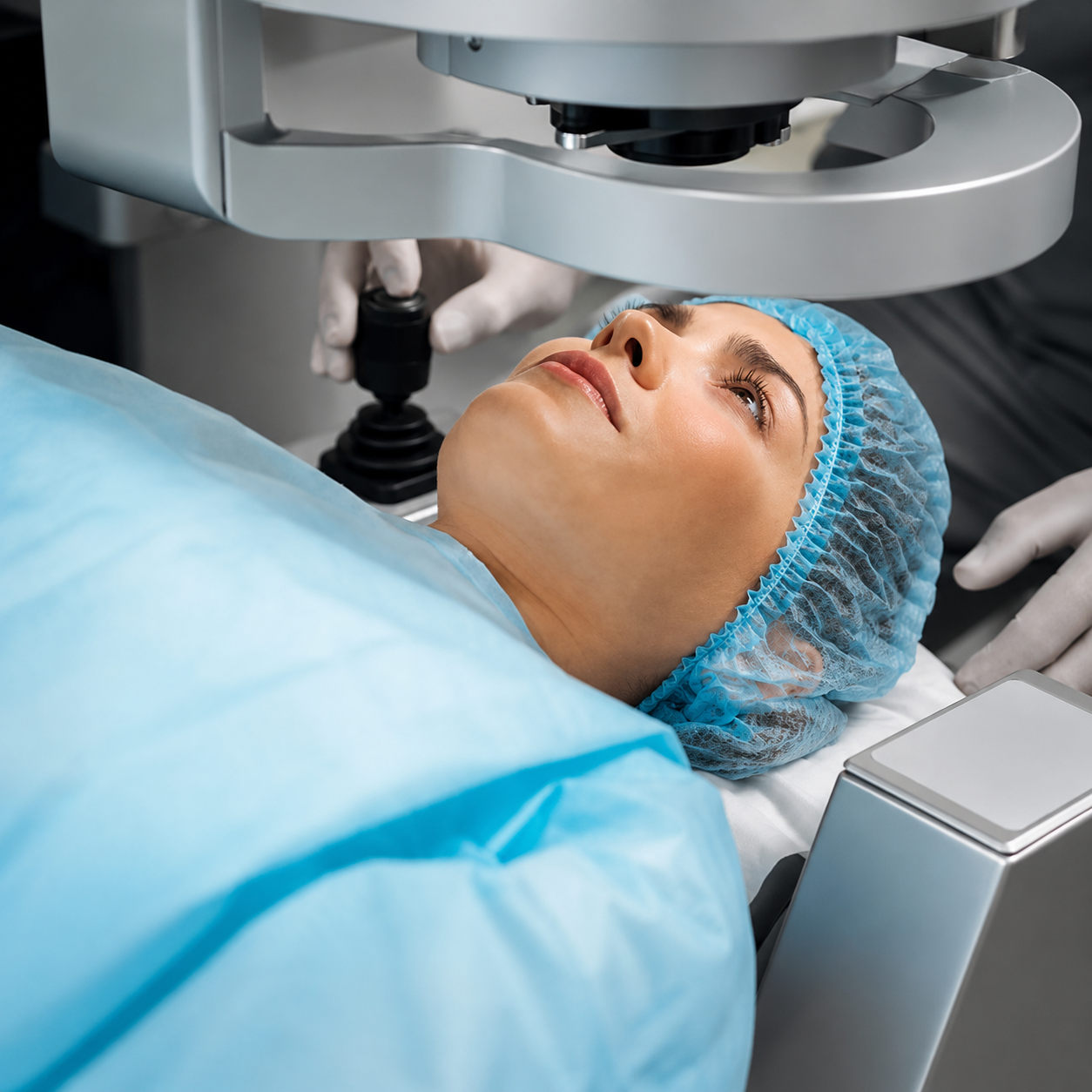
Low vision treatment helps people with permanent vision loss make the most of their remaining sight — and stay independent in everyday life. If reading, recognising faces or daily tasks have become hard because of macular degeneration, diabetic retinopathy or glaucoma, a personalised assessment can help you use the sight you have.
NABH Accredited20+ YearsRetina & Glaucoma SpecialistsFamily-Friendly Care
Wondering if a low-vision assessment could help? A good first step is to have your eyes and daily needs assessed by our team — and consult our doctors about your sight, your options and what support may help.
Low vision can affect people of any age, but it is most common in older adults and in anyone living with a long-term eye condition. An assessment is worth considering if you, or someone you care for, notices difficulties such as:
Struggling to read newspapers, medicine labels or your phone even with glasses on.
Finding it harder to recognise faces, house numbers or bus routes.
Needing much brighter light than before, or being troubled by glare.
Missing steps, kerbs or objects to the side, or bumping into things.
Stepping back from hobbies, cooking or going out because sight makes them difficult.
Living with a diagnosed condition — macular degeneration, diabetic eye disease or glaucoma — that has affected central or side vision.
An assessment does not replace treatment of your eye condition — it works alongside it. Many patients see our retina or glaucoma specialists for the underlying condition and use low-vision support to make daily life easier at the same time.
2.2 Billion
people worldwide live with a vision impairment — you are far from alone. Cataract, uncorrected refractive error, glaucoma, diabetic retinopathy and age-related macular degeneration are among the leading causes.
Source: World Health Organization, World Report on Vision.
Types
Types of Low Vision
Low vision shows up differently depending on which part of the eye or visual pathway is affected. Knowing which type you have matters — the aids that help central-vision loss differ from those that help a narrowed field, and mapping that out is exactly what an assessment does.
Blurred vision
Detail is soft or hazy at every distance, even with glasses.
Central vision loss
A blur or blank patch in the middle of your view, making reading and faces hardest (typical of macular conditions).
Contrast difficulty and discomfort
Objects blend into their background, and glare feels harsher than before.
Night blindness
Seeing poorly in dim light, or taking a long time to adjust after bright light.
Peripheral vision loss
The sides of your view narrow, so you miss steps, kerbs and people beside you (typical of advanced glaucoma).
Depth perception difficulty
Judging distances, pouring, and stairs become harder.
Causes
Causes of Low Vision
Low vision is usually the result of an underlying condition affecting the retina or the optic nerve, and managing that condition well is the first pillar of protecting your sight. The most common causes include:
Older adults are at higher risk, though ageing on its own does not cause low vision; certain genetic conditions (such as retinitis pigmentosa) and injuries to the eye or brain can also cause it at any age. Because we are a full-service eye hospital, our retina service and glaucoma specialists manage these conditions in the same building as your low-vision support.
A low-vision assessment is unhurried and practical. Rather than only measuring how well you read a chart, we take time to understand what you want to be able to do — read comfortably, see your grandchildren’s faces, use your phone, cook safely or keep working — and then work out how to make those specific tasks easier.
01
Review your eye condition and history, often alongside findings from your detailed eye check-up.
02
Measure your current vision at near and distance, and in different lighting.
03
Check contrast sensitivity and, where relevant, your field of vision (using the Humphrey Field Analyzer where indicated).
04
Discuss your daily tasks, home setup, work and the goals that matter most to you.
05
Let you try different aids and lighting, so you can feel what genuinely helps before anything is recommended.
06
Agree a simple, practical plan — and, where useful, share guidance with the family members who support you.
Support Offered
Treatments Offered
Here “treatment” means support for your remaining sight — matching the right aids, strategies and training to your vision and your goals, alongside medical care of the underlying condition where possible. No aid reverses the condition itself. Options we may discuss and let you try include:
Type of Aid
Examples
Helps Most With
Optical magnifiers
Hand magnifiers, stand-mounted and illuminated magnifiers, magnifying glasses
Print, labels, small detail
Telescopic aids
Telescopic glasses and monoculars
Detail at a distance — boards, signs, faces across a room
Video magnifiers (CCTV), text-reading software, and built-in phone/tablet accessibility — larger text, zoom, high-contrast modes, screen readers
Sustained reading, screens, flexibility
Non-optical everyday tools
Large-print publications, high-contrast and talking clocks and watches, big-button phones, cheque-writing guides, bump markers and clear labelling
Daily routines and independence at home
Lighting and contrast strategy
Task lighting, glare control, bold colour contrast (a dark cup on a light saucer)
Almost every task — often the simplest, most affordable win
Which combination is right for you is decided together at your assessment, based on how you see and what you most want to do — and results vary from person to person.
Protecting Your Sight
Can Low Vision Be Prevented?
In some cases, further vision loss can be reduced or slowed — which is different from saying low vision can always be prevented, and very different from a cure. For people with diabetes, good sugar control and regular retinal screening allow diabetic retinopathy to be caught and treated before it takes more sight. Timely treatment of glaucoma can slow further loss of side vision, and monitoring and treating AMD can help protect remaining central vision in suitable patients.
The honest summary: prevention here means protecting the sight you still have through early detection and good management of the underlying condition — it does not mean restoring sight already lost, and how much is possible depends on your condition and its stage. A sudden drop in vision, new flashes or floaters, a curtain or shadow across your sight, or eye pain should be seen promptly — please contact us or seek urgent care without delay.
Daily Life
Living With Low Vision
Rehabilitation is about rebuilding confidence in real, daily tasks, with realistic goals set together — not “sight as it was”, but reading the paper again with the right magnifier and lighting, cooking safely, or continuing to work. Small, practical changes often make the biggest difference:
Brighter, well-placed light
Use task lighting at home and work, and control glare with filters or anti-glare wear.
Boost contrast everywhere
Bold colour contrast between objects and backgrounds makes everyday items stand out.
Keep magnifiers to hand
One by the reading chair, one in the kitchen — where you actually use them.
Set up your home
Clear walkways, mark step edges, and keep things in fixed places so you can move around easily.
Use device accessibility
Larger text, zoom and voice features on an ordinary phone go a long way.
Stay connected
Sharing resources and keeping up hobbies in adapted ways protects independence and mood.
For Caregivers
How We Support Families and Caregivers
Low vision is a family experience, and caregivers carry a great deal — often without guidance. We actively welcome family members into the assessment and consultation, work at a pace that suits older patients, and explain everything in plain language, Hindi or English as your family prefers.
Practical guidance we share with caregivers includes setting up lighting and contrast at home, guiding a relative safely without taking over, labelling medicines and appliances, and spotting the vision changes that need prompt review. Just as important, we help families set realistic expectations together — knowing what support can and cannot do keeps everyone working toward the same practical goals.
Why Us
Why Choose Dayal Eye Centre for Low Vision in Gurgaon?
Living with low vision is as much about everyday life as it is about the eye itself, and our care is built around both — the medical management of the condition behind your low vision, and the practical support to live well with the sight you have.
NABH-accredited, specialist-led — senior retina and glaucoma care — quality and safety you can verify.
Care under one roof — diagnosis on advanced equipment (RTVue FD-OCT, Humphrey Field Analyzer, CX-1 Digital Retinal Camera), medical treatment and low-vision support coordinated in the same place.
Senior specialists — our retina service is led by Dr. Neelam Khatwani, with glaucoma care drawing on Dr. Sanjeev Bisla’s Aravind glaucoma fellowship and 23+ years of experience.
A warm, patient approach — we take time with you and your family, at a pace that suits seniors and carers.
Honest guidance — we set realistic goals and explain clearly what low-vision support can and cannot do — it is support for your remaining sight, never a promised outcome.
Specialist-Led Care
Dr. Neelam Khatwani
Retina service · MBBS, DNB (Gold Medalist)
Fellowship-trained at H.V. Desai Eye Hospital, Pune and Shroff Eye Centre, Delhi, with a special interest in diabetic retinopathy and AMD — supported by our glaucoma team for the conditions behind low vision.
The questions patients and families ask us most. For anything specific to your eyes, a consultation gives the clearest answer.
Low vision means reduced sight that cannot be fully corrected with ordinary glasses, contact lenses, medicine or surgery — in practical terms, best-corrected vision of roughly 6/18 or worse in the better eye, or a significantly narrowed field of vision. It is usually caused by an underlying condition such as macular degeneration, diabetic retinopathy or glaucoma. A low-vision assessment focuses on helping you use the sight you still have.
No. Low-vision care is support and rehabilitation — it does not reverse the underlying condition or bring back sight that has been lost. What it can often do is help you use your remaining sight far more effectively with the right aids, lighting and techniques. Managing the underlying condition with our retina and glaucoma specialists is a separate, important part of protecting the sight you have.
No. Low vision means useful sight remains that cannot be fully corrected with ordinary glasses or lenses, whereas blindness refers to little or no usable sight. Low-vision support is designed to help you make the most of the sight you still have.
We review your eye condition and history, measure how you see at near, at distance and in different lighting, check contrast and — where relevant — your field of vision, and discuss the daily tasks that matter most to you. You then try different aids and lighting so you can feel what helps, and we agree a simple, practical plan together.
Common examples include hand and illuminated magnifiers, telescopic glasses, light-filtering lenses, video magnifiers (CCTV), text-reading software, large-print and talking tools, and the built-in accessibility features on phones and computers. The right combination is chosen at your assessment, based on how you see and what you want to do. Results vary from person to person.
Further loss can sometimes be slowed — for example, regular retinal screening and good sugar control help catch diabetic retinopathy early, and timely glaucoma treatment can slow loss of side vision. This protects remaining sight; it does not restore sight already lost. Regular specialist review is the key, and any sudden change in vision needs prompt attention.
Yes, and we encourage it. We take time with older patients and their families, work at a comfortable pace, and share practical guidance carers can use at home. You are welcome to accompany your relative to the assessment and consultation.
Arrange a check if your sight has changed, daily tasks are getting harder, or a known eye condition seems to be affecting more of your vision. A sudden drop in vision, new flashes or floaters, a shadow across your sight or eye pain should be seen promptly. A detailed eye check-up is a good starting point.
Because care is tailored to each person, the assessment fee and the cost of any aids are confirmed directly by Dayal Eye Centre and are subject to an individual consultation. Please book a consultation for an accurate, personalised estimate.
Important Information
This page is for general information and does not replace a medical consultation. Low-vision care supports and helps you make the most of your remaining sight; it is not a cure and does not reverse the underlying eye condition or recover sight that has been lost. Whether an assessment or any aid helps, and how much, depends on a detailed evaluation, and individual results vary based on your eye condition, its stage, your overall eye health and your daily needs. Any sudden change in vision should be assessed promptly.
Make the Most of the Sight You Have
If low vision is making daily life harder for you or someone you love, we are here to help — with no pressure to proceed. Our medical counsellors will contact you — no sales, expert consultation.
 Vision Correction
 Cataract
 Retina
 Glaucoma & Cornea
 Paediatric & Speciality
 Oculoplasty