






NABH Accredited 20+ Years 1.2 Lakh+ Surgeries International Patients Mon–Sat · 8:30 AM–7:30 PM +91 81786 39701
NABH Accredited
Dayal Eye Centre
Contact
Book an AppointmentHow would you like to go ahead?
Self BookingPick your doctor, date and slot. Booking RequestLeave your number — our counsellors call you. Mon–Sat 8:30 am – 7:30 pm · Sunday closed
NABH · Gurugram

Need a second opinion on your eyes?

Leave your number. A specialist calls you back today.

Available now

Call us from your phone

Copy the number, or leave your details and we will call you back.

+91 81786 39701

Mon–Sat · 8:30 AM–7:30 PM · Sector 15, Gurugram

Best Retina Treatment in Gurgaon

If a retinal problem is threatening your sight, the safest next step is a specialist assessment — quickly. At Dayal Eye Centre in Gurgaon, our vitreoretinal (retina) specialists diagnose and treat the full range of retinal conditions — from diabetic retinopathy and macular degeneration to retinal tears and retinal detachment — using advanced imaging and proven laser, injection and surgical treatments. The goal of every retina treatment we plan is the same: protect the vision you have and, where possible, recover what a retinal disease has taken. We are an NABH-accredited eye hospital with 20+ years of caring for Delhi-NCR patients and 1.2 lakh+ (120,000+) surgeries performed across our specialities.

Retinal conditions rarely improve on their own, and many are time-sensitive — so if you are noticing new floaters, flashes, a shadow in your side vision or blurred central vision, consult with our doctors without delay.

NABH Accredited
1.2 lakh+ Surgeries
20+ Years in Gurgaon
Cashless & Easy EMI
OCT & OCT-Angiography In-House
Fellowship-Trained Retina Surgeons
NABH Accredited
1.2 lakh+ Surgeries
20+ Years in Gurgaon
Cashless & Easy EMI
OCT & OCT-Angiography In-House
Fellowship-Trained Retina Surgeons
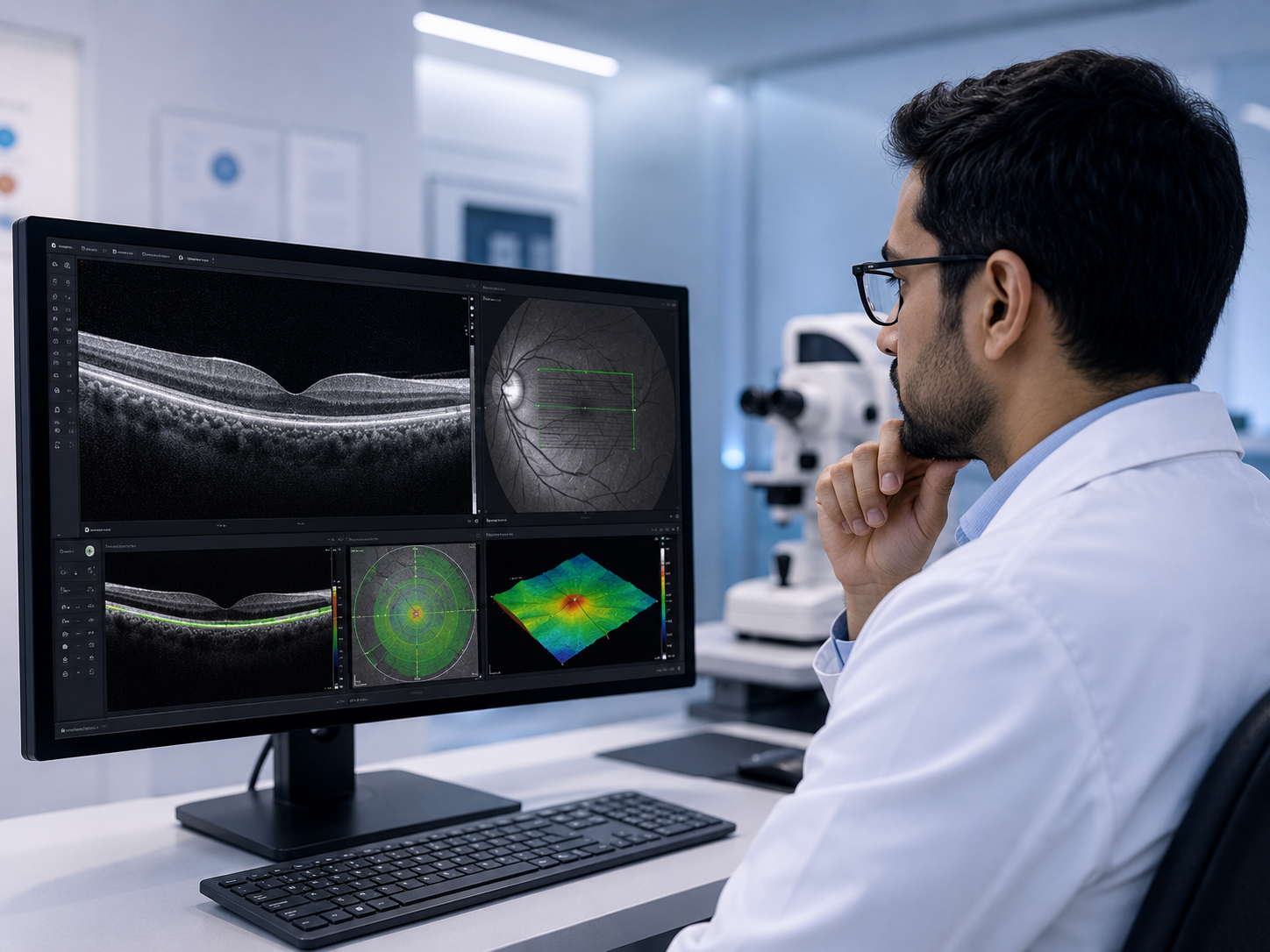
Retina specialist reviewing an OCT scan at Dayal Eye Centre
Conditions We Treat

Types of Retinal Diseases

We diagnose and treat the full range of retinal conditions — medical and surgical — in one NABH-accredited centre.

Sources: wet-AMD share of severe AMD vision loss — American Academy of Ophthalmology; ROP burden — Blencowe et al. 2016, GBD 2021.

Overview

What is Retina?

The retina is the thin, light-sensitive layer at the back of your eye. It works like the film in a camera: it captures the light entering your eye and sends those signals to your brain, which turns them into the image you see. When the retina is damaged — by diabetes, ageing, a tear, or an injury — that signal breaks down, and vision can blur, distort or disappear in part of your field.

Retina treatment is the medical and surgical care we use to repair that damage and stabilise vision. Depending on the condition, that can mean laser therapy, medicated injections into the eye, or retinal surgery such as a vitrectomy. Because retinal tissue does not regenerate the way skin does, timing matters — treating a problem early usually protects far more sight than treating it late. If you have been told you have a retinal condition, or you are living with diabetes and haven’t had your retina checked, our specialists can examine the back of your eye in detail and tell you plainly where you stand.

Causes of Retinal Diseases

Retinal disease can start for several reasons. Knowing which applies to you helps us plan the right treatment.

Diabetes and high blood pressure: uncontrolled blood sugar damages the tiny blood vessels of the retina — this is diabetic retinopathy, and in India roughly one in six people with diabetes (about 16.9%) has some degree of it, with around 3.6% at a sight-threatening stage (Vashist et al., population study). High blood pressure causes similar vessel damage.

Ageing: age-related macular degeneration (AMD) affects the central retina and is a leading cause of vision loss after 50.

Inherited conditions: genetic disorders such as Usher syndrome, Stargardt disease and retinitis pigmentosa can progressively damage the retina.

Eye injuries and trauma: a blow to the eye can tear or detach the retina.

After eye surgery or with age: scar tissue can form on the retina (macular pucker).

Inflammation and infection: certain autoimmune conditions or cytomegalovirus retinitis can also harm the retina.

If any of these apply to you, or you’re experiencing symptoms, consult with our doctors for an expert diagnosis and a treatment plan matched to your condition. You can read more about how the retina works on our blog.

Symptoms of Retinal Diseases

Retinal problems often cause no pain, which is exactly why they get missed. See a specialist promptly if you notice:

Floating specks, dots or cobweb-like shapes (floaters), especially a sudden shower of them

Flashes of light in your side vision

Blurred or distorted vision — straight lines looking wavy or bent

A dark curtain, shadow or missing patch in your side (peripheral) vision

Sudden or gradually worsening vision loss

A sudden increase in floaters and flashes, or a curtain moving across your vision, can signal a retinal tear or detachment — an emergency. Do not wait for it to settle. Contact Dayal Eye Centre the same day so we can examine your retina.

Same-Day Retina Check — Call Now
Our Team

Retinal Specialists in Gurgaon

Retinal care is a super-specialty, and it is led here by fellowship-trained vitreoretinal surgeons.

View All Doctors
Dr. Neelam Khatwani, Vitreo-Retinal Surgeon at Dayal Eye Centre
Vitreo-Retina · Uvea · Neuro-Ophthalmology

Dr. Neelam Khatwani

MBBS, DNB (Gold Medalist)

Works across medical and surgical retina, ROP and uveitis, has performed numerous retinal surgeries, and earned a gold medal in her postgraduation.

Book With Our Retina Team
NABH
Accredited eye hospital — audited protocols, infection control and patient safety
1.2 lakh+
Surgeries performed across our specialities
20+ yrs
Caring for Delhi-NCR patients from Sector 15, Gurgaon
3
Modular operating theatres, with retina imaging in-house

Together with our wider team, they deliver retinal care backed by advanced imaging and modern surgical equipment. Book your consultation to get a complete diagnosis and an honest plan for your eye.

Care at Every Step

How Are We the Best for Retinal Treatment in Gurgaon?

Diagnosis

Accurate retinal treatment starts with an accurate look inside your eye. Your assessment with us typically includes:

Medical history review — diabetes, blood pressure, previous eye problems — because these shape retinal disease.

Detailed eye examination — focused on the retina and macula.

Dilated fundus exam — we use eye drops to widen your pupil so we can examine the retina thoroughly.

Optical Coherence Tomography (OCT) — a quick, non-contact scan that captures high-resolution, cross-section images of your retina.

OCT angiography — a dye-free scan that maps the blood flow in your retina in 3D.

Fluorescein angiography — a dye test that shows leaking or blocked retinal blood vessels.

B-scan ultrasound — used when bleeding or a dense cataract blocks a clear view of the retina.

Retinal Surgery Procedure

Retinal surgery is planned around your specific condition, and most procedures are performed under local anaesthesia, so you are comfortable throughout. A common approach for many conditions is a vitrectomy, in which we:

1

We numb the eye so the procedure is comfortable.

2

We make micro-incisions and remove the vitreous gel that is pulling on or clouding the retina.

3

We repair tears, remove scar tissue or abnormal blood vessels, and treat the retina with laser as needed.

4

We place a gas bubble or, in some cases, silicone oil to hold the retina in position while it heals.

You may see the gas bubble in your lower vision for a while after surgery; it is absorbed by your eye over the following days to weeks. We will tell you exactly what was done in your eye and what to expect next.

Testing

The imaging we rely on to diagnose, plan and monitor retinal disease:

OCT (Optical Coherence Tomography)

Detailed cross-section images of the retina to detect swelling, holes and thinning.

Fundus photography with autofluorescence

High-quality retinal photos to track change over time.

Fluorescein angiography

Highlights leakage and abnormal vessels.

B-scan ultrasound

Evaluates the retina when a direct view isn’t possible.

Retinal Disease Treatment and Management

There is rarely just one option. We match the treatment to the diagnosis, and we explain the trade-offs before you decide:

TreatmentBest suited toWhat it involves
Intravitreal injections (anti-VEGF / steroid)Wet AMD, diabetic macular edema, vein occlusionA quick medicated injection into the eye; studies report injections stabilise vision in about 9 of 10 treated eyes and improve it in around 3 of 10. Usually repeated over time.
Laser therapyRetinal tears, diabetic retinopathy, macular edema, central serous retinopathyTargeted laser seals tears and abnormal vessels; typically an outpatient procedure.
VitrectomyRetinal detachment, macular pucker, macular hole, vitreous bleeding, eye injuryMicro-incision surgery to repair the retina from inside the eye.
Scleral buckleCertain retinal detachmentsA soft silicone band supports the eye wall to reattach the retina.
Pneumatic retinopexySelected detachmentsA gas bubble is injected to push the retina back into place, combined with laser or freezing.
Cryopexy (freezing)Retinal tearsIntense cold seals the tear.

Where surgery is needed for a detachment, published series report the retina is successfully reattached in roughly 8–9 of every 10 eyes with a single operation, and in about 9 of 10 or more when a second procedure is required (JAMA Ophthalmology; Wilkinson & Rice review). How much vision returns depends on the condition, how early it was treated and whether the macula (your central-vision zone) was affected. Our doctors will recommend the plan most likely to preserve your vision.

Get Your Retina Treatment Plan

Retinal Surgery Recovery and Aftercare

  • Some floaters, flashes or mild irritation are normal in the first days and usually settle; severe pain is uncommon — tell us at once if it occurs.
  • Your vision may be blurry at first, partly from dilation drops and partly as the eye heals.
  • Rest matters. You may need an eye shield and medicated drops, and follow-up visits are essential.
  • If a gas bubble was placed, you may be asked to keep a specific head position (often face-down) for several days to help the bubble hold the retina — we will show you exactly how.
  • Most people return to routine activities within about 2–6 weeks, avoiding heavy lifting, straining and eye trauma during healing. Full visual recovery can take longer.
  • Wear sunglasses for UV protection, and contact us immediately if you notice increasing floaters, new flashes, pain, redness or a drop in vision.

Recovery timelines: patient-education consensus; individual healing varies with your diagnosis and procedure.

When to Consider Retinal Surgery?

Consider a specialist retinal assessment — and possibly surgery — if you have:

A sudden shower of floaters, or flashes of light in your vision.

A curtain-like shadow or loss of side vision.

Vision that is distorting or blurring and getting worse.

Signs of a retinal detachment, where the retina lifts away from the back of the eye.

Fluid building up under the retina.

These can be urgent. If a retinal detachment is suspected, it is treated as an emergency — the sooner the retina is reattached, generally the better the visual outcome. When surgery isn’t the right answer, we will tell you that too, and route you to the correct treatment.

How to Prepare For a Retinal Surgery

  • You may be asked not to eat or drink after midnight before surgery — we will confirm your instructions.
  • Wear comfortable, loose clothing on the day.
  • Remove contact lenses beforehand and avoid eye make-up.
  • Continue or pause specific medicines (including some diabetes medicines) only as your surgeon instructs.
  • Use any prescribed eye drops or medicines exactly as directed, and arrange for someone to accompany you home.
Technology

The Imaging Behind Your Retina Diagnosis

Named platforms, in-house — so your scans, your treatment and your follow-up all happen under one roof.
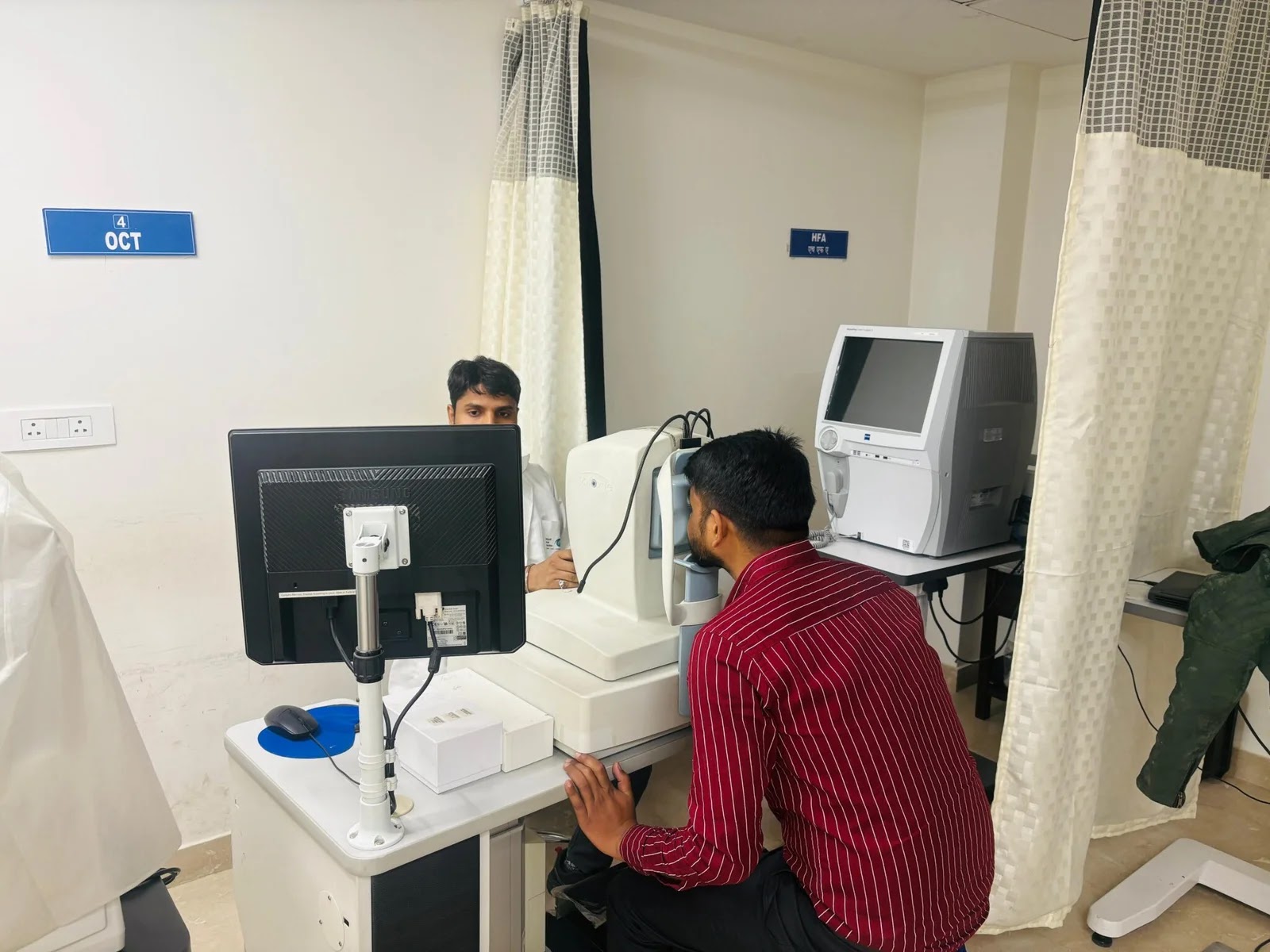
Optovue RTVue OCT and OCT Angiography unit at Dayal Eye Centre

Optovue RTVue OCT & OCT Angiography

Cross-section retinal scans · dye-free blood-flow mapping

We use OCT to see swelling, holes and thinning in your retina layer by layer, and OCT angiography to map retinal blood flow in 3D without any dye. These scans decide whether your condition needs an injection, laser or surgery — and they let us measure whether treatment is working at every follow-up.

Read More

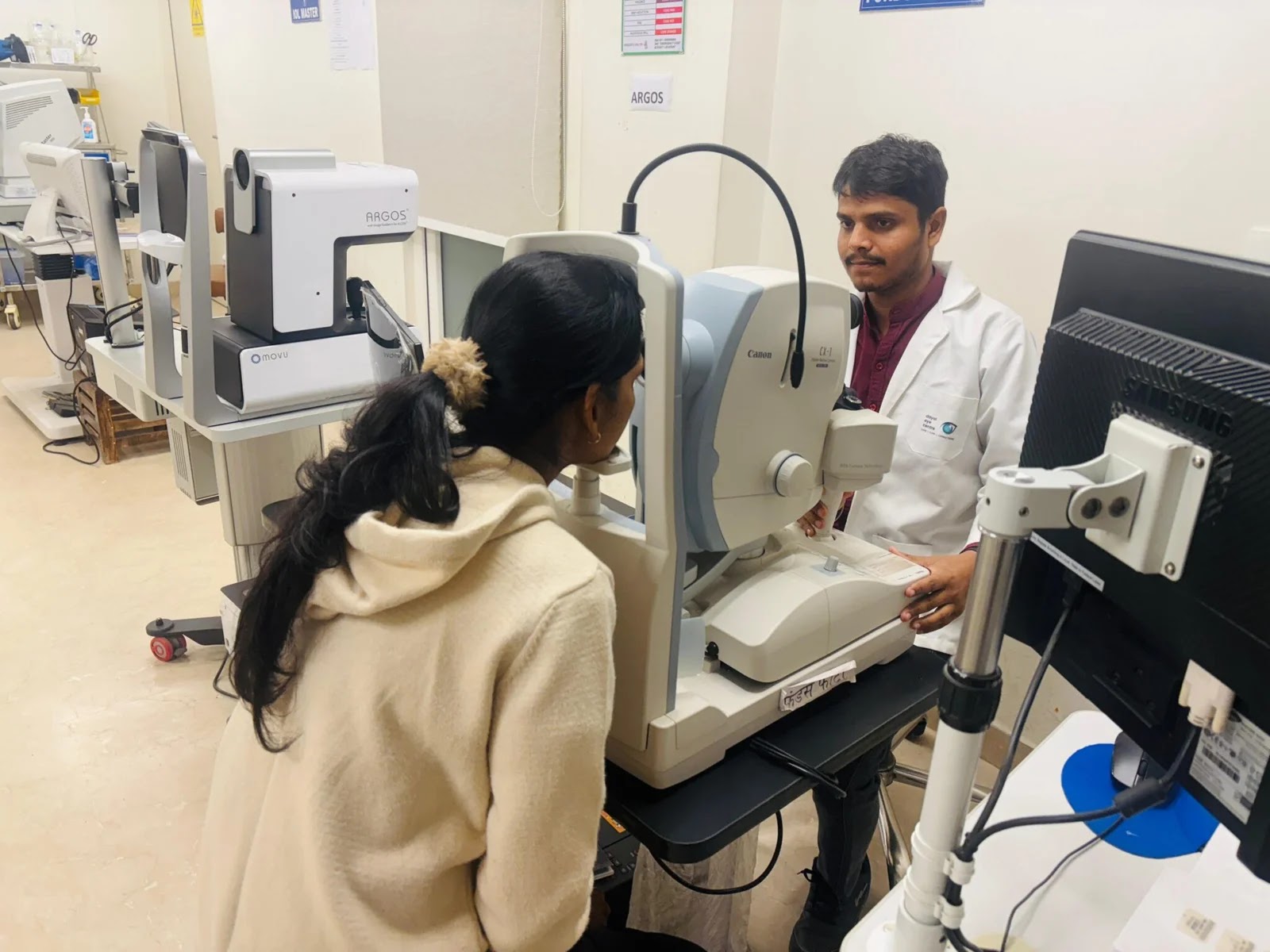
Canon CX-1 Retinal Camera

Fundus photography · autofluorescence · fluorescein angiography

High-quality retinal photographs let us document your retina today and compare it precisely at your next visit — essential in diabetic retinopathy, where change is gradual. Fluorescein angiography on the same platform highlights leaking or blocked retinal vessels before they threaten your central vision.

Read More
Canon CX-1 retinal camera at Dayal Eye Centre
Testimonials

Patient’s Feedback

4.9 ★★★★★ Google 2,508 reviews
★★★★★
I came in with a shadow in my side vision and was operated the same day. The team explained every step before and after surgery.
A.K. A.K., Gurgaon Retinal detachment surgery · Google review
★★★★★
My sugar had been high for years. The OCT scan showed exactly what was happening and my injections were started immediately.
S.M. S.M., Gurgaon Diabetic retinopathy · Google review
★★★★★
The face-down positioning was explained to me clearly beforehand, so I knew what to expect at home. Follow-ups were thorough.
R.D. R.D., Delhi NCR Vitrectomy · Google review
★★★★★
Straight lines had started looking bent. Surgery was comfortable and my reading vision has improved steadily.
P.G. P.G., Gurgaon Macular hole · Google review
★★★★★
My insurance was handled cashless by their desk — I did not have to run around for approvals.
V.S. V.S., Gurgaon AMD injections · Google review
★★★★★
They told me my case did not need surgery yet and put me on monitoring. That honesty is why I keep going back.
N.B. N.B., Delhi NCR Retina consultation · Google review
★★★★★
I came in with a shadow in my side vision and was operated the same day. The team explained every step before and after surgery.
A.K. A.K., Gurgaon Retinal detachment surgery · Google review
★★★★★
My sugar had been high for years. The OCT scan showed exactly what was happening and my injections were started immediately.
S.M. S.M., Gurgaon Diabetic retinopathy · Google review
★★★★★
The face-down positioning was explained to me clearly beforehand, so I knew what to expect at home. Follow-ups were thorough.
R.D. R.D., Delhi NCR Vitrectomy · Google review
★★★★★
Straight lines had started looking bent. Surgery was comfortable and my reading vision has improved steadily.
P.G. P.G., Gurgaon Macular hole · Google review
★★★★★
My insurance was handled cashless by their desk — I did not have to run around for approvals.
V.S. V.S., Gurgaon AMD injections · Google review
★★★★★
They told me my case did not need surgery yet and put me on monitoring. That honesty is why I keep going back.
N.B. N.B., Delhi NCR Retina consultation · Google review

Individual results vary. Outcomes depend on your diagnosis, how early treatment began, whether the macula was affected and your overall eye health. Testimonials shared with patient consent, initials only.

Cost & Payment

More Details About Retinal Surgery in Gurgaon

Total Cost

The cost of retinal surgery depends on your diagnosis, the procedure required (injection, laser or surgery), the technique, and whether one or both eyes need treatment. Because every retina is different, we confirm your cost only after an examination — and we explain what is included before you decide. See the detailed cost note below, and speak to our team about cashless and Easy EMI options.

Cashless Payment

Dayal Eye Centre offers cashless treatment with a wide range of insurers and TPAs, so eligible patients need not pay the covered amount upfront. Our team helps you check your policy, complete pre-authorisation and understand what your plan covers.

See all empanelled insurers, TPAs and schemes on our Policies and Insurance page — paperwork is handled end to end by our team.

Benefits

Modern, minimally invasive retinal treatment offers real advantages over older techniques:

Micro-incision surgery often needs no large cuts or stitches, so recovery is generally faster.

Laser targets only the problem area, sparing healthy tissue.

A single approach can address several problems — tears, abnormal vessels, swelling — in one sitting.

Many procedures are day-care, so an overnight stay is often not needed.

Precise, modern technique helps lower the chance of complications compared with older methods.

Recovery Tips

Follow our instructions on drops, eye protection and activities to avoid.

If you have a gas bubble, keep the recommended head position (for example, face-down) to help it heal.

Avoid heavy lifting, bending and strenuous activity; limit screen time to reduce eye strain.

Use eye shields or sunglasses to protect the eye.

Keep to the schedule for drops and medicines to prevent infection and reduce swelling.

Eat well — vitamins, minerals and omega-3-rich foods support healing.

Attend every follow-up so we can confirm you’re healing and catch any issue early.

Watch for pain, sudden vision change, redness or swelling, and contact us if they occur.

Risks Or Complications

Every surgery carries some risk, and retinal surgery is no exception. Possible complications include infection, raised eye pressure, cataract formation over time, new retinal tears, or the need for further surgery. Not everyone is a candidate for every procedure.

Our surgeons discuss the specific risks and benefits for your eye during consultation, so you can make an informed decision.

Cost for Retinal Detachment surgery in Gurgaon

₹51,000 – ₹85,000 per eye · indicative starting range

As a guide, retinal (retinal detachment) surgery in Gurgaon commonly starts from around ₹51,000 and ranges up to about ₹85,000 per eye, depending on the technique used and the complexity of your case. This is an indicative starting range, not a fixed quote — your final cost is confirmed after a consultation and eye examination, and depends on the procedure, any implants (such as gas or silicone oil), and follow-up care.

Individual results and costs vary based on your eye condition, the type of procedure, whether one or both eyes are treated, and your overall eye health. Please consult our doctors for a personalised assessment.

Pyment Options Available in Dayal Eye Centre

We aim to make retinal treatment affordable and accessible:

Easy EMI

Spread the cost of retinal treatment into comfortable monthly instalments — our counsellors set it up for you.

Cashless Insurance & TPA

Direct settlement with a wide range of insurers and TPAs, with pre-authorisation handled by our team.

PSU & Government Schemes

Including support for eligible public-sector panels and scheme beneficiaries.

Our billing team will walk you through the options that apply to you. Consult with our doctors and ask about payment plans when you book.

Why Dayal Eye Centre

Why Dayal Eye Centre for Your Retina

Choosing where to have retinal treatment comes down to who is treating you and what they treat with. At Dayal Eye Centre you have fellowship-trained vitreoretinal specialists, advanced retinal imaging (OCT, OCT-angiography, fluorescein angiography, B-scan) and modern laser and surgical equipment — under one roof, in one NABH-accredited centre. Across our specialities we have performed 1.2 lakh+ surgeries over 20+ years, and our director Dr. Sanjeev Bisla brings 23+ years of experience and 80,000+ cataract surgeries to the team’s surgical depth.

808 B, Galaxy Road, Sector 15 Part 2, Near 32nd Avenue, Gurgaon, Haryana 122001 · nearest metro IFFCO Chowk (Yellow Line)

Mon–Sat 8:30 AM – 7:30 PM · Sunday closed · wecare@dayaleyecentre.in · Get directions

FAQs

Frequently Asked Questions

Answers to the questions patients ask most about retinal conditions, treatment, recovery and cost in Gurgaon.

There is no single “best” treatment — the right one depends on your diagnosis. Laser therapy is effective for retinal tears and some diabetic retinopathy; medicated injections help wet AMD, diabetic macular edema and vein occlusion; and surgery (vitrectomy, scleral buckle or pneumatic retinopexy) is used for detachment, macular holes and vitreous bleeding. Early diagnosis improves outcomes, so a specialist assessment is the real first step.

For retinal detachment, published series report the retina is successfully reattached in roughly 8–9 of every 10 eyes with a single surgery, and about 9 of 10 or more when a further procedure is needed. How much vision returns depends on the condition, how early it was treated, and whether central vision was already affected.

Some retinal conditions are managed with injections or laser rather than surgery. But a true retinal detachment does not heal on its own and needs prompt treatment to prevent permanent vision loss. Only an examination can tell you which situation you’re in.

Warning signs include a sudden onset of floaters, flashes of light, distorted or wavy vision, or a shadow/curtain over part of your sight. These are reasons to be seen quickly — retinal problems usually cause no pain, so these visual symptoms are your main clue.

You can’t examine your own retina at home, but you can stay alert to changes — new floaters, flashes, distortion or a blur in central vision. An Amsler grid can help you notice central-vision changes. Any new symptom is a reason to book a retinal check.

No — retinal procedures are done with the eye numbed (local anaesthesia), so you should feel little to no pain during surgery. Mild irritation, watering or a gritty feeling afterwards is normal and settles; significant pain is uncommon and should be reported to us straight away.

Most people return to routine activities within about 2–6 weeks, though vision can keep improving for longer. If a gas bubble was placed, you may need to hold a specific head position (often face-down) for several days. Your surgeon will give you a timeline for your specific procedure.

Retinal surgery in Gurgaon commonly starts from around ₹51,000 per eye and varies with the procedure and complexity. It’s an indicative range, not a fixed quote — your cost is confirmed after examination. Dayal Eye Centre offers cashless insurance/TPA settlement and Easy EMI options; our team will help you check your coverage.

Yes. Diabetic retinopathy is managed with injections, laser and, in advanced cases, surgery — and controlling blood sugar and blood pressure protects your retina further. Because it often causes no symptoms until late, anyone with diabetes should have their retina examined regularly, even if their vision feels fine.

Medically reviewed by Dr. Neelam Khatwani, MBBS, DNB (Gold Medalist) — Vitreo-Retina & Uvea Surgeon, Dayal Eye Centre · Last reviewed: 31 July 2026 · Editorial Policy