
PRK, LASIK, and LASEK procedures help most patients achieve their desired vision correction, with success rates reaching 90%. Though LASEK ranks among the safest elective surgeries available, each procedure brings its own set of potential complications.
Your choice between PRK and LASIK requires careful consideration. The risk of infection differs notably between procedures – PRK shows approximately 1 case in 7,000, while LASIK presents 1 case in 20,000. These differences matter when deciding which surgery suits your needs.
Talk with your eye doctor about the specific risks linked to each procedure. This guide examines everything from common side effects to rare complications, helping you understand what to expect during recovery. You’ll learn about potential challenges and ways to reduce your risk factors, regardless of which procedure you choose.
Understanding PRK, LASEK, and LASIK Basics
Our natural lens is like a camera lens crystal clear to most of us. Each procedure – PRK, LASEK, and LASIK – uses specific techniques to reshape the cornea and correct vision problems.
What each procedure involves
PRK (Photorefractive Keratectomy) PRK, approved by FDA in 1995, stands as LASIK’s predecessor. During PRK, your eye doctor removes the cornea’s outer layer (epithelium) completely. An excimer laser then reshapes the underlying corneal tissue to correct vision problems. After surgery, a special contact lens protects your eye while new epithelial cells grow back over five days.
LASIK (Laser-Assisted In Situ Keratomileusis) received FDA approval in 1999. Your surgeon creates a thin flap in the cornea’s outer layer using a femtosecond laser. They lift this microscopically thin hinged flap and reshape the deeper corneal tissue with an excimer laser. The flap then returns to position, acting like a natural bandage for faster healing.
LASEK (Laser Epithelial Keratomileusis) LASEK blends elements from both PRK and LASIK. Instead of removing the epithelium completely as in PRK, your surgeon creates and preserves an ultra-thin epithelial flap. This flap stays attached to one side of your cornea throughout the procedure. After laser reshaping, they reposition the epithelial tissue and apply a protective contact lens.
Key Differences between Techniques
Surgical Approach The main difference lies in how surgeons access your cornea. LASIK creates a deeper flap containing both epithelial and stromal tissues. PRK removes the epithelium completely, while LASEK preserves it as a thin flap.
Recovery Timeline Each procedure follows its own healing pattern. LASIK typically offers quickest recovery – most patients see better within days. However, complete healing takes several months. With PRK and LASEK, vision improves gradually over several weeks.
Suitability Factors Talk with your eye doctor about which procedure suits you best. LASIK works well for people with moderate to high refractive errors or thicker corneas. PRK and LASEK might better serve those with:
- Thin corneas
- Irregular corneal surfaces
- High-impact lifestyles or professions
Wound Healing Response LASIK’s advantage comes from keeping the central corneal epithelium intact, reducing healing response. This means less regression for high corrections and fewer complications like stromal clouding.
Long-Term Considerations Though all three procedures show excellent long-term outcomes, they differ structurally. PRK and LASEK often prove safer long-term because they avoid creating a permanent corneal flap. This makes them particularly good choices for people at higher risk of eye injuries.
Comfort Levels LASIK typically causes minimal discomfort thanks to the protective flap. PRK and LASEK patients often experience more initial discomfort while the epithelium heals. However, newer post-operative care methods have improved comfort across all procedures.
Common Short-Term Side Effects
After cataract surgery, you’ll have some discomfort for a few days. Similarly, laser eye surgery brings temporary side effects that vary among PRK, LASEK, and LASIK procedures. Let’s understand what you might experience during recovery.
Pain and discomfort levels
Concerned about pain during eye surgery? The level and duration of discomfort differs notably between procedures. LASIK patients typically feel minimal pain, experiencing only slight burning for a few hours after surgery. However, PRK patients often report more noticeable discomfort, with pain reaching its peak around day 2 or 3.
Studies show nearly all PRK patients experience some pain, with most reporting significant discomfort (≥7/10) during recovery. LASEK falls between these two, causing more discomfort than LASIK but possibly less than PRK.
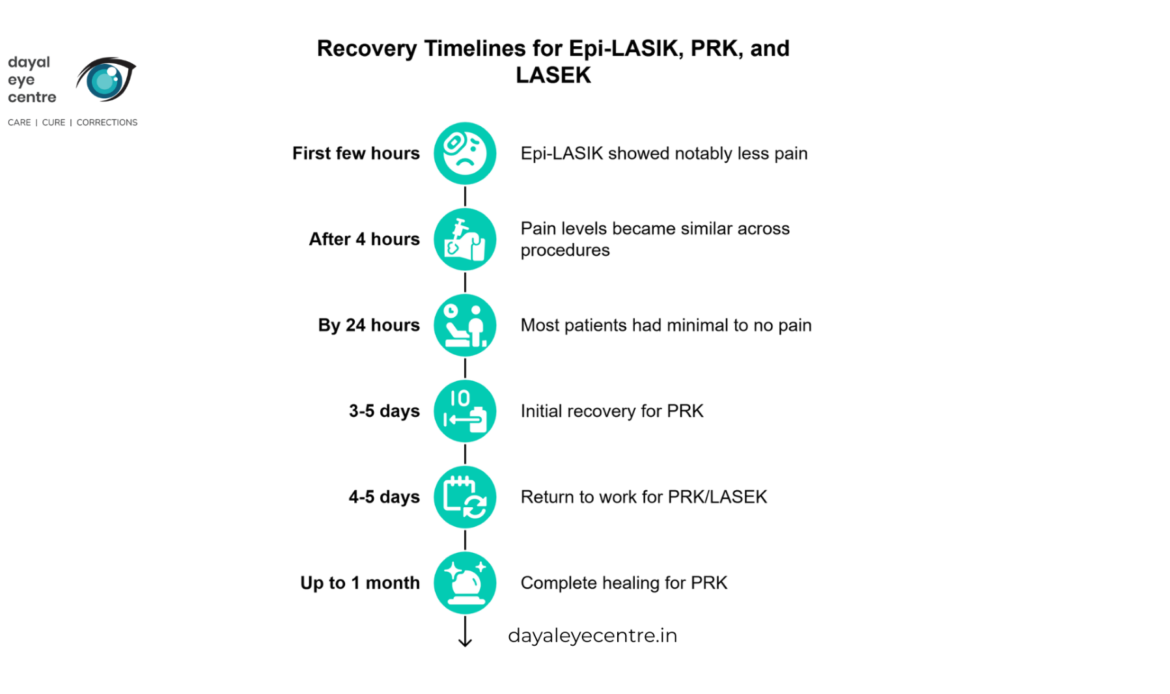
A study of 95 eyes revealed interesting pain patterns:
- First few hours: Epi-LASIK showed notably less pain
- After 4 hours: Pain levels became similar across procedures
- By 24 hours: Most patients had minimal to no pain
The sensation feels like having something in your eye, along with:
- Grittiness and burning
- Watery eyes
- Light sensitivity
- Mild irritation
Vision fluctuations
The way smudgy lenses cause blurring of vision, post-operative changes follow distinct patterns. About 95% of patients experience some form of dry eye symptoms right after surgery. These symptoms can make your vision fluctuate and create foreign body sensations, temporarily affecting daily activities.
For LASIK patients, vision typically becomes stable within 2-3 months after surgery. PRK and LASEK patients might notice slightly worse vision during initial healing before improvement. This temporary decline happens because new epithelial cells grow “bumpy” under the bandage contact lens.
You might experience:
- Blurred vision (especially in first few days)
- Hazy or cloudy vision (up to 9 months with LASEK)
- Night vision difficulties
- Temporary farsightedness, affecting close-up vision
Recovery timeline differences
We can have different healing patterns with each procedure. LASIK offers quickest recovery, with most patients seeing better within days. Many notice improved vision within 24 hours of LASIK.
PRK and LASEK take longer to heal:
- Initial recovery: 3-5 days for PRK versus 24 hours for LASIK
- Return to work: 4-5 days for PRK/LASEK versus 2-3 days for LASIK
- Complete healing: Up to 1 month for PRK
Dry eye patterns show interesting differences. Six months after surgery, mean DEWS scores were:
- PRK: 0.78 ± 0.83
- LASEK: 0.82 ± 0.92
- LASIK: 1.07 ± 0.86
LASIK patients showed higher dry eye scores at 6 months compared to PRK or LASEK. These symptoms usually peak in the first few months, then gradually improve within a year.
To help your eyes heal properly:
- Avoid heavy lifting and strenuous activities for two weeks
- Wait up to 3 months before contact sports
- Use prescribed eye drops as directed
- Wear protective eyewear during sleep
Most patients see substantial improvement within one to two months, though complete stabilization takes longer. Night vision problems, like halos or starbursts, commonly occur in the first weeks but usually resolve within six months.
Serious Complications to Consider
Cataract surgery is generally safe, but like any other procedure in body it carries risks. Similarly, laser eye surgery, despite its advanced technology, brings certain serious complications that need careful consideration. Talk with your eye doctor about these potential risks before deciding on PRK, LASEK, or LASIK procedures.
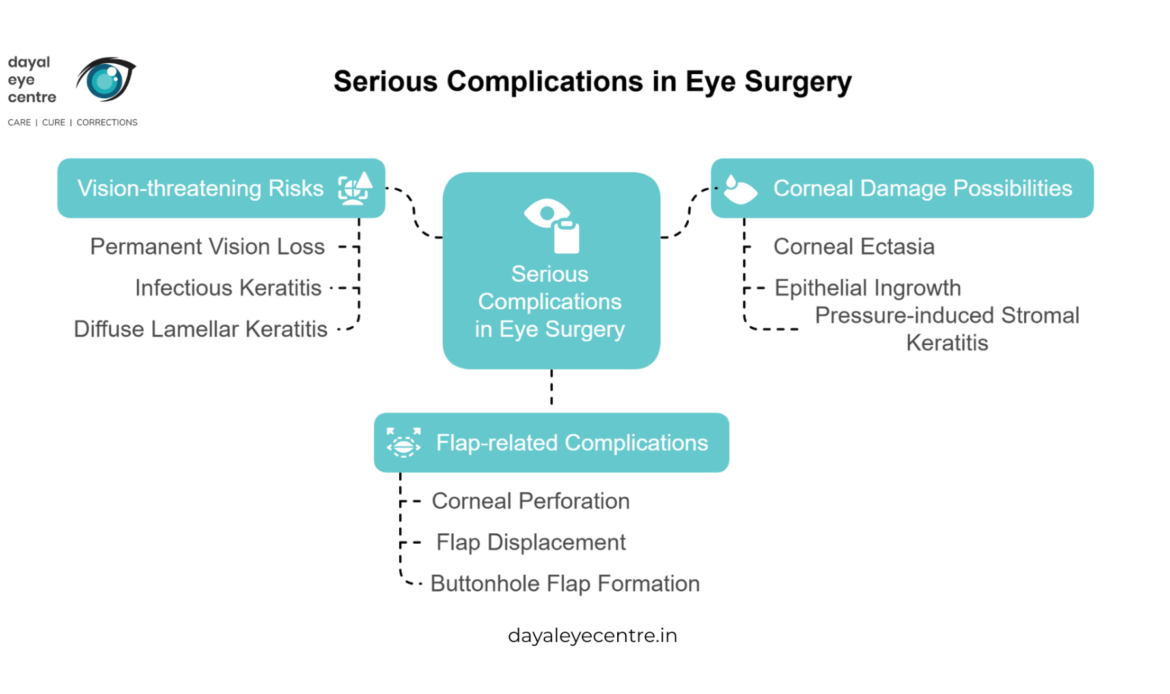
Vision-threatening risks
Permanent vision loss remains extremely rare but critical across all procedures. Studies show vision-threatening complications occur in less than 1% of LASIK cases. Research reveals different vision loss rates among procedures:
- PRK: 0.5% of eyes lost visual acuity
- LASEK: Up to 8.2% of cases experienced vision changes
- LASIK: 0.6% of patients reported decreased visual ability
Infectious keratitis, occurring in 0.005% to 0.034% of cases, presents another serious risk. Watch for signs like:
- Blurred vision
- Extreme light sensitivity
- Persistent eye redness
- Severe pain
The way smudgy lenses cause blurring, a condition called diffuse lamellar keratitis (DLK) or “Sands of Sahara” affects 0.13% to 18.9% of cases. This inflammation needs immediate attention and can progress through four stages:
- Initial peripheral granular cells appear
- Central area becomes involved
- Significant inflammation requires flap lifting
- Permanent stromal damage occurs
Corneal damage possibilities
Corneal ectasia, occurring in about 0.2% of LASIK cases, ranks among the most serious complications. Your cornea might:
- Become excessively thin
- Weaken progressively
- Bulge abnormally
- Cause significant vision deterioration
Epithelial ingrowth affects 1% to 20% of flap procedures. This problem can develop weeks or months after surgery, potentially causing:
- Ongoing inflammation
- Progressive scarring
- Decreased vision clarity
- Need for additional surgery
Pressure-induced stromal keratitis (PISK) presents another significant risk. This inflammation can:
- Damage your corneal stroma
- Create severe eye pain
- Cause permanent nerve damage
- Lead to vision loss that can’t be reversed
Your risk of developing corneal haze varies based on factors like:
- Amount of vision correction needed
- Astigmatism over 2 diopters
- Previous eye surgeries
- Slow healing
- Vitamin deficiencies
LASIK patients specifically face flap-related complications including:
- Corneal perforation (rare but severe)
- Incomplete or irregular flap creation
- Flap displacement
- Debris trapped under flap
- Buttonhole flap formation
Certain health conditions increase your risk of complications:
- Autoimmune disorders
- Weakened immune systems
- Chronic dry eyes
- Corneal problems
- Active eye inflammation
- Pregnancy-related hormonal changes
Under or overcorrection complications might lead to:
- Ongoing vision problems
- Need for additional surgery
- Permanent vision changes
- Increased astigmatism risk
For most people, there is no rush to have laser eye surgery. Take time to discuss these potential complications with your eye doctor. Proper screening and careful evaluation of your medical history help reduce these risks significantly.
Recovery Challenges by Procedure
The way smudgy lenses causes blurring of vision, each laser eye surgery brings unique recovery challenges. Let’s understand what you might experience during healing with different procedures.
PRK healing process
Our natural lens heals in a specific way after PRK. The cornea’s outer layer regenerates naturally over 5 days, and you’ll need to wear a protective contact lens during this time.
The first week proves most challenging:
- Days 1-3: You’ll experience peak discomfort, light sensitivity, and foreign body sensation
- Days 4-5: Your vision starts improving as the cornea heals
- Week 1: Most people return to work, though vision continues to fluctuate
Concerned about how PRK healing works? Your cornea heals from the edges toward the center, often creating a small ridge across your pupil. This ridge smooths out over six weeks, which explains why your vision keeps improving well after initial recovery.
LASIK flap concerns
The corneal flap created during LASIK needs special attention. Your surgeon ensures this flap stays regular, well-centered, and maintains proper thickness. Watch for these flap-related challenges:
Early Recovery Phase
- Flap might shift due to anxiety, heavy blinking, or dry eye
- Tissue might grow under the flap edge
- Tiny folds might form in the flap
Long-term Considerations Talk with your eye doctor about permanent precautions – your flap never regains its original strength. High-impact activities or contact sports may need extra protection.
LASEK recovery specifics
LASEK blends PRK and LASIK approaches, creating its own recovery pattern. The total healing period spans approximately six months, with distinct phases:
Initial Recovery (Days 1-3) You might experience:
- Soreness in your treated cornea
- Feeling like something’s in your eye
- Need for protective eyewear due to light sensitivity
Intermediate Phase (Days 4-14) Your vision improves gradually as the epithelial flap stabilizes. Most people can:
- Get back to work after 4-5 days
- Start driving within 1-2 weeks
- Use digital screens after 7 days
Wait these periods before activities:
- Light exercise: 2 weeks minimum
- Intense workouts: 3-4 weeks
- Swimming or saunas: 2 weeks
Recovery varies among procedures. LASIK patients often see better within days, while PRK and LASEK patients notice gradual improvement over weeks. PRK and LASEK typically cause more post-surgery pain than LASIK.
For best healing results:
- Keep water from splashing your eyes
- Skip eye makeup
- Use eye drops as prescribed
- Wear eye protection during sleep
Your lifestyle might help choose your procedure. For example, contact sports players often pick PRK to avoid flap problems. People with thinner corneas (under 490-500 microns) usually choose LASEK or PRK.
Who Faces Higher Risk Levels
Talk with your eye doctor about whether surgery is right for you. We know certain medical conditions and lifestyle choices can affect how safe and successful PRK, LASEK, or LASIK procedures might be.
Medical conditions that increase risk
Concerned about how your health conditions might affect laser eye surgery? Autoimmune disorders need special attention. If you have active systemic conditions like lupus (SLE) or rheumatoid arthritis (RA), you face higher risks of corneal problems. However, if your autoimmune condition stays well-controlled, research suggests you might safely undergo LASIK.
Diabetes brings its own challenges. If you have uncontrolled diabetes, you might face:
- Unstable vision measurements
- Slower wound healing
- Changing vision clarity
Some eye conditions mean you can’t have laser surgery:
- Keratoconus
- Corneal ectasias
- Corneal thinning
- Interstitial keratitis
- Neurotrophic keratitis
Hormonal changes affect surgery results too. For pregnant or nursing mothers, we recommend waiting since hormone changes can alter your vision measurements. Some medications (amiodarone, isotretinoin, sumatriptan) also mean you should avoid these procedures.
The way smudgy lenses causes blurring, dry eyes need careful checking. About 95% of patients experience some dry eye symptoms right after surgery. Women face higher risks of severe dry eyes after surgery, mainly due to lower androgen hormone levels.
Lifestyle factors to consider
Our daily activities help determine which procedure suits us best. High-impact activities need special consideration:
- Contact sports
- Martial arts
- Professional fighting
- Basketball
Corneal characteristics play a key role in choosing your procedure. You might face higher risks with:
- Thin corneas (under 490-500 microns)
- Irregular corneal surfaces
- Very flat or curved central cornea
Your pupil size matters too. If you have large pupils, especially in dim light, you might see:
- Troublesome glare
- Halos around lights
- Starburst patterns
- Ghost images
Where you live affects healing. In hot, dry climates, you might experience:
- More eye dryness
- Less clear vision
- Slower healing
Your job might influence which procedure works best:
- Night vision requirements
- Close-up vision needs
- Exposure to eye irritants
Age brings important considerations:
- Vision stability
- Healing ability
- Visual needs
- Reading vision changes
Previous eye surgeries might limit your options. If you’ve had refractive surgery before, you face:
- Higher complication risks
- Fewer correction choices
- Less predictable results
Daily life factors matter too:
- Regular vision needs
- Work requirements
- Hobby demands
- Recovery time needs
For most people, there is no rush to remove cataracts because they usually don’t harm the eyes. Similarly, take time to consider these risk factors carefully. Your medical history, lifestyle, and personal needs help determine which approach suits you best.
How to Minimize Surgery Risks
Cataract surgery is generally safe, but like any other procedure in the body it carries risks. The same applies to laser eye surgery – proper preparation and careful aftercare significantly reduce complication risks.
Pre-surgery preparation steps
Talk with your eye doctor about finding an experienced surgeon. Studies show expert surgeons encounter permanent vision problems in only 1 in 30,000 cases.
If you wear contact lenses, you’ll need to stop wearing them before surgery:
- Soft lenses: 1 week before evaluation
- Toric lenses: 3 weeks before
- Gas permeable lenses: Several months may be needed
Thorough eye examinations help identify potential risks. Your doctor will check:
- Your overall eye health
- Corneal measurements
- Vision stability
- Medical history
The day before surgery requires special preparation:
- Skip makeup, creams, and perfumes
- Wear comfortable clothes for rest
- Prepare meals ahead of time
- Arrange for someone to drive you
Tell your doctor about all medications you take, including over-the-counter drugs and allergies. We recommend storing prescribed eye drops in the refrigerator – many patients find cool drops more comfortable during recovery.
Post-surgery care essentials
After surgery, focus on preventing complications through proper care:
Eye Protection
- Sleep with protective eyewear for the first week
- Don’t rub your eyes for at least one month
- Wear sunglasses outside to block UV rays
Hygiene Protocol
- Wait until next day for showering
- Keep soap and tap water away from eyes
- No pools, hot tubs, or saunas for three weeks
Activity Restrictions
- Start exercise after two days
- Wait 7-10 days for hair treatments
- Stay away from dust for one week
Your surgeon will prescribe important medications:
- Anti-inflammatory drops
- Antibiotics
- Artificial tears
Regular follow-up appointments help catch potential problems early. See your doctor:
- Within 24-48 hours after surgery
- At recommended intervals
- For at least six months
Watch for warning signs requiring immediate care:
- Sudden vision changes
- Severe pain
- Red eyes
- Unusual discharge
Our natural lens takes three to six months to stabilize after surgery. Keep in touch with your healthcare team about any concerns during this time.
Your healing environment matters. Remember to:
- Keep sleeping areas clean
- Use eye protection during sports
- Follow activity restrictions carefully
PRK patients need extra precautions:
- Avoid tap water
- Maintain UV protection
- Follow dietary guidelines
Plan your workplace return carefully:
- Schedule time off
- Adjust screen brightness
- Ensure proper lighting
For most people, there is no rush to have surgery. Follow protective measures until your surgeon confirms complete healing. Each person’s healing journey differs, so your care plan will match your specific needs and chosen procedure.
Conclusion
The way smudgy lenses causes blurring of vision, each laser eye surgery procedure brings its own considerations. LASIK helps you see better fastest but needs careful attention to the corneal flap. PRK and LASEK work better if you have thin corneas or lead an active life. Nine out of ten patients achieve their desired vision correction.
Talk with your eye doctor about how your medical conditions and lifestyle affect your surgery choice. Careful screening, experienced surgeons, and following pre and post-surgery care instructions help reduce risks. Schedule a consultation with our eye care professionals to learn which procedure suits your needs best.
For most people, there is no rush to have laser eye surgery. Take time to follow your medication schedule, attend follow-up appointments, and protect your eyes during healing. Remember, our natural lens takes three to six months to stabilize after surgery. Your dedication to recovery instructions helps ensure the best possible outcome.
FAQs
1. Is PRK or LASIK considered riskier?
Both PRK and LASIK are generally considered safe and effective procedures. While LASIK offers a faster recovery time, PRK may be preferred for patients with thin corneas or active lifestyles. The choice between the two depends on individual factors and should be discussed with an eye surgeon.
2. What are the most common risks associated with laser eye surgery?
Common risks include temporary dry eyes, light sensitivity, and visual disturbances like glare or halos. These side effects typically resolve within a few weeks to months. Serious complications that could lead to vision loss are extremely rare, occurring in less than 1% of cases.
3. How long does it take for vision to stabilize after laser eye surgery?
Vision stabilization varies depending on the procedure. LASIK patients often see improvement within days, while PRK and LASEK patients may experience gradual improvement over several weeks. Complete stabilization typically occurs within three to six months post-surgery.
4. Who might not be a suitable candidate for laser eye surgery?
Individuals with certain medical conditions like uncontrolled diabetes, autoimmune disorders, or specific eye conditions like keratoconus may not be suitable candidates. Additionally, pregnant women, nursing mothers, and those with unstable vision should postpone surgery.
5. What steps can patients take to minimize risks during recovery?
To minimize risks, patients should follow their surgeon’s instructions carefully. This includes using prescribed eye drops, wearing protective eyewear, avoiding rubbing the eyes, and attending all follow-up appointments. It’s also important to avoid swimming, saunas, and dusty environments for the recommended period after surgery.