





A complete review of 97 well-laid-out studies that analyzed 67,893 LASIK-treated eyes shows why laser eye surgery has become a trusted vision correction solution. Patients frequently ask about the safety margins when comparing LASIK vs PRK.
LASIK and PRK both have proven track records. PRK offers distinct advantages for specific conditions. LASIK remains one of the most performed procedures, but PRK is a safer choice for people with thin corneas or dry eye conditions. These different procedures have unique safety profiles that help determine which option suits your specific needs best.
Understanding Different Types of Laser Eye Surgery
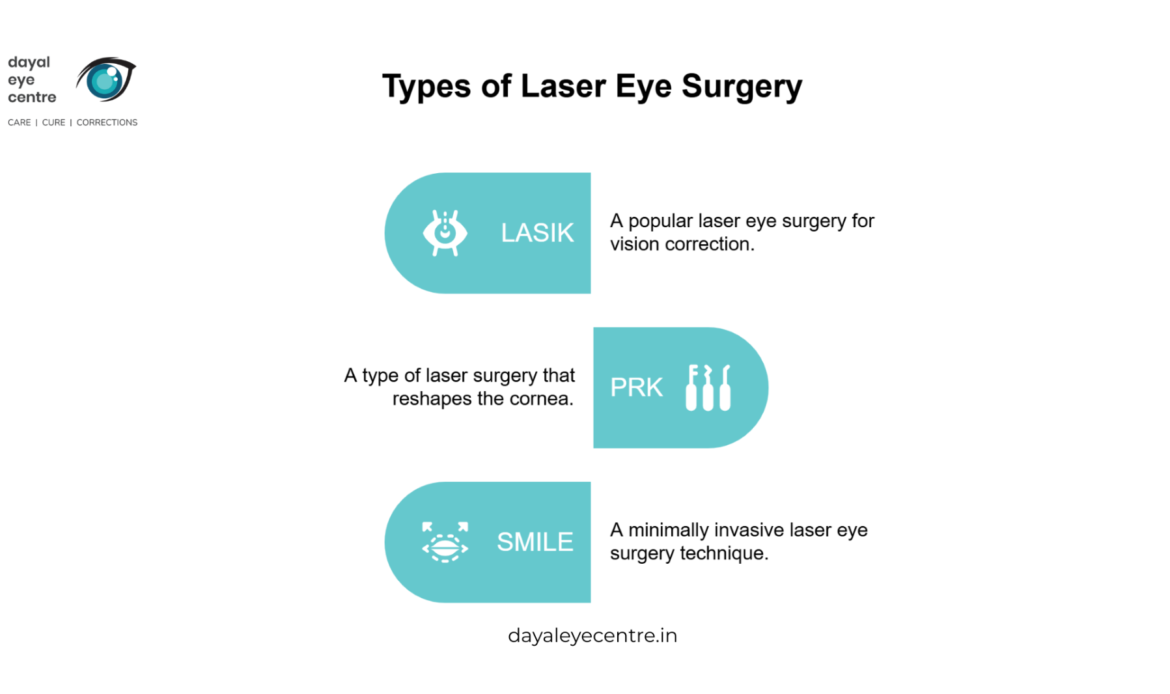
Laser eye surgery comes in three main types that doctors trust to correct vision problems. Each type works differently and suits different eye conditions and lifestyles.
LASIK: The Popular Choice
LASIK has been the go-to laser vision correction procedure since the 1990s. The surgeon makes a thin flap in the cornea and reshapes it with an excimer laser. Then they put the flap back in place.
LASIK’s quick recovery stands out as one of its best features. You’ll feel little pain and see better within 1-2 days. The numbers back this up too – about 95% of the 800,000 people who get LASIK each year end up with the vision they wanted.
PRK: The Original Procedure
PRK kicked off laser vision correction surgery back in the 1980s. The approach differs from LASIK because doctors remove the cornea’s outer layer instead of making a flap. They use an excimer laser to carefully remove tiny bits of corneal tissue until light focuses properly on your retina.
PRK works better in certain cases. To cite an instance, if you have thin corneas or play contact sports, PRK might be your best bet since there’s no flap to worry about. PRK also helps people who tend to get dry eyes because it affects fewer corneal nerves than LASIK does.
SMILE: The Newest Option
SMILE came along in the 2010s as the latest breakthrough in laser vision correction. This gentle procedure uses a femtosecond laser to create a small lens-shaped piece of tissue under your cornea’s surface. The surgeon takes out this tiny piece through a small cut, which changes the cornea’s shape.
The results speak for themselves. Studies show 99% of patients could see 20/40 or better within six months, and 88% achieved perfect 20/20 vision. Since the FDA gave its approval in 2016, doctors have done over 5 million SMILE procedures worldwide.
Each option needs careful thought. Your cornea must be thick enough to make LASIK’s flap. PRK takes longer to heal – your vision gets better over 3-4 days as the cornea heals. SMILE works great but only fixes nearsightedness and astigmatism, while LASIK and PRK can also help with farsightedness.
The right choice depends on several things like how thick your corneas are, what vision problems you have, and your daily activities. People with thin corneas might do better with SMILE or PRK. Those who play rough sports usually pick procedures that don’t need a corneal flap.
Why PRK is Often Called the Safer Option
Eye surgeons often recommend PRK because it eliminates certain risks you might face with traditional LASIK procedures.
No Flap-Related Complications
The main difference between PRK and LASIK comes down to surgical technique. PRK removes the cornea’s outer layer instead of creating a corneal flap. This simple approach helps you avoid many complications that can happen during LASIK flap creation.
Clinical studies show several issues with LASIK flap procedures:
- Suction loss happens in 1.29% of cases
- Difficult flap dissection affects 0.59% of patients
- Epithelial defects show up in 0.12% of procedures
Creating the corneal flap remains the riskiest part of LASIK surgery and can affect your procedure and recovery time. Modern femtosecond lasers haven’t eliminated all risks – complications like opaque bubble layer formation and buttonhole creation still happen.
Better for Thin Corneas
PRK works really well if you have thin corneas. The largest longitudinal study of corneas less than 500 micrometers thick shows PRK is both safe and effective. This happens because PRK’s technique keeps more of your cornea’s structure intact.
PRK works great with thin corneas because:
- It leaves more of your cornea untouched
- You might qualify for PRK even when LASIK isn’t an option
- Treatment happens closer to the front of your cornea, making it safer when corneas are thin
Research backs up PRK’s safety record. A four-year study of patients with thin corneas showed their vision stayed stable after surgery. You’ll rarely see corneal ectasia after PRK when corneal topography is normal.
PRK has other safety benefits too. Your corneal nerves recover faster, which means less dry eye problems. This matters because LASIK can disrupt nerve connections that affect your eye’s moisture.
PRK makes sense if you live an active lifestyle or work in high-risk jobs like law enforcement or military service. Without a corneal flap, you won’t risk flap dislocation during physical activities or eye injuries. Both procedures fix your vision just as well, but PRK’s approach gives you these extra safety advantages in specific situations.
Safety Factors in Modern Laser Technology
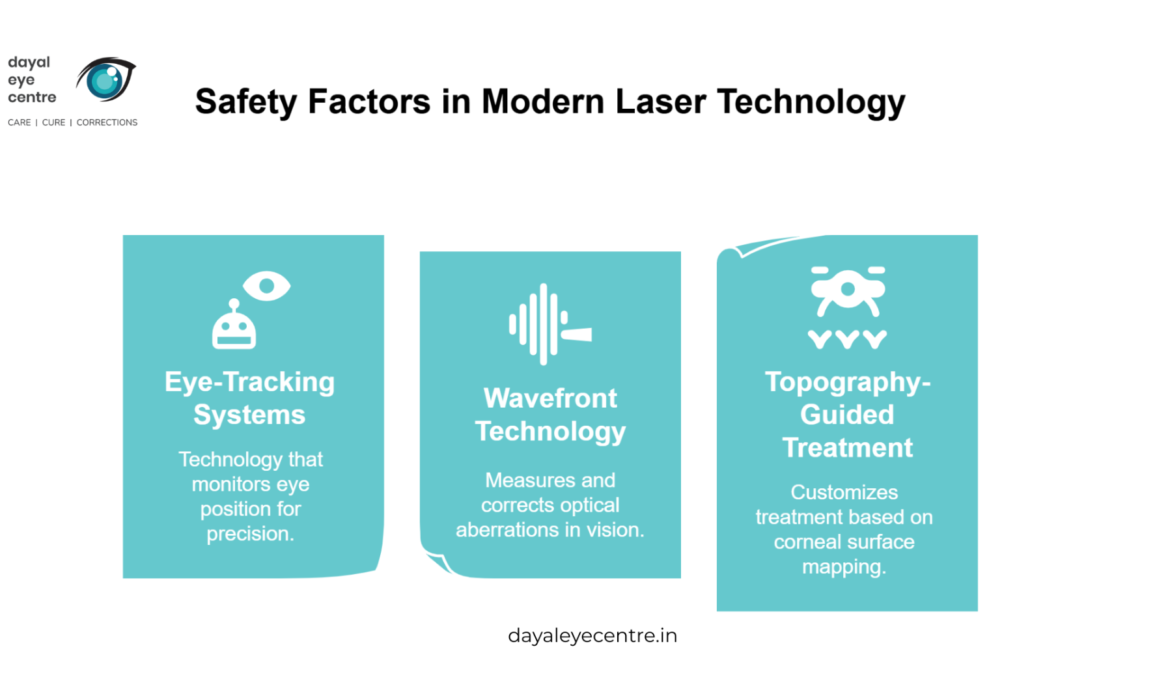
Modern laser eye surgery has made amazing progress in safety through better technology. These innovations have improved the precision and effectiveness of both LASIK and PRK procedures by a lot.
Eye-Tracking Systems
New eye-tracking technology watches eye movements at speeds up to 4,000 times per second. These systems adjust laser positioning automatically to make up for tiny involuntary eye movements that can reach speeds of 170 mm/s.
Today’s tracking systems come with key safety features:
- Live position monitoring that takes just 3 milliseconds
- Automatic laser adjustments or stops if eye movements go beyond safe limits
- Six-dimensional tracking that considers the cornea’s curve
Studies show that modern eye-tracking systems give better visual results. Patients who got procedures with infrared pupil tracking had better uncorrected visual acuity and more predictable outcomes.
Wavefront Technology
Wavefront technology, which came from astronomy, creates detailed 3D maps of each eye’s unique flaws. Surgeons can now spot and fix both common vision problems and subtle irregularities called higher-order aberrations.
These procedures are incredibly precise. They measure vision corrections to 0.01 Diopters, while older methods only reach 0.25 Diopters. This precision brings amazing results:
Most patients get 20/20 vision or better after wavefront-guided surgery. The technology removes tiny amounts of corneal tissue based on each patient’s unique eye features.
Topography-Guided Treatment
Topography-guided laser surgery is another big step forward in safety that looks at over 22,000 unique points on the cornea. This detailed mapping helps surgeons fix irregular astigmatism effectively.
This treatment works great for:
- Complex corneas that other systems don’t image well
- Problems from earlier laser eye surgery
- Uneven astigmatism
- Corneal scars after keratoplasty
Clinical data backs up how well topography-guided treatments work. Combined with corneal collagen cross-linking, the procedure helped more than 50% of treated eyes achieve good distance vision of 20/40 or better. Distance best-corrected visual acuity got better or stayed the same in 77% to 91% of eyes, depending on the laser system used.
These technologies combine naturally with each other. The femtosecond laser gives unique precision in procedures like Femto-LASIK. Advanced diagnostic tools like optical coherence tomography and Scheimpflug imaging create detailed corneal maps that make surgical planning more accurate.
Comparing Safety Records of Different Procedures
The largest longitudinal study that spans multiple decades provides a great way to get insights into how safe laser eye surgery procedures are. These findings help patients make better decisions about their vision correction options.
Clinical Study Results
A complete network meta-analysis that looked at 48 randomized controlled trials showed no major differences in visual outcomes between laser eye procedures. The data showed femtosecond-based LASIK (FS-LASIK) performed better than traditional LASIK, PRK, and other procedures.
Recent safety studies reveal these important findings:
- LASIK’s overall complication rate stays below 1%
- Topography-guided LASIK helps almost 100% of patients achieve 20/20 vision
- All but one percent of patients can perform daily activities after surgery with ease
Studies that match FS-LASIK against PRK revealed higher safety scores for FS-LASIK patients. Both procedures managed to keep safety scores above 1.0 after ten years, that indicates excellent stability over time.
Long-term Success Rates
Studies over many years show remarkable stability in different procedures. A 12-year study of conventional LASIK found:
- No vision-threatening complications during the entire study
- Safety scores stayed stable at 0.82 ± 0.29 after 12 years
- About 10% of eyes had minor myopic regression
Patient satisfaction numbers reflect how well these procedures work:
- Primary LASIK surgery has a 95.4% satisfaction rate
- Myopic LASIK patients report 95.3% satisfaction
- Hyperopic LASIK patients show a slightly better 96.3% satisfaction rate
SMILE, one of the newer technologies, shows promising results. Clinical data shows SMILE works exceptionally well for treating high myopia, with better stability and predictability. In spite of that, LASIK remains strong with decades of proven success.
Research shows 46% of patients without visual symptoms before surgery reported at least one symptom three months after the procedure. Halos were the most common issue, affecting up to 40% of patients who had no symptoms before.
About 28% of patients who didn’t have dry eye problems reported symptoms three months after surgery. The good news is that more than 95% of people ended up happy with their post-LASIK vision.
When comparing safety between contact lenses and laser procedures, the results might surprise you. Contact lens use guides to more eye infections each year – about eight times more than LASIK. Contact lenses cause eye infections that lead to blindness in 1 out of 500 users yearly, while LASIK has never been the sole cause of blindness.
How to Choose the Safest Option for Your Eyes
You need to think about multiple factors when choosing the right laser eye surgery. A full picture of your eye condition and professional guidance will give optimal safety and results.
Understanding Your Eye Condition
Your refractive error and corneal characteristics determine how well laser eye surgery will work. Custom LASIK uses wavefront technology to create detailed three-dimensional maps of your eye. This enables precise correction of both lower- and higher-order aberrations.
These key factors determine if you qualify for specific procedures:
- Vision prescription that hasn’t changed in 12 months
- Corneal thickness that matches the chosen procedure
- Normal corneal shape without irregularities
- Refractive error within approved ranges (-12.00 diopters for nearsightedness, up to 6 diopters for astigmatism and farsightedness)
Evaluating Risk Factors
Some conditions might affect your eligibility or increase potential risks:
Systemic conditions like thyroid disorders or PCOS need careful attention. People with autoimmune disorders, HIV, or those taking immunosuppressive medications might face higher risks.
Your cornea’s characteristics play a vital role in determining safety. PRK might work better than LASIK if you have thin corneas or irregular corneal surfaces. People who participate in high-impact sports or contact activities should look at procedures that don’t create corneal flaps.
Consulting with Specialists
Meeting with an experienced eye surgeon is the most important step. This evaluation usually includes:
- Detailed eye examination with advanced diagnostic tools
- Assessment of corneal thickness and topography
- Discussion about your lifestyle and job requirements
- Complete review of medical history and potential risks
Recent studies show custom LASIK procedures have grown from about 11% to more than 45% of all procedures. This increase shows patients prefer customized treatments that offer better safety profiles.
The safest option changes based on your specific situation. Wavefront-optimized LASIK reduces higher-order aberrations to less than 1% clinical significance. PRK might be safer for some people, especially those with thin corneas or active lifestyles.
Safety should come before cost considerations. Clinical data shows patients value safety and visual outcomes more than procedure costs. Find a qualified specialist who will assess your case and recommend the best procedure based on your eye’s characteristics and lifestyle needs.
Conclusion
Laser eye surgery provides safe and effective vision correction options. LASIK remains popular due to quick recovery time and high success rates. PRK proves especially safe for patients with thin corneas or active lifestyles. SMILE, the latest technique, delivers promising results with minimal invasiveness.
Eye-tracking systems, wavefront guidance, and topography-guided treatments have enhanced these procedures’ safety. Clinical studies validate excellent long-term outcomes. Patient satisfaction rates exceed 95% across procedures.
Your specific eye condition, lifestyle, and medical history determine the safest choice. Book an appointment with our specialists to find your best-suited procedure. Modern laser eye surgeries have impressive safety records, but proper patient selection and full evaluation remain vital for optimal results.
Research shows laser vision correction procedures are safer than wearing contact lenses long-term. A qualified professional’s guidance and careful review of your individual circumstances will help ensure the best outcome for your vision correction trip.
FAQs
1. Which laser eye surgery procedure is considered the safest?
While all modern laser eye surgeries are generally safe, PRK is often considered the safest option for certain patients, particularly those with thin corneas or active lifestyles. However, the safest procedure varies depending on individual eye conditions and lifestyle factors.
2. How do LASIK and PRK compare in terms of safety?
Both LASIK and PRK have excellent safety profiles. LASIK offers quicker recovery, while PRK eliminates flap-related complications. The choice between the two often depends on factors like corneal thickness and specific eye conditions.
3. What are the long-term success rates of laser eye surgery?
Long-term studies show high success rates for laser eye surgeries. For instance, LASIK has a patient satisfaction rate of over 95%, with most patients achieving 20/20 vision or better. Studies also indicate stable results even after 10-12 years post-surgery.
4. How has modern technology improved the safety of laser eye surgery?
Advanced technologies like eye-tracking systems, wavefront-guided treatments, and topography-guided procedures have significantly enhanced the safety and precision of laser eye surgeries. These innovations allow for more personalized treatments and better visual outcomes.
5. What factors should I consider when choosing a laser eye surgery?
When selecting a laser eye surgery, consider your specific eye condition, corneal thickness, lifestyle, and any potential risk factors. It’s crucial to have a comprehensive eye examination and consult with an experienced eye surgeon to determine the most suitable and safest option for your individual needs.

Director and Chief Ophthalmologist of Dayal Eye Centre, with more than two decades of experience and over 80,000 cataract surgeries — one of the most experienced eye surgeons in Gurgaon.