Astigmatism changes how your eyes process light, affecting the clarity of your vision. This common vision condition affects approximately 13% of all vision problems. Unlike diseases that damage eye structures, astigmatism simply means your eye cannot focus light correctly onto your retina, causing blurred vision at any distance.
Corneal vs Lenticular Astigmatism Explained
Your eyes can develop astigmatism in two main areas, each affecting vision differently. Corneal astigmatism, the more common type, happens when your cornea has an irregular shape. Instead of being round like a basketball, your cornea resembles more of a football shape. This irregular curve prevents light from focusing properly.
Lenticular astigmatism occurs when the lens inside your eye has an irregular shape. Your lens may develop problems like:
- Abnormal lens curvature
- Tilting or displacement of the lens
- Different focusing power across different parts of the lens
Some patients have both types at once. Your doctor might also classify your astigmatism as “regular” or “irregular.” Regular astigmatism maintains a consistent pattern despite not being perfectly round. Irregular astigmatism shows uneven curvature across your eye’s surface—often from injuries, infections, or conditions like keratoconus.

How Light Refraction Is Altered in Astigmatism
Our natural lens helps us see clearly, much like a camera lens. In normal vision, your cornea and lens bend incoming light rays evenly, focusing them precisely onto one point on your retina. Your brain then receives a clear image.
When you have astigmatism, light entering your eye cannot converge at a single focal point. This creates what eye specialists call Sturm’s conoid—where light forms two separate focal lines instead of one point. These focal lines may form in front of your retina, behind it, or both.
Your astigmatism falls into specific patterns:
- With-the-rule astigmatism: Your vertical curve is steepest, like a football lying on its side
- Against-the-rule astigmatism: Your horizontal curve is steepest, resembling a football standing on end
Astigmatism often combines with other vision problems. Many patients experience astigmatism alongside nearsightedness or farsightedness, creating “myopic astigmatism” or “hyperopic astigmatism”.
This incorrect light focusing means only parts of what you’re looking at will be in focus. Your brain receives incomplete visual information, making objects appear blurry, wavy, or distorted. You might notice straight lines looking bent or round objects appearing stretched.
Understanding how astigmatism affects your vision helps explain why it requires specific correction methods targeting its unique light-bending properties. Talk with your eye doctor about how astigmatism might be affecting your everyday vision and what treatment options might work best for your situation.
Common Causes of Astigmatism in Adults and Children
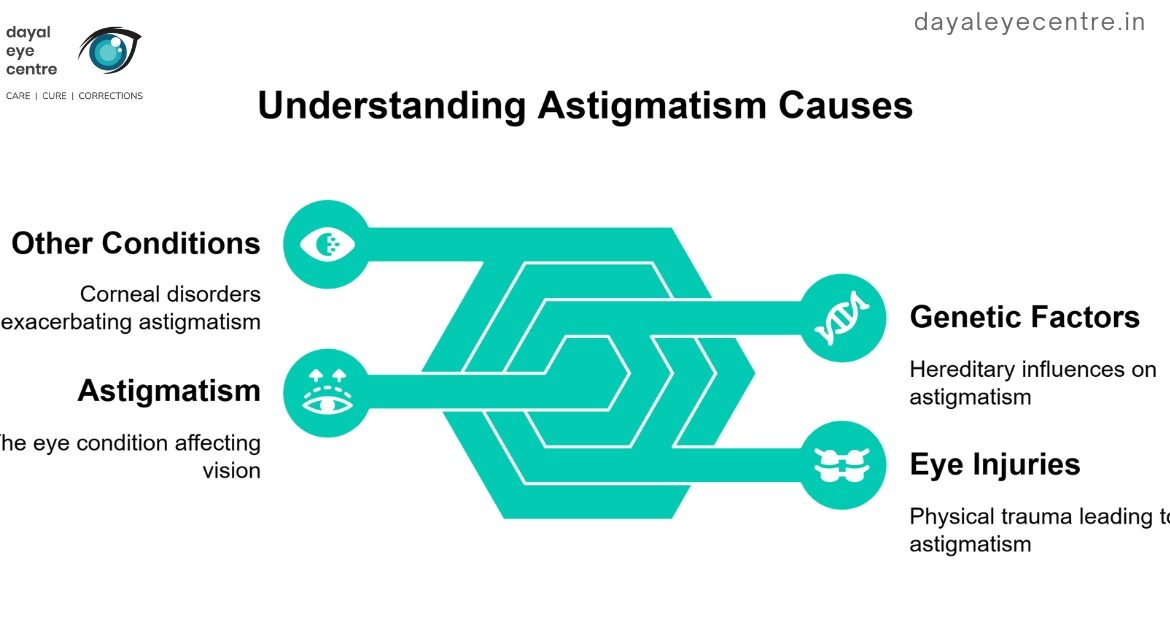
Your astigmatism may come from several sources, ranging from your family history to injuries affecting your eyes. Like any other condition in the body, understanding what causes astigmatism helps determine the right treatment approach.
Genetic Factors and Family History
Your genes play a major role in astigmatism development. Studies show astigmatism has a heritability as high as 60%, with twin research strongly supporting genetic influence. If you have parents with astigmatism, your risk increases significantly – children with astigmatic parents face approximately twice the risk of developing the condition themselves.
The family connection follows a clear pattern: children with two astigmatic parents face considerably higher risks than those with just one affected parent. Your ethnicity also affects your risk level, with studies showing African American and Hispanic children have higher rates of astigmatism than non-Hispanic Caucasian children.
Talk with your eye doctor about early screening if astigmatism runs in your family. Early detection proves especially important for children, as undiagnosed astigmatism can interfere with visual development.
Eye Injuries and Post-Surgical Changes
Physical trauma often leads to astigmatism later in life. Research examining patients with known pre-injury vision status found trauma-induced astigmatism in 21% of eyes following blunt injuries. Small, hard objects like game marbles and stones frequently cause these vision changes.
Your corneal shape may also change after eye surgeries. Procedures that commonly lead to astigmatism include:
- LASIK and other laser vision corrections
- Cataract surgery
- Glaucoma treatments
- Radial keratotomy
Beyond direct injuries, certain habits may gradually reshape your cornea. Frequent eye rubbing stands out as particularly harmful, potentially changing corneal shape over time. This behavior increases your risk not only for astigmatism but also for developing keratoconus.
Keratoconus and Other Corneal Disorders
Keratoconus represents the most common corneal disorder leading to astigmatism. This condition causes your cornea to thin progressively and form a cone shape, significantly distorting how light enters your eye. While everyone with keratoconus has astigmatism, not everyone with astigmatism has keratoconus.
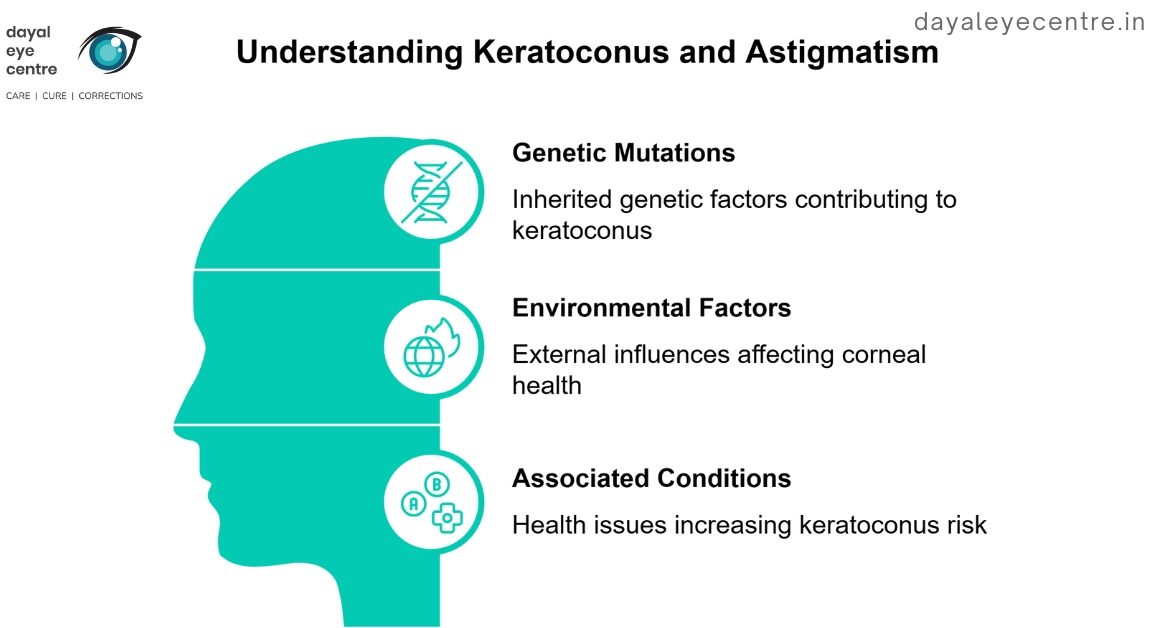
The numbers tell an interesting story: about 8% of keratoconus cases result from genetic mutations, while 92% stem from environmental factors. Your risk increases if you have certain conditions:
- Down syndrome
- Ehlers-Danlos syndrome and connective tissue disorders
- Allergic conditions like atopic dermatitis
- Asthma
- Leber congenital amaurosis
Other corneal disorders that may cause astigmatism include posterior keratoconus, keratoglobus, pellucid marginal degeneration, and various types of keratitis. Though these conditions rarely lead to blindness, they significantly impact daily vision function.
Regular check-ups help detect these conditions early when treatment proves most effective. If you notice progressive vision changes, schedule an appointment with your eye doctor promptly.
Recognizing Astigmatism Symptoms Early
Spotting astigmatism signs early helps prevent worsening symptoms and complications like lazy eye (amblyopia). Though astigmatism affects approximately 30% of people, many people—especially children—don’t realize their vision differs from normal. Learning these warning signs helps you seek timely diagnosis and treatment.

Blurry or Distorted Vision at All Distances
Astigmatism causes blurred or distorted vision that affects both near and distant objects. Unlike nearsightedness, which mainly impacts distance vision, or farsightedness, which primarily affects close-up tasks, astigmatism disrupts vision at all ranges. This occurs because light cannot focus properly on the retina, forming two focal points instead of one.
You might have astigmatism if you notice:
- Text appears fuzzy at any distance
- Straight lines look wavy or bent
- Objects seem stretched or distorted
- Vision feels generally hazy or unclear
In mild cases, these symptoms may be subtle or intermittent. However, even slight astigmatism can gradually strain your visual system. Your eyes must work harder to compensate for the irregular shape, leading to ongoing discomfort and fatigue.
Frequent Headaches and Eye Strain
Headaches after reading, computer use, or other visually demanding tasks often indicate undiagnosed astigmatism. These headaches occur because your eyes constantly struggle to achieve clear focus. An irregularly shaped cornea or lens forces the eye muscles to overwork, resulting in fatigue and discomfort.
Eye strain often feels like your eyes are “constantly working too hard to see.” This extra effort can cause:
- General eye discomfort or irritation
- A frequent need to squint for clearer vision
- Eye fatigue that worsens throughout the day
- Headaches around the eyes or forehead
The connection between astigmatism and headaches is strong. Research shows a higher prevalence of migraine headaches among individuals with astigmatism. If these symptoms occur regularly, it’s important to discuss them with your eye doctor.
Night Vision Difficulties and Halos
Night vision problems are often one of the earliest noticeable signs of astigmatism. In low-light conditions, your pupils dilate, allowing more peripheral light to enter the eye. This exaggerates the blurring and distortion caused by astigmatism, producing distinctive visual effects around light sources.
At night, astigmatism commonly causes:
- Halos or bright rings around streetlights and headlights
- Light sources appearing streaky, with lines radiating outward
- Increased glare from oncoming headlights
- Worsened blur in rainy or low-contrast conditions
For individuals with significant astigmatism, these effects may resemble “comets,” with light rays extending from the center rather than simple halos. This distortion can make night driving especially challenging, as distance judgment becomes more difficult and reaction times may be affected.
Recognizing these symptoms early allows for proper correction with glasses, contact lenses, or, in some cases, surgery. Timely treatment helps prevent further visual strain and improves overall quality of life. If you notice these signs, schedule a comprehensive eye exam promptly.
How Astigmatism Is Diagnosed During an Eye Exam
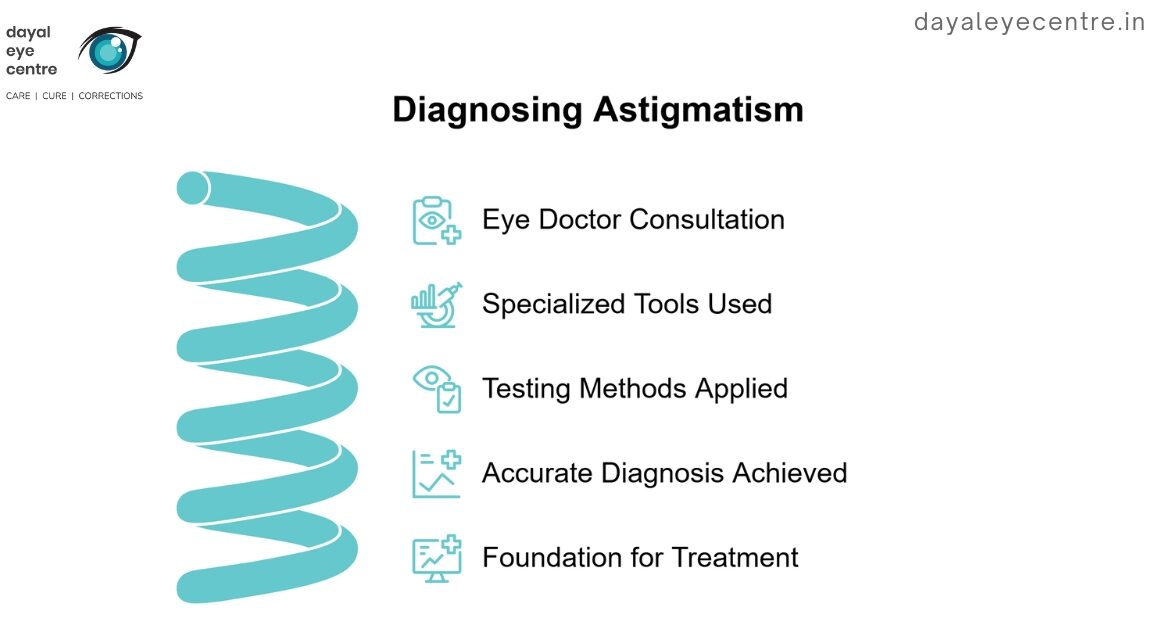
Your eye doctor uses specialized tools and testing methods to diagnose astigmatism accurately. Like any other condition in the body, proper diagnosis forms the foundation for effective treatment.
Visual Acuity Test Using Eye Charts
The first step in your astigmatism diagnosis checks how clearly you see. During this test, you’ll sit 20 feet from an eye chart – typically a Snellen chart with letters that become progressively smaller. You’ll cover one eye at a time and read the smallest line possible.
If you have astigmatism, you might read some letters on a line clearly while struggling with others. This happens because astigmatism affects your vision unevenly. Many patients don’t realize that 20/20 vision simply represents average clarity, not perfect vision as commonly believed.
Phoropter and Autorefractor Measurements
Next, your doctor measures exactly how light bends through your eyes using precision instruments. The phoropter – that large binocular-like device with multiple lenses – helps determine your exact prescription. During this test, you’ll look through different lens combinations while your doctor asks which provides clearer vision. This process identifies both the cylinder power (amount of astigmatism) and axis (direction).
Before using the phoropter, many eye doctors first use an autorefractor. This device automatically measures your refractive error by shining light pulses into your eye and analyzing how they focus on your retina. Autorefractors provide an excellent starting point, accurately detecting astigmatism within 0.2 diopters in many cases.
Corneal Topography and Keratometry
To gain a complete understanding of your astigmatism, your doctor may assess the shape of your cornea. Keratometry measures corneal curvature in two principal directions, helping identify corneal astigmatism. This test uses a keratometer to project light onto the cornea and evaluate its reflection.
In more complex cases, corneal topography may be recommended. Considered the gold standard for detecting subtle corneal changes, this technology creates detailed, color-coded maps of the corneal surface. Warmer colors such as red and orange indicate steeper areas, while cooler colors like green and blue represent flatter regions. Corneal topography is particularly useful for identifying irregular astigmatism that standard tests may miss.
Corneal topography proves particularly valuable for identifying irregular astigmatism that might go undetected through standard tests.
Talk with your eye doctor about which tests you’ll need. The combination of these diagnostic methods helps determine the exact nature of your astigmatism and guides your treatment plan. Most patients find these tests quick and painless, though you might experience temporary blurriness from the eye drops used during the eye exam.
Treatment Options: Glasses, Contacts, and Surgery
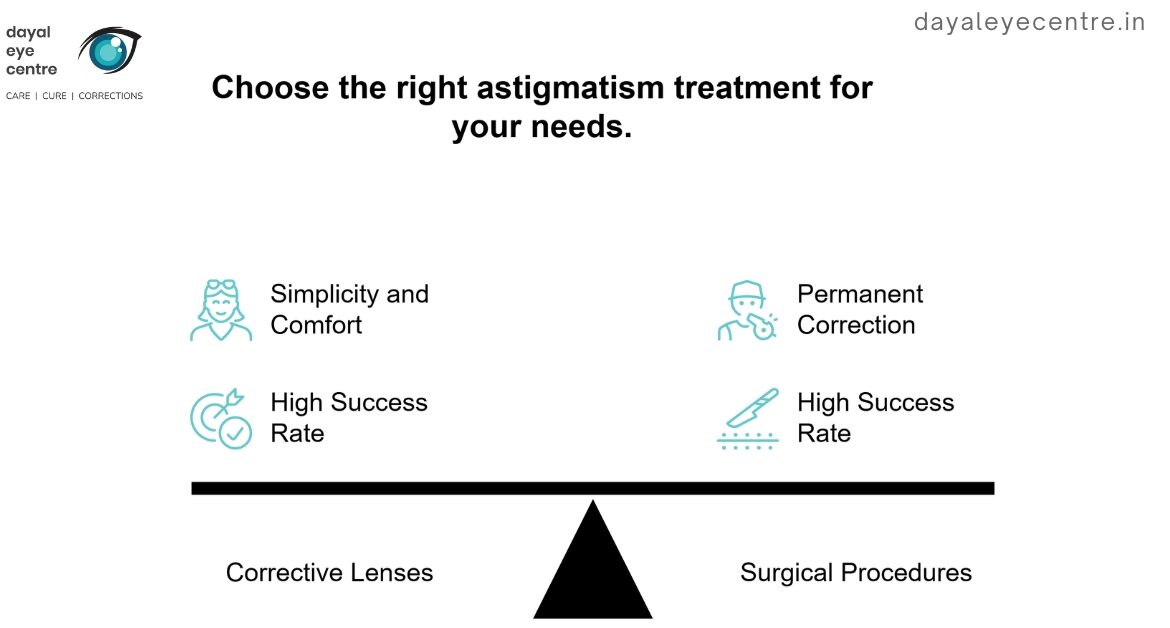
Discuss the most suitable astigmatism treatment with your eye doctor based on your individual needs. Options range from corrective glasses and contact lenses to surgical procedures, with success rates generally exceeding 90% for most treatments.
Toric Lenses vs Rigid Gas Permeable Contacts
Toric contact lenses are specially designed to correct astigmatism by providing different focusing powers in the vertical and horizontal directions. Unlike regular contact lenses, toric lenses have a distinct shape—often compared to a slice of a donut—that precisely addresses the cornea’s irregular curvature. They include built-in stabilizing features to prevent rotation and maintain proper alignment on the eye.
Your vision may appear blurry immediately after inserting toric lenses if they rotate out of position, which is why proper fitting is essential for clear, stable vision.
Rigid Gas Permeable (RGP) lenses, on the other hand, offer superior visual clarity for many people with astigmatism. Unlike soft lenses that conform to corneal irregularities, RGP lenses maintain their shape. This allows them to effectively neutralize corneal astigmatism without requiring a toric design. The trade-off is that RGP lenses usually require a longer adaptation period and may feel less comfortable at first.
Orthokeratology (Ortho-K) for Temporary Correction
Orthokeratology provides an innovative option where specially designed gas-permeable lenses temporarily reshape your cornea overnight. This reshaping effect corrects astigmatism up to 1.50D – about the same as moderate astigmatism.
Most patients notice improved vision after just one night of wearing these lenses, though complete clarity may take several weeks with higher prescriptions. Think of these lenses as “retainers for your eyes” – you wear them while sleeping, then enjoy clearer vision during the day without any lenses.
LASIK, PRK, and SMILE Surgical Procedures
Surgical correction offers permanent solutions for astigmatism:
- LASIK creates a thin flap in your cornea – like turning a page in a book – before reshaping the underlying tissue
- PRK removes the cornea’s surface cells before laser reshaping, making it ideal if you have thinner corneas
- SMILE involves creating a small disc of tissue within your cornea, then removing it through a tiny incision
LASIK can typically correct up to 6.00D of astigmatism, with 91% of patients achieving vision within 1.0 diopter of their target correction.
Risks and Recovery from Refractive Surgery
Like any other procedure in the body, refractive surgeries carry potential side effects. About 20-40% of patients experience temporary dry eyes for six months after surgery. Other possible complications include glare, halos around lights, undercorrection, or overcorrection.
Your recovery timeline varies by procedure:
- After LASIK, most patients return to work within 1-2 days
- PRK requires 3-4 days for initial healing
- SMILE often allows normal activities within days
Serious complications are rare, occurring in less than 1% of cases. Carefully following your doctor’s post-operative instructions helps ensure optimal healing, vision stability, and long-term results.
Take time to discuss all available options with your eye doctor before choosing an astigmatism treatment. Factors such as prescription strength, corneal thickness, lifestyle needs, and budget all play an important role in determining the most suitable approach for your individual situation.

Conclusion
Astigmatism represents one of the most common vision conditions affecting millions worldwide, yet many people don’t fully understand it. Throughout this guide, we’ve explored how this refractive error happens when your cornea or lens has an irregular shape, preventing light from focusing properly on your retina. This creates blurry vision at all distances, headaches, eye strain, and distinctive night vision difficulties that can significantly impact your daily life.
The causes of astigmatism range from genetic factors—with heritability estimates as high as 60%—to eye injuries, surgical complications, and corneal disorders like keratoconus. Though often present from birth, astigmatism can develop or worsen over time, particularly after trauma or certain eye conditions. Recognizing symptoms early helps prevent complications like amblyopia (lazy eye).
Talk with your eye doctor about comprehensive testing beyond standard vision checks. Specialized instruments like phoropters, autorefractors, and corneal topography precisely map your corneal irregularities for accurate diagnosis. After diagnosis, several effective treatment options exist depending on severity and your personal preferences. While glasses with cylindrical lenses offer the simplest solution, contact lens options include specialized toric lenses or rigid gas permeable lenses. For those seeking freedom from corrective eyewear, surgical procedures like LASIK, PRK, and SMILE provide permanent correction with success rates above 90% for most patients.
Like any other condition in the body, astigmatism requires proper care and monitoring. Regular eye examinations remain essential even for mild cases, since untreated astigmatism often leads to increased eye strain, headaches, and potential vision deterioration. For children especially, early detection proves vital as astigmatism can interfere with normal visual development.
The good news is that, with proper diagnosis and appropriate correction, you can enjoy clear, comfortable vision and maintain good eye health throughout your life. Book an appointment with your eye doctor if you notice symptoms such as blurry vision, headaches after reading, or halos around lights at night. With regular check-ups and timely treatment, most people with astigmatism lead normal lives with excellent visual clarity.
FAQs
-
What are the common treatment options for astigmatism?
Treatment options for astigmatism include corrective lenses (eyeglasses or contact lenses), refractive surgery (such as LASIK or PRK), and orthokeratology. The best option depends on the severity of astigmatism and individual preferences. Consult an eye doctor to determine the most suitable treatment for your specific case.
-
Can astigmatism be prevented?
Astigmatism cannot be prevented as its causes are often genetic or related to natural eye development. However, regular eye check-ups can help detect and manage astigmatism early, preventing potential complications or vision deterioration.
-
How does astigmatism affect night vision?
Astigmatism can significantly impact night vision, causing halos or streaks around lights, increased glare from headlights, and difficulty judging distances in low-light conditions. These symptoms are often more noticeable at night due to pupil dilation, which exacerbates the effects of astigmatism.
-
Is astigmatism hereditary?
Yes, astigmatism has a strong genetic component. Studies show that children with astigmatic parents have a higher risk of developing the condition. However, environmental factors and eye injuries can also contribute to astigmatism development.
-
How is astigmatism diagnosed during an eye exam?
Astigmatism is diagnosed through a comprehensive eye exam that includes visual acuity tests, refraction assessments using a phoropter and autorefractor, and corneal mapping techniques like keratometry or corneal topography. These tests help determine the exact nature and severity of astigmatism for proper treatment.