Talk with your eye doctor about whether SMILE or LASIK is right for your high myopia. 92% of patients achieve 20/20 vision or better after SMILE surgery. More than 5 million SMILE procedures worldwide demonstrate its effectiveness for treating severe nearsightedness.
Both SMILE and LASIK can correct vision within 1 diopter for most patients. Each procedure offers distinct benefits – LASIK provides decades of proven results since its 1995 FDA approval, while SMILE, approved in 2016, shows advantages like reduced dry eye complications.
Your choice between these procedures depends on several factors specific to your eyes and vision needs. This guide examines how SMILE and LASIK compare for high myopia treatment, looking at their effectiveness, recovery time, and long-term results. Understanding these differences helps you make the best decision for your vision correction.
Understanding High Myopia and Treatment Options
Our natural lens helps focus light properly on the retina. High myopia occurs when the eyeball becomes too long or the cornea becomes too steep, causing severe nearsightedness. Eye doctors define this condition as a refractive error of -6.00 diopters or greater. The eye’s axial length typically exceeds 26mm, which can lead to various eye complications.
People with high myopia experience more noticeable vision problems than those with mild nearsightedness. You might notice blurred distant vision, frequent eyestrain, headaches, and trouble seeing at night. While genetics plays a major role, activities like prolonged near work and limited outdoor time can worsen the condition.
What is high myopia?
The way smudgy lenses cause blurring of vision, high myopia makes your vision increasingly unclear without correction. By 2050, this condition will affect 9.8% of the global population, reaching 938 million people. Young adults, especially in urban East and Southeast Asian countries, show the highest rates.
Children with high myopia need special attention. Studies show concerning results – 54% of highly myopic children aged 3-10 years had underlying systemic conditions, while 38% showed eye problems like displaced lenses and retinal issues.
Why special consideration for high myopia treatment?
High myopia requires careful monitoring because it increases your risk of serious eye conditions. The chance of developing glaucoma rises by nearly 50% compared to those with low myopia. Your risk of needing cataract surgery also increases by 17%.
Most concerning is the risk of retinal detachment, which becomes five to six times higher with high myopia. As your eye length increases beyond 26mm, complications become more likely. For example, the risk of macular problems doubles in the 1-3D group compared to normal vision, becomes 10 times higher in the 3-5D group, and rises to 40 times greater beyond 5D.
When considering vision correction, SMILE can treat myopia up to -10.0D and astigmatism up to -3.00D. SMILE’s design may provide safer surgery for highly myopic eyes by reducing the risk of corneal weakening.
Your myopia might continue changing until ages 20-30. Even after stabilizing, you’ll need regular check-ups since high myopia can lead to serious vision problems later in life. Talk with your eye doctor about creating a monitoring schedule that works for you.
Key Differences Between Relex Smile and Opti Lasik
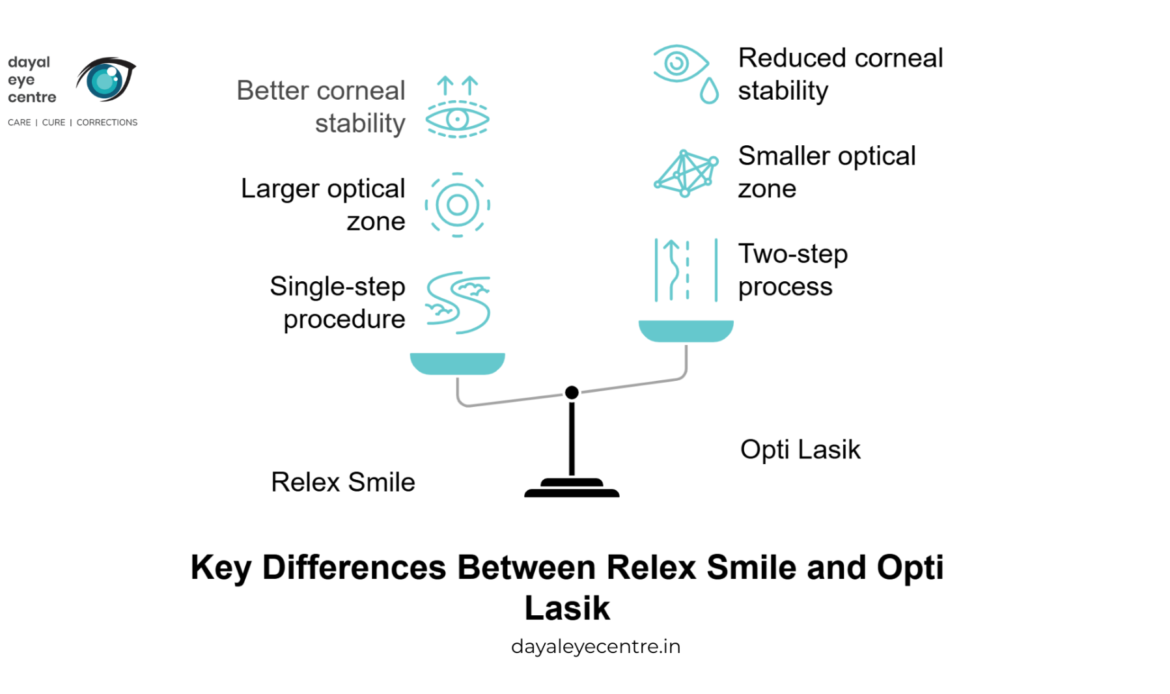
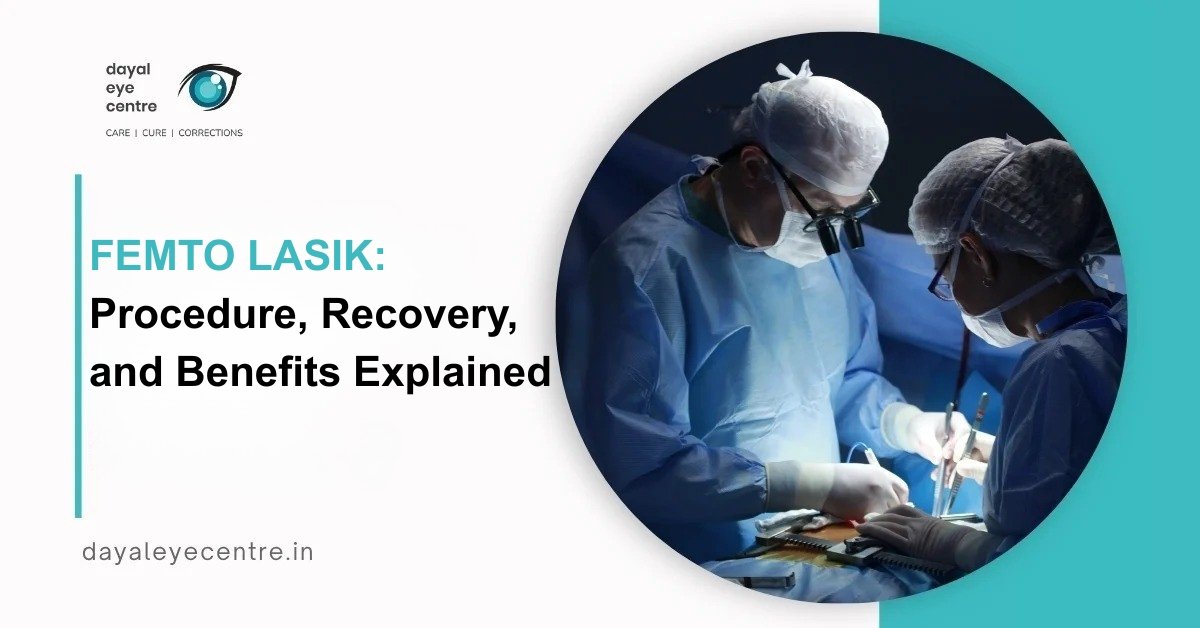
SMILE and LASIK use different approaches to correct your vision. SMILE creates a small lens-shaped tissue (lenticule) under your cornea, removing it through a tiny 2-3mm opening. LASIK, however, creates a larger corneal flap measuring 22-25mm (270 degrees).
Basic procedure comparison
The way smudgy lenses cause blurring of vision, both procedures aim to reshape your cornea for clearer sight. SMILE uses a single-step, bladeless approach. During surgery, the doctor uses a femtosecond laser to create a precise lenticule in your cornea’s middle layer. This small piece of tissue is then removed through a minimal incision, permanently improving your vision.
LASIK involves two separate steps. First, your doctor creates a corneal flap using either a microkeratome or femtosecond laser. Then, an excimer laser reshapes your cornea to correct vision problems. While this two-step process takes longer, LASIK offers quick visual recovery – 95% of patients achieve 20/20 vision within one week.
Technology used
Like a camera needs the right lens for perfect photos, each procedure uses specific technology. SMILE relies on a single femtosecond laser system – the VisuMax. This streamlined approach may reduce both surgery time and costs.
LASIK uses two different laser systems: one for creating the flap and another for reshaping your cornea. Though more complex, this dual-laser system allows for customized treatment based on your unique corneal characteristics.
Treatment zones
Our natural lens helps focus light properly, and these procedures create specific zones for vision correction. SMILE consistently creates larger functional optical zones compared to LASIK. Studies show SMILE achieves a 5.62mm zone, while LASIK reaches 4.78mm. Larger zones typically mean better night vision and less glare.
SMILE shows better stability in these treatment zones. When planning a 6.5mm zone, SMILE comes closer to the target, being only 1.45mm smaller versus LASIK’s 1.67mm difference. Most importantly, 93.8% of SMILE patients achieve their planned vision correction within ±0.5D.
For high myopia correction, SMILE offers a key advantage. The procedure maintains more of your cornea’s front tissue, providing better biomechanical stability. This becomes especially important for severe vision corrections, as larger corrections usually result in smaller treatment zones.
Safety and Success Rates for High Myopia
Talk with your eye doctor about the safety and effectiveness of both SMILE and LASIK procedures for treating high myopia. Clinical studies spanning many years help us understand what you can expect from each procedure.
Clinical study results
Like any other procedure in the body, both surgeries show impressive safety records. A 12-year study shows that conventional LASIK maintains excellent outcomes. About 53% of eyes achieve correction within 0.5 D of the target, while 75% reach within 1.0 D.
SMILE demonstrates similar success, with 93.8% of cases achieving the planned refractive value of ±0.5 D, and all patients reaching within ±1.0 D. Most encouraging for patients considering SMILE, 92% achieve 20/20 vision or better.
When comparing both procedures, SMILE shows less under-correction and regression than FS-LASIK. For treating high myopia specifically, SMILE’s stability makes it increasingly popular among eye surgeons.
Risk factors comparison
To deal with concerns about lasik surgery, understanding possible complications helps you make an informed choice. SMILE typically causes fewer dry eye problems. Your tears stay stable longer after SMILE compared to FS-LASIK at both 1 and 6 months after surgery.
Your corneal sensitivity recovers better with SMILE. Studies show better sensitivity at several checkpoints:
- 1 week after surgery
- 1 month post-procedure
- 3 months following treatment
- 6 months after operation
SMILE’s smaller incision – 80% smaller than LASIK’s flap – helps maintain your cornea’s strength, reducing risks of thinning and bulging. This becomes especially important if you have high myopia, where larger corrections are needed.
Both procedures show strong safety measures. LASIK’s safety index reaches 1.05 ± 0.12, with 73.7% keeping their vision unchanged and 21.9% seeing even better. SMILE shows similar success with safety and effectiveness scores of 1.16 ±0.14 and 1.07 ±0.16.
However, some LASIK patients – about 10% – experience slight vision changes over time. These changes usually stabilize, showing only a small -0.51 D difference between 1 and 24 months after surgery.
Your surgeon’s experience matters significantly. Complications stay below 1% for SMILE when performed by experienced doctors. Both procedures maintain their results long-term, with neither wearing off over time.
Recovery and Healing Process
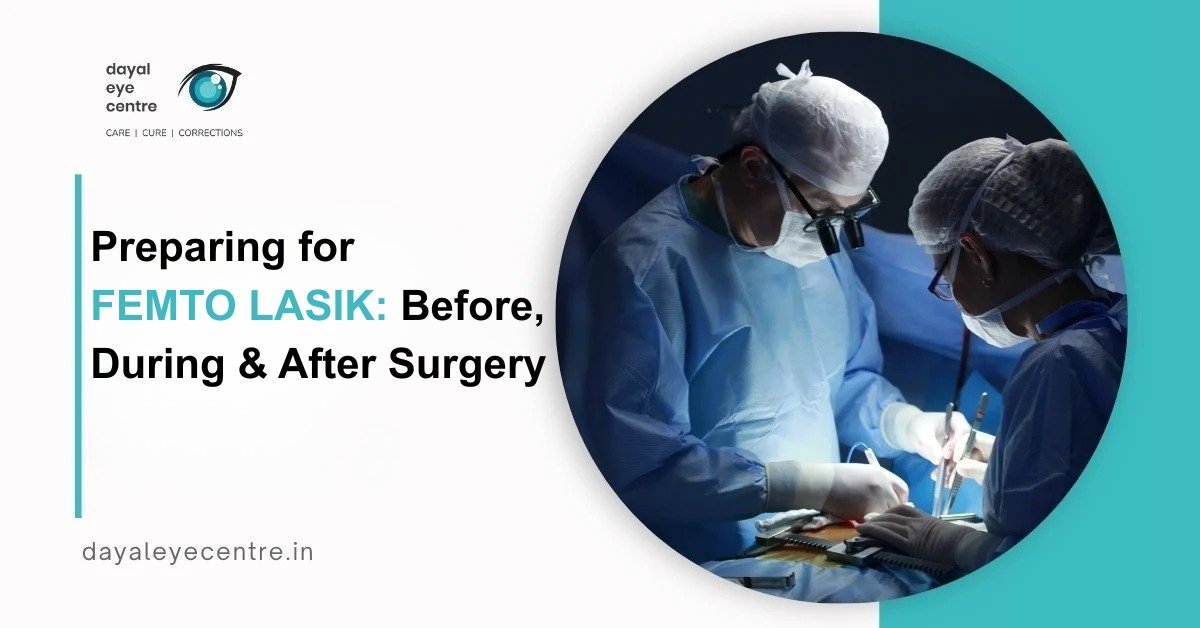
After the procedure, you’ll have some discomfort and vision changes that improve over time. Understanding what to expect helps you prepare for your recovery journey.
Immediate post-surgery experience
Like any other procedure in the body, your vision will be blurry right after surgery, but improves within 24 hours. Most patients see better within hours – studies show 80% notice substantial vision improvement very quickly.
During your first few days, you might experience:
- Sensitivity to light lasting several hours
- Mild discomfort that eye drops can help manage
- Changes in your vision clarity
Long-term recovery timeline
Your healing continues over several weeks. Most people’s vision becomes stable within 1-2 months, though high myopia may need up to 3 months for complete recovery.
To monitor your progress, your eye doctor will schedule:
- First day: Quick check-up
- First week: Detailed eye examination
- One month: Progress check
- Two months: Final review
Both SMILE and LASIK patients report feeling more comfortable after the first month. Your eyes need time to adapt fully, and vision quality continues improving throughout your recovery.
Return to daily activities
We can resume most activities gradually after surgery. After SMILE, you can typically return to:
Within 2 days:
- Reading and computer use
- Basic eye makeup
- Normal showering
Within 3-5 days:
- Driving your car
- Light exercise
- Regular work
Some activities need more waiting time. Don’t swim or do water activities for 6 weeks after surgery. Contact sports also need a 6-week wait for complete healing.
Taking care of your eyes remains essential during recovery. Use your prescribed eye drops – usually two different kinds for at least the first week. Wear protective sunglasses outdoors for one month to shield your eyes from UV light.
SMILE shows better results for dry eye problems. Your eyes recover faster from inflammation and dryness compared to LASIK. Studies show better tear film stability and longer-lasting tears during check-ups.
For best results, keep your eyes clean, avoid rubbing them, and take breaks from screen time. Most importantly, attend all your follow-up appointments so your doctor can check your healing progress.
Cost and Value Analysis
Talk with your eye doctor about the financial aspects of vision correction surgery. Understanding costs, insurance coverage, and long-term value helps you plan for this investment in your vision.
Procedure costs
Both SMILE and LASIK procedures cost about INR 168,760 per eye. Your final cost depends on:
- Your surgeon’s experience and reputation
- Your clinic’s location
- The technology used for your procedure
- Pre-surgery tests and follow-up care
Insurance coverage options
The way smudgy lenses cause blurring of vision, unclear insurance terms can confuse patients. Most health insurance now covers laser vision correction when you meet specific requirements:
- Your vision prescription is 7.5 diopters or higher
- Your vision problems come from an injury or accident
- You need correction after surgery complications
- You can’t wear glasses or contact lenses due to physical limitations
Before surgery, you’ll need to complete waiting periods of 2-3 years. Your insurance provider needs proof that the surgery is medically necessary before approving coverage.
Conclusion
Talk with your eye doctor about whether SMILE or LASIK is right for your high myopia. Both procedures show excellent results, though SMILE offers advantages with its smaller incision and better corneal stability. 92% of SMILE patients achieve 20/20 vision or better, with fewer dry eye problems and quicker recovery.
Our natural lens helps focus light properly, and these procedures aim to restore that clarity. While the initial cost might seem high, think about the long-term savings compared to years of buying glasses and contact lenses. Many eye centers offer payment plans to help manage these costs.
Like any other procedure in the body, safety comes first in vision correction. Studies over ten years show both procedures work well, especially for high myopia. However, your unique eye characteristics and daily activities should guide your choice. Schedule a consultation with our expert team to learn which procedure suits your eyes best.
Remember, successful results depend on choosing experienced doctors and following their care instructions carefully. With this understanding of procedure differences, recovery time, and costs, you can make the best choice for your vision needs.
FAQs
1. What are the main differences between SMILE and LASIK for treating high myopia?
SMILE is a minimally invasive, flapless procedure that uses a single femtosecond laser, while LASIK creates a corneal flap and uses two laser systems. SMILE typically results in fewer dry eye symptoms and faster corneal sensitivity recovery compared to LASIK.
2. How do the success rates compare between SMILE and LASIK for high myopia correction?
Both procedures show high success rates, with SMILE achieving 93.8% of cases within ±0.5 D of the target refraction and 92% of patients attaining 20/20 vision or better. LASIK demonstrates similar effectiveness, with 53% of eyes achieving correction within 0.5 D of the target.
3. What are the recovery timelines for SMILE and LASIK procedures?
SMILE patients typically experience substantial vision improvement within hours, with 80% noticing significant changes within 24 hours. Full visual recovery may take 1-3 months. LASIK often provides faster initial visual recovery, with 95% of patients achieving 20/20 vision within one week.
4. Are there any limitations on the degree of myopia that can be treated with SMILE or LASIK?
SMILE can address myopia up to -10.0 D and myopic astigmatism up to -3.00 D. LASIK can typically treat up to -12.00 D of myopia, depending on the technology used. However, the suitability for either procedure depends on various factors, including corneal thickness and overall eye health.
5. How do the costs of SMILE and LASIK procedures compare?
The costs for both SMILE and LASIK are generally comparable, averaging around INR 168,760 per eye. However, prices can vary based on factors such as the surgeon’s expertise, clinic location, and technology used. Many clinics offer flexible payment options to make these procedures more accessible.