Refractive errors affect millions of Americans, making them the most common vision problem in the United States. These vision problems occur when the shape of your eye prevents light from focusing correctly on your retina. While refractive errors impact both children and adults, only about one-third of people worldwide with distance vision problems receive proper correction through glasses.
The impact of uncorrected vision extends beyond daily activities. Global productivity losses reach US$ 244 billion annually due to untreated refractive errors. Most eye doctors suggest early diagnosis since these vision problems respond well to correction when identified promptly.
Your eyes can develop four main types of refractive errors:
- Nearsightedness (difficulty seeing distant objects)
- Farsightedness (trouble focusing on close objects)
- Astigmatism (distorted vision at any distance)
- Presbyopia (age-related difficulty with near vision)
Talk with your eye doctor about whether you have symptoms of refractive errors. Most vision problems can be corrected with proper glasses or contact lenses. The key lies in recognizing early warning signs and getting regular eye examinations to protect your vision before these problems affect your daily activities and work.
Understanding Refractive Errors
Our natural lens is like a camera lens – crystal clear in most of us. The way smudgy camera lenses cause blurry pictures, problems with eye shape prevent light from focusing correctly on your retina. These vision problems affect both children and adults, making them among the most prevalent eye conditions globally.
The impact of uncorrected refractive errors extends beyond blurry vision. These vision problems significantly affect academic performance in children, reduce workforce participation, and can lead to social isolation in older adults.
How Your Eyes Work
Your eye works much like a sophisticated camera. Light enters through the cornea – the clear front layer of your eye. This light then travels through several parts:
- The aqueous humor (a watery substance)
- The pupil (the black opening in your iris)
- The lens (which adjusts its shape to focus light)
- The vitreous (clear jelly-like substance)
The light finally reaches your retina, where specialized cells transform it into electrical signals. These signals travel through your optic nerve to your brain, which processes them into the images you see.
We have two types of vision cells in our retina:
- Rods: Help us see in dim light and detect brightness differences
- Cones: More sensitive cells that help us see details and colors
Warning Signs of Vision Problems
Most eye doctors suggest watching for early signs since about 80% of what we learn comes through our eyes. Talk with your eye doctor if you notice:
Physical Signs:
- Blurred vision (either up close, at a distance, or both)
- Double vision
- Frequent headaches
- Eye strain
- Eye pain
Changes in Children’s Behavior: Children might not realize their vision is deteriorating. Parents should watch for:
- Difficulty concentrating
- Sudden decline in school performance
- Squinting while reading or watching television
Like any other health condition, refractive errors can develop at any age – even if you’ve previously had clear vision. Regular eye check-ups remain crucial for maintaining optimal eye health.
The good news? Reduced vision from refractive errors can be fully corrected with glasses, contact lenses, or laser surgery. However, only about 36% of people worldwide with distance vision impairment have received proper correction.
Main Types of Refractive Errors
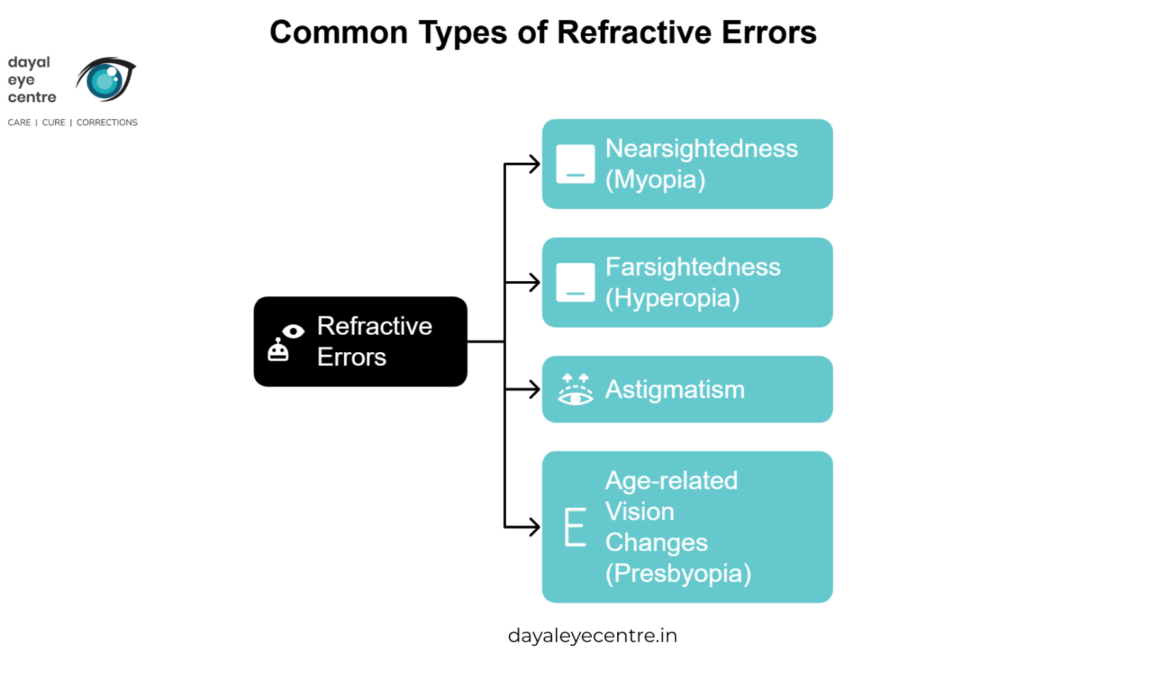
Your eye doctor can identify four main types of refractive errors during an eye examination. Each affects your vision differently and requires specific correction methods.
Nearsightedness (Myopia)
When your eyeball grows too long from front to back, light focuses in front of your retina instead of directly on it. This makes distant objects appear blurry while close objects remain clear. More than 40% of Americans experience nearsightedness, and this number continues rising, especially among school-aged children.
Most children develop myopia between ages 6 and 14, though it usually stabilizes by early twenties. Talk with your eye doctor about myopia if you spend long hours on close-up work or have parents with this condition. While regular myopia responds well to glasses, a rare inherited form called pathologic myopia can lead to serious complications like retinal detachment and glaucoma.
Farsightedness (Hyperopia)
Farsightedness makes nearby objects appear blurry while distant vision stays clearer. About 4.6% of children and 30.9% of adults worldwide have this condition. Your eye doctor can detect if your eyeball is shorter than normal or if your cornea is too flat.
Watch for these common signs of hyperopia:
- Headaches during close work
- Eye strain with near tasks
- Blurred vision at any distance
- Trouble focusing on nearby objects
Astigmatism
Unlike other vision problems, astigmatism occurs when your cornea or lens has an irregular shape. Think of a normal eye as round like a baseball – with astigmatism, it becomes shaped more like a football. This affects about one in three people, causing uneven light focus and blurred vision at all distances.
You can have astigmatism along with other vision problems, and it may develop at any age. While usually inherited, eye injuries or certain conditions like keratoconus can also cause astigmatism.
Age-Related Vision Changes
Our eyes naturally change as we age. Around age 40, most people notice presbyopia – an age-related form of farsightedness. Your lens becomes less flexible, making it harder to focus on close objects.
Between ages 40-60, vision typically shifts toward farsightedness by about +0.50DS every decade. Interestingly, some people over 70 experience a shift toward nearsightedness of up to –0.70DS.
Astigmatism also changes with age, increasing roughly 0.25DC each decade. By age 85, most people have about 1.25D of astigmatism. These changes show how our vision naturally evolves throughout life.
Risk Factors and Causes
Most eye doctors suggest understanding both inherited traits and environmental factors that affect your vision throughout life. Talk with your eye doctor about your specific risk factors for refractive errors.
Genetic Factors
Our eye shape and vision characteristics often run in families. Twin studies show that genetic factors account for up to 86% of variance in myopia and hyperopia. Children with nearsighted parents face higher risks of developing vision problems themselves.
Your eye doctor may consider these genetic patterns:
- Over 261 genetic disorders include myopia as a symptom
- Groups of genes affect how eye tissue develops
- Specific inherited traits determine how eyes respond to environmental factors
The way smudgy camera lenses blur photos, inherited eye shapes can affect how clearly we see. Some people inherit not just vision problems but also increased sensitivity to environmental factors.
Environmental Triggers
Beyond family history, several factors affect your vision health:
Education and Screen Time University graduates show 2.31 times higher odds of developing myopia compared to those with basic education. Like a camera lens that stays focused too long on close objects, prolonged screen time and close-up work strain your eyes.
Outdoor Activities Natural light helps protect vision health:
- Five hours of daily outdoor time reduces myopia risk
- Limited outdoor exposure increases vision problems
- Natural light exposure benefits eyes more than specific activities
Environmental Hazards Watch for these vision risks:
- Air pollution irritates eyes and blurs vision
- UV rays can damage your retina and cornea
- Airborne particles cause eye irritation
- Smoke exposure threatens eye health
Daily Habits Your lifestyle choices affect vision:
- Long periods of close work strain eye muscles
- Poor lighting while reading causes eye stress
- Too few breaks during visual tasks harm eye health
Recent studies show parents pass down not just genes but also vision-affecting habits to children. Medical conditions like diabetes can double your risk of developing myopia. Some jobs requiring detailed visual work show higher rates of vision problems.
Early Warning Signs
Talk with your eye doctor if you notice changes in your vision. School vision screenings miss up to 75% of children with vision problems that could affect their learning.
Physical Signs to Watch For
Your body often signals vision problems through specific symptoms. Watch for:
Changes in Vision:
- Blurry or wavy vision at any distance
- Seeing double (diplopia)
- Halos around bright lights
- Trouble focusing on objects
Discomfort Signs:
- Headaches that won’t go away
- Eye strain, especially during close work
- Eye pain or soreness
- Frequent eye rubbing
About 10% of school-aged children have moderate to severe convergence insufficiency, making it hard to focus on close tasks.
Changes in Behavior
Children might not tell you their vision is getting worse. Parents should watch for changes in behavior. Children with vision problems are twice as likely to receive an ADHD diagnosis.
Watch for These Signs:
- Squinting or tilting head to see better
- Holding books unusually close
- Moving carefully around furniture
- Avoiding social activities
Most eye doctors suggest careful observation since 40% of children labeled with learning disabilities actually have uncorrected vision problems. Vision problems can make children three times more likely to be diagnosed with ADHD.
When Your Eyes Need Immediate Care
Some eye problems need urgent attention. See your eye doctor right away if you notice:
Emergency Warning Signs:
- Sudden loss of vision
- Severe eye pain that over-the-counter medicine doesn’t help
- New flashes or many more floaters
- Sudden halos or rainbow rings around lights
Schedule a Check-up For:
- Blurry vision that doesn’t go away
- Headaches during visual tasks
- Changes in night vision
- Loss of side vision
Like any other health condition, untreated vision problems can lead to:
- Higher risk of driving accidents
- Problems judging distances
- Difficulty with sports
- Lower self-esteem and social challenges
Remember, vision problems shouldn’t be accepted as just part of getting older. Regular eye check-ups and prompt attention to warning signs help maintain clear vision throughout your life.
Prevention and Eye Care Tips
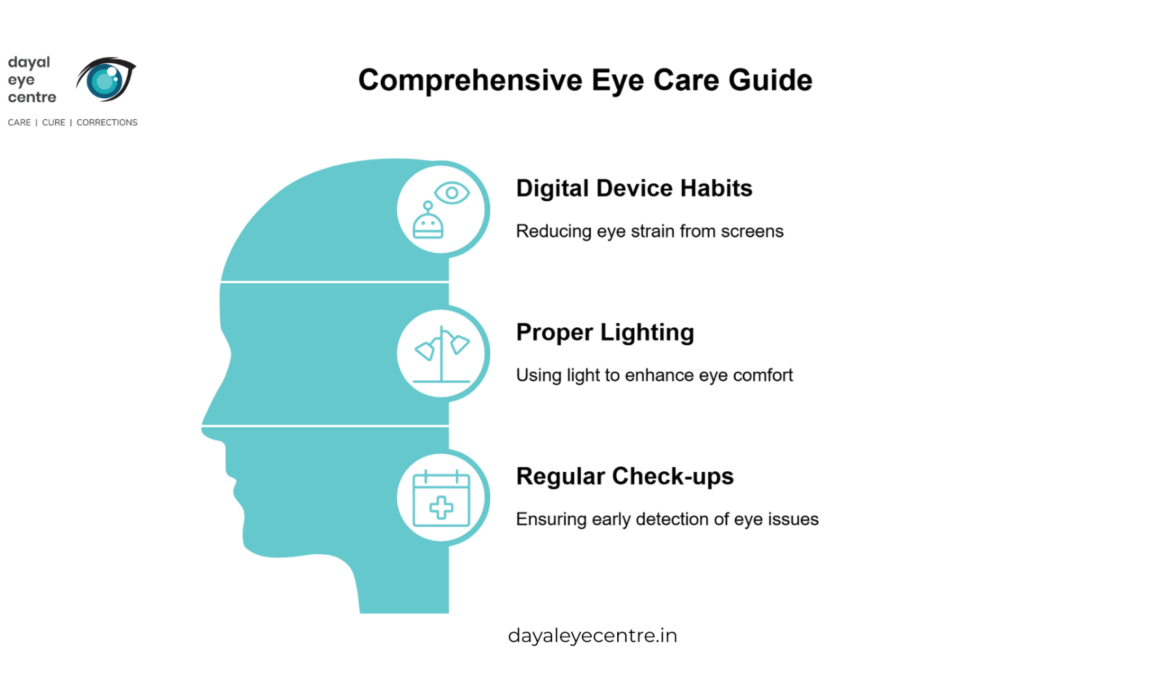
Our eyes need regular care to stay healthy. Most eye doctors suggest simple daily habits to protect your vision.
Digital Device Habits
We blink less often while using screens, which can cause dry eyes and discomfort. To protect your vision:
Follow the 20-20-20 rule: Every 20 minutes, look at something 20 feet away for at least 20 seconds. This helps your eye muscles relax and reduces strain.
Position Your Screen Properly: Keep your screen at arm’s length (20-24 inches) away, with the top at or slightly below eye level. This helps maintain natural eye position and reduces neck strain.
Adjust Your Display: Match screen brightness to your surroundings and use larger text sizes to reduce eye strain. Anti-glare filters can help minimize reflections that tire your eyes.
Proper Lighting
Like a camera needs good lighting for clear pictures, our eyes work best with proper illumination. Natural daylight provides the best light for your eyes. Try these adjustments:
Create Eye-Friendly Spaces:
- Place your desk perpendicular to windows for natural light without glare
- Use adjustable task lights for detailed work
- Choose LED bulbs that match natural daylight (5000-6500 Kelvin)
Avoid Harsh Light: Fluorescent lights can strain your eyes with rapid flickering. Use indirect lighting that spreads evenly across your workspace.
Regular Eye Check-ups
Talk with your eye doctor about scheduling regular comprehensive eye exams. These check-ups can find vision problems before you notice symptoms.
When to Get Check-ups:
- See your eye doctor every two years
- Schedule more frequent visits if you have:
- Existing vision problems
- Diabetes
- High blood pressure
During these visits, your eye doctor checks both your vision sharpness and overall eye health. Finding problems early means better chances for correction with glasses, contacts, or other treatments.
Remember, protecting your vision works like maintaining any other part of your health. Regular check-ups, good lighting, and healthy screen habits help keep your eyes working well.
Conclusion
Like a camera lens that needs regular maintenance, your eyes require ongoing care to stay healthy. While family history plays a role in vision problems, your daily habits and environment significantly affect eye health. Regular eye examinations help maintain clear vision, especially since many eye problems develop slowly without obvious signs.
To deal with symptoms of refractive errors and protect your vision:
- Follow the 20-20-20 rule during screen time
- Keep proper distance from digital devices
- Ensure good lighting in your workspace
- Schedule regular eye check-ups
Most eye doctors suggest considering these steps as essential, not optional. Vision problems shouldn’t be accepted as inevitable parts of aging. Book an appointment with Daya Eye Center for a thorough eye examination that can detect and address vision problems early. Remember, your eyes respond well to proper care, helping you maintain clear, comfortable vision throughout your life.
FAQs
1. What are the main types of refractive errors?
There are four primary types of refractive errors: nearsightedness (myopia), farsightedness (hyperopia), astigmatism, and presbyopia. Each affects vision differently, with myopia causing difficulty seeing distant objects, hyperopia affecting near vision, astigmatism distorting vision at all distances, and presbyopia being an age-related condition affecting near vision.
2. Can refractive errors be prevented?
While it’s not usually possible to prevent refractive errors entirely, as they’re often related to eye shape and genetics, you can take steps to maintain eye health. This includes following good digital device habits, ensuring proper lighting, and getting regular eye check-ups to detect and address vision changes early.
3. What are some early warning signs of vision problems?
Early signs of vision problems can include blurred or double vision, frequent headaches, eye strain, difficulty focusing, and behavioral changes like squinting or holding reading materials closer. If you notice these symptoms, it’s important to consult an eye care professional for a comprehensive examination.
4. How often should I have my eyes checked?
Adults should have an eye exam at least once every two years. However, more frequent check-ups may be necessary for those with existing vision problems, diabetes, or high blood pressure. Regular eye exams can detect refractive errors and other eye conditions before noticeable symptoms develop.
5. What is the 20-20-20 rule, and how does it help eye health?
The 20-20-20 rule is a simple practice to reduce eye strain, especially when using digital devices. Every 20 minutes, take a 20-second break to look at something 20 feet away. This helps relax your eye muscles and reduces fatigue associated with prolonged screen time, contributing to better overall eye health.