
Errors of refraction affect nearly 1.5 billion people worldwide, making them among the most common vision problems today. These vision issues show up in many ways – from blurry vision and constant headaches to eye strain and frequent squinting. Daily activities become challenging when vision isn’t clear.
Refractive errors make simple tasks difficult, whether reading a book or looking at digital screens. Children often struggle silently with these vision problems, leading to poor school performance and lower grades. The natural aging process means most people will develop some form of refractive error by their mid-50s. Presbyopia affects almost 100% of people between ages 55-65, making near vision tasks increasingly difficult.
Talk with your eye doctor about whether you have symptoms of refractive errors. This guide explains the key signs to watch for, how they appear at different ages, and when to seek professional help. Recognizing these signs early helps maintain good vision through proper treatment.
Common Signs of Refractive Errors
Our eyes work like a camera lens, focusing light to create clear images. When refractive errors develop, this focusing system doesn’t work properly. Let’s look at the main signs that indicate you might have a refractive error.
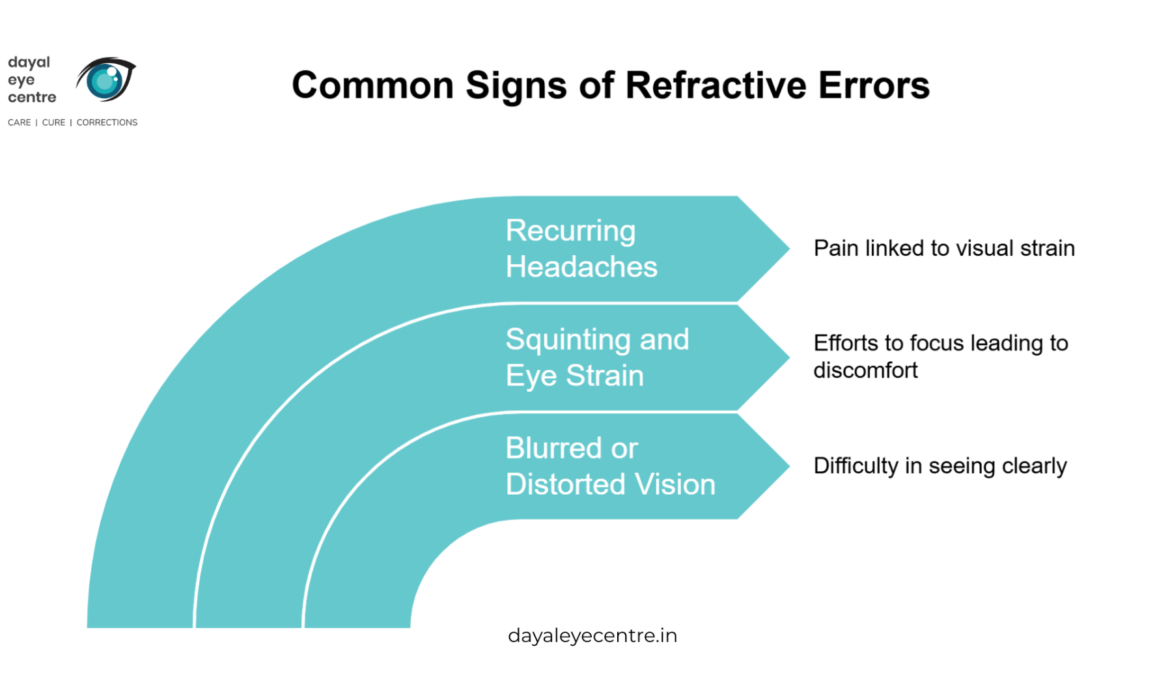
Blurred or distorted vision
Blurred vision stands as the primary indicator of refractive errors. Each type of refractive error creates different vision challenges. Nearsightedness makes distant objects appear fuzzy, while farsightedness affects close-up vision. With astigmatism, both near and far objects might look distorted or wavy.
For some people, bright lights appear with halos or glare, suggesting vision problems. Others experience double vision, making it difficult to focus on single objects. These vision changes often vary throughout the day, similar to how a camera struggles to focus in different conditions.
Squinting and eye strain
Eye strain commonly occurs during activities requiring focused vision. You might find yourself squinting frequently – your body’s natural attempt to sharpen blurry images. Watch for increased squinting during:
- Reading printed materials
- Working on computer screens
- Focusing on detailed tasks
- Viewing distant objects
After prolonged visual tasks, your eyes may feel tired and uncomfortable. Even with your current glasses, you might notice eye discomfort, suggesting it’s time for an updated prescription.
Recurring headaches
Vision-related headaches follow specific patterns. They typically develop during the second half of the day with moderate intensity. Most people feel this pain in the front of their head, creating a pressing sensation.
Your risk of these headaches increases with:
- Extended screen time
- Combined vision problems
- Moderate hyperopia
- Astigmatism
The good news? Proper vision correction significantly improves headache symptoms. Studies show that 72.5% of individuals experience relief after receiving appropriate vision correction.
These symptoms often become more noticeable during specific activities. Many people struggle more while reading or using digital devices. Poor lighting or nighttime activities can make these challenges worse.
Talk with your eye doctor if you notice any of these signs. Untreated refractive errors can lead to other eye problems, including glaucoma, lazy eye, or crossed eyes. Early detection and correction help prevent these complications.
How Symptoms Vary By Age
Our natural lens changes throughout life, creating different vision challenges at each age. Understanding these age-specific patterns helps identify vision problems early.
Signs in young children
Young children rarely tell us about their vision problems. Parents and caregivers need to watch for warning signs like excessive blinking, eye rubbing, and frequent squinting. A sudden drop in school performance or trouble concentrating might point to underlying vision issues.
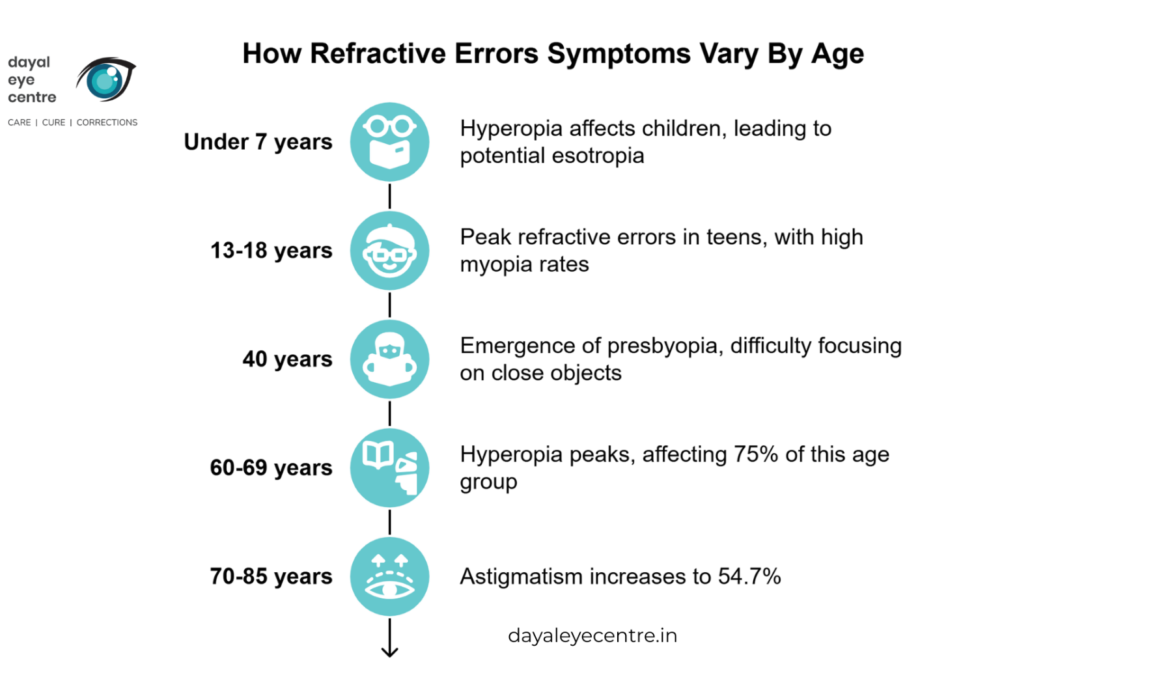
Hyperopia (farsightedness) commonly affects children under 7 years. While mild hyperopia often appears normal during childhood, some children develop esotropia – a condition where eyes turn inward. This affects 61.1% of children aged 0-6 years and 51.7% of those aged 7-12 years.
Teen vision changes
The teenage years bring critical changes to vision development. Refractive errors reach their peak between ages 13-18, affecting 27.7% of teens. Myopia shows particularly high numbers, appearing in 67.8% of this age group.
During these years, decreased vision becomes a primary concern for 53% of teens. Headaches grow more common, especially affecting teens with:
- Astigmatism (58.1%)
- Hyperopia (34%)
- Myopia (gradually increasing through teen years)
Adult eye problems
Vision challenges take new forms in adulthood. Between ages 19-24, refractive errors affect 24.8% of adults. Headaches become more noticeable, with:
- 44.1% of adults aged 19-24 with hyperopia reporting headaches
- 55.2% of those with astigmatism experiencing regular headaches
Age-related symptoms
Around age 40, presbyopia emerges as our natural lens loses flexibility. This makes focusing on close objects increasingly difficult. Watch for these common signs:
- Holding reading materials at arm’s length
- Struggling with close-up tasks
- Developing eye strain during detailed work
These changes continued steadily until the mid-60s. Certain factors can trigger early presbyopia, including:
- Antihistamines
- Antidepressants
- Diabetes
- Multiple sclerosis
- Cardiovascular disease
Astigmatism increases steadily with age, rising from 13.3% in people aged 30-39 to 54.7% in those aged 70-85. Hyperopia peaks between ages 60-69, affecting 75% of this age group.
Talk with your eye doctor about regular eye examinations. Children should have their first check when learning the alphabet, followed by visits every one to two years. For adults, examination frequency depends on your specific vision needs and existing conditions.
Impact on Daily Activities
Refractive errors affect how we handle everyday tasks, from reading books to using digital devices. These vision problems can lower quality of life and limit opportunities in school and work.
Reading difficulties
Our eyes must work harder when refractive errors affect reading. People with these vision problems often struggle with:
- Reading at different distances, leading to headaches and dizziness
- Switching focus between paper documents and computer screens
- Finding the right position to see text clearly
One in ten students between ages 6 and 16 need individual education plans, mainly because of reading difficulties. The connection between reading speed and how well eyes focus together (vergence facility) plays a crucial role.
Children who don’t get proper vision correction often see their grades drop. The impact goes beyond just reading words – it affects how well they understand and remember information.
Screen time challenges
Digital devices make vision problems more noticeable today. Studies show that [72.06% of children spend four to seven hours daily looking at screens. This creates several eye-related issues:
- 33% of children develop increased blinking and dry eyes
- Many experience eye strain during long screen sessions
- Some find it hard to focus on digital content
The risks increase with more screen time. Using screens over six hours daily doubles the chance of developing myopia compared to using them less than two hours. Even more concerning, seven or more hours of daily screen time makes myopia progression 3.53 times more likely.
The “near work hypothesis” helps explain why screen time affects vision. Looking at close objects for long periods can:
- Overwork eye muscles
- Change eye shape
- Increase myopia risk
Computer screens seem to cause more vision problems than other digital devices. This matters more now as online learning becomes common.
These vision problems carry significant costs. Worldwide, uncorrected myopia leads to productivity losses worth USINR 20588.83 billion yearly. Presbyopia adds another USINR 2143.26 billion in losses. These numbers show why proper vision correction matters for both health and economy.
When Symptoms Get Worse
The way smudgy lenses causes blurring of vision, our natural lens can gradually lose its clarity. Let’s understand how these vision problems progress and what signs indicate worsening symptoms.
Night vision problems
Night myopia creates special challenges in dim light, particularly affecting teenagers. Just like a camera struggles to focus in low light, your eyes might see clearly during the day but become fuzzy at night.
Your vision may worsen in darkness because:
- Your pupils widen in low light, making existing vision problems more noticeable
- LED headlights create overwhelming glare
- Moving between bright and dark places becomes harder
Eye fatigue progression
Like a tired muscle, your eyes can wear out during the day. Without proper vision correction, you might experience:
- Headaches that keep coming back
- Growing difficulty with digital screens
- Dry eyes that worsen when you blink less
Concerned about your eyes feeling more tired lately? Extended screen time often makes things worse. People blink less while using devices, leading to drier eyes and blurrier vision. These problems can affect your work and school performance.
Vision changes over time
Between ages 20 and 40, nearsightedness usually stays stable. However, your vision might still change because:
- Small shifts in eye structure can affect existing conditions
- Your prescription might need updating
- Vision correction surgery results sometimes change over time
By age 65, about 90% of people develop cataracts. Our natural lens changes by:
- Growing bigger
- Becoming harder
- Losing its transparency
Watch children carefully – they might not tell you their vision is getting worse. Without treatment, young people can develop serious problems like:
- Amblyopia (lazy eye)
- Higher risk of retinal detachment
- Greater chance of glaucoma
Talk with your eye doctor about regular check-ups, even if vision changes seem small. Sometimes minor changes can signal bigger problems that need attention.
Getting Your Eyes Checked
Just like a camera needs regular maintenance, our eyes need routine check-ups to stay healthy. Regular examinations help catch vision problems early, preventing more serious complications later.
Regular eye exam schedule
Children need their first thorough eye check between ages 3 and 5. After age 6, yearly examinations become essential.
For adults under 60 with healthy eyes, check-ups every two years work well. However, you’ll need more frequent visits if you have:
- Diabetes (yearly examinations needed)
- Current prescriptions (visits every 1-2 years)
- Age over 60 or family history of glaucoma (annual checks)
During a comprehensive eye examination, your doctor will perform:
- Visual acuity tests to check distance vision
- Refraction tests to determine prescription needs
- Slit-lamp examinations to assess eye structures
Emergency warning signs
Some eye problems need immediate attention. Head to the emergency room right away if you notice:
- Sudden vision loss
- Severe eye pain
- New flashes or floaters in your vision
Talk with your eye doctor promptly if you experience:
- Vision becoming increasingly blurry
- Problems with current glasses or contact lenses
- Any noticeable changes in your eyesight
We can detect many eye problems using specialized equipment not available in basic screenings. Comprehensive examinations become particularly important if you have:
- Personal or family history of eye diseases
- Health conditions affecting vision
- Visually demanding jobs
- High or progressive refractive errors
Early detection through regular check-ups makes a significant difference. Vision problems caught early respond better to treatment. These examinations can also reveal other health issues before they seriously affect your vision.
Adults between 40 and 54 should visit every two to four years. After age 55, increase visits to every one to three years. If you have diabetes, the American Diabetes Association recommends yearly examinations.
Remember, vision screenings at schools or workplaces can’t replace thorough eye examinations. While these screenings might spot potential problems, they don’t provide the detailed assessment you get from eye care professionals using specialized equipment.
Conclusion
Our natural lens is like a camera lens – when it doesn’t focus properly, vision problems develop. Refractive errors show up through blurred vision, constant headaches, and tired eyes. These symptoms often start subtly but can worsen over time, especially affecting how well you read or use digital devices.
Just as a camera needs different settings for different conditions, your eyes face varying challenges with age. Children might not tell us about their vision problems, while adults notice their eyesight changing as they grow older. Without proper care, these vision problems can lead to serious complications like lazy eye or increased risk of glaucoma.
Talk with your eye doctor about any vision changes you notice. Book an appointment with our experienced eye specialists to ensure your eyes get the care they need. Like any other part of your body, your eyes respond best to early treatment, helping you maintain clear vision throughout life.
FAQs
1. What are the main symptoms of refractive errors?
Common symptoms include blurred or distorted vision, squinting, eye strain, recurring headaches, and difficulty focusing on close-up or distant objects. Some people may also experience halos around bright lights or double vision.
2. How do refractive errors affect daily activities?
Refractive errors can significantly impact reading abilities, cause difficulties with screen time, and lead to reduced productivity at work or school. Many people experience challenges with focusing on digital content and may need to adjust their positioning for clarity when reading.
3. Do refractive error symptoms change with age?
Yes, symptoms can vary across different age groups. Young children may show signs like excessive blinking or rubbing eyes, while teens often experience decreased vision. Adults may develop presbyopia after 40, making it harder to focus on close objects. Astigmatism tends to increase with age.
4. When should I seek professional help for vision problems?
You should schedule an eye exam if you notice persistent blurred vision, difficulties with current glasses or contacts, or any noticeable changes in your eyesight. Immediate medical attention is necessary for sudden vision loss, severe eye pain, or new flashes or floaters in your vision.
5. How often should I get my eyes checked?
The frequency of eye exams depends on age and existing conditions. Children should have their first comprehensive check between ages 3 and 5, followed by annual exams. Adults under 60 without vision problems can have exams every two years, while those over 60 or with specific health conditions may need annual checks.