Your eyes need special care after LASIK surgery to heal properly and maintain comfort. Like any surgical procedure, LASIK temporarily affects your eye’s natural ability to stay moist. Most patients—about 95%—experience some degree of dry eye symptoms following the procedure.
Why Dry Eyes Happen After LASIK
During LASIK, tiny incisions are made in the cornea to reshape it for improved vision. These incisions temporarily disrupt the nerves that control tear production, reducing your eyes’ ability to stay naturally lubricated. This leads to dryness, irritation, and discomfort, particularly in the first few months after surgery.
Eye Drops and Their Purpose
Managing dry eyes after LASIK requires a combination of specialized eye drops:
- Antibiotic drops: Prevent infection during the healing process
- Steroid drops: Reduce inflammation and support proper healing
- Preservative-free artificial tears: Maintain natural moisture and comfort
During the first week after surgery, these drops are typically used every hour while awake. After this period, the frequency reduces to about four times daily for the following month. Your eye doctor will create a personalized schedule based on your healing progress.
Tips for Supporting Your Eyes
- Avoid rubbing your eyes, which can worsen dryness and delay healing
- Stay hydrated by drinking plenty of water
- Use a humidifier if your environment is dry
- Wear sunglasses outdoors to protect your eyes from wind and UV exposure
- Follow your doctor’s eye drop schedule precisely for optimal recovery
Understanding Post-LASIK Eye Care Basics
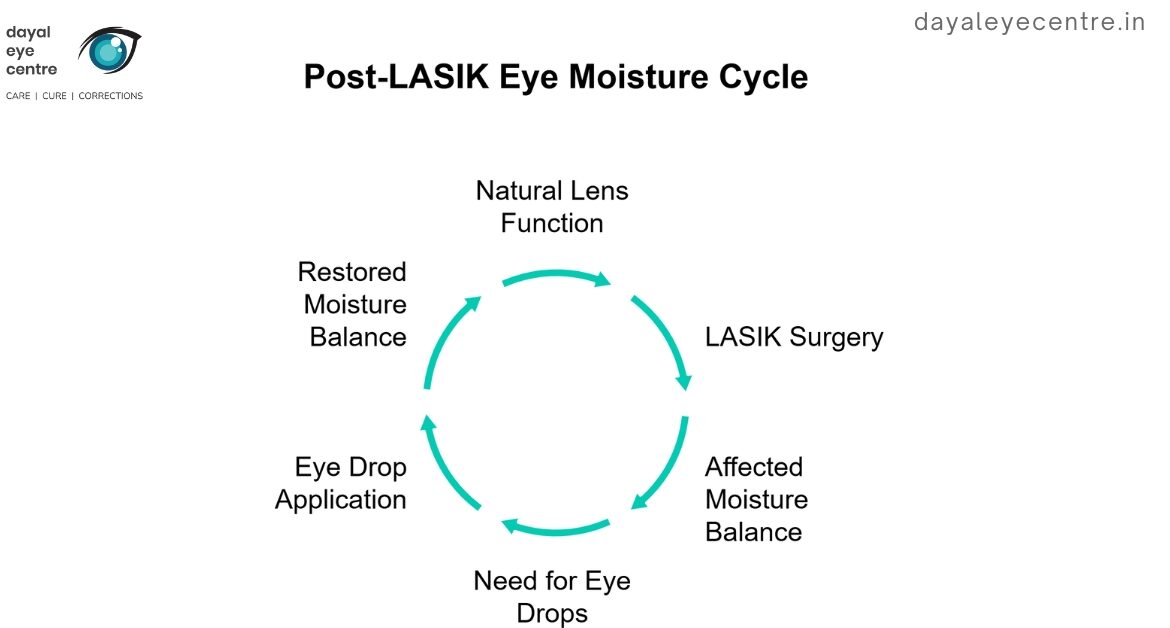
Think of your natural lens like a camera lens that needs constant moisture to function properly. LASIK surgery temporarily alters this delicate balance, making eye care crucial. Proper lubrication and protection allow your eyes to heal efficiently, reduce discomfort, and maintain the clarity of your improved vision.
Why Your Eyes Need Drops After LASIK
The cornea has multiple layers that work together to distribute tears and keep your eyes properly lubricated. After LASIK surgery, this natural tear system is temporarily disrupted. About 60% of patients notice dry eye symptoms within the first month.
When the surgeon creates the corneal flap, it affects the nerves responsible for tear production. These nerves heal gradually, which is why your eyes require support through different types of drops. Most patients use eye drops every 2 hours for at least 10 weeks after surgery.
Types of Eye Drops Used
1. Antibiotic Drops
- Protect your eyes from infection during the early healing phase
- Even with sterile conditions, the cornea needs this extra protection while its natural barrier recovers
2. Steroid Drops
- Reduce inflammation and support proper healing
- Typically prescribed alongside antibiotics for about one week
3. Preservative-Free Artificial Tears
- Maintain moisture and comfort while the corneal nerves recover
- Help minimize dry eye symptoms during the first few months
Common Eye Issues During Recovery
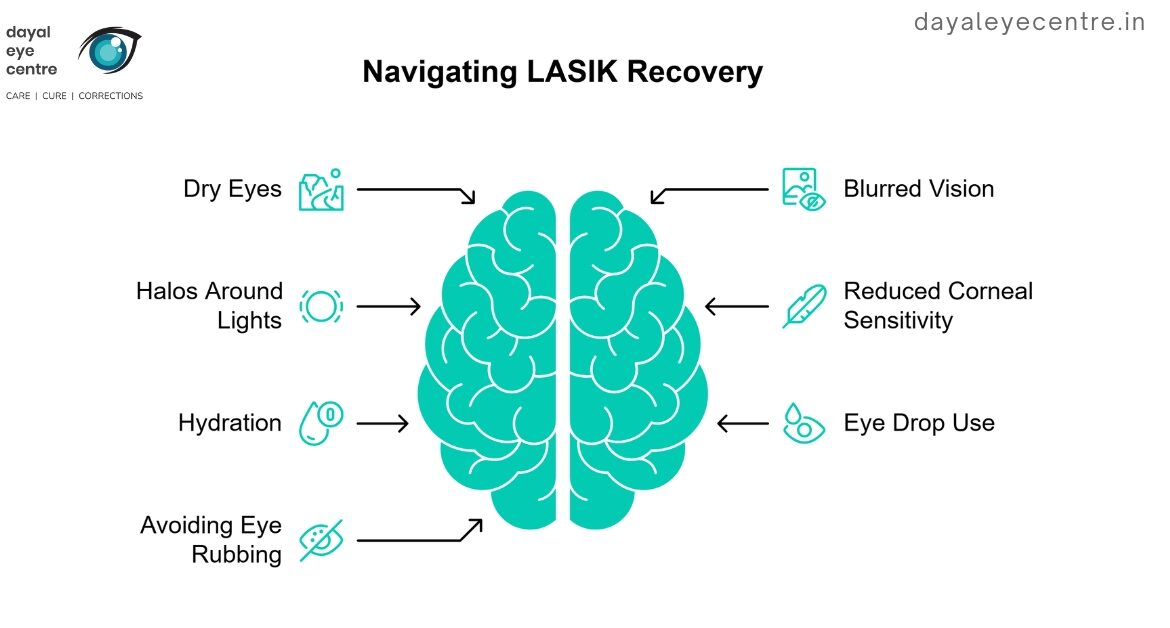
Dry eyes are the most frequent challenge after LASIK. Studies show that 95% of patients report some level of dry eye immediately after the procedure.
Other symptoms during recovery may include:
- Blurred or fluctuating vision
- Halos or starbursts around lights
- Reduced corneal sensitivity
- Temporary reduction in vision clarity
These issues usually peak within the first few months, and most patients notice significant improvement between 6-12 months. Staying hydrated and following your eye drop regimen can help reduce discomfort.
Post-LASIK Eye Care: Eye Drops and Healing
Your healing after LASIK depends heavily on your existing eye conditions and following the prescribed drop schedule. Studies show that 38–75% of LASIK candidates already have dry eye symptoms before surgery. Addressing these issues early with proper drops is crucial for optimal results.
Important: Avoid rubbing your eyes, even if they feel itchy. Doing so can disturb the healing corneal flap and affect your vision correction. Use your prescribed drops instead for relief.
Types of Eye Drops You’ll Need
Your doctor will prescribe three essential types of drops, each serving a unique purpose:
Antibiotic Drops (Infection Prevention)
- Protect your eyes from infection after surgery
- Usually prescribed for 7–10 days
- Recommended 4 times daily on surgery day
- Common medications: Moxifloxacin or Ofloxacin
Steroid Drops (Inflammation Control)
- Reduce swelling and prevent scarring
- Prescribed for 1–2 weeks
- On surgery day: every hour while awake
- Gradually reduce use under your doctor’s guidance
Preservative-Free Artificial Tears (Lubrication & Comfort)
- Help relieve post-LASIK dryness
- Avoid preservative-containing drops, which can irritate healing eyes
- Most patients use them every 2 hours for 6–12 months
Tip: Wait 5 minutes between different types of drops to avoid dilution or irritation.
Suggested Eye Drop Schedule
First Week:
- Antibiotic drops: 4 times daily
- Steroid drops: Every hour while awake
- Artificial tears: Every 30–60 minutes
Weeks 2–10:
- Continue preservative-free artificial tears every 2 hours (or as advised by your doctor)
Extended Use:
- Artificial tears may be used 4 times daily until dryness resolves
- Persistent dry eye may require special medications like Restasis or Xiidra
Creating Your Daily Eye Drop Schedule
Morning routine
- Wash your hands thoroughly
- Start with preservative-free artificial tears
- Shake antibiotic and steroid drops before use
- Wait 3–5 minutes between each type
- Optional: Store drops in the refrigerator for a soothing effect
- Track doses using a schedule or phone alarms
Daytime Tips (First Week):
For the first week after surgery, follow this schedule:
- Antibiotic drops: 4 times daily
- Steroid drops: Every 2 hours while awake
- Artificial tears: Every 30-60 minutes
Practical Tips:
- Keep extra artificial tear vials handy
- Gently pull down your lower lid while instilling drops
- Avoid touching the dropper to your eye or face
- Close eyes gently after application for better absorption
- Use artificial tears first to reduce stinging from other drops
Even if your eyes feel fine, continue your drop schedule. Skipping doses can slow healing. Your doctor may adjust treatment if dryness persists.
Proper Eye Drop Techniques
Think of your eyes like a camera lens – proper care ensures the best results.
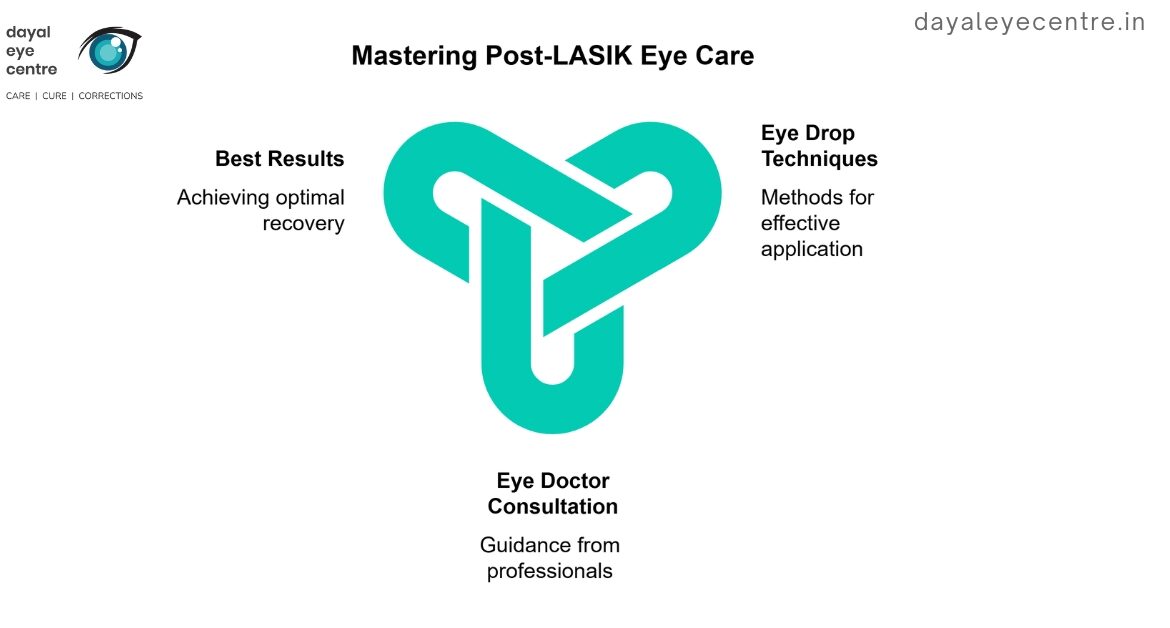
- Instill drops with clean hands
- Avoid rubbing your eyes afterward
- Follow your doctor’s schedule precisely
- Monitor for unusual discomfort or prolonged dryness
This guide ensures your eyes heal comfortably and effectively after LASIK.
Step-by-step application guide
Start by washing your hands thoroughly with antimicrobial soap. Tilt your head back gently and look toward the ceiling. With your index finger, create a small pocket by pulling down your lower eyelid.
Hold the dropper near your eye without touching any part of your eye or face. Steady your hand against your brow if needed. Put in one single drop – your eye holds only about 1/6 of a drop, making extra drops unnecessary.
Keep your eyes closed gently for 30 seconds after putting in drops. This helps the medicine spread evenly across your eye. Many patients blink repeatedly, but this can wash away the medication.
When using different drops, wait 5 minutes between each type. Use lubricating drops last to coat your eye properly.
Common application mistakes to avoid
Our patients sometimes make these mistakes during recovery:
- Letting the dropper touch eyes or skin, which can cause contamination
- Using large bottles instead of individual vials in the first two weeks
- Putting in drops with unwashed hands
- Missing scheduled doses, which affects healing
- Choosing drops with preservatives that might irritate eyes
Pro tip: Keep your preservative-free drops in the refrigerator for extra comfort. After putting in drops, press gently between your lower eyelid and nose for two minutes – this helps the medicine work better.
Bacteria can grow in eye drops even with preservatives. Call your doctor right away if you think your drops might be contaminated. Clean hands and proper technique help your eyes heal safely after LASIK surgery.
Conclusion
The way smudgy lenses cause blurring of vision, proper eye drops help maintain clarity during LASIK recovery. Though managing different types of drops takes time to master, following your prescribed schedule becomes easier with practice.
Most patients see their vision improve within 6-12 months after surgery. Each person’s healing journey differs, much like how different eyes adapt to new glasses. Preservative-free artificial tears become your most important tool, especially in those first few months when dryness peaks.
Talk with your eye doctor about your progress during recovery. Schedule an appointment with our experts to discuss your eye drop needs and healing timeline.
Take time to follow your drop schedule carefully and use proper application techniques. While recovery needs patience, seeing clearly without glasses makes this short-term effort worthwhile. Remember, we’re here to guide you through each step of your healing journey.
FAQs
1. What types of eye drops are typically prescribed after LASIK surgery?
After LASIK, patients are usually prescribed three types of eye drops: antibiotic drops to prevent infection, steroid drops to reduce inflammation, and preservative-free artificial tears to combat dryness. The antibiotic and steroid drops are typically used for about a week, while artificial tears may be needed for several months.
2. How often should I use eye drops following LASIK?
In the first week after LASIK, you’ll likely need to use antibiotic drops 4 times daily and steroid drops every 2 hours while awake. Preservative-free artificial tears should be applied every 30-60 minutes initially. Your doctor will provide a specific schedule and adjust it as your eyes heal.
3. Are preservative-free eye drops better for post-LASIK care?
Yes, preservative-free artificial tears are considered the gold standard for post-LASIK care. They help combat dryness without the risk of irritation or inflammation that preservatives can cause. These drops can be used safely and frequently throughout your recovery period.
4. What’s the proper technique for applying eye drops after LASIK?
To apply eye drops correctly, wash your hands thoroughly, tilt your head back, and gently pull down your lower eyelid. Position the dropper close to your eye without touching it, and squeeze one drop into the pocket created by your lower lid. Close your eyes gently for 30 seconds to allow the medication to spread evenly.
5. How long will I need to use eye drops after LASIK surgery?
The duration varies, but most patients need to use preservative-free artificial tears for 6-12 months post-surgery. Antibiotic and steroid drops are typically used for about a week. However, some people may need to continue using artificial tears even longer, depending on their individual healing process and eye dryness.