SMILE stands for Small Incision Lenticule Extraction – a technique that corrects refractive errors through a tiny opening in your cornea. Unlike traditional methods, this procedure works like keyhole surgery, primarily treating nearsightedness and astigmatism.
The key step involves creating a thin section in your cornea – like turning a page in a book. Instead of making a large flap as in LASIK, your surgeon makes a small incision—only 2-4 millimeters wide. Through this tiny opening, they remove a precisely shaped piece of tissue to correct your vision.
Studies show more than 98% of patients achieve at least 20/40 vision without glasses, while about 88% reach perfect 20/20 vision. The entire procedure takes just 10-20 minutes to complete, making it efficient for both you and your doctor.
How SMILE reshapes the cornea to correct vision
Your vision depends on your cornea focusing light properly onto your retina. When your cornea’s shape changes, this focusing ability becomes compromised, causing blurry vision.
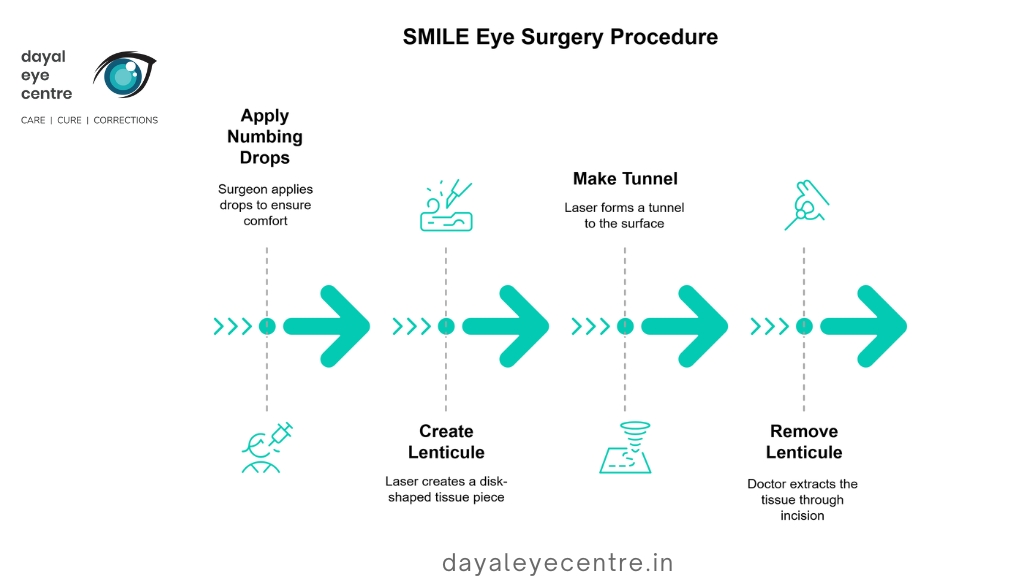
During the SMILE procedure:
- Your surgeon applies numbing drops to ensure your comfort
- The femtosecond laser creates a small, disk-shaped piece of tissue (lenticule) within your cornea
- The same laser makes a tiny connecting tunnel to the surface
- Your doctor gently removes this lenticule through the small incision
This removal reshapes your cornea to precisely counteract your specific vision problem. Like any other procedure in the body, the technique follows a careful sequence for best results. The actual laser portion takes about 30 seconds per eye, making the whole process remarkably efficient.
Differences from traditional LASIK and PRK
Talk with your eye doctor about how SMILE differs from other vision correction options:
Single Laser System: SMILE uses only one laser throughout the procedure, while LASIK needs both a femtosecond and an excimer laser.
Smaller Incision: Unlike LASIK’s 20mm flap, SMILE makes only a 2-4mm incision. This eliminates flap-related complications that can happen with LASIK.
Better Nerve Preservation: The small incision disrupts fewer corneal nerves than LASIK’s larger flap. This typically means less dry eye afterward and faster recovery of normal sensation.
Stronger Cornea After Surgery: Because SMILE doesn’t create a flap, your cornea maintains more of its natural strength. This provides particular benefits for active people and athletes.
Middle-Ground Recovery: Most patients see clearly within 1-2 days after SMILE. This recovery time falls between LASIK (fastest) and PRK (slowest).
Current Limitations: SMILE is currently FDA-approved only for nearsightedness and astigmatism, while LASIK can also correct farsightedness.
The numbers tell an encouraging story about SMILE’s effectiveness. For patients seeking freedom from glasses with reduced risk of dry eye, SMILE combines advantages from both LASIK and PRK while avoiding some of their drawbacks.
Step-by-Step Breakdown of the SMILE Procedure
Your journey to clearer vision through SMILE surgery begins well before the actual procedure. Understanding each step helps you prepare mentally and set realistic expectations for this vision correction approach.
Pre-surgery eye examination and eligibility check
Talk with your eye doctor about whether SMILE surgery suits your specific vision needs. Your doctor will conduct a thorough eye examination to determine if you qualify for the procedure. This initial assessment typically includes:
- Vision testing to measure your nearsightedness and confirm your prescription has remained stable
- Corneal mapping to identify any surface irregularities and program precise laser settings
- Corneal thickness measurement to ensure you have enough tissue for safe treatment
- Complete eye health evaluation to detect any conditions that might affect surgery outcome
Your medical history plays a crucial role in determining eligibility. Patients with glaucoma, keratoconus, unstable diabetes, or certain eye allergies may not qualify for SMILE. If you’re pregnant or breastfeeding, your doctor will likely recommend waiting until afterward.
Take comfort knowing that your doctor will explain what sensations to expect during the procedure, including sounds and slight pressure feelings. Remember, SMILE aims to reduce your dependence on glasses rather than promising perfect vision in every case.
Lenticule creation using femtosecond laser
The actual SMILE procedure begins after your eye is completely numbed with anesthetic drops. Your doctor will:
- Place a small device to keep your eyelids open during the procedure
- Position a special contact glass on your eye to hold it steady
- Use the VisuMax femtosecond laser to deliver precisely positioned pulses
The key step involves creating a thin disc (lenticule) inside your cornea – like cutting a small lens within the layers of your cornea:
- First, the laser forms the bottom portion of this disc
- Next, it creates the top boundary
- Finally, it makes a tiny tunnel to access this disc
Throughout this process, the laser settings are programmed specifically for your eye, typically including a depth of 120 μm and a small side opening of 2-5 mm. The treatment area generally spans about 6 mm across your cornea.
Lenticule extraction through a 2-4mm incision
Once the laser finishes, your surgeon begins the manual part of the procedure:
- Using specialized tools, your doctor gently separates the lenticule from surrounding tissue
- A small spatula carefully outlines the edges of this created disc
- The surgeon removes the lenticule through the tiny opening using special forceps
- Your doctor examines the removed tissue to ensure nothing remains behind
This removal reshapes your cornea to correct your vision without needing any stitches. Your doctor may rinse the area with a balanced salt solution and smooth everything into place.
Total duration and anesthesia used
The entire SMILE procedure typically takes just 10-15 minutes for both eyes, with the actual laser portion requiring only about 30 seconds per eye. This quick timeframe helps maintain your comfort and the procedure’s precision.
For pain control, your surgeon uses only topical anesthetic eye drops. These drops completely numb your eye surface, though you might still feel some pressure when the contact glass touches your eye.
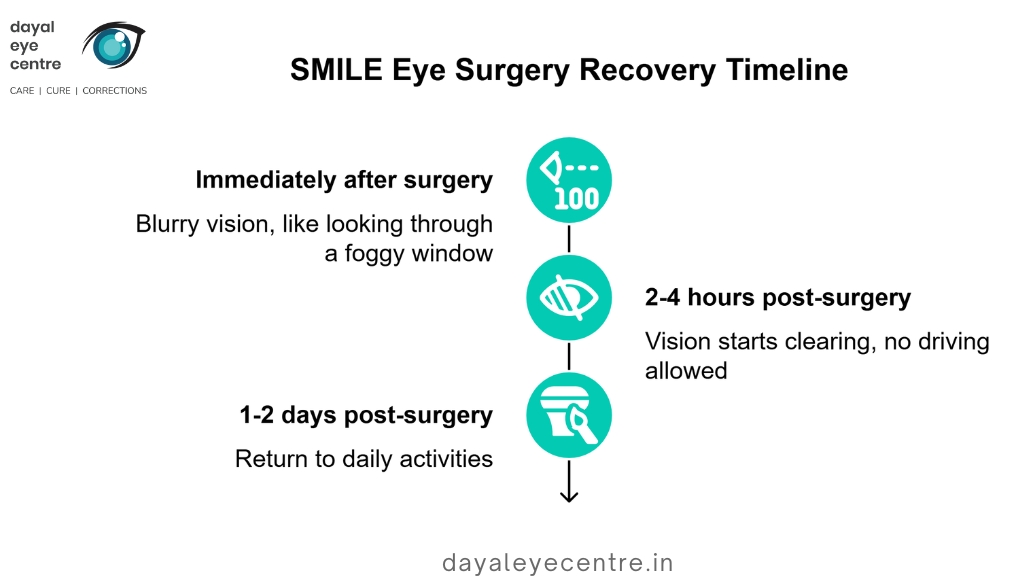
Your vision will be blurry right after the procedure, similar to looking through a foggy window. You’ll need someone to drive you home afterward. Most patients return to many daily activities within 24-48 hours, though your doctor will provide specific instructions about rest, eye protection, and when to use medications.
Top Benefits of SMILE Laser Eye Surgery
- No Corneal Flap & Faster Healing: A small 2–4mm incision means likely clear vision within 3–4 days. You avoid flap-related complications and return to daily activities sooner.
- Lower Risk of Dry Eye: SMILE preserves more corneal nerves, resulting in fewer dry eye issues. 80% of patients stopped using eye drops within six months, compared to 57% for LASIK.
- Preserved Corneal Strength: SMILE-treated corneas remain 47% stronger than LASIK-treated corneas, maintaining long-term stability.
- Ideal for Active Individuals & Athletes: No flap displacement during contact sports, quicker return to light training (48–72 hours), less dryness, and fast vision stabilization.
SMILE Eye Surgery Recovery Timeline and Aftercare
Vision will be blurry immediately after surgery but starts clearing within 2–4 hours. Driving is not allowed during this period. Most patients return to daily activities within 1–2 days. Following your doctor’s instructions regarding rest, eye protection, and medications ensures optimal recovery.
First 24 hours: rest and eye protection
After your SMILE procedure, you’ll need someone to drive you home. Your doctor will apply special eye drops, and you should keep your eyes closed as much as possible. Most patients experience mild discomfort, sensitivity to light, watery eyes, and blurry vision – all normal reactions as your eyes begin healing.
Wearing protective eye shields while sleeping prevents accidentally rubbing your eyes. Take comfort knowing that burning sensations usually fade within five hours. Though your vision starts improving quickly, avoid straining your eyes during this crucial period.
Vision improvement within 2-7 days
Good news: about 90% of patients notice significant vision improvement within 24–48 hours after surgery. The small 2–4mm incision allows eyes to heal faster, typically within 3–4 days. Vision might fluctuate initially, with complete stabilization taking several weeks.
Most patients can drive after receiving approval from their doctor, often within 24 hours. Tasks like reading fine print might remain challenging for 1–2 weeks, so patience is key.
Precautions after SMILE eye surgery
To protect your eyes during healing:
- Use all prescribed eye drops and medications exactly as directed
- Avoid rubbing your eyes completely
- Wear UV-protective sunglasses outdoors for at least one month
- Stay away from dust, smoke, and eye makeup
- Keep soap and water away from eyes
When to resume daily and athletic activities
SMILE surgery allows a quick return to normal activities:
- Regular daily activities: 1-2 days
- Computer work and reading: 2 days
- Driving: 3 days (with doctor’s approval)
- Light exercise like walking: 5 days
- Swimming and water activities: 4-6 weeks
- Contact sports: 4-6 weeks
Recovery varies per person. Regular check-ups help monitor healing and address concerns promptly. Seek immediate medical attention if you experience severe pain or worsening symptoms.
Risks, Side Effects, and Who Should Avoid SMILE
While SMILE shows excellent results for most patients, understanding potential side effects helps you make informed decisions. Discuss these with your eye doctor.
Common side effects: glare, halos, dryness
Vision may fluctuate temporarily. Some patients notice glare or halos around lights, especially at night. These disturbances typically improve within weeks. Arrange alternative transportation until your doctor confirms night vision has stabilized.
Dry eye symptoms occur less frequently with SMILE than LASIK due to nerve preservation. Studies show 80% of SMILE patients stopped using eye drops within six months, compared to 57% of LASIK patients. Most dry eye symptoms resolve within three months.
Rare complications: suction loss, lenticule tears
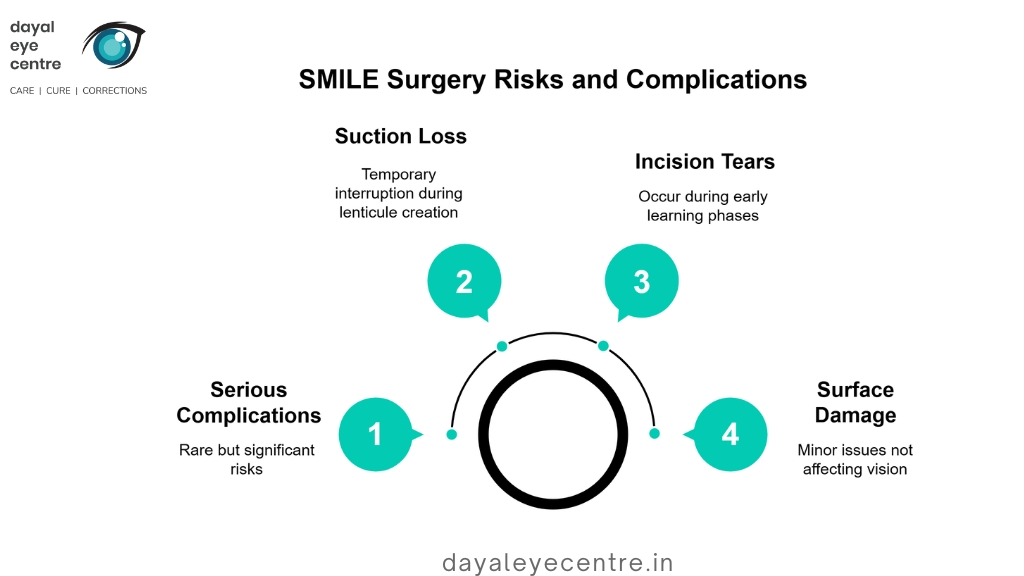
Like any procedure, SMILE carries some risks, though serious complications are uncommon.
- Suction loss during lenticule creation occurs in 0.17–0.93% of cases with modern technology and experienced surgeons.
- Incision tears occur in approximately 2–11% of cases, usually during a surgeon’s early learning curve. Small surface damage at the incision occurs in 0.17–11.25% of procedures but typically does not affect final vision.
Other rare complications include incomplete lenticule removal, corneal haze, or abnormal surface cell growth. The risk of corneal weakening (ectasia) exists but remains lower than with LASIK.
Who is not a good candidate for SMILE surgery
Your eye doctor will determine if SMILE surgery suits your particular needs. The procedure isn’t recommended for people with:
- Unstable prescriptions or vision outside the approved range (-1D to -8D nearsightedness, up to -5D astigmatism)
- Corneal problems like keratoconus, thin corneas, or severe scarring
- Active eye conditions such as glaucoma, serious dry eye, cataracts, or inflammation
- Uncontrolled diabetes, autoimmune disorders, or certain medications like isotretinoin
- Pregnancy or breastfeeding due to hormone changes affecting vision
Thorough pre-surgery testing helps identify these factors before proceeding with SMILE. Your doctor will check your corneal thickness, map your eye’s surface, and review your medical history to ensure you’re a good candidate for the procedure.
Conclusion
Our natural lens allows clear vision, and SMILE eye surgery has helped millions restore theirs. This small-incision procedure offers key advantages over traditional LASIK and PRK:
- No corneal flap, leading to faster healing
- Lower risk of dry eye symptoms
- Better corneal strength and stability
These benefits make SMILE especially valuable for athletes and active individuals.
Like any other procedure in the body, SMILE requires healing time, though most patients see significant vision improvements within the first week. The procedure’s safety comes from its tiny 2-4mm incision, which preserves more corneal nerves than traditional methods. However, not everyone qualifies as an ideal candidate – particularly those with certain corneal problems, changing prescriptions, or specific health conditions.
Talk with your eye doctor about whether SMILE surgery is right for you. Your doctor will conduct a thorough eye examination to determine your eligibility and discuss what you can realistically expect. Though some patients experience temporary glare or mild dryness at first, these effects typically improve within weeks as your eyes heal.
Studies show approximately 88% of patients achieve 20/20 vision after SMILE surgery, highlighting its effectiveness. With proper care and regular check-ups, most patients enjoy clear vision for many years. Consider the benefits and risks carefully with your doctor before making a decision.
FAQs
-
How long does recovery take after SMILE eye surgery?
Most patients can return to daily activities within 24-48 hours after SMILE surgery. However, complete vision stabilization may take a few weeks. It’s important to follow your doctor’s specific instructions for optimal recovery.
-
What are the main advantages of SMILE over traditional LASIK?
MILE offers several benefits, including a smaller incision, faster healing, lower risk of dry eye, and better preservation of corneal strength. It’s particularly suitable for active individuals and athletes due to reduced flap-related complications.
-
Who is not a good candidate for SMILE eye surgery?
SMILE may not be suitable for individuals with unstable refractive errors, certain corneal abnormalities, severe dry eye, uncontrolled diabetes, or those who are pregnant or breastfeeding. A thorough pre-operative screening is essential to determine eligibility.
-
What side effects can I expect after SMILE surgery
Common temporary side effects include mild discomfort, light sensitivity, and blurry vision in the first 24-48 hours. Some patients may experience glare or halos around lights, especially at night, but these typically resolve within weeks.
-
How soon can I resume sports and exercise after SMILE?
Light exercise like walking can usually be resumed after 5 days. However, swimming and water activities should be avoided for 4-6 weeks, and contact sports should not be resumed for at least 4-6 weeks. Always consult your surgeon for personalized advice based on your recovery progress.